Royal Academy of Turin: A Savoy Court School and Military Academy
Site at a Glance
- Popularity
- High
- Country
- Italy
- Primary era
- Early Modern
- Eras represented
- Early Modern
- Civilizations
- Duchy of Savoy
- Site type
- Civic
- Remains
- School
On this page8 sections
History
The Royal Academy of Turin was a court school and later a military academy in Turin, Italy. It opened on 1 January 1679 as the Royal Academy of Savoy, in a palace whose construction had begun in 1673. The institution grew out of the Savoy Royal School of Artillery and Fortifications, but its first purpose was broader than military education.
The Savoy court academy
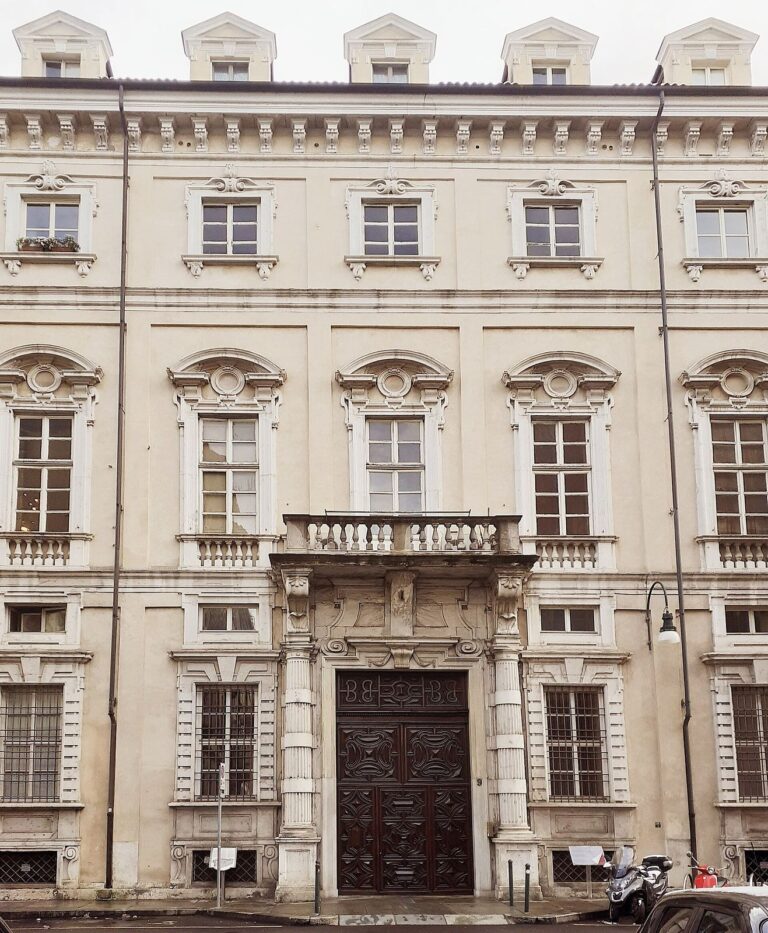
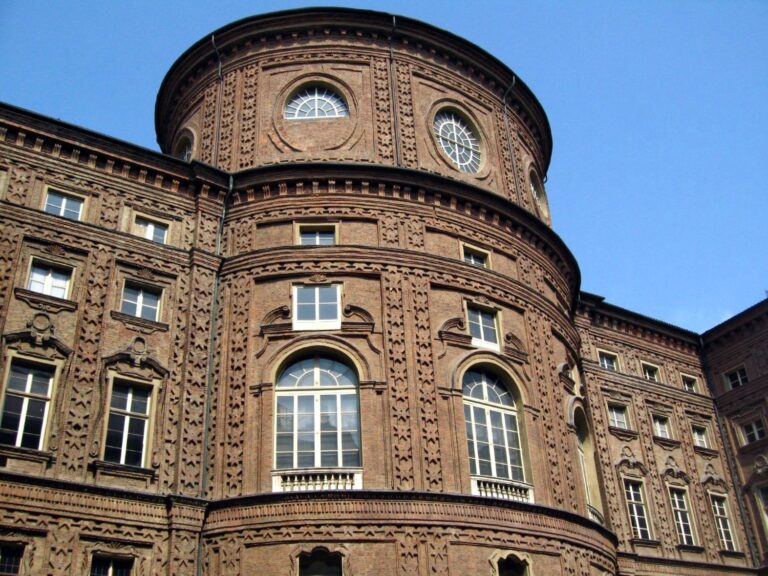
The late Duke Carlo Emanuele II planned the palace, and the regent Maria Giovanna Battista di Savoia-Nemours promoted the project. Amedeo di Castellamonte designed parts of the building, which Carlo Buzzi constructed between 1676 and 1680. Deodato Ramelli, Carlo Ferretti, and Antonio Casella arranged for stone to be obtained and transported from quarries at Chianocco in the Susa Valley.
The academy prepared young aristocrats from across Europe for life as gentlemen at court. Its students came from the Savoy territories and other parts of Italy, including the Papal States and the Venetian Republic, as well as England, Germany, Austria, Bohemia, Poland, and Russia. Their studies combined literature, history, Italian and French with dancing, fencing, riding, and military subjects, especially architecture and fortifications. Students also attended some lectures at the University of Turin and practised riding in a school building.
King Vittorio Amedeo II reorganized the academy in 1729 to admit university students, dividing its courses into three tracks based on their intended studies. A further reform in 1756 established a military-career course and distinct instruction for theologians and senior officials. French occupation of the Savoy state brought the academy to an end in 1798.
Military education after the Restoration
Following the Restoration, the return of established monarchies after the Napoleonic era, King Vittorio Emanuele I founded the Royal Military Academy in the same palace on 2 November 1815. Unlike the earlier school, it admitted only subjects of the Savoy territories who planned military careers, and entry required the sovereign’s approval. The intended enrollment was 200. The government funded 75 places, while the royal household paid the pensions of 16 young court attendants known as pages of honor.
Boys entered between the ages of 9 and 12. Training lasted eight years for candidates for the infantry and cavalry, who qualified as second lieutenants, and nine years for artillery and military engineering candidates, who graduated as lieutenants. The institution also preserved the earlier academy’s court tradition of educating pages.
King Carlo Alberto granted the academy the Italian tricolor flag on 15 March 1849, replacing its former white-cross-on-red flag. From 1857, applicants had to be at least 16, and courses lasted three years for infantry and cavalry and four for the specialist branches. A supplementary course opened at the Infantry Military School in Ivrea in 1859. In 1860, Minister of War General Manfredo Fanti proposed separate officer courses for infantry, cavalry, and the specialist fields of general staff, artillery, and military engineering. A royal decree of 13 March addressed the reorganization, including a minimum entry age of 19.
Reorganization and closure
The Turin academy’s military-academy phase ended in 1862, after which it continued as an artillery academy until 1943. Following the unification of courses with those in Turin and Naples, Modena became, from 1865, the sole institution recruiting and training infantry and cavalry officers for the Italian Royal Army. In 1897, the School of Application for Artillery and Engineers and the Royal Military Academy were placed under one command. The institution took the official name Military Academy of Artillery and Engineers in 1923, then the title Royal Academy in 1928.
Damage to the academy’s buildings began with a theatre fire in 1936 and continued during the 1942 bombing of Turin. The academy moved to Lucca in 1943 and was dissolved after 8 September that year. Buildings that survived intact continue to house the Italian Army’s 1st Infrastructure Unit. In 1997, the academy building became part of the UNESCO World Heritage property Residences of the Royal House of Savoy.
Remains
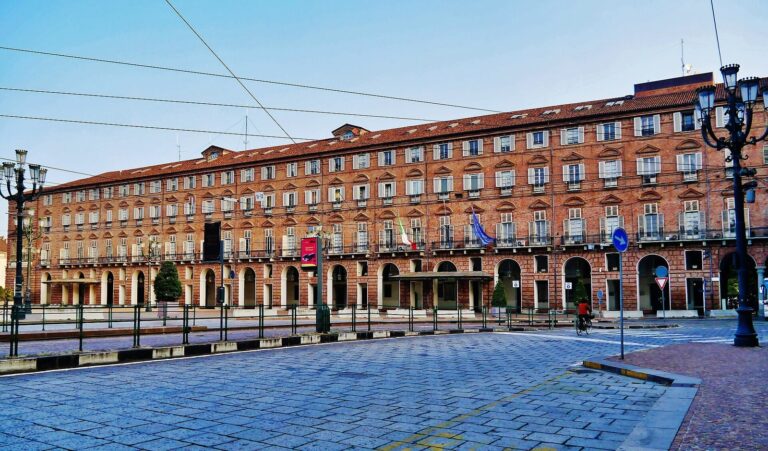
The academy occupied part of the Savoy kingdom’s command zone, an administrative complex containing government offices. Its palace and the Old Royal Theatre formed a three-wing enclosure around an inner courtyard, creating a courtyard-centered layout.
Palace and associated buildings
Palace design and construction
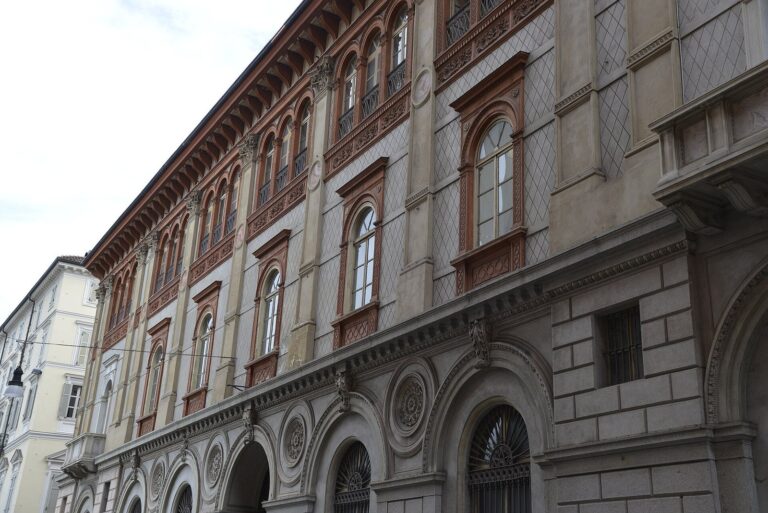
The buildings had three storeys above ground and a loggia facing the courtyard. Amedeo di Castellamonte designed the south and east wings, while Filippo Juvarra designed the north wing. Stone from the Chianocco quarries in the Susa Valley was used in the construction. A riding-school building also served students for equestrian exercises.
Surviving fabric and theatre
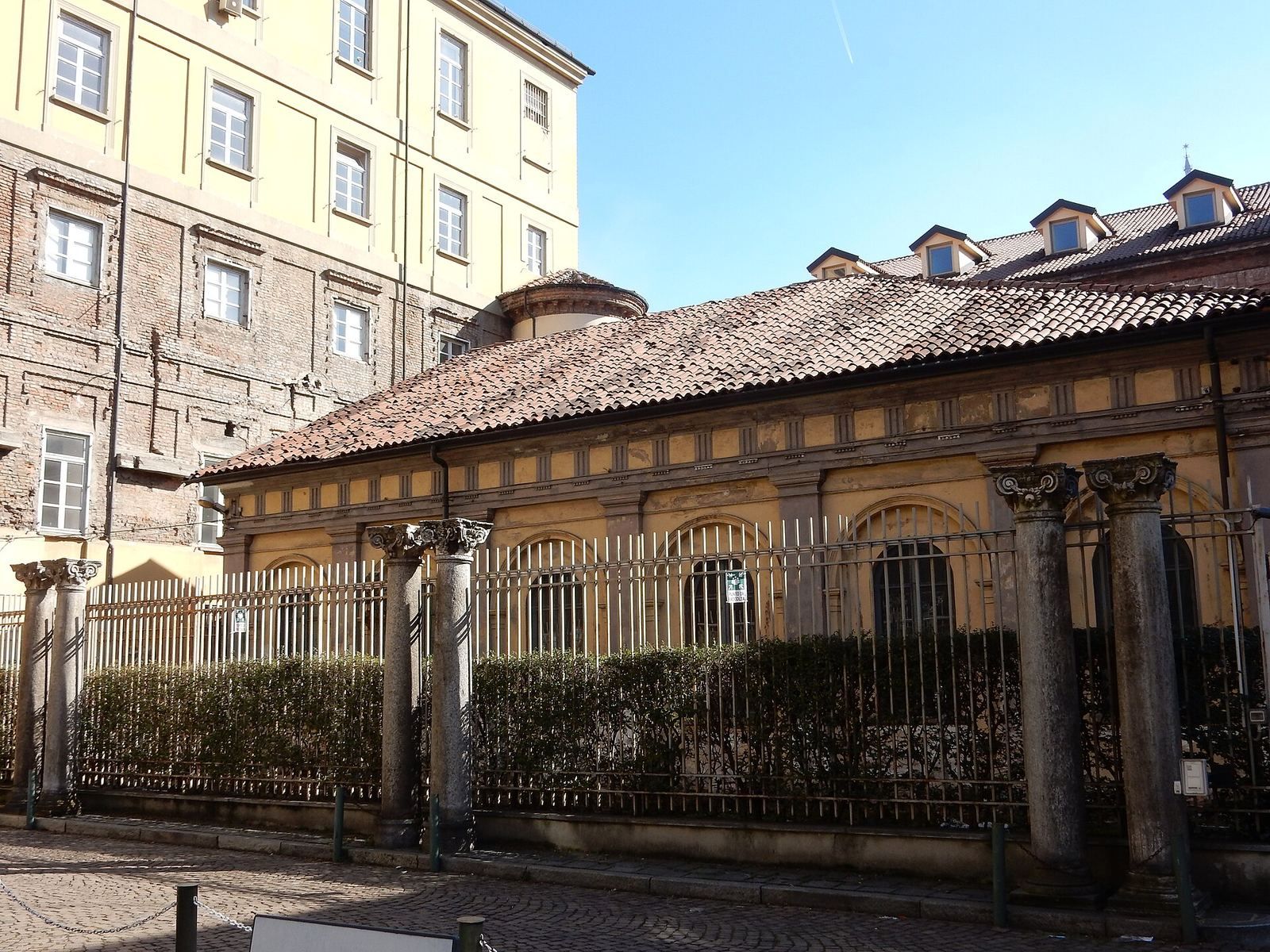
The fire and bombing left only a few fragments of Castellamonte’s seventeenth-century work. A short section of the east wing’s loggia survives along Via Verdi. Further demolition in 1959 cleared space for the present Royal Theatre, designed by Carlo Mollino.