Church of St. Francis of Paola: A Baroque Parish Church in Turin
Site at a Glance
- Country
- Italy
- Primary era
- Early Modern
- Eras represented
- Early Modern
- Civilizations
- Duchy of Savoy
- Site type
- Religious
- Remains
- Church
On this page17 sections
History
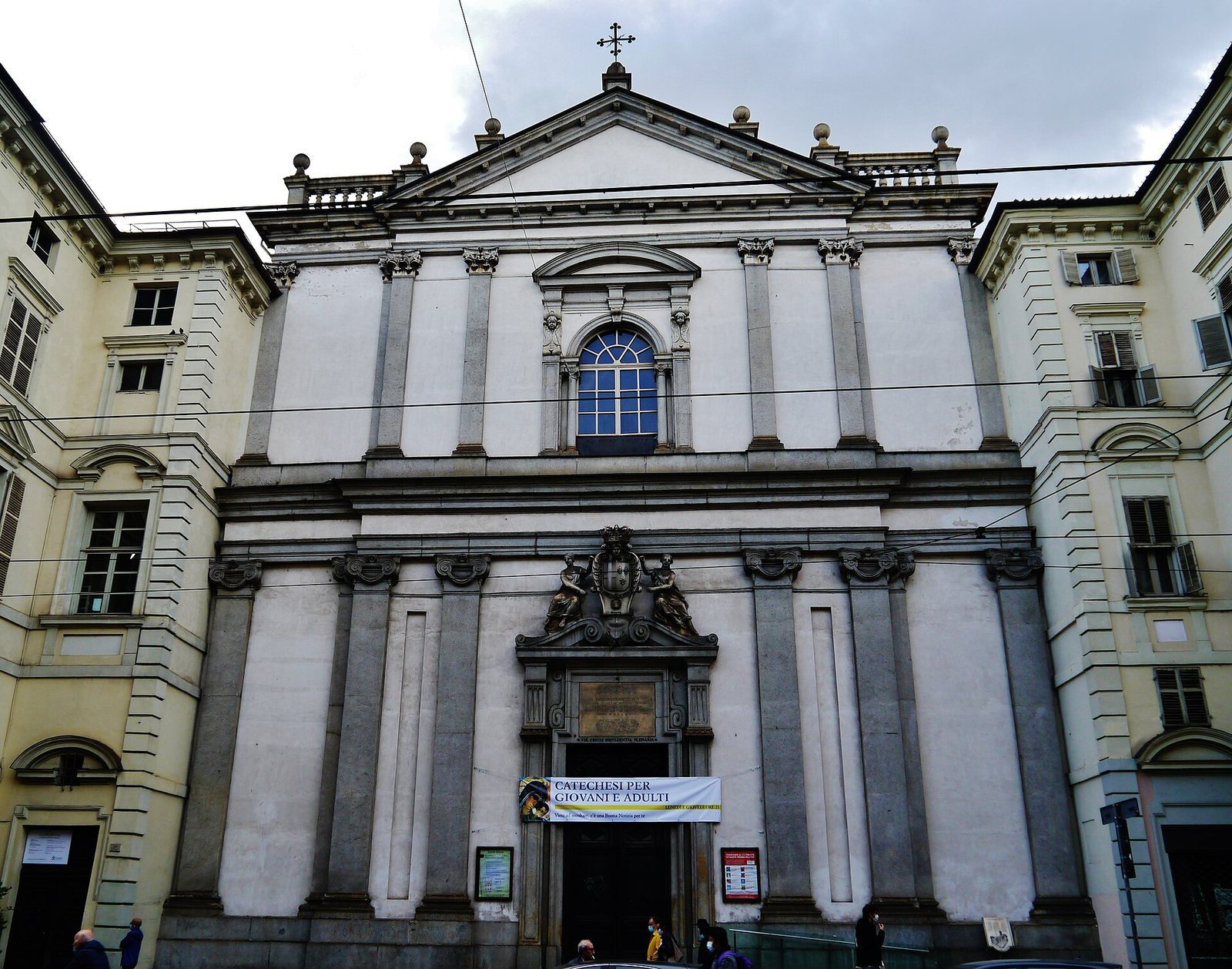
The Church of St. Francis of Paola is a Roman Catholic church on Via Po in Turin, Italy, dedicated to Francis of Paola, a fifteenth-century Italian religious founder who established the Minims, a Catholic order distinct from the Franciscans. Construction began in the 1630s in the Baroque style, an ornate European style that developed from the late sixteenth century, and the façade was completed in 1667. Christine Marie of France, a French princess and Duchess of Savoy, supported the project. Its design is attributed to Andrea Costaguta, a cleric and architect, with Pellegrino Pellegrini, an architect and painter, also associated with it.
Court Patronage and Chapels
Families connected to the Savoy court sponsored several side chapels and their altars. Anna Maria d’Orléans commissioned the first chapel on the left. From 1654, Maurizio di Savoia, a prince of the House of Savoy and a cardinal, commissioned the third chapel on that side. The third chapel on the right was first under the patronage of the Carron family of San Tommaso. After passing through successive inheritances, it came to Gustavo Benso di Cavour, who replaced the Carron coat of arms with the Benso family arms.
Convent and Parish Use
An adjoining convent was built for Franciscan monks, members of a Catholic religious order distinct from the Minims. During the twentieth century, the convent was converted into a school. The church serves as the parish church of the same name within the Archdiocese of Turin.
Remains
Plan and Exterior
The church stands at the corner of Via Po and Via San Francesco da Paola. Its rectangular interior is organized around a nave with six side chapels. Craftsmen from Lugano, including Martino Solaro and Giacomo Papa, completed the façade, which bears a ducal coat of arms.
Interior Decoration and Furnishings
Main Altar
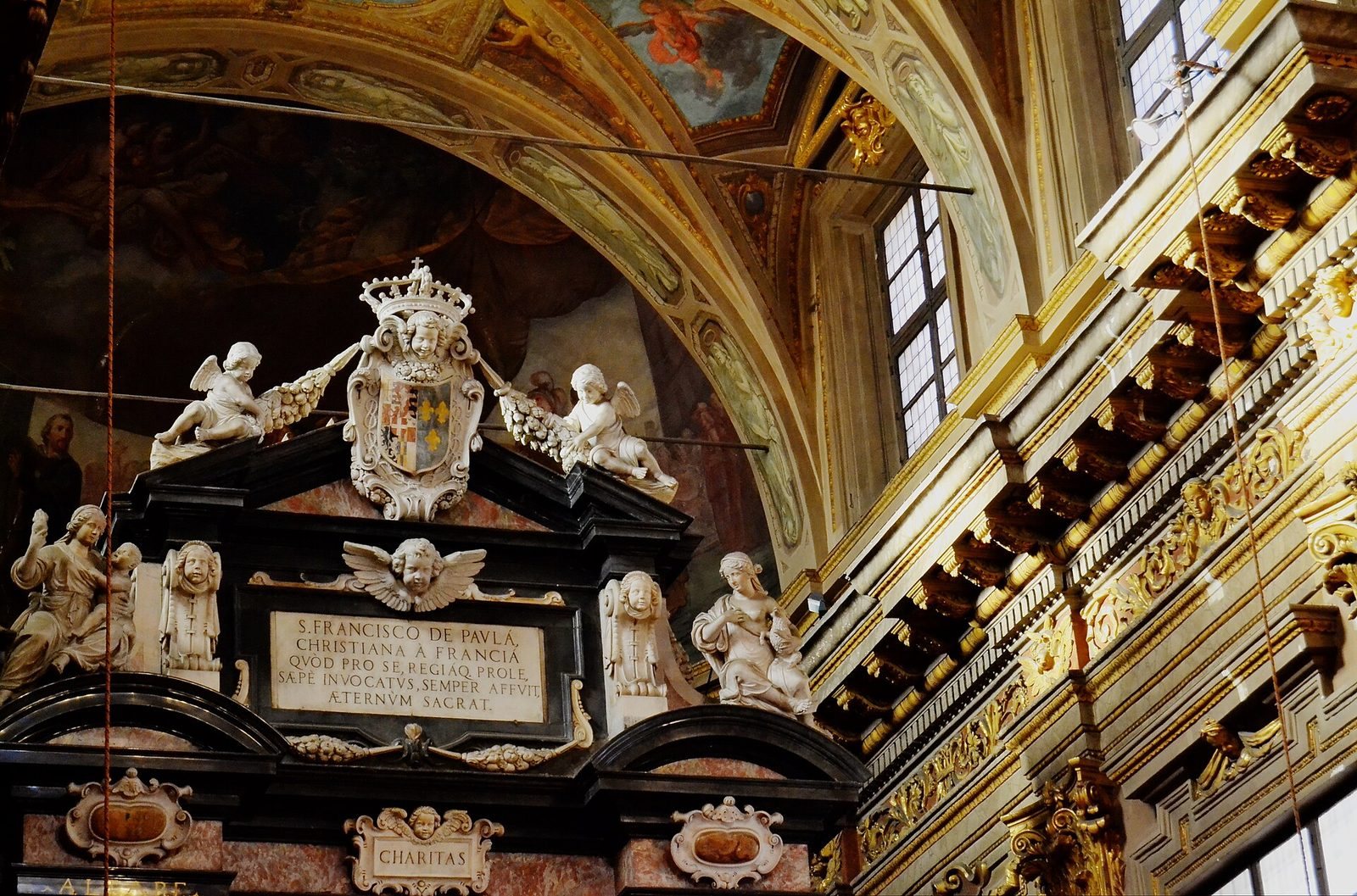
Tommaso Carlone made the main altar in 1664–1665 to a design by Amedeo di Castellamonte, an architect and engineer associated with the Savoy court. The altar bears Christine Marie’s coat of arms. Its central painting, Saint Francis of Paola in Glory, was painted by Charles Dauphin in 1664.
Sculpture and Painted Works
Carlone and his workshop produced much of the church’s sculptural decoration. Carlone also made the pulpit and a basin for holy water. Dauphin painted Louise of Savoy Asking for Grace, while Saint Francis of Paola Crossing the Strait of Messina is attributed to Carlone’s workshop. Francesco Guatier of Saluzzo painted murals inside the church and on the exterior of the façade.
Choir
The choir contains paintings of six apostles by Bartolomeo Guidoboni.
Side Chapels
First Chapel on the Right
Dedicated to the Trinity, understood in Christian tradition as one God in three persons, Father, Son, and Holy Spirit, this chapel contains a funerary monument to the marquises Morozzo della Rocca dating to 1699. It also holds The Transit of Saint Joseph, painted by Tommaso Lorenzone in the mid-nineteenth century, and a canvas by Sebastiano Taricco. Saint Joseph is Mary’s husband and Jesus’s earthly guardian.
Second Chapel on the Right
This chapel contains a monument to Tomaso and Marcantonio Graneri, together with a late-seventeenth-century painting of the Archangel Michael by Stefano Maria Legnani. In Christian tradition, Michael is a leading angel.
Third Chapel on the Right
Giovanni Domenico and Giuseppe Maria Carlone, who followed their father Tommaso in work at the church, decorated this chapel. It contains Giovanni Peruzzini’s Immaculate Conception and Saints.
First Chapel on the Left
The altar is attributed to Carlo Emanuele Lanfranchi. A late-seventeenth-century painting of Saint Genevieve, the patron saint of Paris, is by Daniel Seiter; François Jossermé made the works flanking it.
Second Chapel on the Left
Known as the Crucifixion Chapel, it contains a seventeenth-century painting of Christ crucified with the Virgin Mary and Saint John the Evangelist. The latter is traditionally identified as an apostle and Gospel author. The painting belongs to the Genoese school, an artistic tradition associated with Genoa.
Third Chapel on the Left
Dedicated to Our Lady of Good Help, a devotional title for the Virgin Mary, this chapel has an altar with a statue of the Madonna of Good Help made by Tommaso Carlone in 1655. Carlone and his workshop also created the chapel’s decoration.
Tommaso Carlone’s Funerary Monument
A funerary monument to sculptor Tommaso Carlone is set into the counter-façade, the interior wall opposite the main façade. Carlone requested burial in the church in his will. His sons Giovanni Domenico and Giuseppe Maria made the monument, probably soon after his death; it was in place by 1667.