Roman Theatre of Nicaea: A Second-Century Roman Performance Venue
Site at a Glance
- Popularity
- Medium
- Country
- Turkey
- Primary era
- Classical
- Eras represented
- Classical
- Civilizations
- Roman
- Site type
- Entertainment
- Remains
- Theatre
On this page8 sections
History
Roman construction and use
The Roman Theatre of Nicaea is a second-century Roman theater in İznik, Türkiye. It was built during the reign of Emperor Trajan (AD 98–117) by Pliny the Younger, then governor of Bithynia, a Roman province in northwestern Asia Minor. For two centuries, the theater hosted gladiatorial contests and other games. It later served other purposes.
Later uses
During the Nicaean Empire, a Byzantine successor state established at Nicaea after Latin forces captured Constantinople in the Fourth Crusade, soldiers who died in battles were buried together in the theater’s passageways.
In the Ottoman period, pottery kilns operated at the site for a time. After they ceased to be used, blocks from the theater continued to be taken for reuse in nearby houses into recent centuries.
Identification and excavation
The theater was first identified and sketched in 1743. Excavations led by Bedri Yalman, a specialist at the Bursa Museum, began in 1980 and continued until 2006. The İznik Museum resumed work from 2011 to 2015. From 2016, a Dokuz Eylül University team continued the excavations under the direction of Aygün Ekin Meriç.
Remains
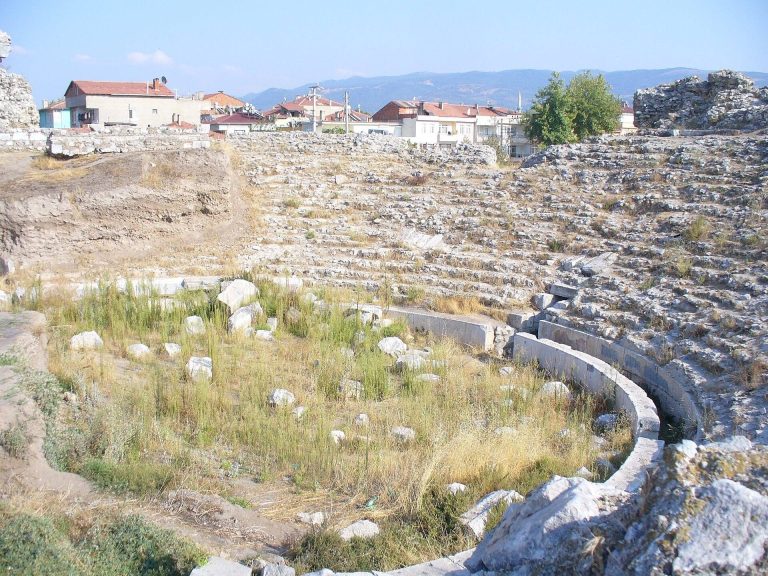
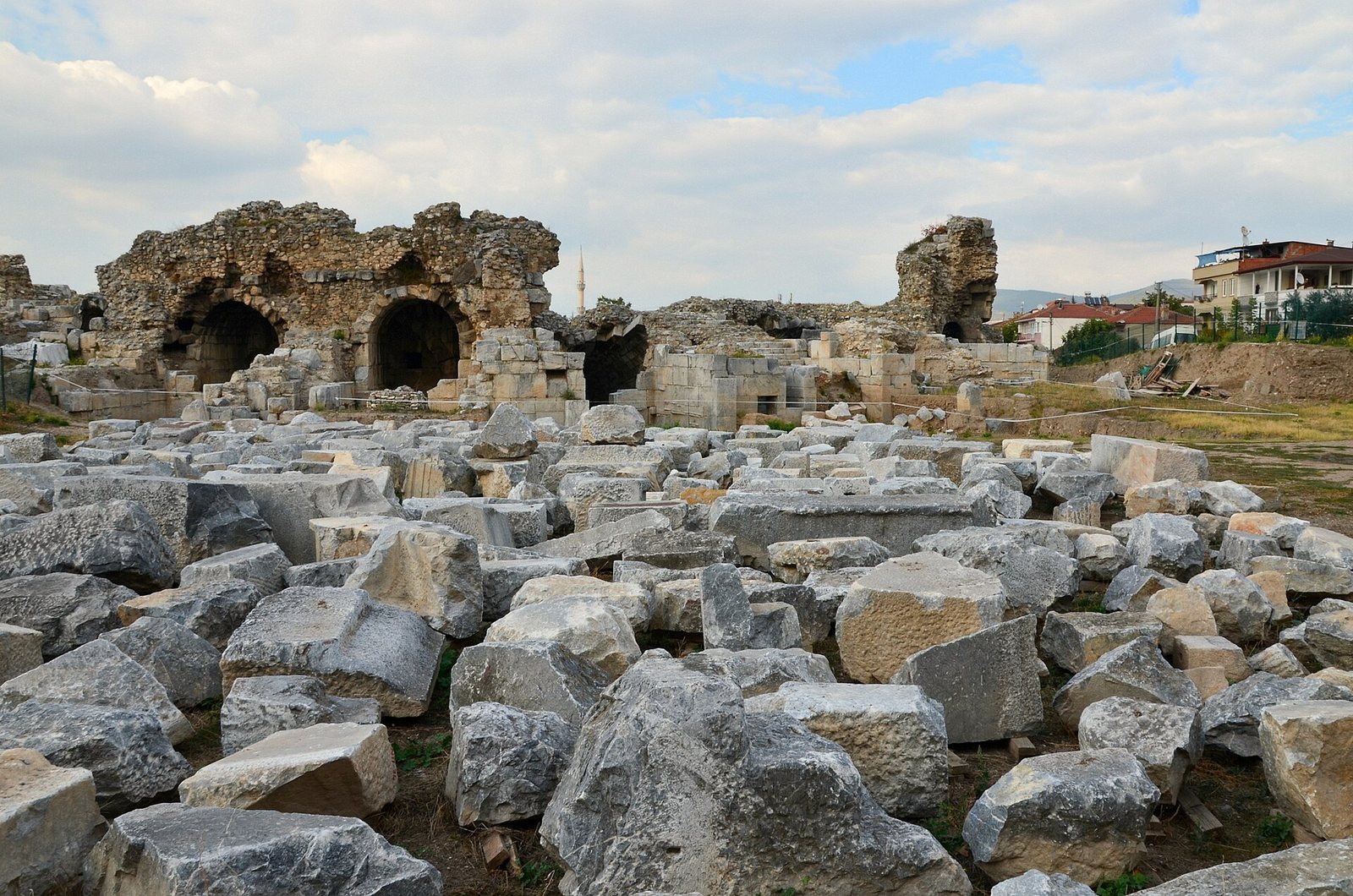
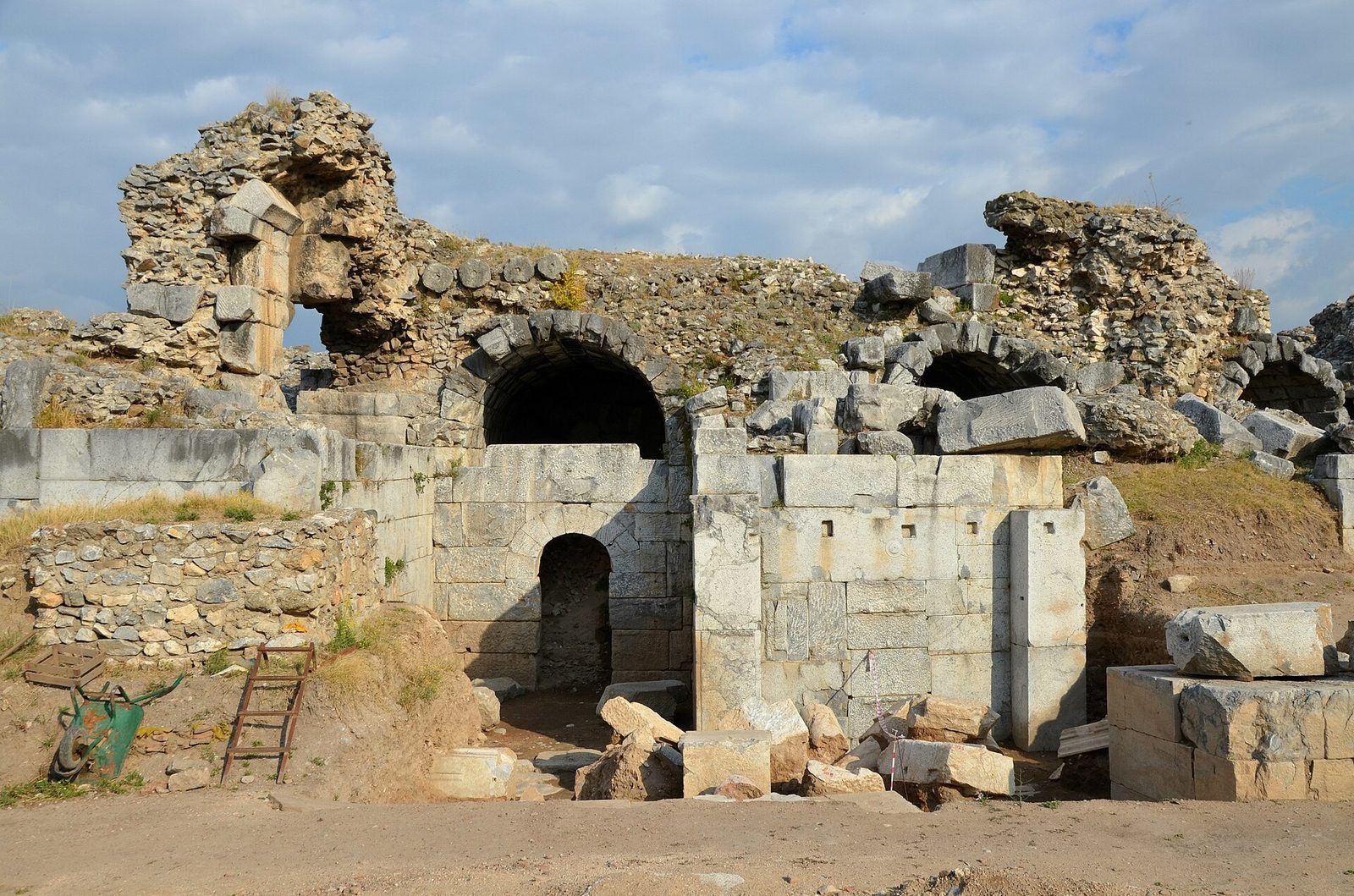
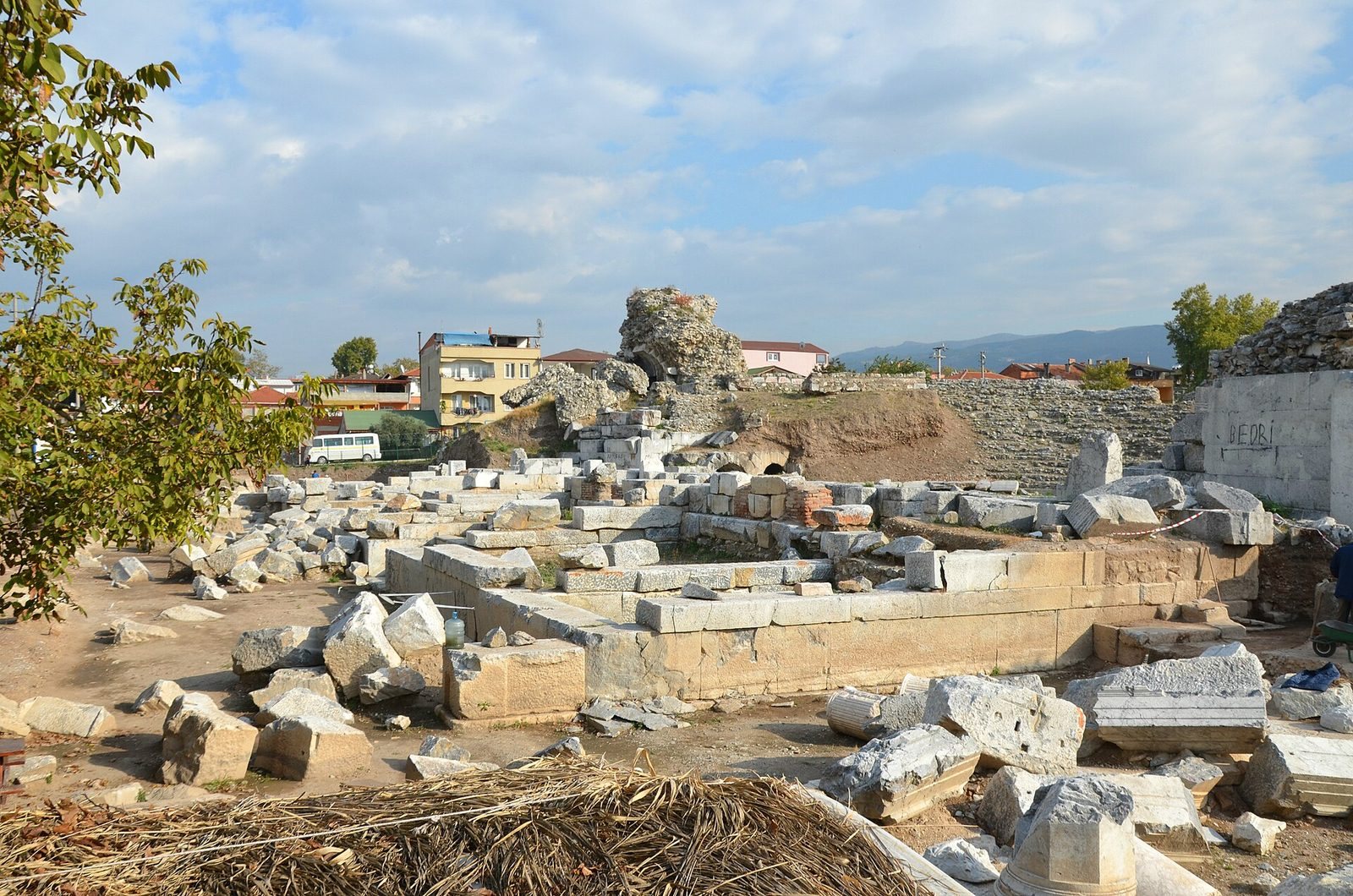
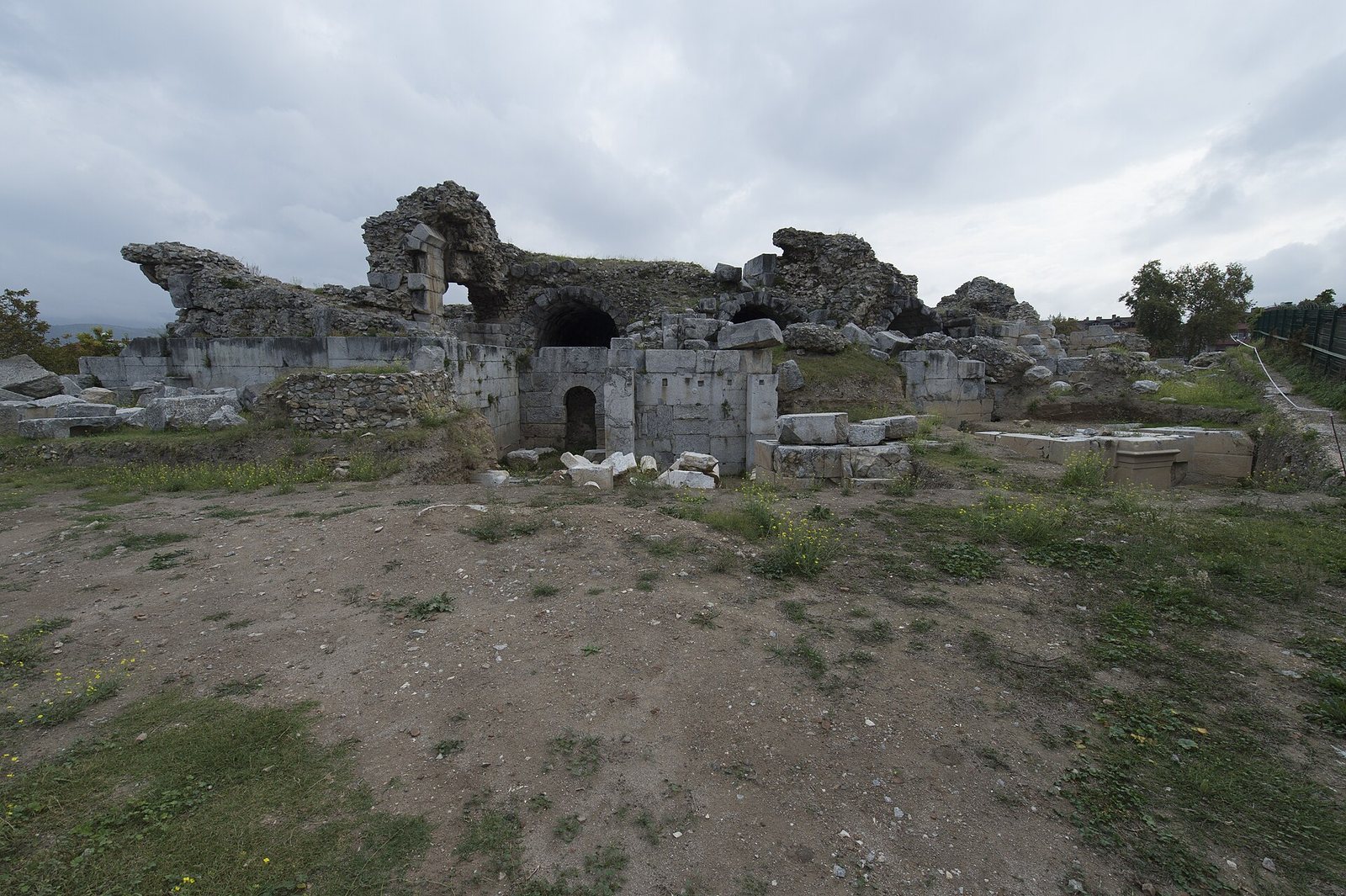
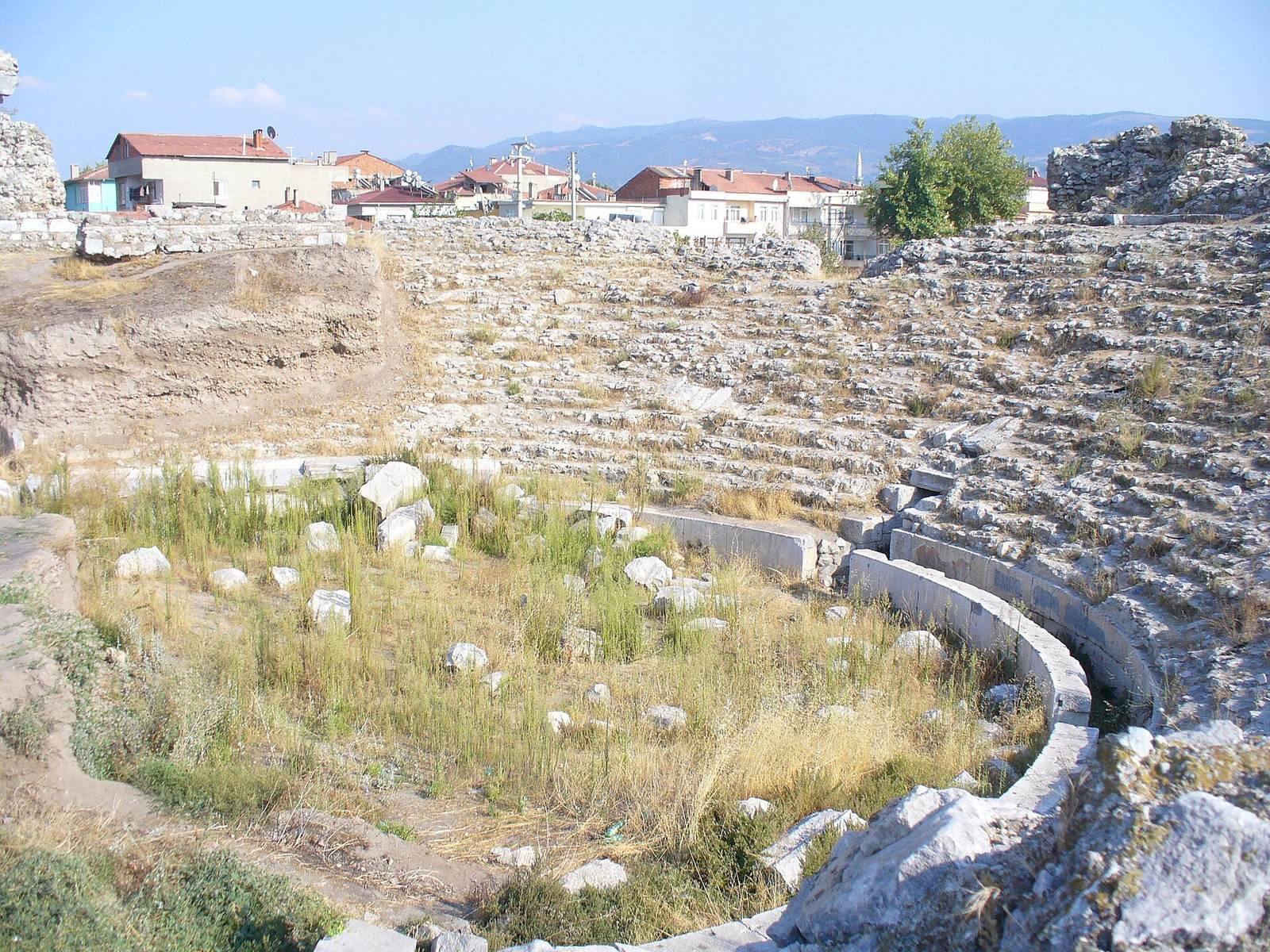
The theater stands on level ground 90 metres north of the city walls, but its structure was raised on supporting arches. It covers an area 84 metres long and 63 metres wide and could hold about 10,000 spectators. Its plan includes three entrance gates and four main spaces divided by corridors. The theater’s construction on level ground above arches is architecturally unique in Türkiye.
Surviving structures
Seating and arena passage
The audience seating remains largely standing. A tunnel section used to release animals into the arena also survives in largely standing condition.
Stage building
The stage building originally had three levels. Only its first level survives.