Rokosowo Palace: A Romantic Neo-Gothic Residence in Greater Poland
Site at a Glance
- Popularity
- Medium
- Country
- Poland
- Primary era
- Modern
- Eras represented
- Modern
- Civilizations
- Kingdom of Prussia
- Site type
- Domestic
- Remains
- Castle
On this page8 sections
History
Construction and the Mycielski family
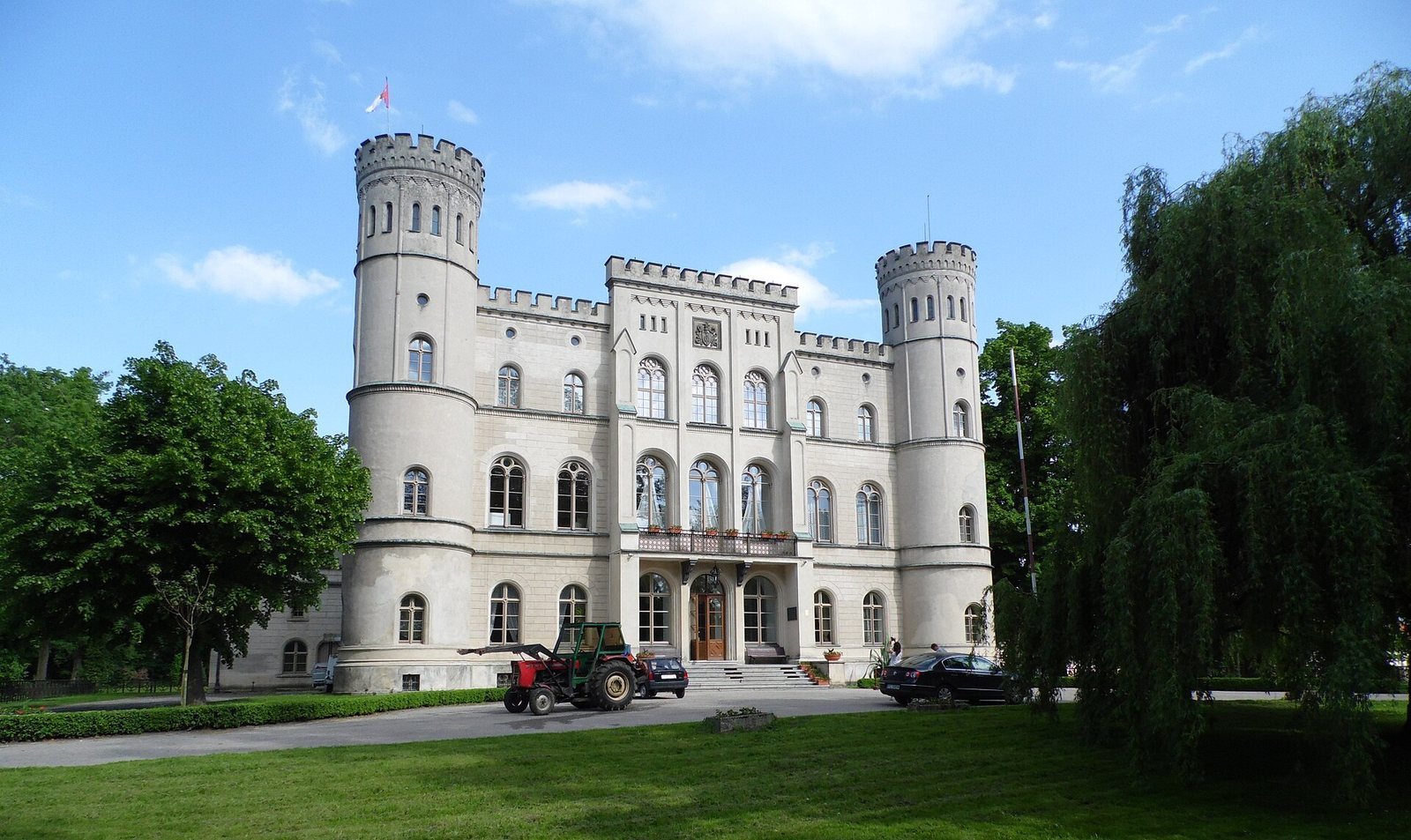
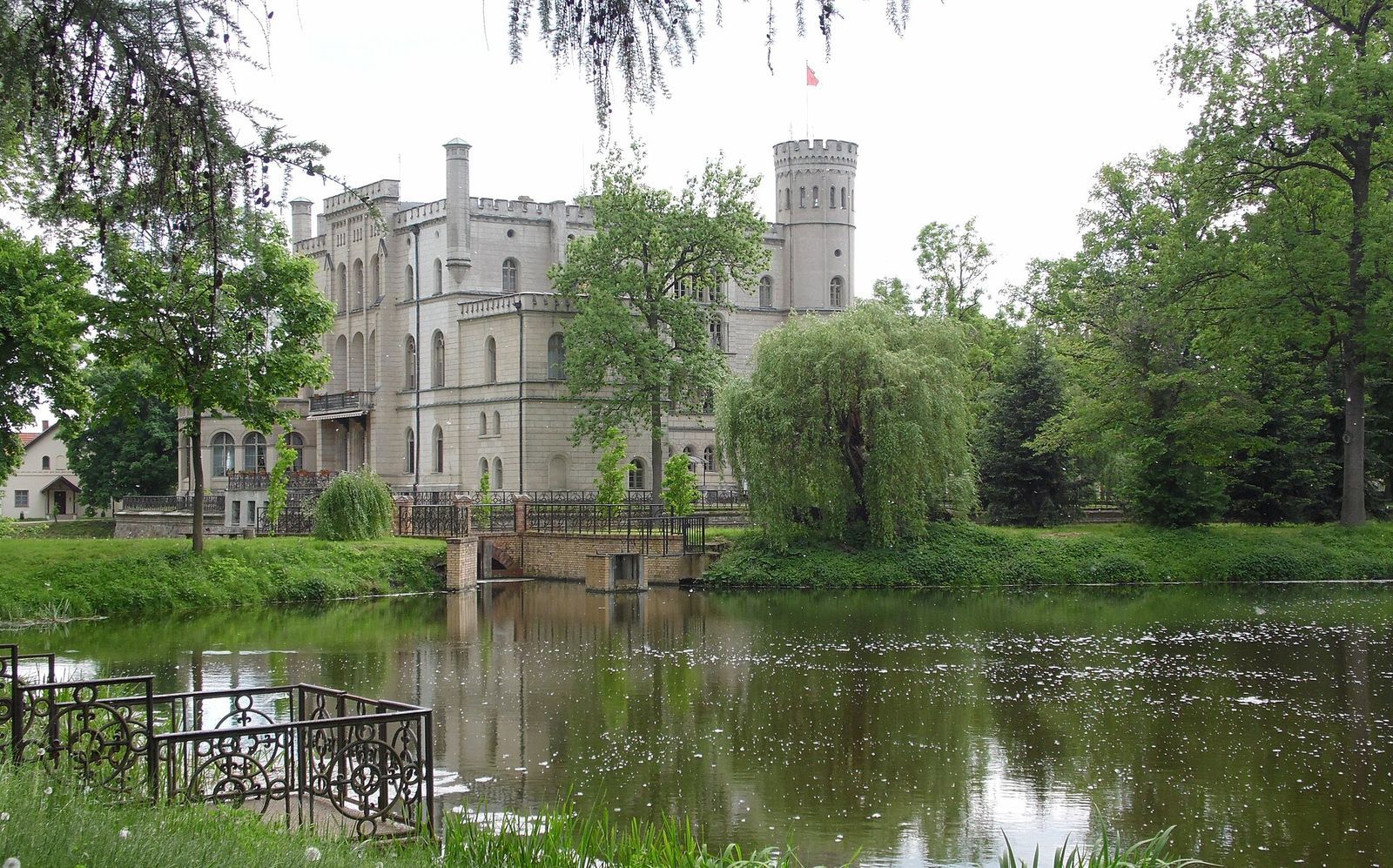
Rokosowo Palace is a Romantic neo-Gothic residence in Greater Poland, Poland, built for Polish nobleman Józef Mycielski between 1849 and 1854. The Prussian architect Friedrich August Stüler designed it as a family home. Its design has been interpreted as expressing mid-nineteenth-century Romantic ideals, drawing inspiration from the writings of Walter Scott, Lord Byron and Adam Mickiewicz.
The palace remained a residence of the Mycielski family before passing to Prince Adam Konstanty Czartoryski. Ownership then went to his son Zygmunt and grandson Jan Roman, who owned the palace from 1930. The building was remodeled around 1900 and restored in 1984–1986.
Public use
From 2002 to 2023, the palace served as the Centre for European Integration and belonged to the Marshal’s Office of the Greater Poland Voivodeship, which is its current owner. Since 2023, it has operated under the name Greater Poland Castle in Rokosowo.
Remains
Palace and grounds
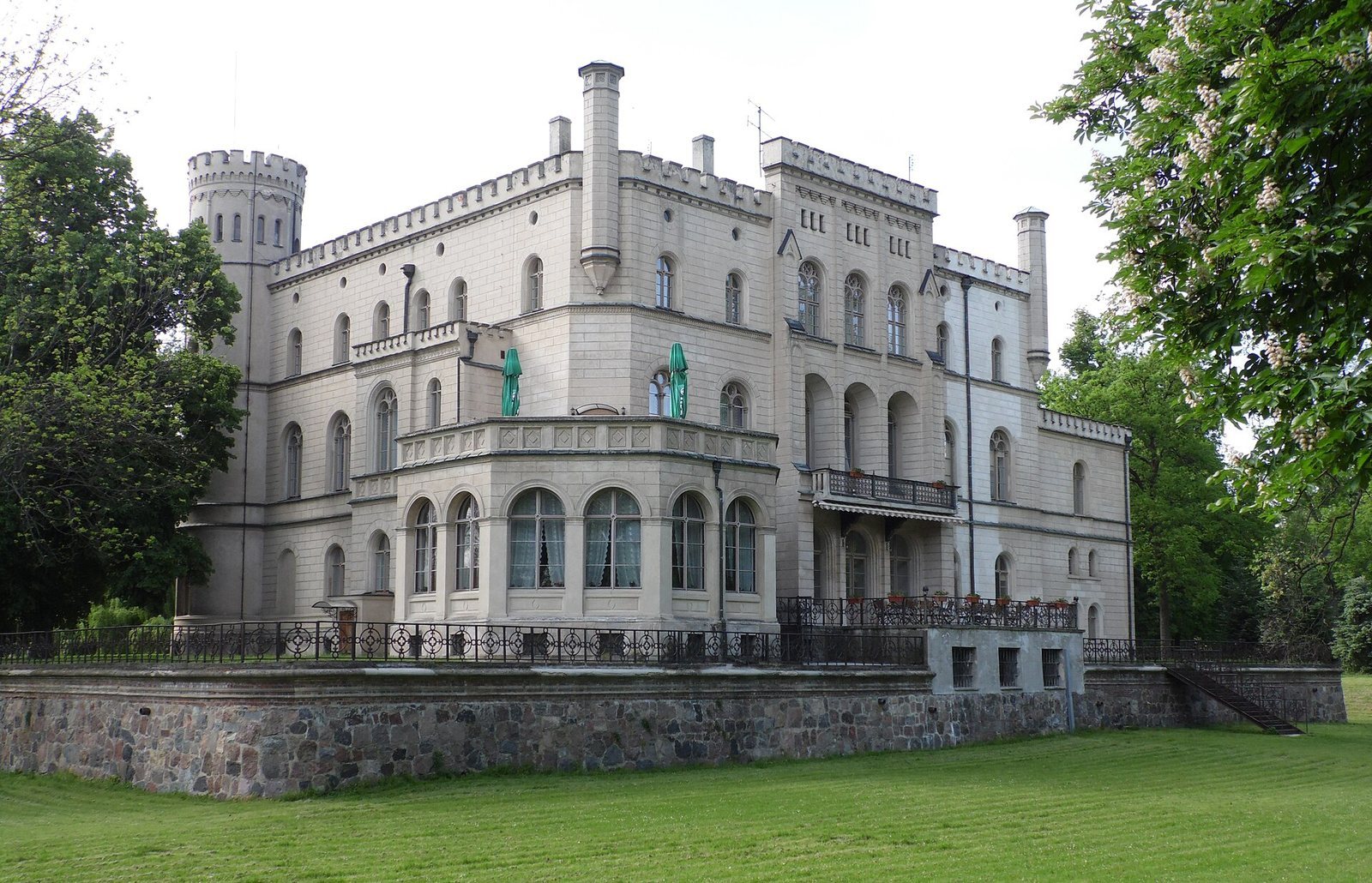
The palace combines English neo-Gothic influences with features drawn from fifteenth-century Florentine residences. Massive corner towers and battlements shape its exterior, while a moat around the building is partly dry. The palace stands within a park covering 3.2 hectares.
Central façade
A cartouche, a decorative framed panel, sits above the central projecting section of the façade. It bears the Dołęga coat of arms of the Mycielski family.
Chapel
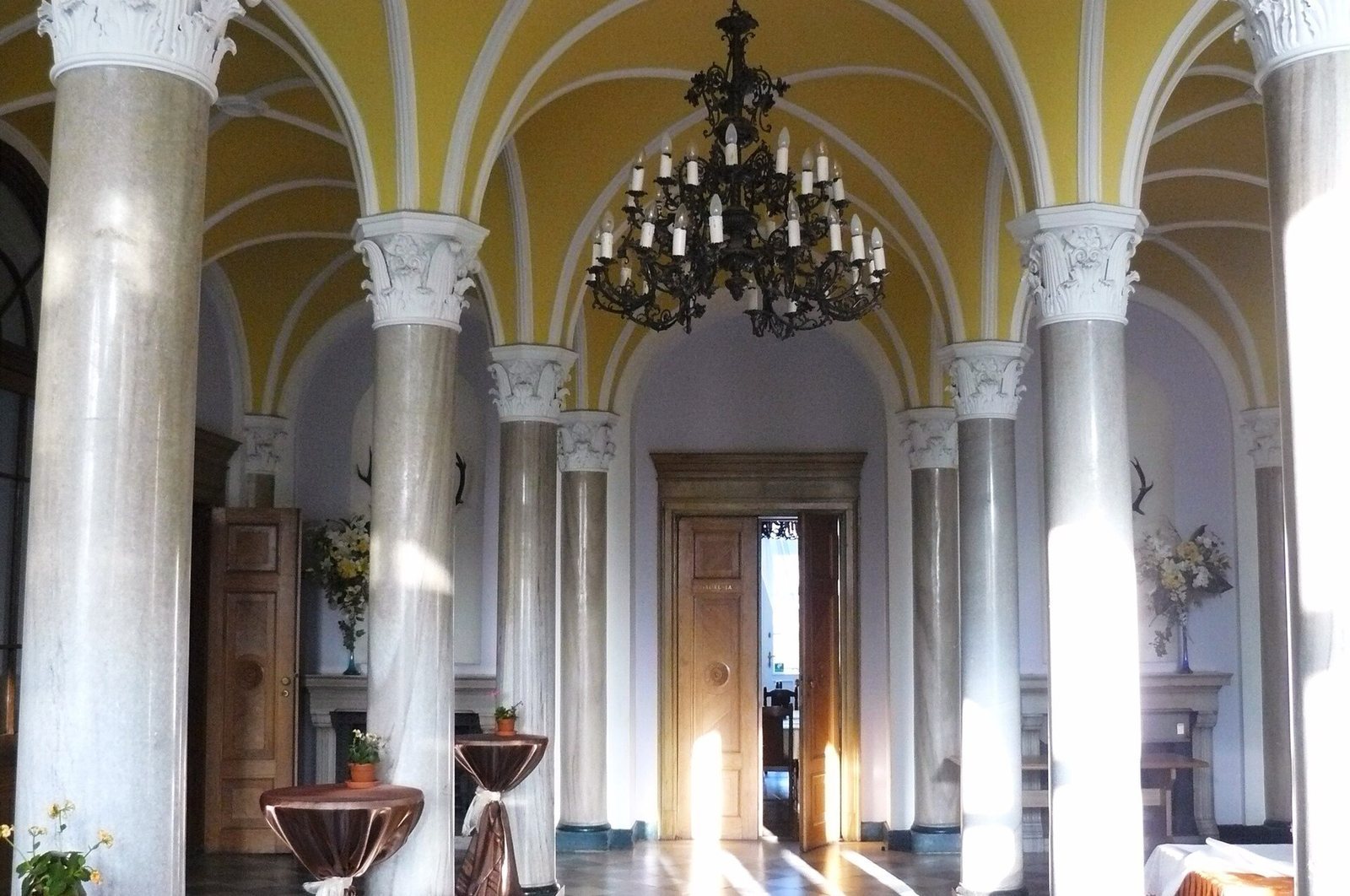
The palace contains a two-storey chapel covered by a groin vault, formed by the intersection of two barrel vaults. It was the first two-storey chapel in Greater Poland.
Winter garden
A winter garden at the rear of the palace is now used as a restaurant.