Rocca Pia: A Fifteenth-Century Fortress in Tivoli, Italy


Site at a Glance
- Rating
- 4.4
- Popularity
- Low
- Country
- Italy
- Primary era
- Medieval
- Eras represented
- Medieval, Modern
- Civilizations
- French, Papal States
- Site type
- Military
- Remains
- Fort
On this page11 sections
History
Rocca Pia is a fifteenth-century fortress in Tivoli, Italy, built under papal authority to secure the city after prolonged political and factional conflict. Pope Pius II Piccolomini ordered its construction in 1458, and the first building phase was completed in 1461. Its position and garrison were intended to prevent renewed unrest and strengthen direct papal control over Tivoli.
From communal conflict to papal control
Tivoli’s earlier efforts to maintain communal independence had been suppressed by the mid-fifteenth century. The city had been affected by struggles between Guelphs and Ghibellines, rival medieval factions broadly associated with papal and imperial authority, as well as by the rivalry between the Roman aristocratic families Colonna and Orsini. Rocca Pia was built to house troops loyal to the Holy See, the governing authority of the Papal States, territories ruled by the pope as a temporal ruler.
The project was probably entrusted to the Florentine architects Niccolò and Varrone, pupils of the Renaissance architect Filarete. Giovanni Stefano da Landriano supervised the works, while the master builder Manfredino and his workshop carried them out. Fra Giacomo da Gaeta managed the finances. The complex was completed later in the fifteenth century. The two smaller towers have been attributed either to the pontificate of Sixtus IV or, more probably, to that of Alexander VI, and further alterations took place in the early sixteenth century under Julius II.
Papal government and changing military use
In 1522, Pope Adrian VI abolished Tivoli’s municipal government. The troops stationed in Rocca Pia helped maintain papal control over the city for approximately four centuries. In the summer of 1539, Pope Paul III stayed at the fortress and received from Ignatius of Loyola, through Cardinal Contarini, the first text establishing the Society of Jesus, also known as the Jesuit order. Paul III approved it on 3 September 1539.
Rocca Pia’s strategic military role became fully established after the middle of the sixteenth century, when Cardinal Ippolito d’Este became governor of Tivoli. The fortress was later incorporated into the city’s wider residential and monumental development associated with Villa d’Este. During the eighteenth-century wars, French and Austrian troops occupied it successively, and it was used as a barracks.
Prison and restoration
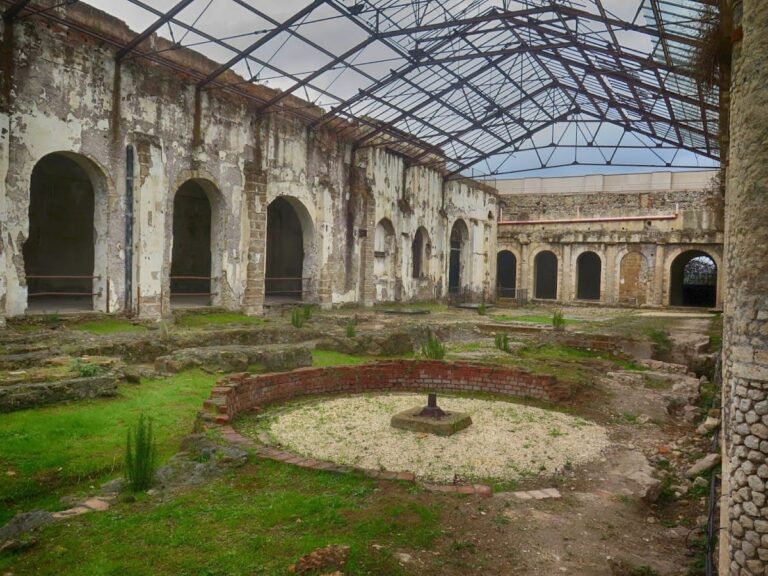
During the Napoleonic period, Rocca Pia was converted into a prison. An additional building was erected inside the courtyard, and a factory was constructed near the northern wall to employ prisoners. The prison function continued until around 1960. After its closure, the fortress had no defined function for several decades. A complete restoration in the early 2000s preceded its transfer to the Municipality of Tivoli and its opening to the public in 2018.
The fortress also appears in Renaissance visual culture. Andrea Mantegna represented Rocca Pia under construction in the frescoes of the Camera degli Sposi in the Castle of San Giorgio at Mantua, painted between 1465 and 1474.
Remains
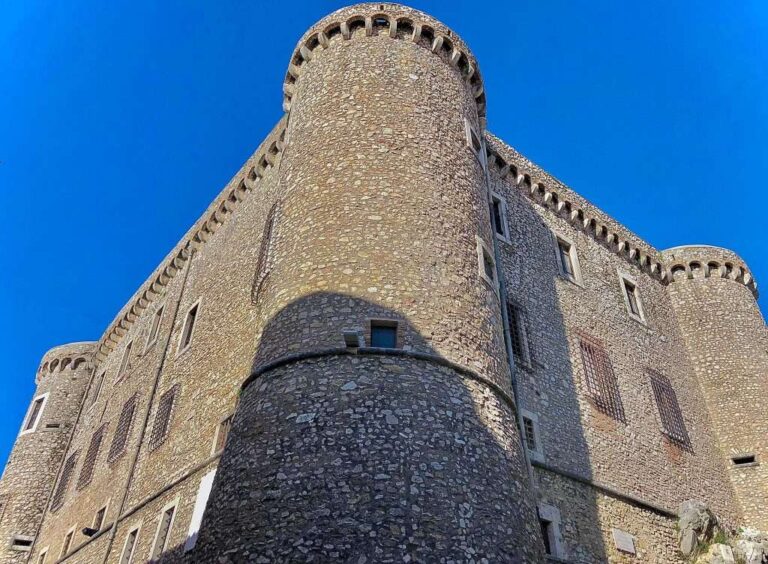
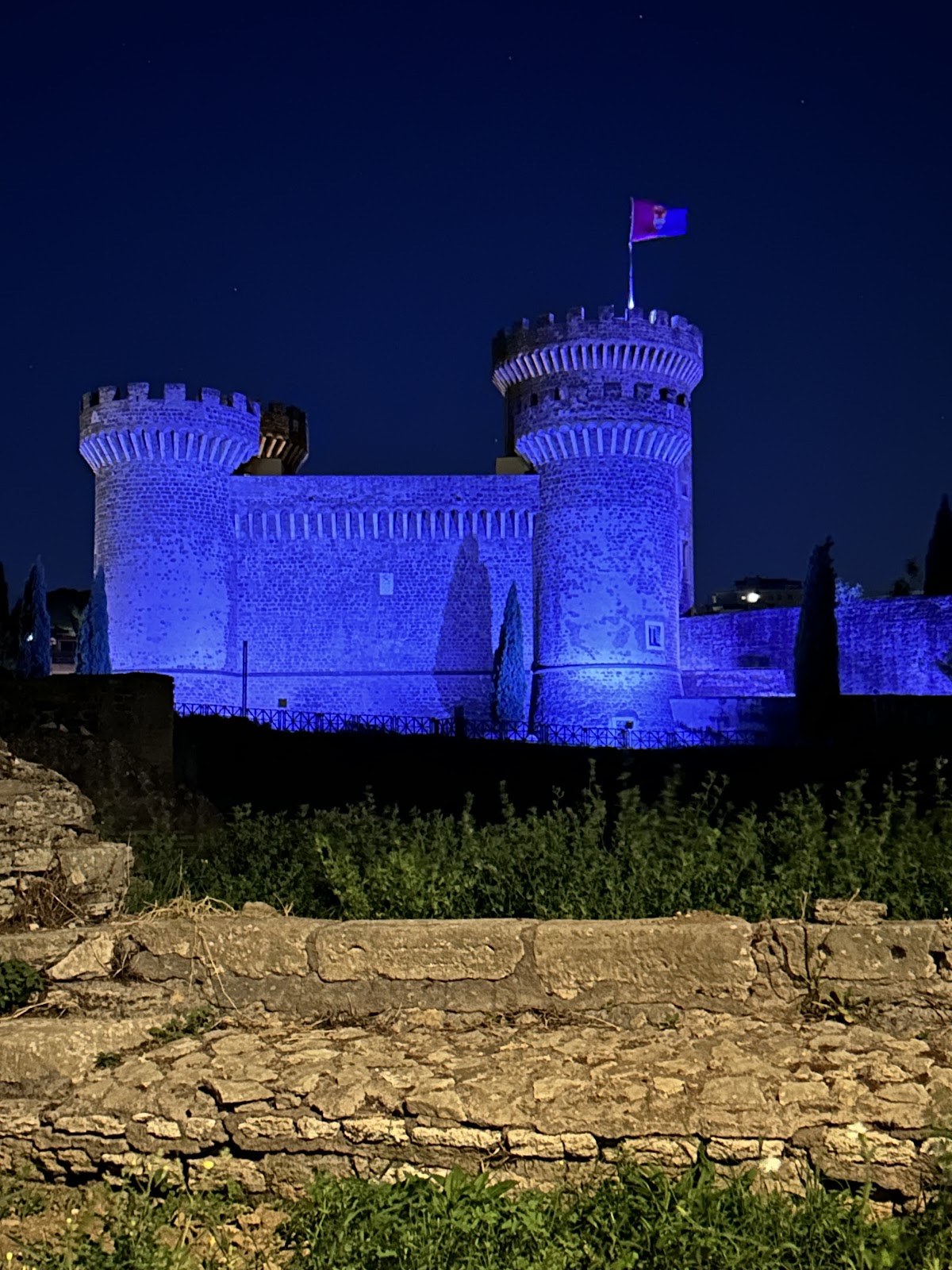
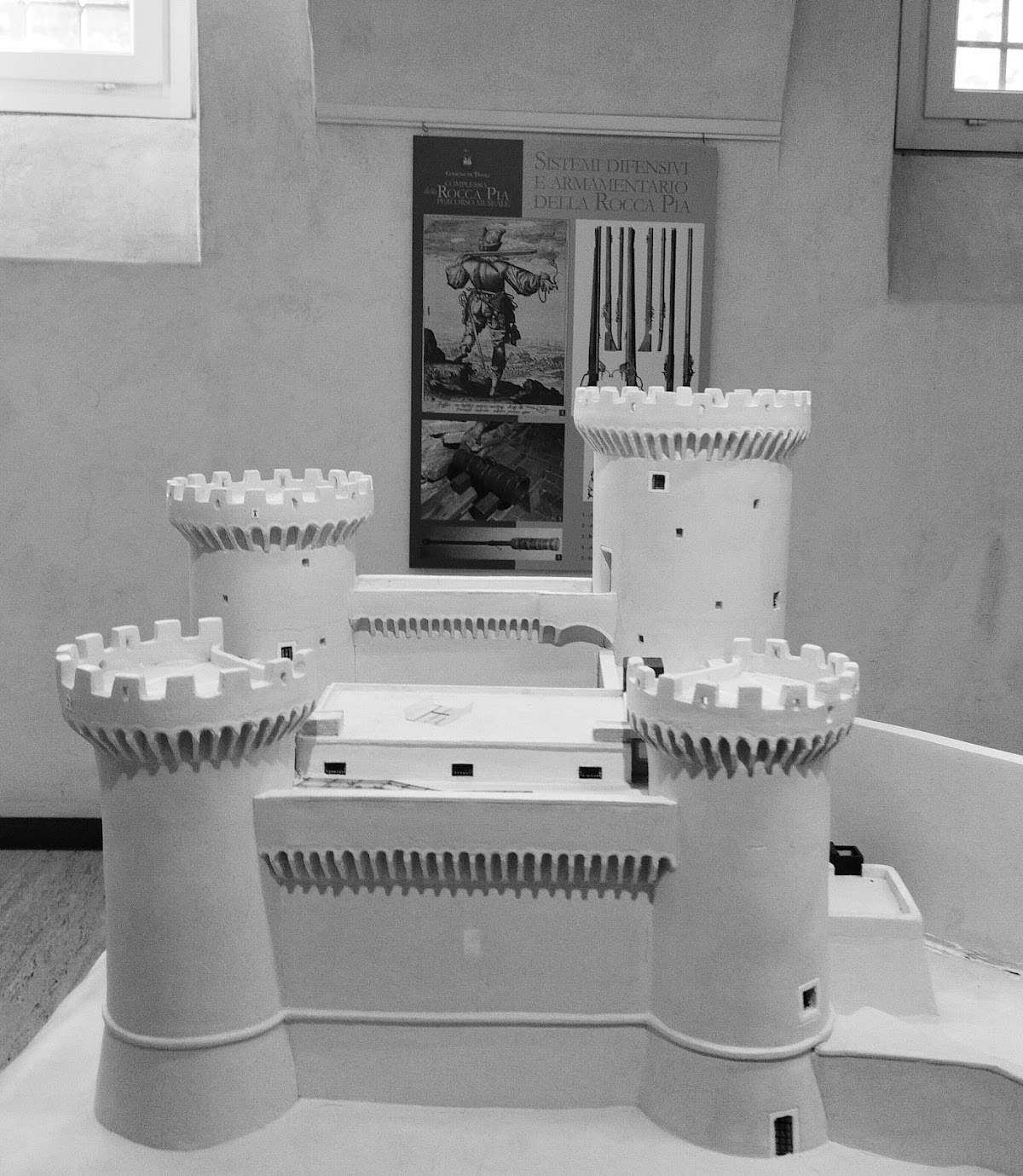
Rocca Pia is a massive, essentially square fortress built on a hill in central Tivoli, just outside the historic settlement and its walls. Its elevated position allowed control of approaches to the city, the Via Tiburtina, and routes through the Aniene valley. Four circular towers of different sizes are joined by high walls around a central courtyard. Local volcanic tuff forms the structure, and its cellular composition was regarded as able to absorb the impact of cannonballs.
Setting and defensive layout
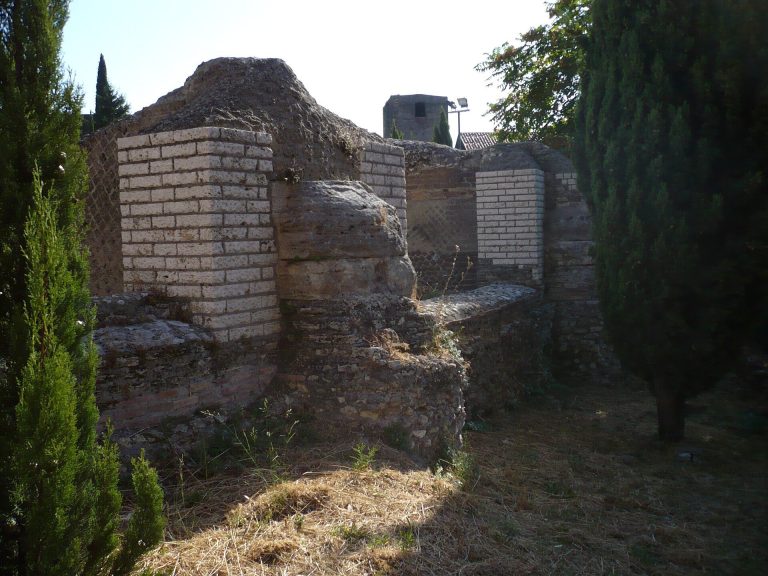
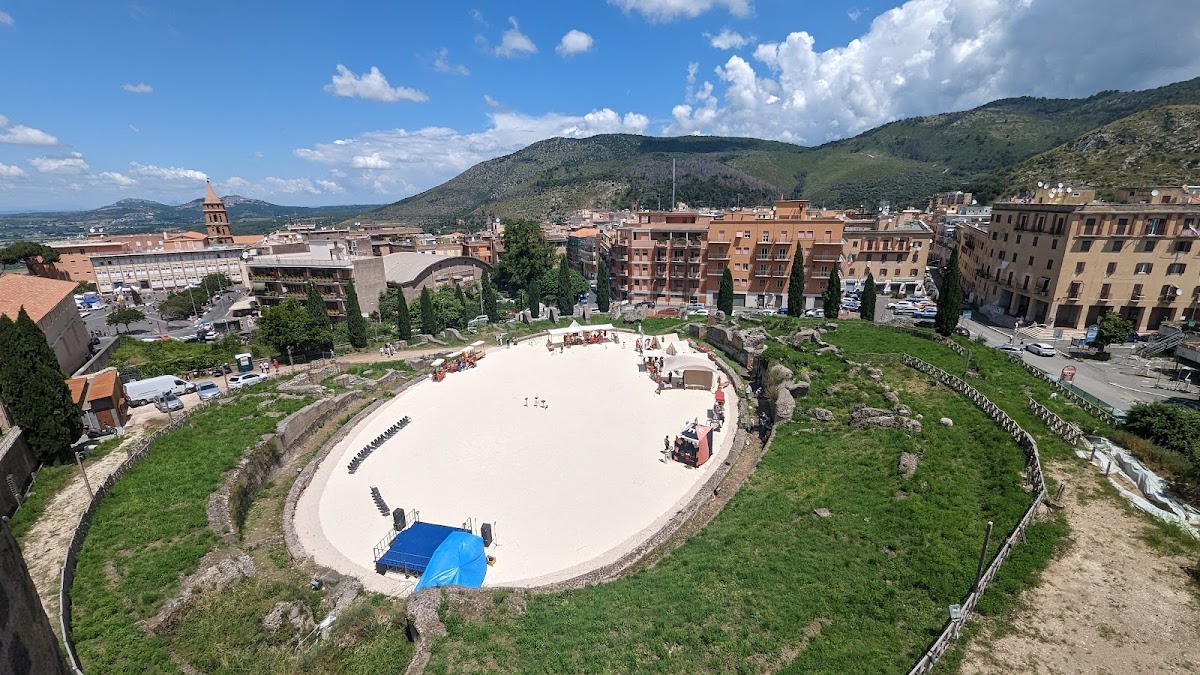
The fortress occupies a complex urban setting. To the east, in the area of present-day Piazza Matteotti, lay an Iron Age necropolis dated to the ninth through sixth centuries BC and associated with early Sabine communities. To the north stood the Roman Amphitheatre of Bleso. Its remains were demolished both to deny attackers potential shelter and to supply stone for Rocca Pia.
Entrance and outer defenses
The main entrance lies on the northern side and was reached by a drawbridge. The eastern wall still preserves, although blocked, the mid-height opening associated with that bridge. The entrance portal bears the arms of the Piccolomini family and a Latin inscription commemorating Pius II’s foundation of the fortress. In translation, it addresses Tivoli as a place welcomed by the good, disliked by the wicked, and hostile to the proud, before stating that Pius established it.
An advanced structure with two square towers defended the entrance. The circular towers and connecting walls rise above a battered base, a sloping lower profile that thickens a defensive structure against attack. They are crowned with deep, projecting corbel arches, which are arches supported by projecting blocks or brackets. The towers retain their original Guelph crenellations, the notched parapets of fortified buildings, while those on the connecting walls have been lost.
Towers and artillery defenses
Largest tower
The largest outward-facing tower rises 36.5 metres and measures about 13.2 metres in diameter. It contains six superimposed internal levels, and its walls are approximately 3.9 to 4 metres thick. Its scale and position formed part of the fortress’s outward defensive system.
Second tower
The second tower is approximately 25.5 to 26.5 metres high and about 10 metres in diameter. It contains five internal levels, enclosed by walls approximately 2.9 to 3 metres thick.
Smaller city-facing towers
The two smaller towers face the city and open toward the central courtyard. Each is about 18 metres high, has three internal levels, and has walls approximately 2 metres thick. Their defensive arrangements were directed chiefly inward and toward Tivoli.
Numerous gun openings were inserted into the heavily thickened walls as firearms became increasingly important in late-fifteenth-century warfare. The fortress combined strongly medieval forms with measures intended to resist artillery, but these defenses soon proved inadequate against newer military architecture. This limitation helped lead to Rocca Pia’s later conversion to barracks, prison, and other functions unrelated to its original defensive purpose.