Rocca di Gusaliggio: A Fortress Defending the Val Mozzola
Site at a Glance
- Popularity
- Very Low
- Country
- Italy
- Primary era
- Medieval
- Eras represented
- Medieval
- Civilizations
- Holy Roman Empire
- Site type
- Military
- Remains
- Castle
On this page9 sections
History
Pallavicino origins and expansion
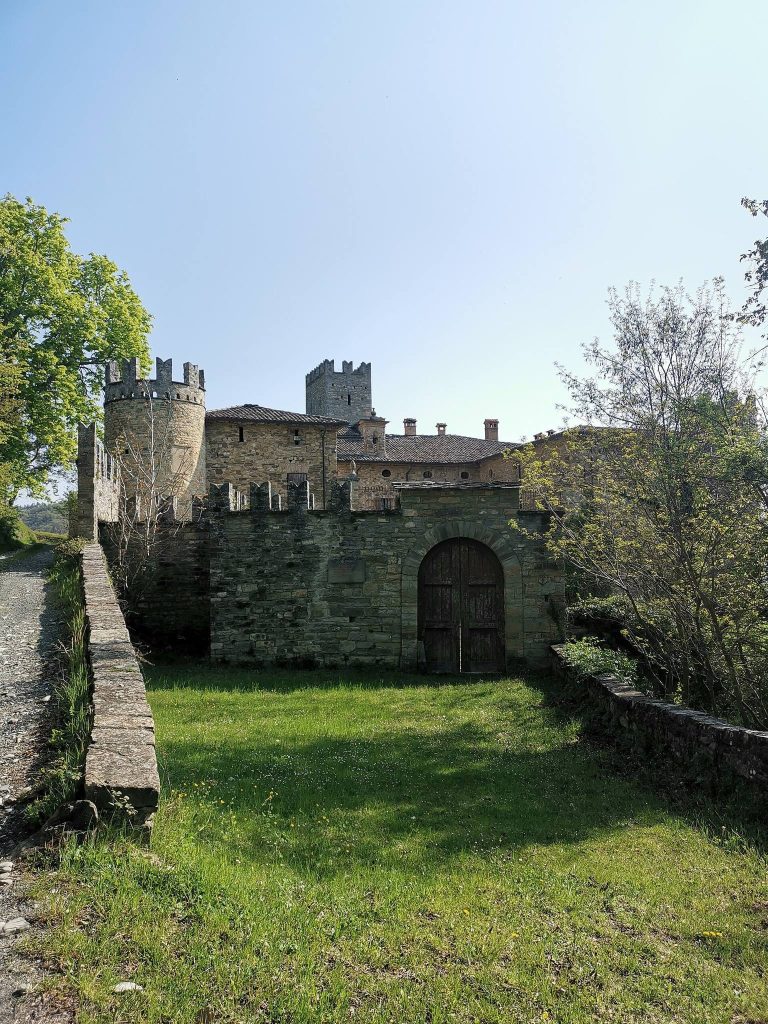
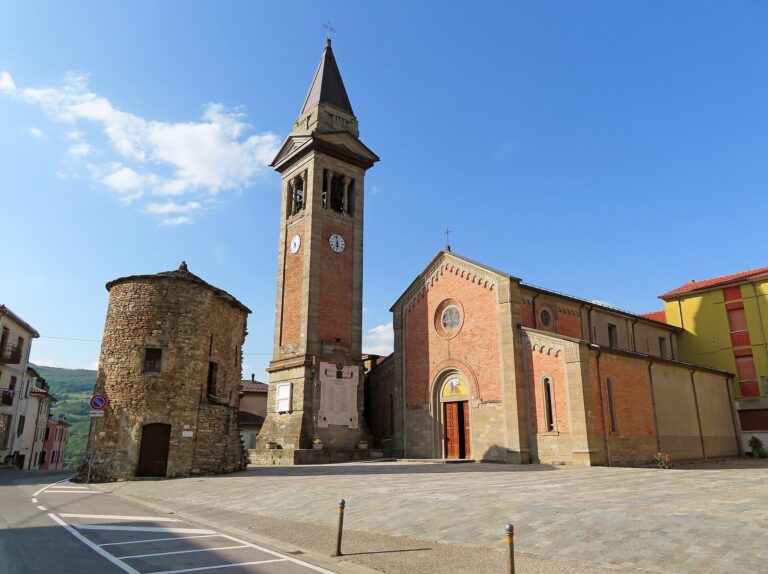
Rocca di Gusaliggio is a fortress near Pieve di Gusaliggio in Italy. The Pallavicino family built it to defend the Val Mozzola, probably beginning in the 12th century, though its original date is unknown. In 1182, Holy Roman Emperor Frederick I, known as Barbarossa, formally granted the Pallavicini rights to the fief, land held under obligations to a superior. After Marquis William died in 1227, his son Oberto II inherited the fortress, then called Rocca di Gisalecchio, and substantially enlarged and strengthened it.
Siege and medieval conflicts
Oberto II, a military commander of Holy Roman Emperor Frederick II, withdrew to the fortress in 1268 after major defeats by Charles I of Anjou, who became king of Sicily. He died there the following year during a siege by Guelph forces from Parma and Piacenza. The Guelphs were associated with papal interests in conflicts against imperial supporters. Oberto’s son Manfredino inherited his possessions, but the castle was later destroyed amid further conflicts.
Renewed lordship and damage
The ruin later passed to the Pallavicini marquises of Pellegrino. In 1428, troops of Filippo Maria Visconti, Duke of Milan, captured Pellegrino Castle and arrested Manfredo Pallavicino. Tortured, Manfredo confessed to conspiring against the duke, who sentenced him to death. In 1438, the duke granted Manfredo’s confiscated possessions to the military commander Niccolò Piccinino. The Pallavicini regained the Gusaliggio fief in 1450, and the fortress resisted attacks by Alessandro Sforza. In 1472, Duke Galeazzo Maria Sforza assigned the fief, which depended on Pellegrino, to his cousin Lodovico Fogliani, husband of Margherita Pallavicino. Lodovico was allowed to add Sforza to his family name. In 1526, two nephews of Pallavicino Sforza Fogliani attacked their uncle’s castle, plundered it, and caused severe damage.
End of feudal rule and decline
Giovanni Fogliani Sforza d’Aragona became viceroy of Sicily, a governor acting on a monarch’s behalf, in 1755. He relinquished his fiefs in 1759 to his nephew Federico Meli Lupi di Soragna. In 1805, Federico’s son Carlo had to surrender his estates under Napoleonic decrees that abolished feudal rights. The Conti family later acquired the partly ruined fortress. After living there for several decades, they dismantled it because the path to the village was inconvenient, reusing its stones for their palace near Pieve di Gusaliggio. The Sozzi family bought the remains in 1860. The abandoned ruins subsequently deteriorated and became partly overgrown.
Remains
Fortress enclosure
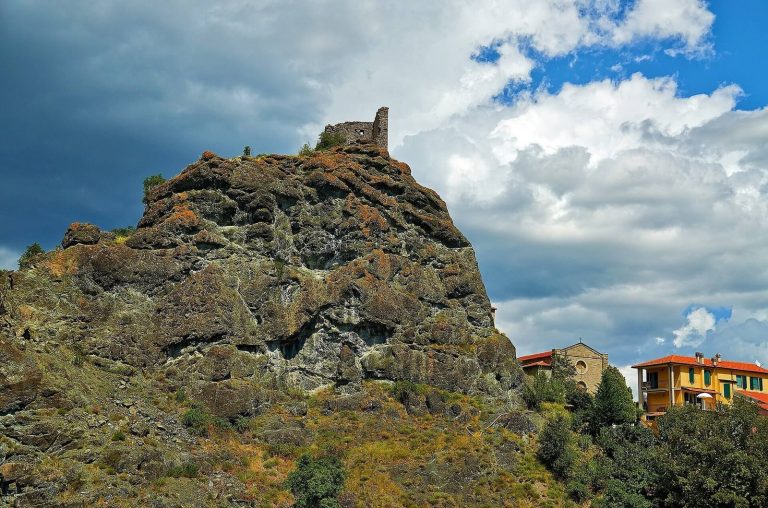
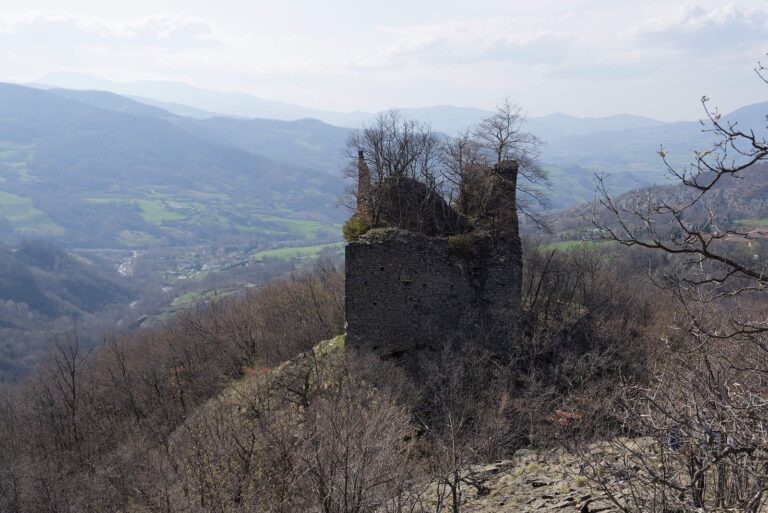
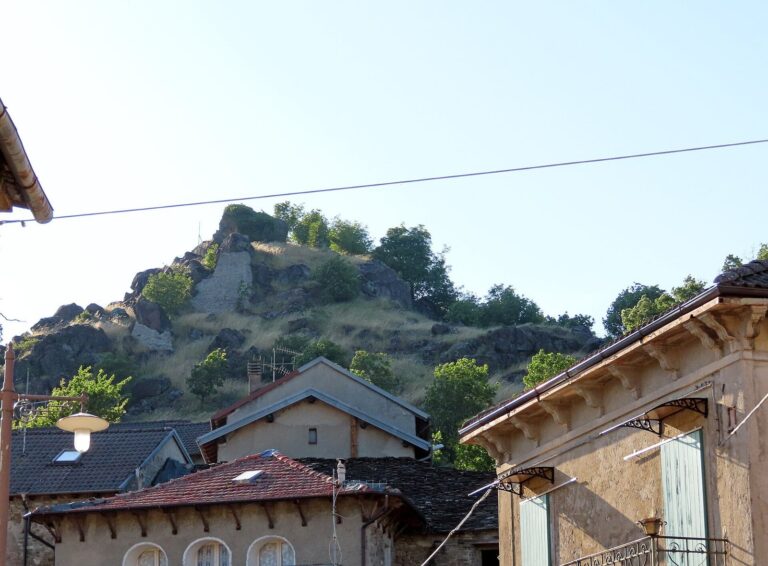
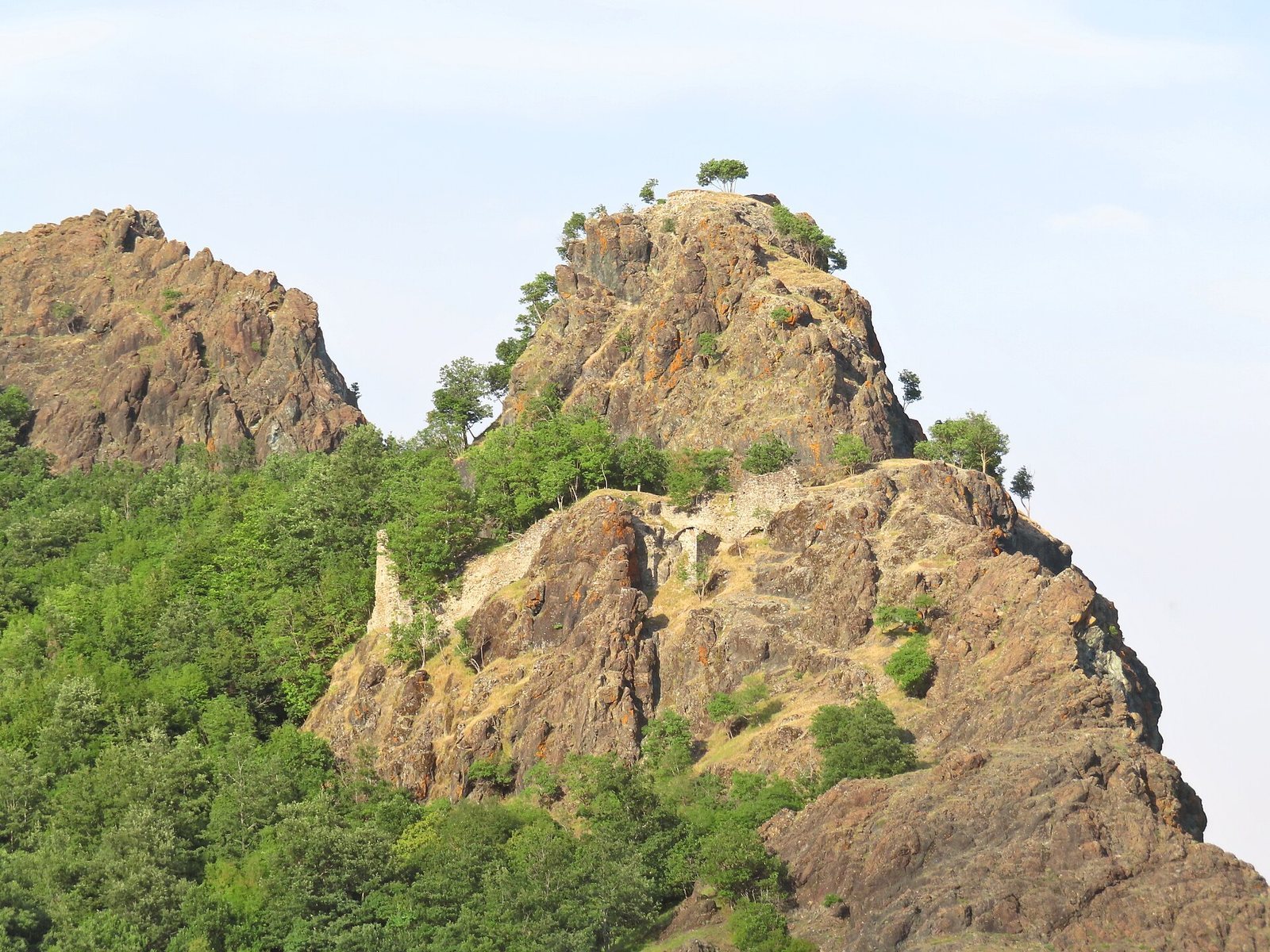
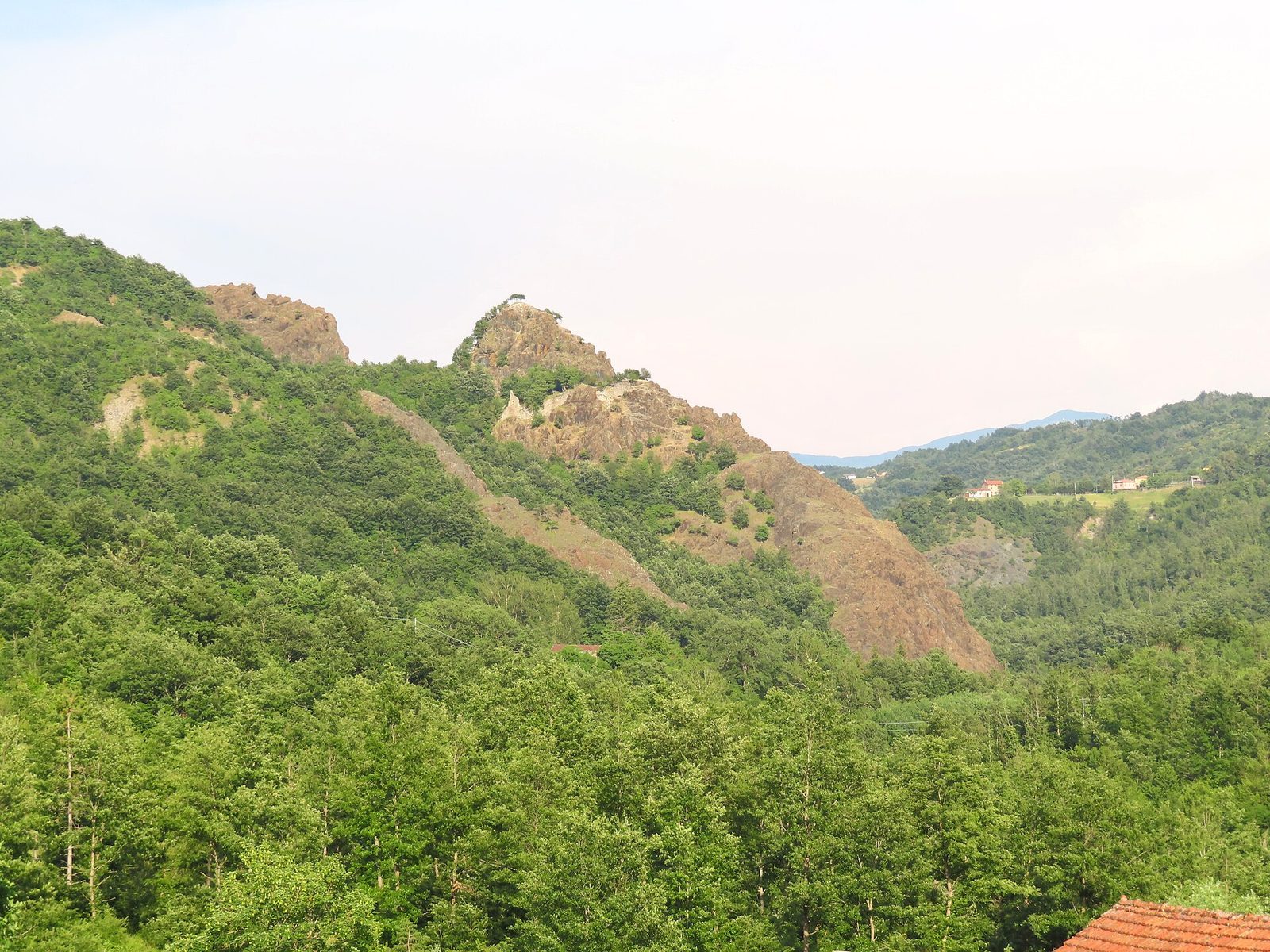
The castle stood beside the summit of a rocky spur about 200 metres high, overlooking the Mozzola stream, at a stated elevation of 582 metres. The spur is made of ophiolite, rock formed from oceanic crust and upper mantle. The fortress developed around a large courtyard enclosed by battlemented stone walls and several large towers. Its construction used massive blocks as well as rough, irregular stone. It rose over multiple levels and contained numerous halls.
Rock-cut rooms and surviving structures
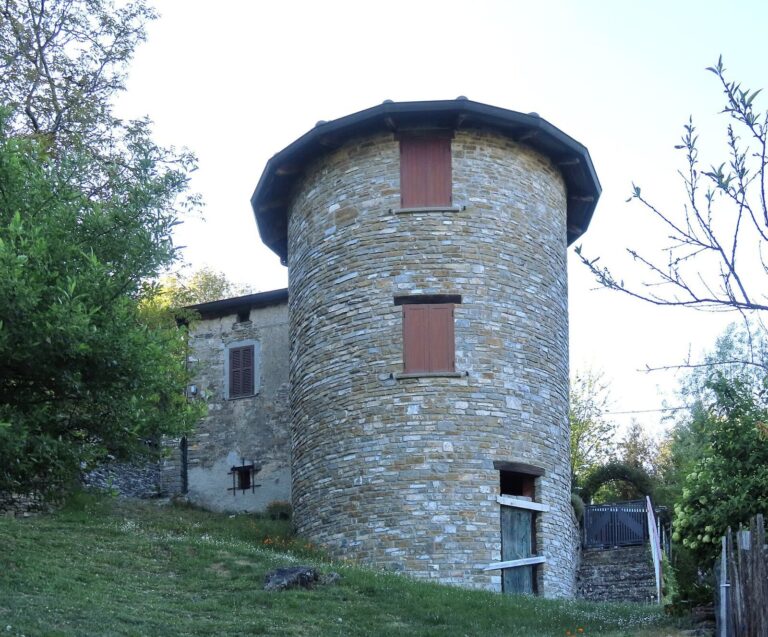
The ground floor was cut into the bedrock, and surviving remains include rock-cut rooms, wall sections, arches, and a large circular tower. Vegetation partly obscures the tower and other remains. The ground-floor spaces connected to a small oratory, or place of prayer, overlooking a plateau above the valley.
Religious and summit features
The original fortification stood near a chapel dedicated to Saint Columban of Luxeuil. Its date is unknown. Monks from Bobbio Abbey spread devotion to Columban in the region during the Lombard period, from the sixth through eighth centuries. A windmill stood on the summit of an adjacent rocky spur, more than 40 metres above the castle, beside the fortress’s drinking-water cistern.