Rhodiopolis: An Ancient Lycian City in Türkiye
Site at a Glance
- Popularity
- Medium
- Country
- Turkey
- Primary era
- Classical
- Eras represented
- Classical, Medieval, Modern
- Civilizations
- Ancient Greek, Byzantine, Lycian, Roman
- Site type
- City
On this page18 sections
History
Rhodiopolis was an ancient Lycian city on a hill northwest of Kumluca, near Sarıcasu in Antalya Province, Türkiye. Settlement traces are sparse before the fourth century BC, and the city later developed from a relatively small Hellenistic community into a compact Roman city. Its name means “Rhodian city,” and its foundation was traditionally linked to settlers from Rhodes.
Hellenistic city
Ancient writers used different forms of the city’s name. Ptolemy and Stephanus Byzantius called it Rhodia, while Pliny the Elder used Rhodiopolis; inscriptions and coins give the name as Rhodiapolis. In 333 BC, Alexander the Great’s army stopped at the city before continuing to Phaselis to camp for the winter.
During the Hellenistic period, an era of Greek cultural influence following Alexander’s conquests, Rhodiopolis belonged to the Lycian League, a federation of Lycian cities whose council assigned votes to its members. The city held one vote and had the right to mint coins, which it did in both the Hellenistic period and under the third-century AD Roman emperor Gordian III. Inscriptions also connect Rhodiopolis with worship of Athena Polias, Athena as protector of the city, during the Hellenistic and Roman periods.
Roman prosperity
In the Roman period, Rhodiopolis became known as the home of Opramoas, a wealthy benefactor. He gave about 500,000 denarii, Roman coins, to 28 Lycian cities to help repair earthquake damage from AD 140 to 143, and paid for two temples at Rhodiopolis. Heraclitus, another notable resident, was known for his oratory and medical knowledge.
Church and later history
In late Roman times, Rhodiopolis was part of the province of Lycia and had a bishopric subordinate to the metropolitan bishopric at Myra. Nicholas, the only bishop of the city known by name, attended a Council of Constantinople in 518. Episcopal lists continued to include the see into the 12th or 13th century. Its name remains in use as a Catholic titular see, an episcopal title without a functioning local diocese.
Rediscovery and archaeological work
T. A. B. Spratt identified the city in 1842. In 1894, a team led by E. Krickl made the first visual record and carried out detailed investigations of the Opramoas inscriptions. A major forest fire damaged the site in 2005, and excavations began the following year. Work in 2011 uncovered a Lycian cemetery complex.
Remains
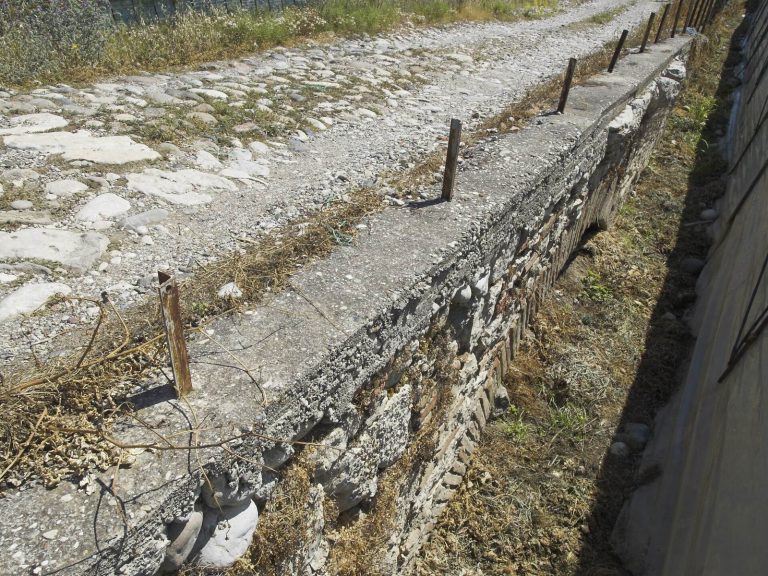
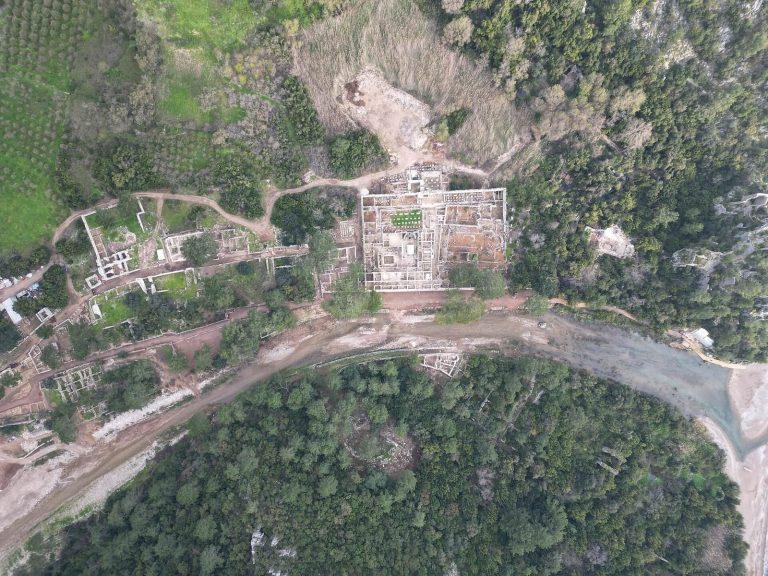
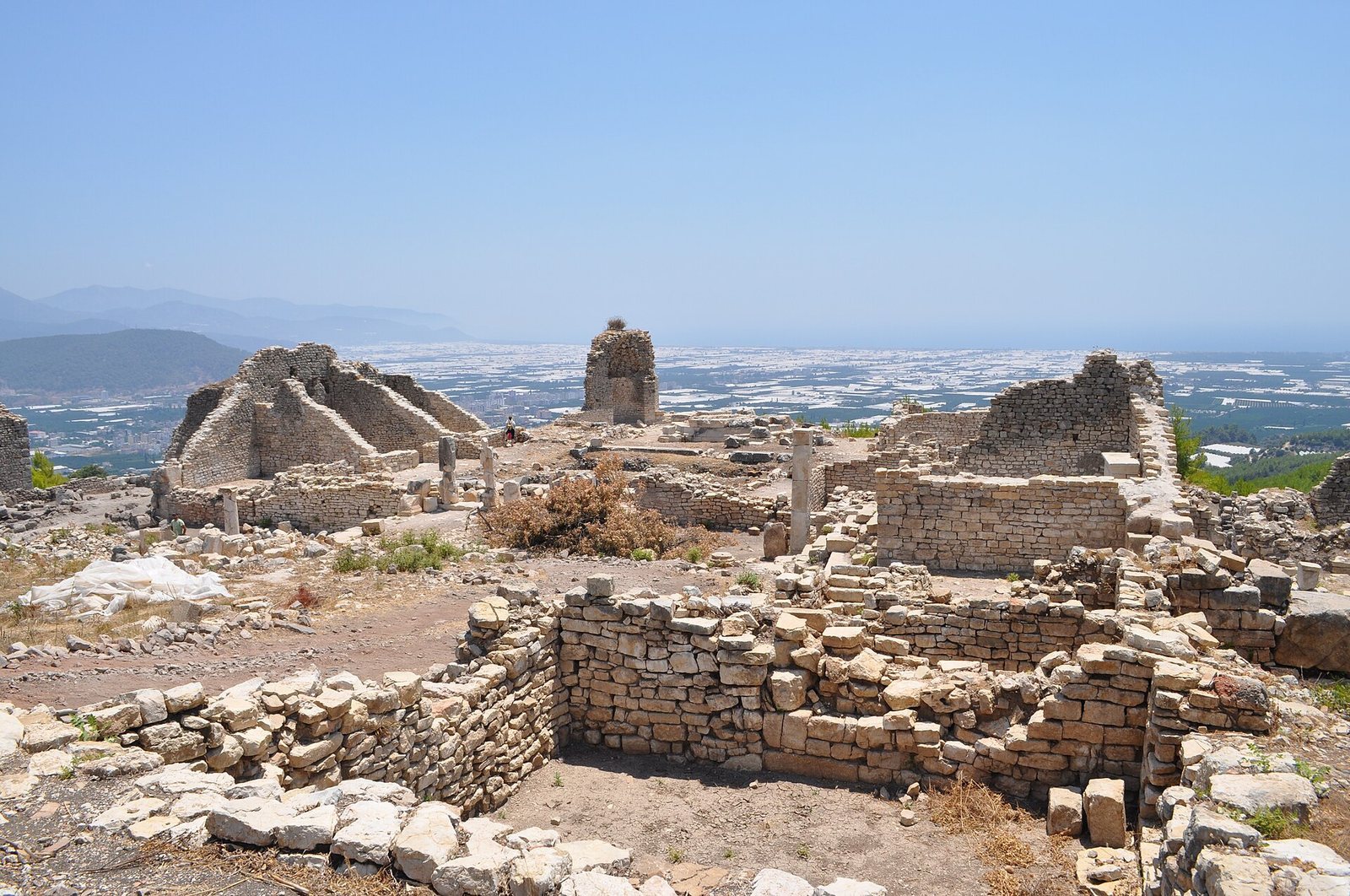
Rhodiopolis occupies rugged, sloping ground, where the compact Roman city was built around the limited space available. Buildings crowded the hillside, leaving streets as the main open areas. Cisterns stored water and also formed much of the terracing, creating level ground for buildings. Most earlier structures were later covered by Roman construction.
Hilltop layout and early remains
Settlement and water storage
Cisterns supplied the city’s water. Some features once interpreted as supports for an aqueduct are Roman chamber tombs. The arrangement of cisterns also helped shape building terraces on the slope.
Tombs and cemetery
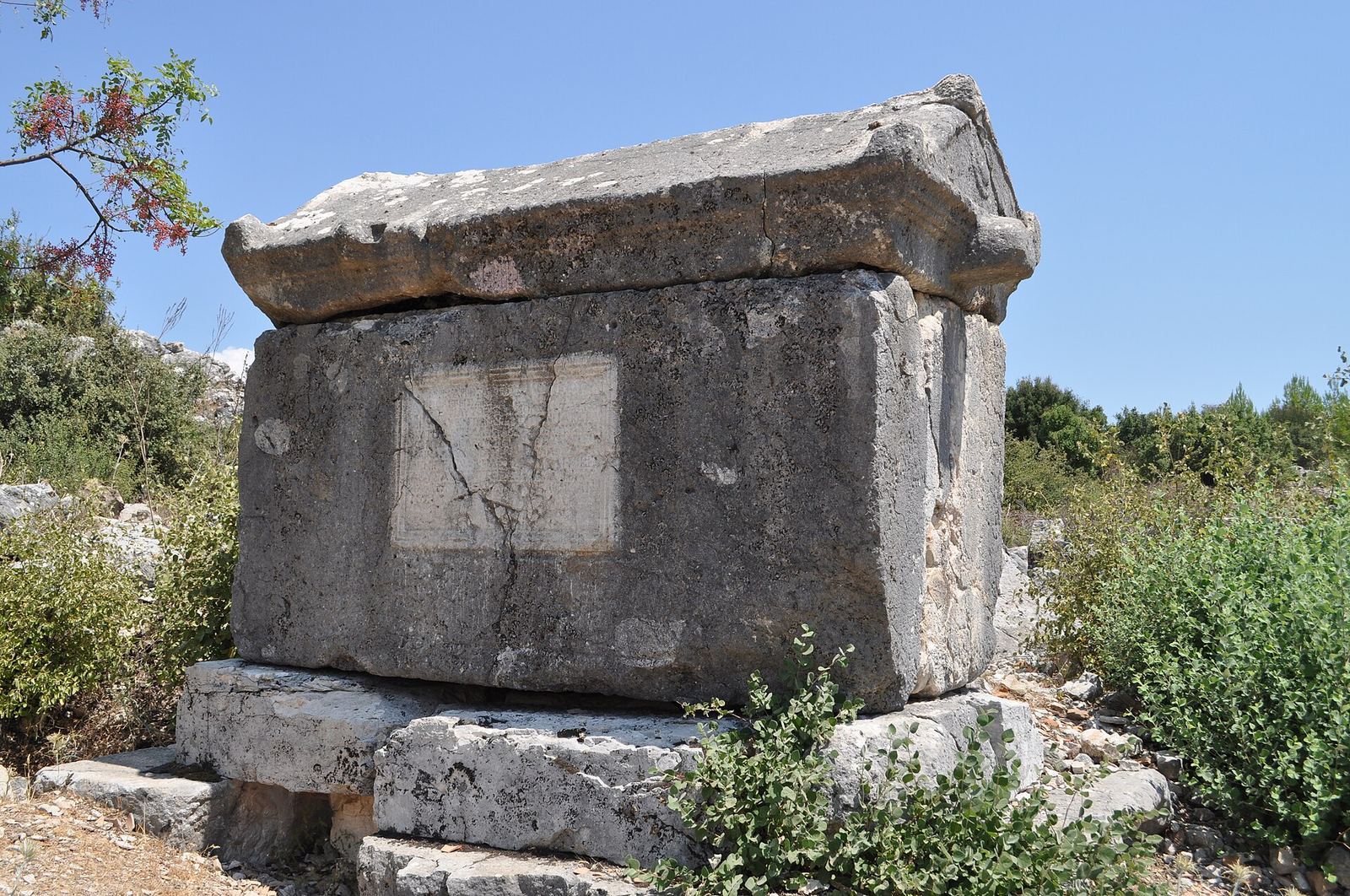
Early remains include a stone tomb with a Lycian inscription and two rock-cut tombs bearing Lycian inscriptions, both dating to the fourth century BC. The cemetery complex dates to about 300 BC.
Civic and religious buildings
Theatres
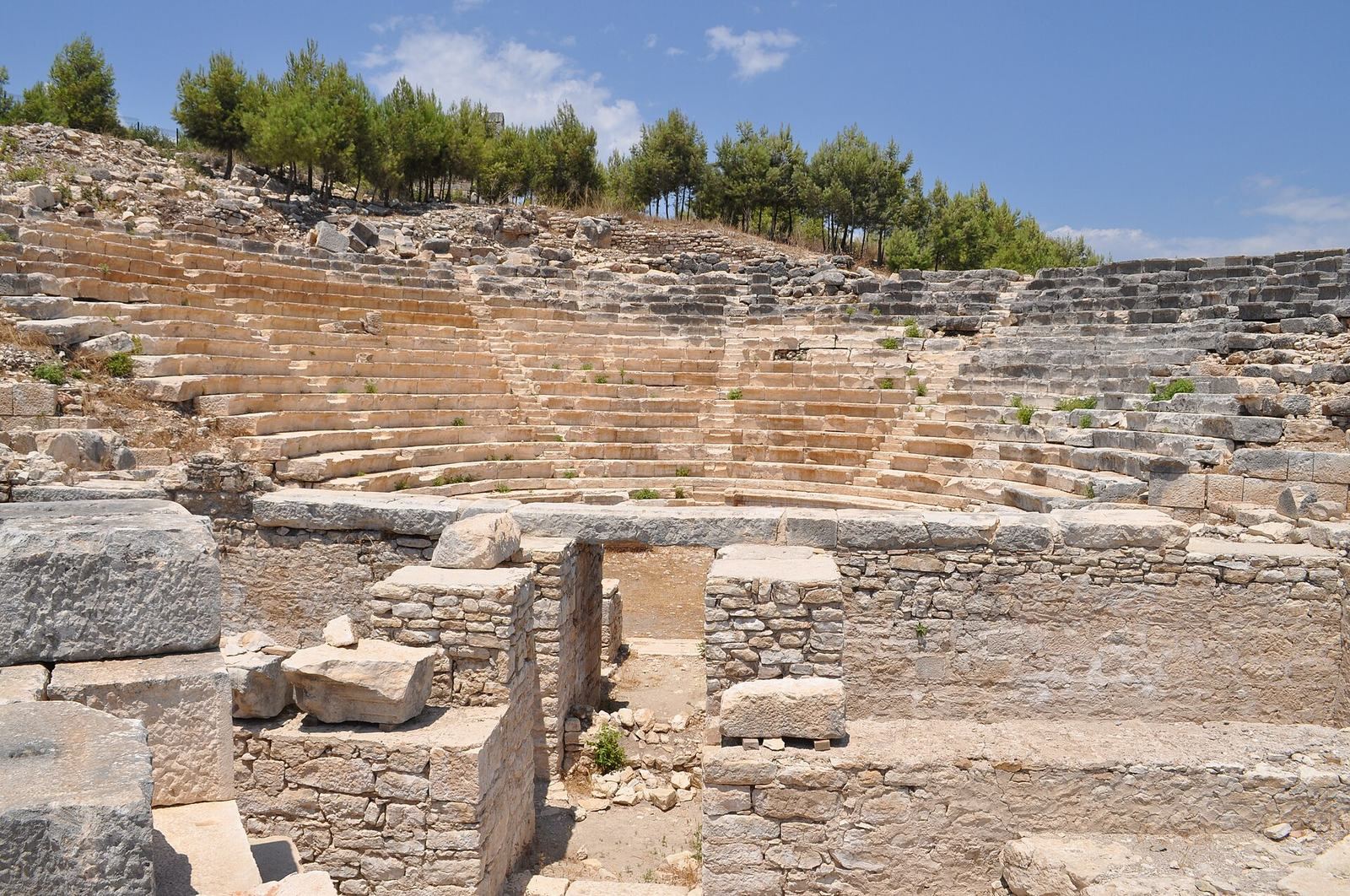
The seating area of the main theatre is the surviving monument assigned to the late Hellenistic period. Remains of a smaller theatre are also visible at the site.
Opramoas monument
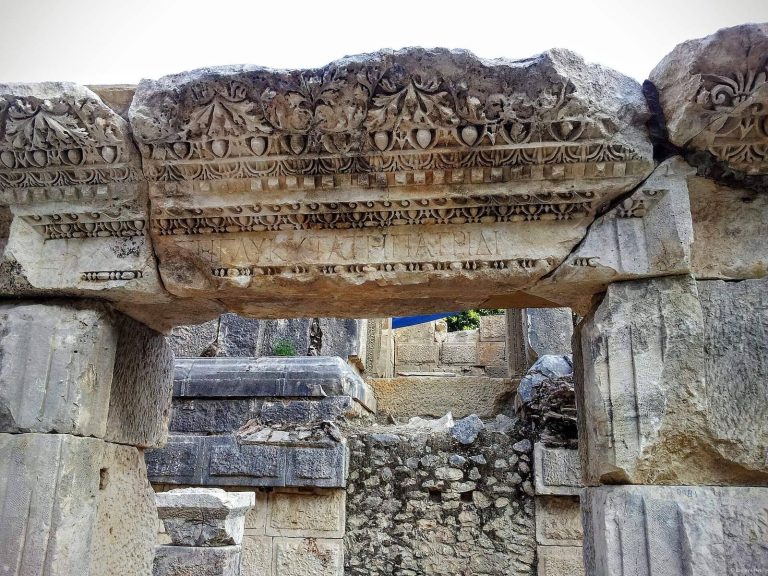
Near the theatre stands the monument to Opramoas. Its walls carry the longest inscription in Lycia, recording his gifts and the honours granted to him.
Public centre and colonnades
The remains include an agora, the city’s public and commercial centre, a two-storey covered colonnade, and the Opramoas colonnade.
Temples
A temple dedicated to Asclepius, the Greek god associated with healing, is among the city’s remains. A temple near the theatre was restored in 2017. The work was criticized because workers lacked restoration experience, no experienced project manager was in charge, some stones were placed upside down or in incorrect positions, and Italian marble was used extensively in place of existing stone.
Churches
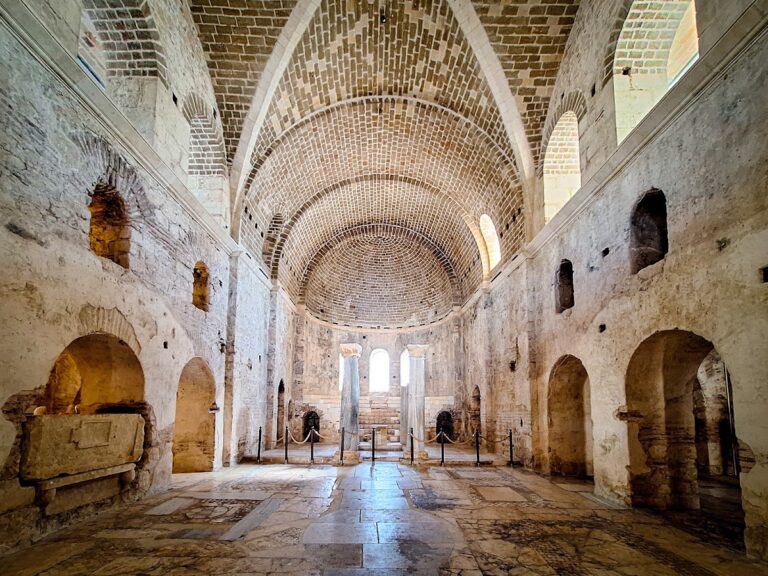
Church remains are also present at Rhodiopolis.
Bath complexes
Large Baths
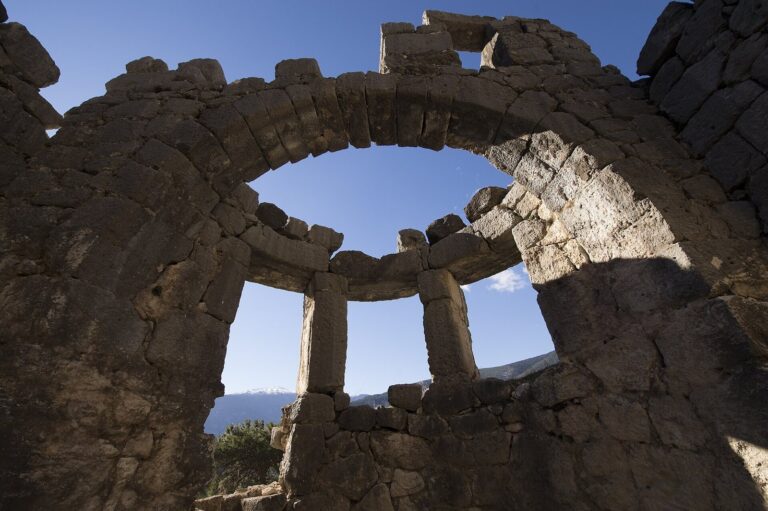
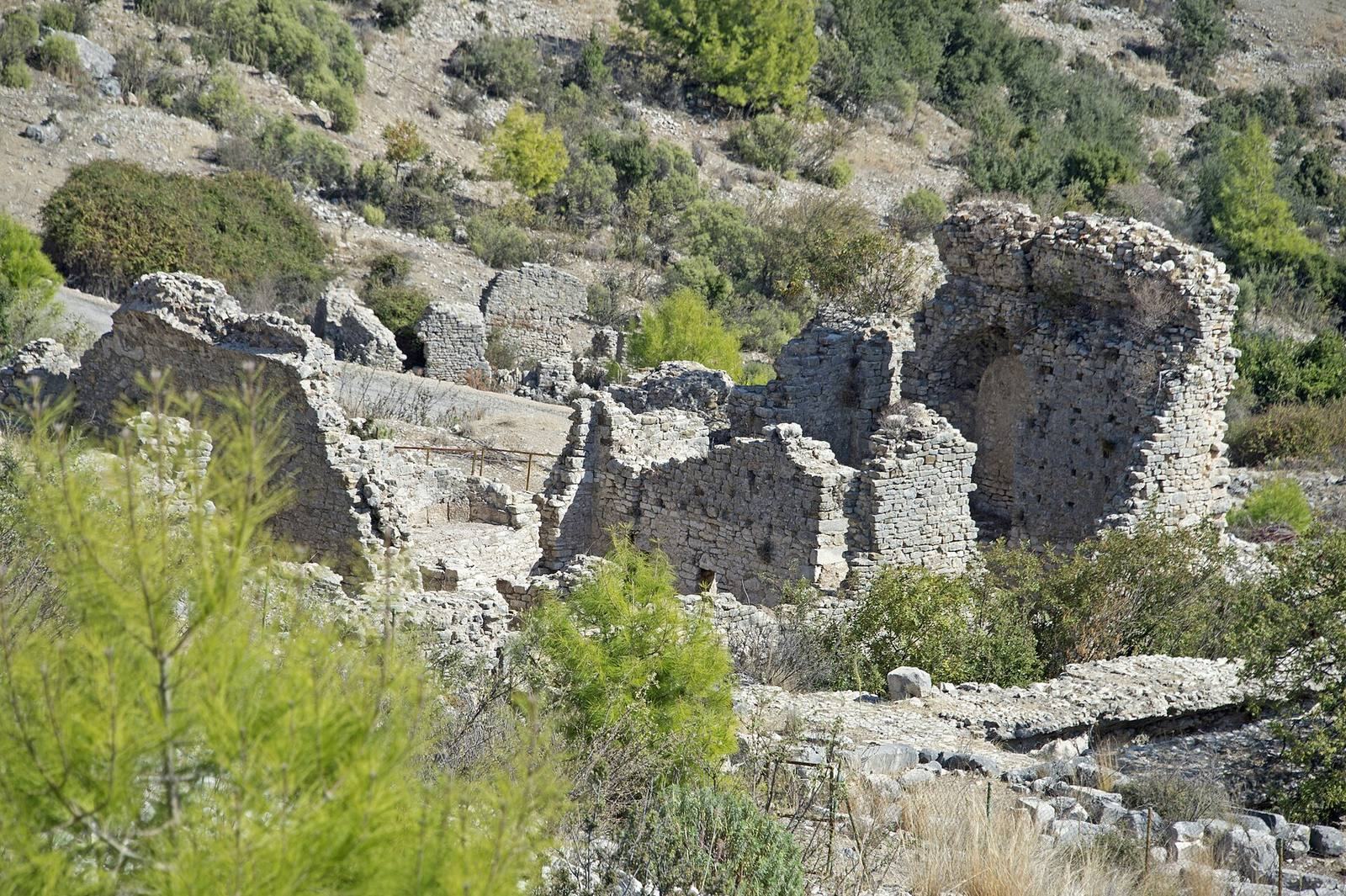
The second-century AD Large Baths cover 1,077 square metres at the foot of the hill, away from the city centre. Their position allowed room for a complex of this size and enabled water to be supplied at the highest pressure. The southern half, 58 percent of the total area, formed an exercise space. Cisterns beneath it supported the structure and created a terrace on the slope. The east wall survives to the level of the vault. The hot, warm, and cold rooms had south-facing windows overlooking the exercise area, admitting daylight and sunlight. The baths underwent several building phases, including a Roman-period revision and substantial changes in the Byzantine period, the continuation of the eastern Roman Empire centred on Constantinople.
Small Baths
The Small Baths date from after the fourth century and lie northeast of the Large Baths. They stand farthest from the town centre, and their location may have been determined by a stream that still flows there.