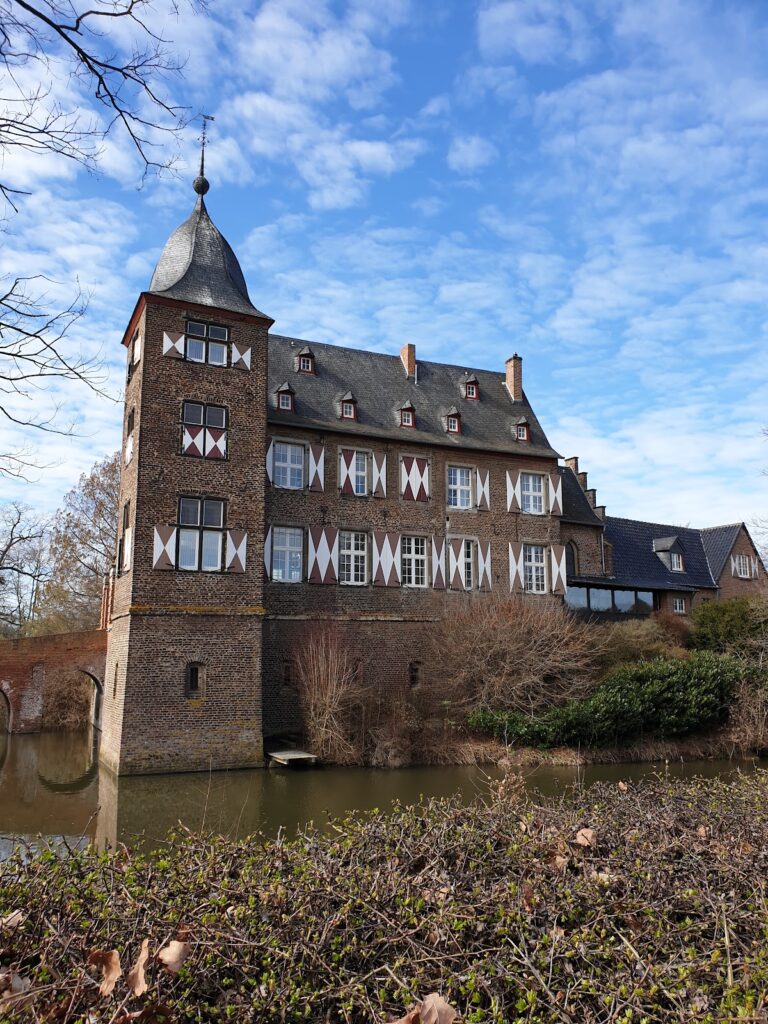
Rheindorfer Burg: A Medieval Castle Complex in Germany


Site at a Glance
- Rating
- 4.2
- Popularity
- Very Low
- Country
- Germany
- Primary era
- Medieval
- Eras represented
- Medieval, Modern
- Civilizations
- German, Holy Roman Empire
- Site type
- Military
- Remains
- Castle
On this page7 sections
History
Medieval origins and noble ownership
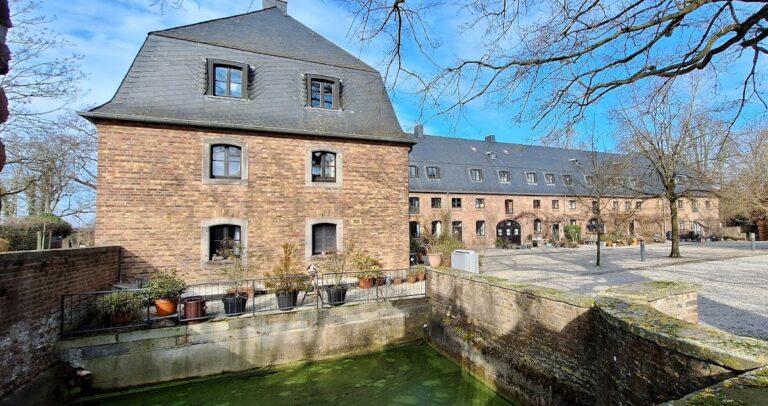
Rheindorfer Burg is an expanded medieval castle complex in Germany, at the northern edge of Walberberg in Bornheim. It was first documented in 1140 as the seat of the knight Christian von Rinchedorp, a ministerial, meaning a member of the medieval service nobility who performed administrative, military, or court duties for a higher-ranking lord. Christian served Count Adolf von Saffenberg, who later became a cathedral bailiff, a senior official connected with the administration and justice of a cathedral institution.
Ownership of the castle changed frequently until 1683. The Lords of Quad held it for about 250 years. By 1683, the free noble estate had passed to the Jesuit order, a Catholic religious order founded in the sixteenth century.
Religious and educational transformation
In 1924, the Dominican order acquired the complex and founded the Dominican Monastery of Saint Albert there in 1926. The Dominicans, a Catholic order associated especially with preaching, teaching, and theological scholarship, used the castle as the seat of the Dominican Philosophical-Theological College in Germany until 1975.
The arrival of the Dominicans brought a thorough internal rebuilding. The castle’s interior was stripped out and adapted within the surviving external walls, particularly to house its library of 156,000 books. The monastery was abandoned in 2007.
Later institutional and commercial use
From 2007 to 2012, the Förderkreis Historisches Walberberg maintained the Rheindorfer Burg Museum Room in the castle. The Walberberg local-history museum later moved to the parish community center Haus im Garten.
In 2008, a private company based in Cologne acquired the listed buildings and established Domäne Walberberg. The complex now incorporates a hotel, restaurant facilities, conference rooms, and assisted living. The former chapel has been secularized and is used as an official venue for civil marriages.
Remains
Castle complex
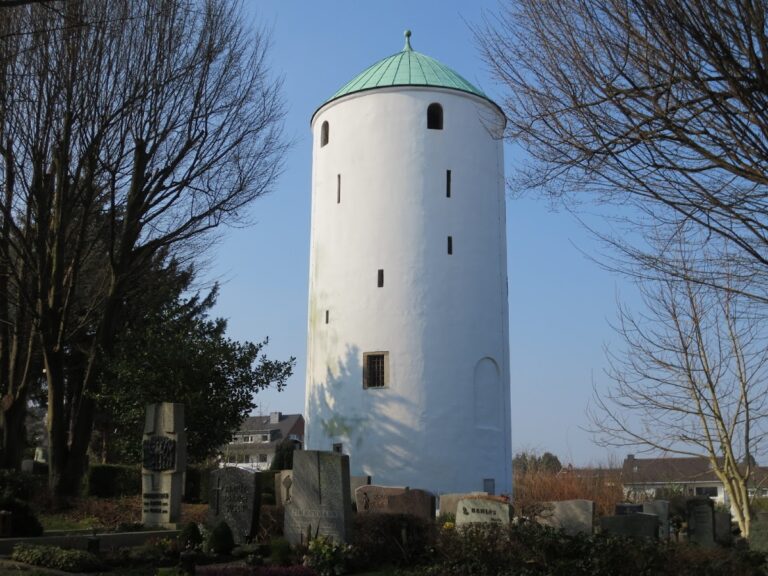
Rheindorfer Burg stands at the edge of the settlement in the foothills of the Rhineland. Its oldest surviving element is a tower dated to the eleventh or twelfth century. The tower closely resembles the Hexenturm in central Walberberg, linking the two structures through their surviving medieval forms.
The complex retains its external walls, while much of the interior was extensively rebuilt after the Dominican order took possession. These surviving walls now enclose spaces adapted for later institutional and commercial functions.
Chapel
The castle includes a chapel that is no longer used for religious worship. After its secularization, it became an official setting for civil marriage ceremonies, preserving the building as part of the complex while giving it a nonreligious function.
Nearby sites