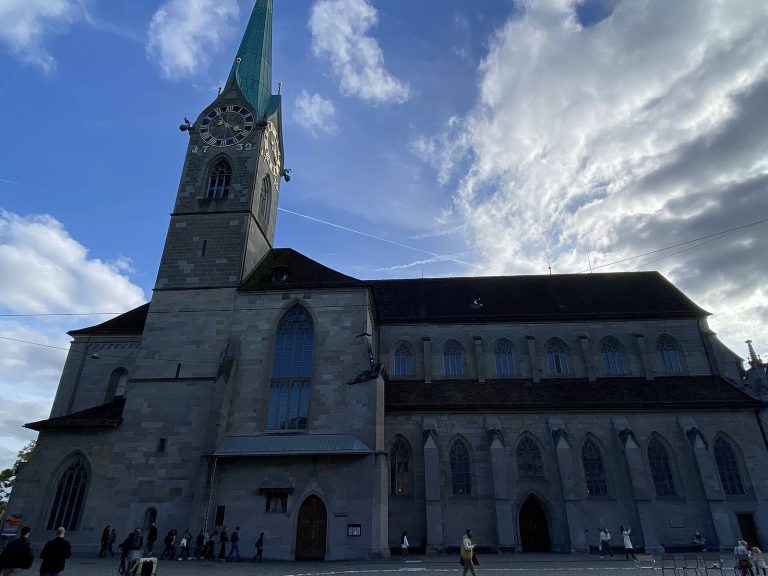
Zollikon Reformed Church: A Late-Medieval Church and Early Anabaptist Center
Site at a Glance
- Popularity
- Very Low
- Country
- Switzerland
- Primary era
- Medieval
- Eras represented
- Medieval, Early Modern, Modern
- Civilizations
- Holy Roman Empire, Swiss
- Site type
- Religious
- Remains
- Church
On this page13 sections
History
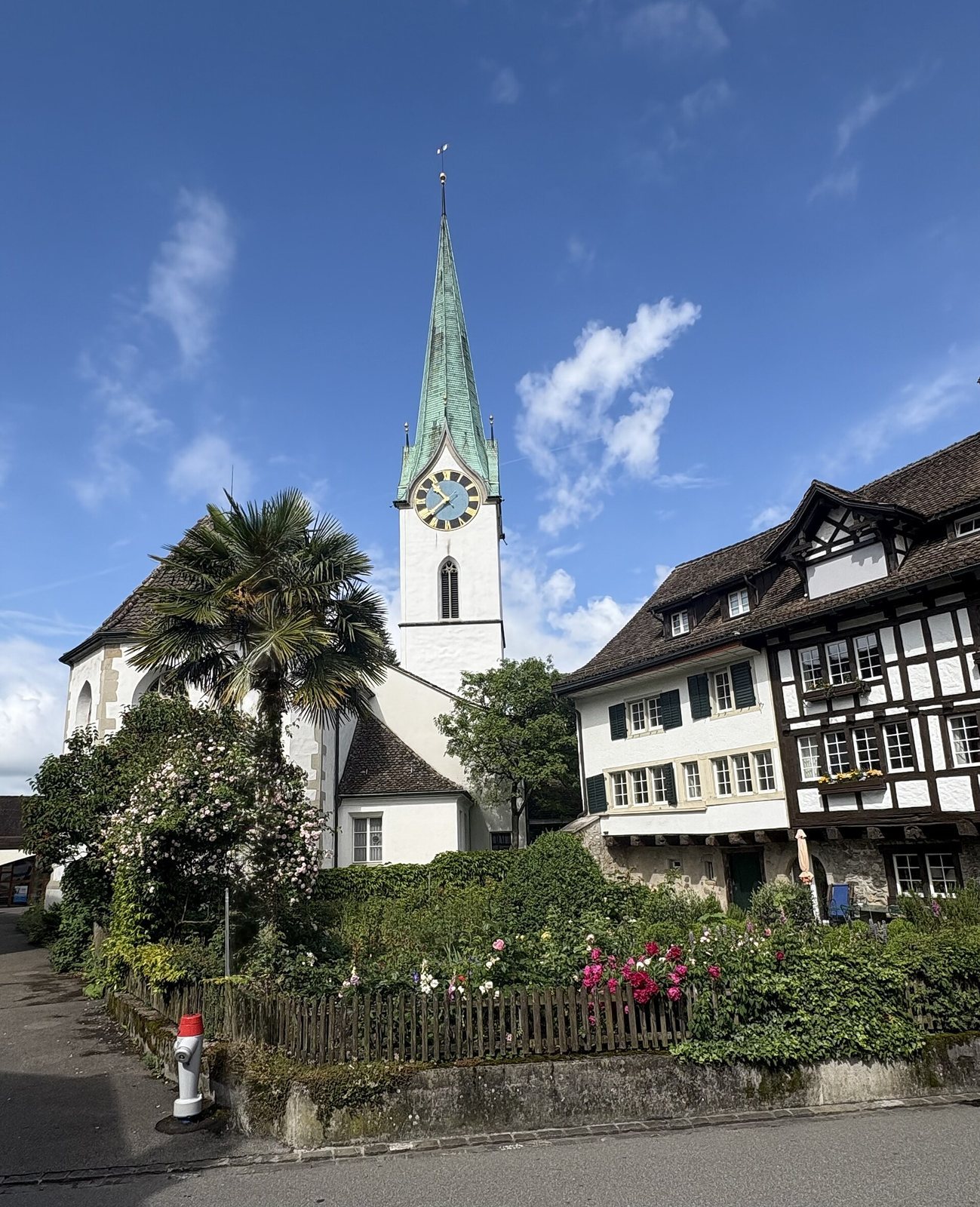
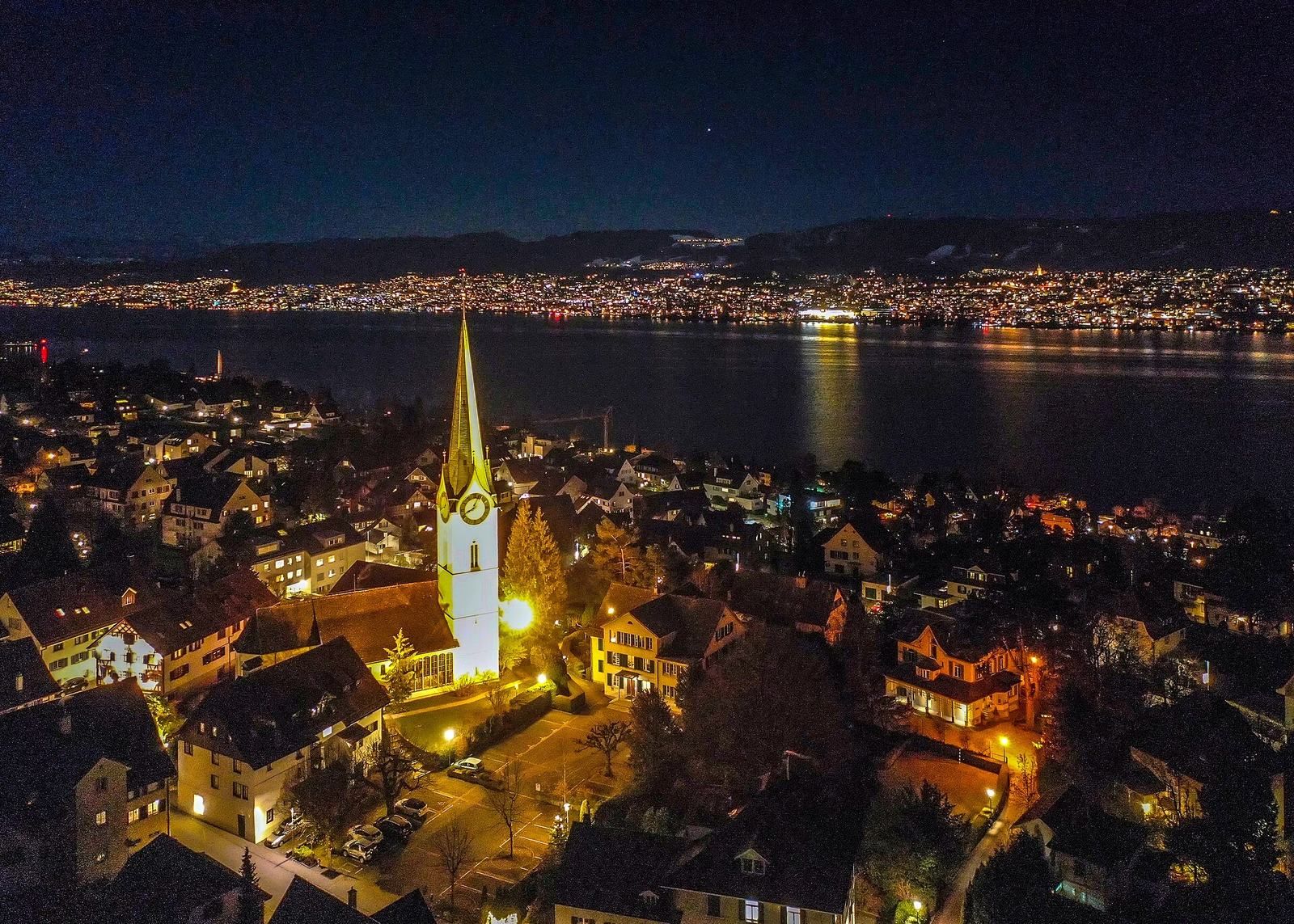
The Zollikon Reformed Church is a parish church in central Zollikon, Switzerland, on the lower right shore of Lake Zurich. A chapel stood here in the ninth century, followed by a small church. The earlier church was Romanesque, a medieval European style associated with rounded arches and massive forms. The present church took shape in the late fifteenth century: its nave, the main body of the church, and bell tower were built in 1497–98, and its choir, the area around the altar, was rebuilt in 1499. In 1525, Zollikon became an early center of the Anabaptist movement.
Medieval foundations and rebuilding
The church is first recorded in 1223, when the abbots, or heads of the abbeys, of Kappel am Albis and Muri settled a dispute over tithes there. In 1495, Zurich’s city council gave the people of Zollikon permission to raise money for a new church. Financing the choir led to a dispute with the Grossmünster chapter, the community of canons associated with Zurich’s Grossmünster, which was later resolved.
Anabaptist activity in 1525
The Reformation, a sixteenth-century movement that brought major changes to Western Christianity, helped make Zollikon an early center of Anabaptism. Anabaptists are Christians who emphasize baptism after a person’s profession of faith rather than baptism in infancy. On 21 January 1525, the first believer’s baptism took place in a private house in Zurich. Those baptized then went to Zollikon, fearing persecution by Zurich’s council, which had required infant baptism amid its conflict with the Anabaptists.
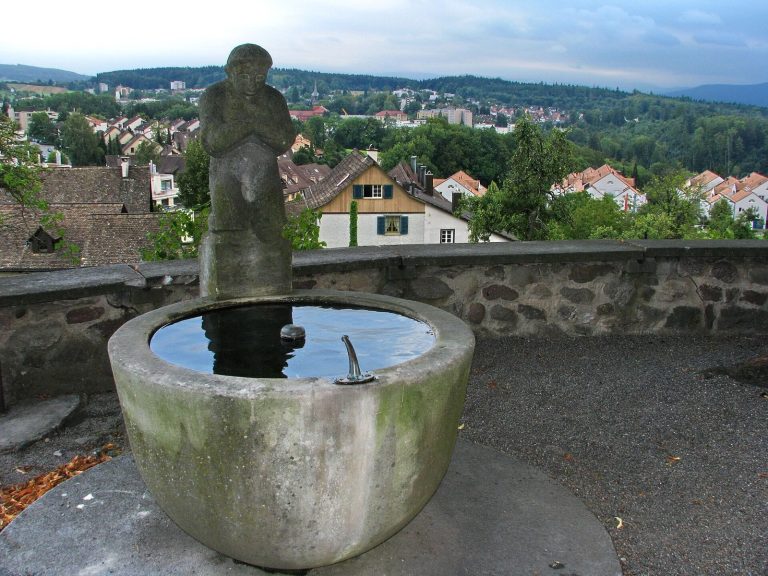
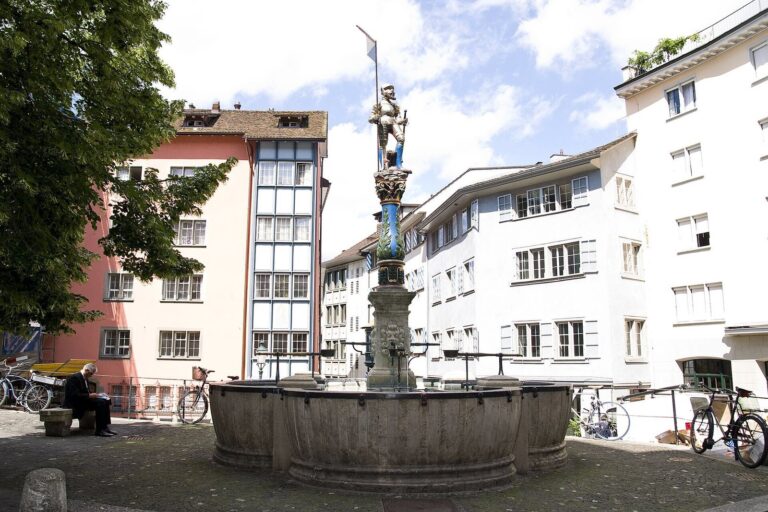
The preaching of Jörg Blaurock, an early Anabaptist preacher and leader, sparked a revival that drew people from different social groups, many seeking baptism. In 1525, Anabaptists met in the village church, at fountains along the Nebelbach, and in private homes. At home, household heads read New Testament passages about the Lord’s Supper and shared bread and wine. These gatherings are considered the earliest evangelical communion services in the Zurich region. Here, “evangelical” refers to the reforming movement: until Easter 1525, Zurich’s churches preached in this spirit but continued to celebrate communion according to the Roman Catholic rite.
Later changes and ownership
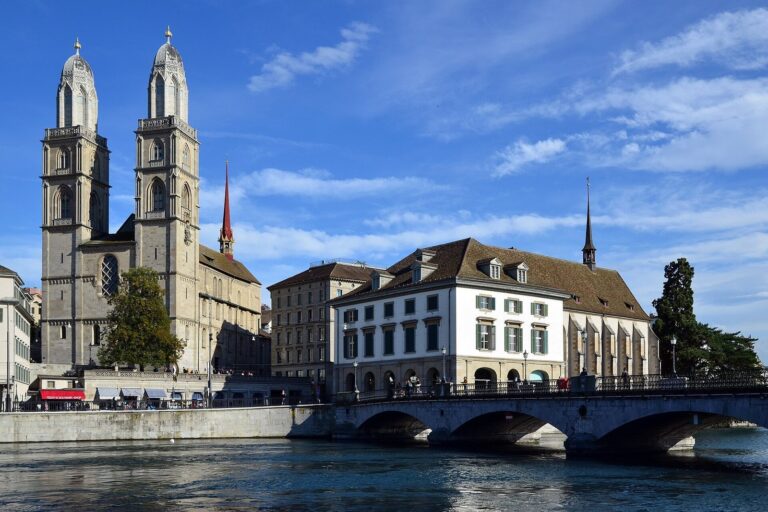
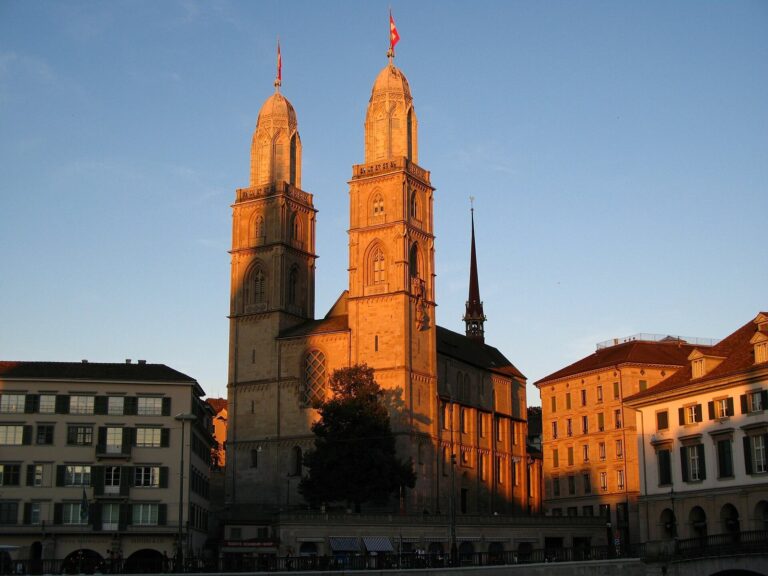
Lightning damaged the tower’s concave, cheese-wedge-shaped roof in 1691, and it partly collapsed in 1794. A pointed spire replaced it in 1795, modeled on the tall, slender spire of Zurich’s Fraumünster, a historic church. Johannes Volkart of Enge and Zollikon resident Johann Murer led the work. In 1836, the Grossmünster transferred the choir to the state, which passed it to Zollikon in 1888.
The church received electric lighting and an interior refit in 1908. Its 400 places repeatedly proved insufficient, so a northern extension in 1937 added 170. A comprehensive renovation in 1967 gave the building its present appearance. The parish community house, completed in 1984, formed the church center.
Remains
The church is arranged around a nave, bell tower, and choir. Its surviving features reflect successive building and refitting, alongside the parish community house and a nearby memorial plaque.
Church fabric and fittings
Plan and interior
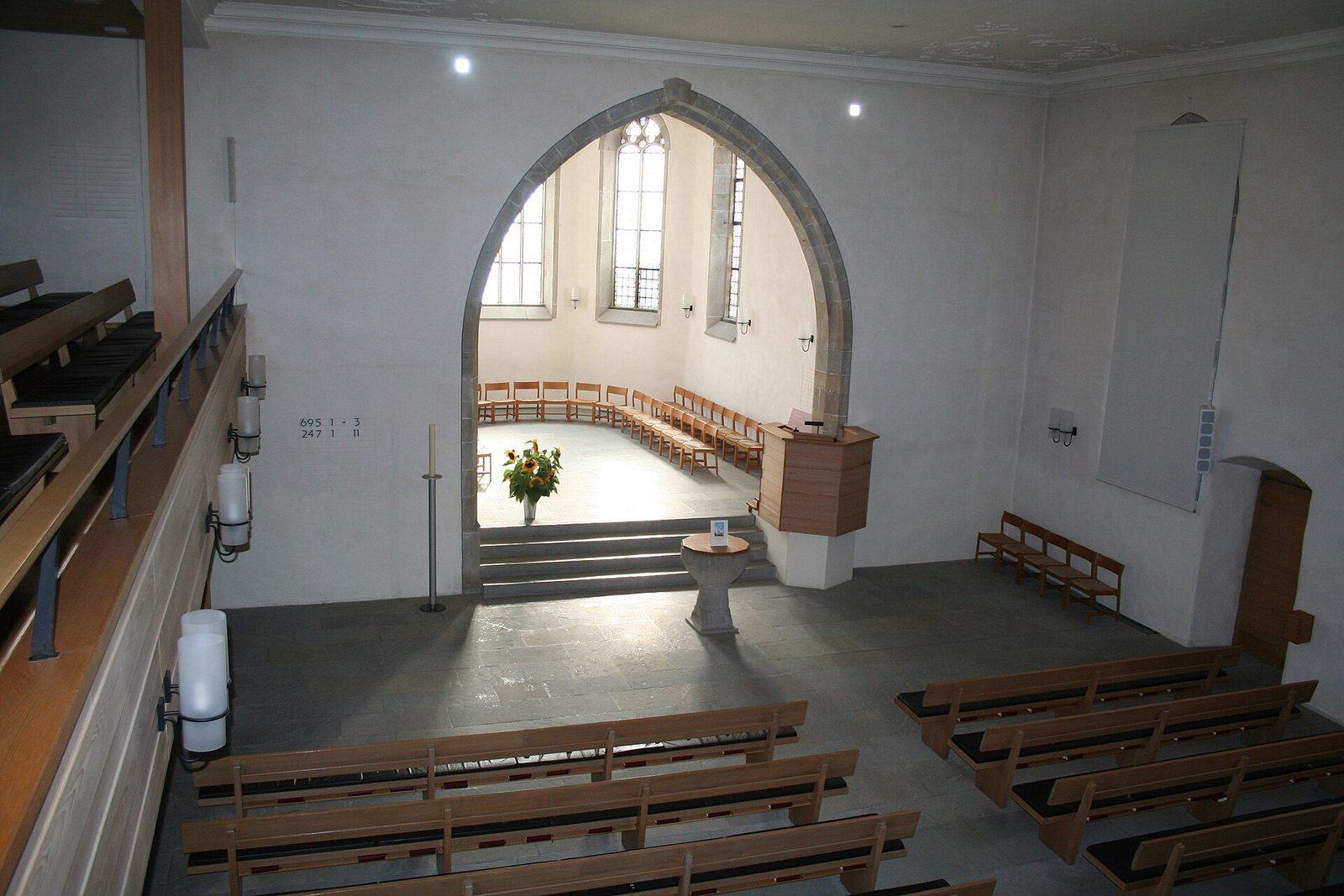
The earlier Romanesque church had a rectangular nave and a square tower that contained the choir. The later church also comprises a nave, bell tower, and choir, with the nave extending to the north. Its heavy wooden ceiling was replaced in 1743 by a plaster ceiling decorated with stucco, or ornamental plasterwork, by Johannes Meyer. A minister’s room was added beside the choir in 1908. During the 1967 renovation, wall paneling was removed, benches were replaced, and the baptismal font, which had been taken out in 1908, was reinstated. The church, tower, and interior were painted white.
Tower and bells
The pointed spire is covered with wooden shingles, replaced by copper shingles in 1898. Four clock faces have decorative pointed gables. The tower measures 52.63 meters to the spire tip and 65.83 meters to the top of its pole; the sphere at the top is 50 centimeters in diameter. Four bells, made by the H. Rüetschi foundry in Aarau, are tuned to B-flat major.
Stained glass and stonework
Three stained-glass panels bear coats of arms. The central panel, made by Lux (Lukas) Zeiner in 1499, depicts the German imperial eagle. The two flanking panels show Zurich’s cantonal arms and date to 1520; Lienhart Brun made them. Stone mason’s marks and a coat of arms associated with Peter also date to 1499.
Organs
The first organ, made by Orgelbau Kuhn of Männedorf, was placed in the choir in 1908 and later transferred to Rohrbach in the canton of Bern. The third organ in the church’s history was also made by Kuhn and was installed on a raised gallery in 1971.
Associated features
Anabaptist memorial plaque
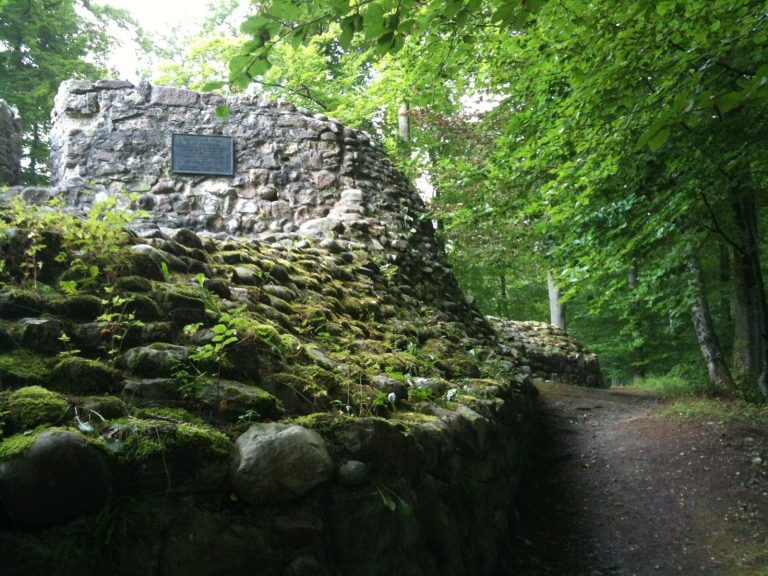
A plaque at Gstadstrasse 25 commemorates one of the early Anabaptist gatherings in Zollikon.
Parish community house
The parish community house forms part of Zollikon’s church center.