Raigou-ji Temple: A Yuzu Nembutsu Buddhist Temple in Osaka
Site at a Glance
- Popularity
- Medium
- Country
- Japan
- Primary era
- Early Modern
- Eras represented
- Early Modern
- Civilizations
- Tokugawa
- Site type
- Religious
- Remains
- Temple
On this page7 sections
History
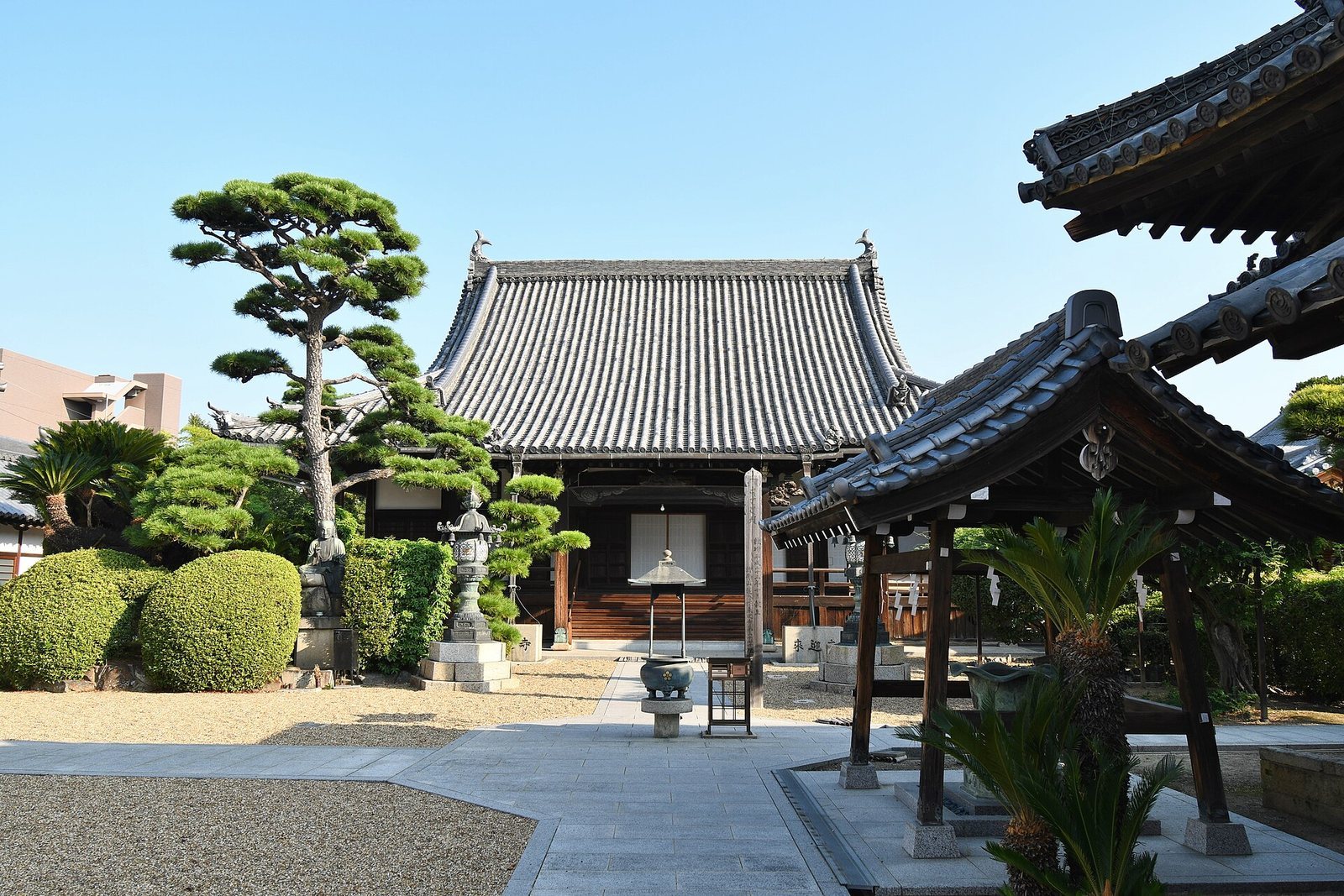
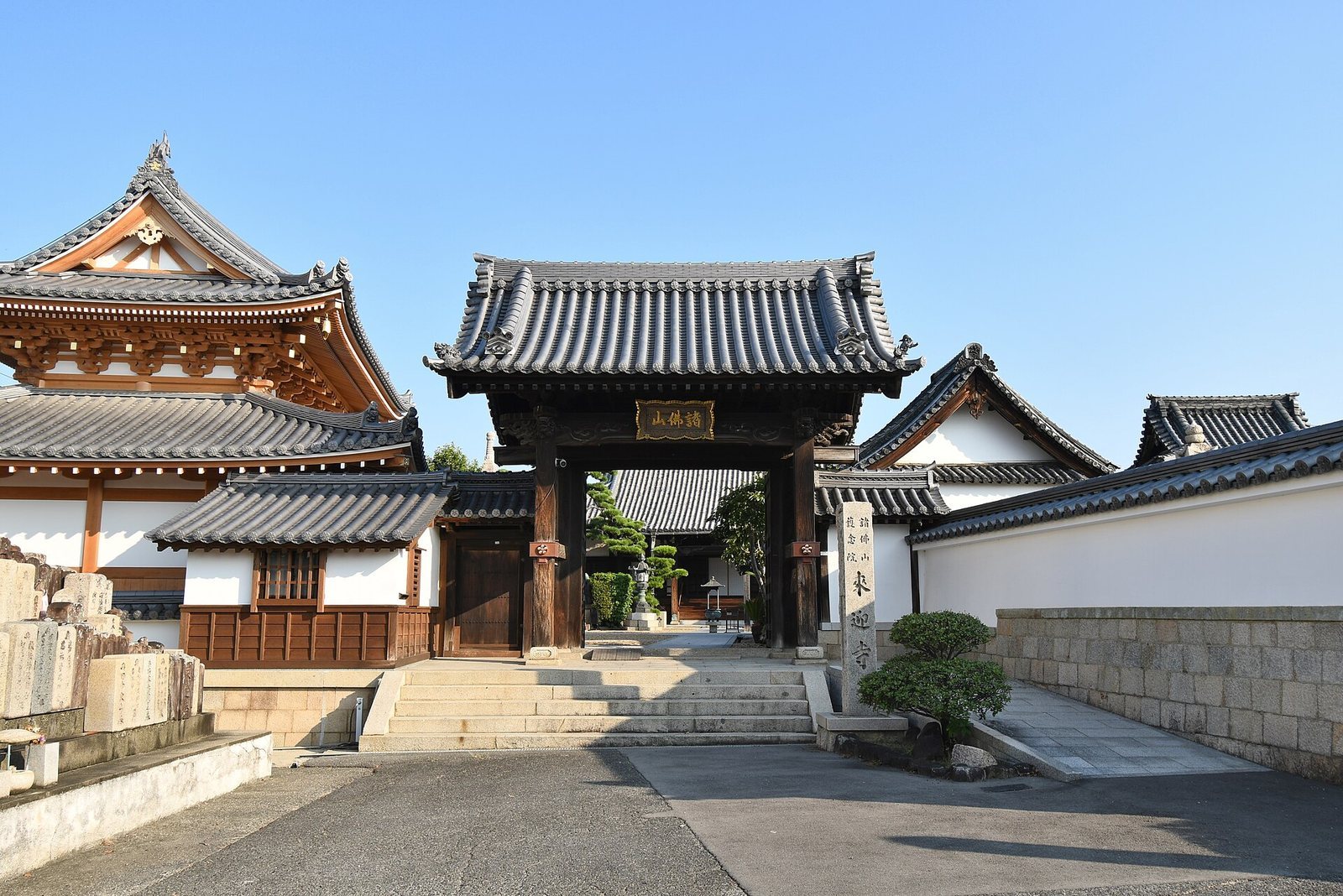
Raigou-ji Temple is a Yuzu Nembutsu Buddhist temple in Tannan, Matsubara City, Osaka Prefecture, Japan. Founded in 1131 by Ryōnin, a Japanese monk associated with the movement’s beginnings, it follows a Pure Land Buddhist tradition centered on reciting Amida Buddha’s name. Amida is associated with rebirth in the Pure Land, and the movement’s teaching emphasizes how religious practices interrelate. Ryōnin was later honored with the Buddhist title Great Master of Sacred Response. The temple held intermediate head-temple rank, an institutional standing within the Buddhist organization, and was among six temples separately awarded that level. In the Kawachi districts of Tanboku, Tannan, and Yagami, as well as a district in Settsu, 36 temples held the rank. Yuzu Nembutsu is the second most widely represented Buddhist sect in Matsubara. The temple’s formal title includes phrases translated as Mountain of All Buddhas and Institute of Protective Mindfulness.
Early history and relocation
Raigou-ji was first called Amida Temple and took its present name in 1324. A monk was credited with reviving the temple. Its earliest location was in what is now Hirakata City. Before it was rebuilt at its current site, the temple moved among different locations and was burned in warfare 26 times.
Wartime destruction and restoration
In 1615, during the Summer Campaign, the final major military campaign of the siege of Osaka, forces commanded by samurai leader Sanada Yukimura burned the temple as they devastated Tannan. The date when it was rebuilt is uncertain.
Takagi Masatsugu made Raigou-ji his family’s mortuary temple, where memorial rites were held for the family and its dead. In 1623, after receiving a fief in Kawachi, he established a jin’ya, a lord’s administrative residence and government office, east of the temple. During the Shōhō era (1644–1648), a monk’s work restored enough of the temple’s former appearance for it to regain its intermediate head-temple rank. The Takagi family continued to rule the area until the Meiji era (1868–1912), a period of major political and social change in Japan.
Government use and the Meiji transition
In June 1869, the domains returned their land and people to the emperor, and Raigou-ji became the Tannan domain government office. After the domains were abolished and prefectures established in July 1871, it served as the Tannan Prefecture office. Tannan merged into Sakai Prefecture that November. The Takagi family moved to Tokyo, and the administrative residence was demolished.
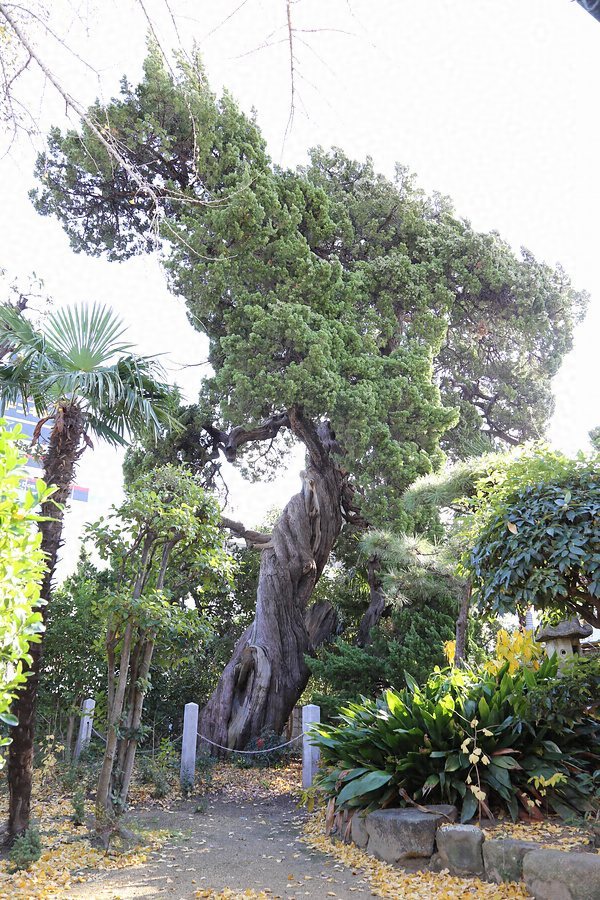
Maps from 1873 and 1880 show a small shrine to Gozu Tennō north of the former administrative residence. Gozu Tennō, a deity associated with protection against epidemics and blending Buddhist and Japanese religious traditions, is thought to have been the Takagi family’s local guardian. A shrine to the same deity stood near the family’s residence in Edo, now Tokyo. The former shrine site is now occupied by a golf center beside the Central Circular Route. A Japanese juniper at Raigou-ji is designated an Osaka Prefecture natural monument.
Remains
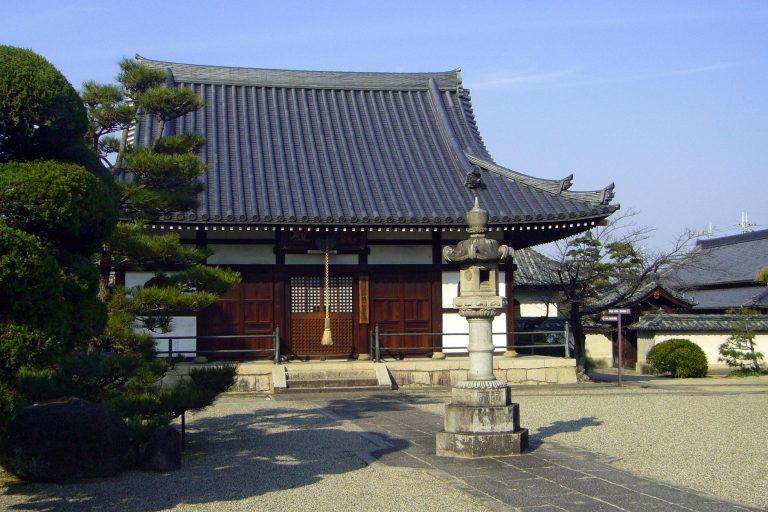
The surviving temple complex includes a main hall and a guest hall. The former Takagi administrative compound stood east of the temple, and a monument in front of the temple gate marks the former compound. Factories and residences now occupy its site.
Temple buildings and principal image
The guest hall incorporates a formal room laid with tatami mats, transferred from the former administrative residence. Raigou-ji’s principal image depicts Amida Buddha’s descent to welcome the faithful to the Pure Land. The image is formed from Buddhist scripture characters written in gold ink on paper.
Archival collection
The temple preserves an extensive archive on early-modern Yuzu Nembutsu head temples. It contains about 4,500 documents from the early modern period, along with older records, woodblocks, and sacred texts. The oldest item is believed to be a 1612 record of the transfer of the principal image and ritual implements; documents from before the movement’s early-modern organization also survive. Fifty-nine woodblocks concern illustrated images, the teaching of Buddhism to lay households, and religious services. The collection’s 63 sacred texts include scrolls transmitting Buddhist teaching and texts describing religious procedures. The archive is considered important for foundational research into the sect’s early-modern history.