Zábřeh na Moravě Castle: A Renaissance Residence and Administrative Seat
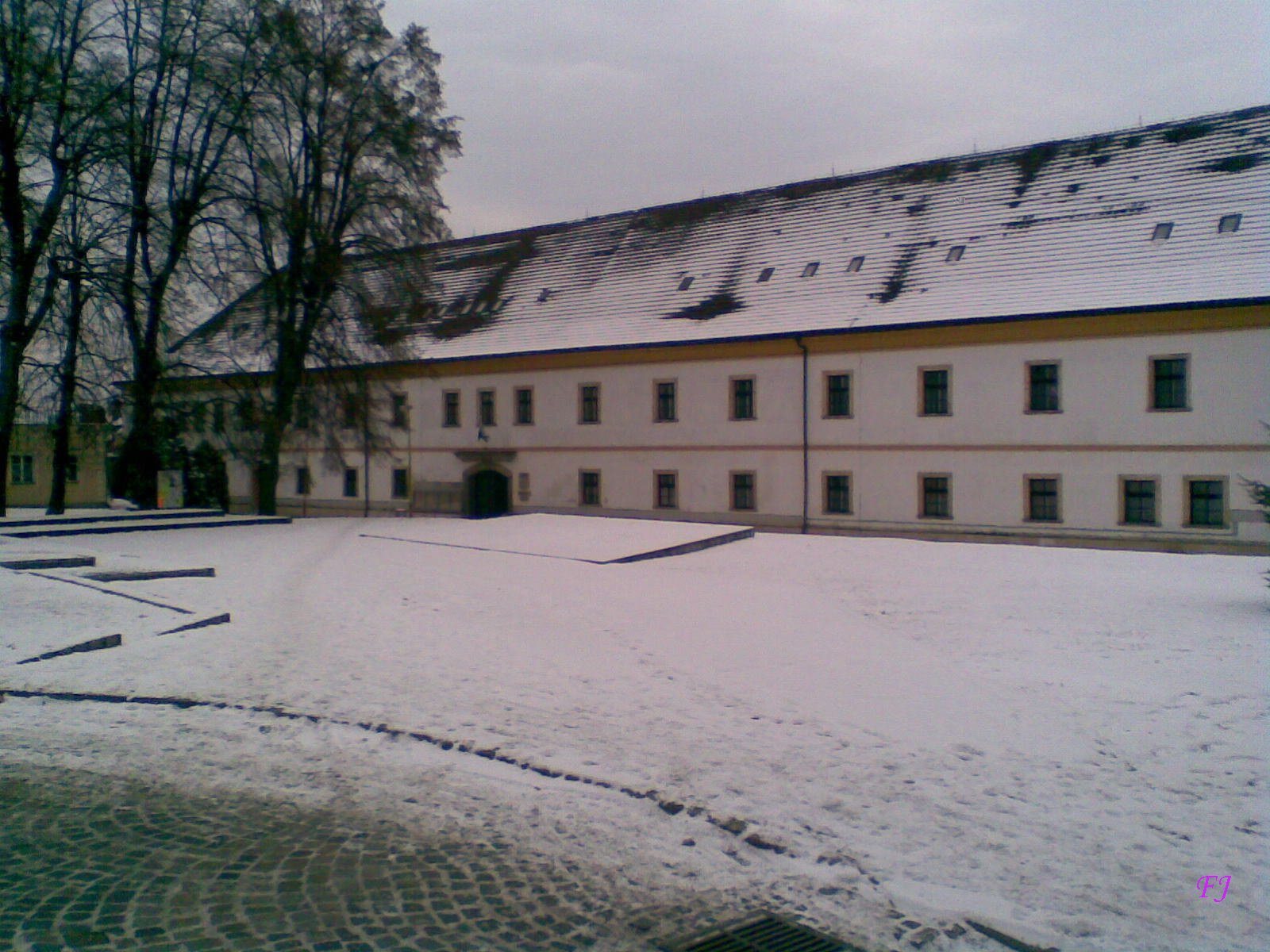
Site at a Glance
- Popularity
- Medium
- Country
- Czechia
- Primary era
- Early Modern
- Eras represented
- Medieval, Early Modern, Modern
- Civilizations
- Austria-Hungary, Habsburg, Holy Roman Empire, Margraviate of Moravia
- Site type
- Domestic
- Remains
- Castle
On this page14 sections
History
Zábřeh na Moravě Castle is a Renaissance residence in Czechia that developed from a fortified stronghold enlarged in the second half of the thirteenth century to protect a land route between Moravia and Bohemia. The route followed the Moravská Sázava valley toward Tatenice. The castle’s history reflects its changing roles, from a defended passage through the region to a noble residence and, later, an administrative centre.
Medieval stronghold and Tunkl residence
The Šternbergs and the Lords of Kravaře substantially enlarged and fortified the stronghold in the second half of the thirteenth century. By the end of the fourteenth century, it was known as Zábřeh Castle. The established estate passed to the Lords of Kravaře late in that century. Around 1442, Jiří of Kravaře sold it to Jan the Elder Tunkl of Drahanovice.
Under the Tunkls, the estate grew to include Brníčko and Hoštejn. Brníčko Castle had been damaged in the fifteenth-century conflicts between Bohemian and Hungarian powers, while Hoštejn Castle suffered damage during the Hussite Wars, conflicts associated with the religious movement that followed Jan Hus. Zábřeh became the Tunkl family seat. Its late Gothic decoration, part of a European architectural and artistic style, and repeated rebuilding gradually shifted it from a fortified castle toward an aristocratic country residence.
Renaissance residence and changing owners
In 1510, Jindřich Tunkl sold the estate to Mikuláš Trčka of Lípa, bringing its expansion and prominence as a lordly residence to an end. Two years later, Mikuláš exchanged it with Ladislav of Boskovice, who chose Moravská Třebová as his home. Zábřeh was thereafter generally occupied by estate managers and officials responsible for its finances.
In 1569, Jan of Boskovice took charge of the extensive Boskovice estates and often stayed at Zábřeh with his wife. He had the castle remade as a Renaissance residence, in a distinct European architectural and artistic style. Jan’s sister Kunhuta, who had married into the Žerotín family, lived there until her death in 1590. Her son, Ladislav Velen of Žerotín, inherited the Boskovice properties after Jan’s death but made Moravská Třebová his principal residence and visited Zábřeh only occasionally. The town grew and prospered under the Boskovice and Žerotín families.
Lichtenštejn rule and administrative use
Ladislav Velen’s only son, Karel, frequently lived at Zábřeh in the 1620s. After the Battle of White Mountain in 1620, when Habsburg forces defeated the Bohemian estates and strengthened Habsburg rule in Bohemia, Ladislav Velen fled abroad. He was sentenced to death in absentia and his lands were confiscated. Emperor Ferdinand II granted the Zábřeh estate to Prince Karel of Lichtenštejn. Under the Lichtenštejns, the castle became definitively a centre for estate administration.
The Thirty Years’ War, the European conflict of 1618–1648, brought hardship to the estate. Officers from a regiment associated with Wallenstein, a leading imperial commander, were quartered at the castle in 1621. Swedish forces caused considerable damage there in 1642. The castle underwent partial remodelling in the Baroque style, another European architectural and artistic style, in 1661. Further extensive rebuilding from 1727 to 1736 responded to the estate’s economic needs.
During the eighteenth-century Silesian Wars between Prussia and the Habsburg monarchy, and the Napoleonic Wars involving France under Napoleon from the late eighteenth century into the early nineteenth, Prussian, Austrian, and French troops passed through Zábřeh. The town and castle were repeatedly looted. French forces also passed through after the 1805 Battle of Austerlitz. A fire in 1793 destroyed nearly the entire town and part of the castle, including its tower, which was later restored.
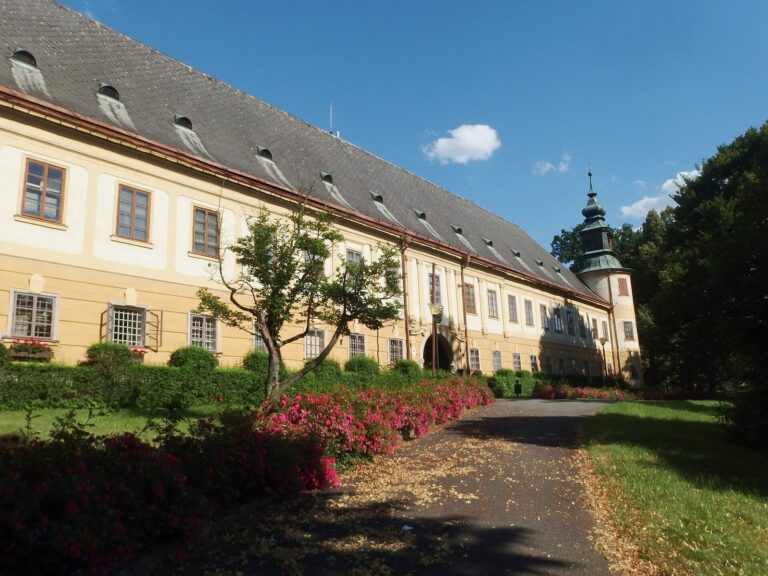
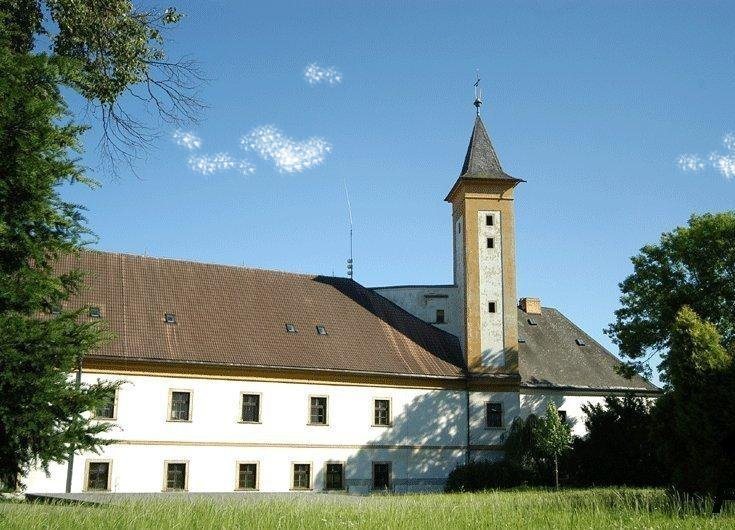
In 1849, Prince Alois of Lichtenštejn sold the castle to the town. The building was leased to the district governor’s office and district court, and it continues to serve administrative purposes as the seat of the municipal office.
Remains
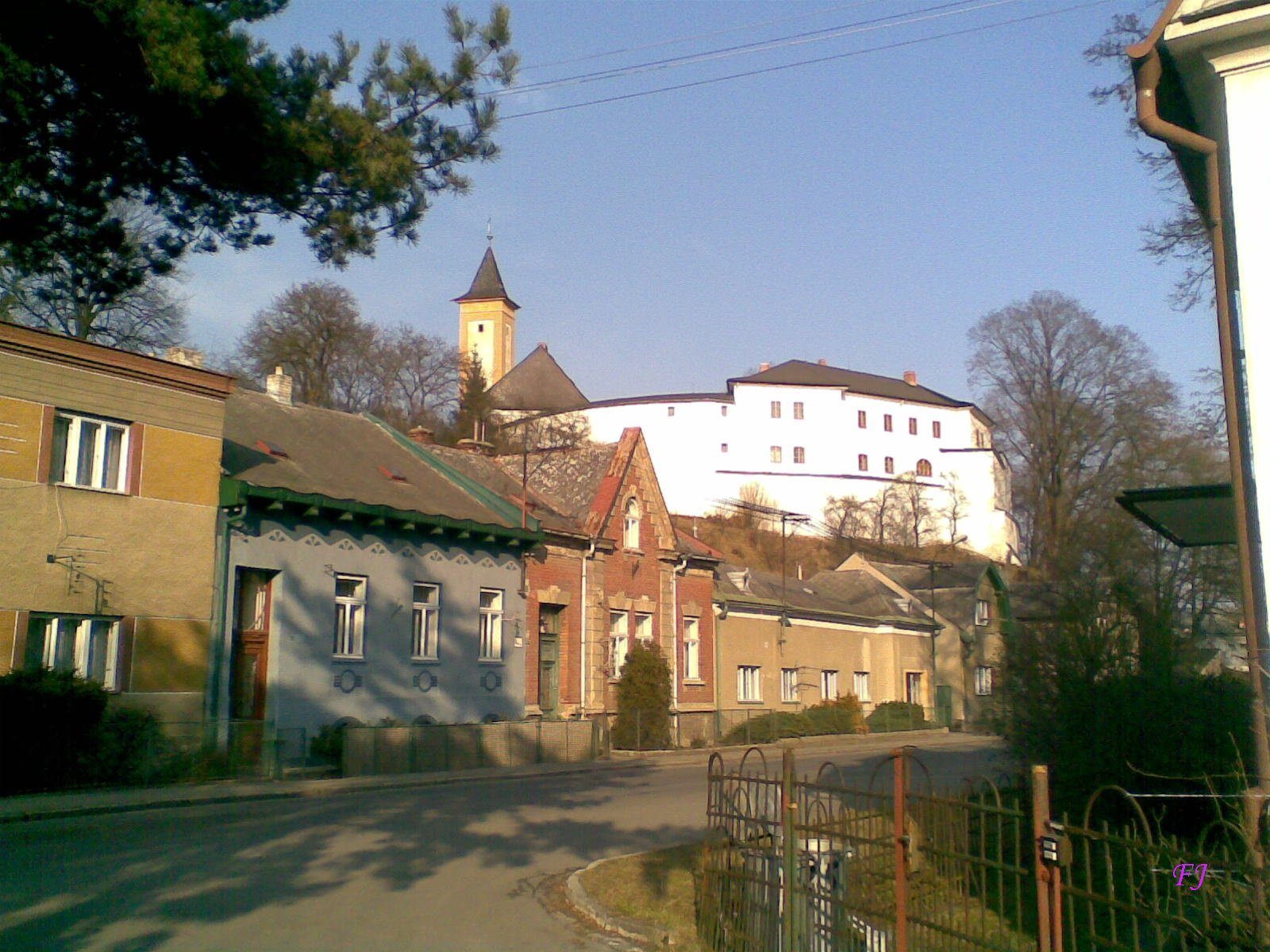
The castle stands in the old part of Zábřeh, and its surviving fabric brings together Renaissance work, a Baroque addition, and later alterations. The predecessor stronghold occupied sloping ground, while its defensive boundary and remains beneath the town preserve evidence of the earlier fortified plan.
Defenses and underground route
Walls, moat, and gate
The earlier castle stood on a steep slope descending toward present-day Havlíčkova Street. A high stone wall from its fortifications survives. On the town-facing side, a deep moat separated the castle from the town. The entrance gate, near the northeastern part of the present castle, had a projecting drawbridge, a movable bridge that could be raised to obstruct passage across the moat.
Cellars and passage
Deep cellars survive in part, along with a section of an underground passage. Legends claimed that the passages reached the neighboring castles of Brníčko and Hoštejn, but their likely purpose was to let people escape beyond Zábřeh’s town walls in danger. The route ran beneath present-day Masaryk Square toward a house nearby. It collapsed at the site of a small park in 1928 and was subsequently filled in.
Renaissance and Baroque fabric
Residence, garden, and tower
The Renaissance remodelling raised the castle by one storey, which held four halls, and created a garden on the side facing the square. A new brewery and an extensive manor farm were established below the castle. A narrow, square tower was added in the late Renaissance period; its present form dates to 1869.
North wing and coat of arms
The north wing is a Baroque addition. A sandstone coat of arms of the Lichtenštejn family bears the name of Karel Eusebius of Lichtenštejn, the owner associated with the earlier remodelling, and serves as its memorial.
Carved stone and former church
Tunkl shield
A carved shield now stands in the castle’s entrance passage. Made from Maletín sandstone, it was originally placed above the castle gate. Its elaborate ornament includes the Tunkl arms, marked by two fish, and an inscription naming Jiří Tunkl the Elder as lord of Brníčko and Zábřeh. The shield is dated 1478.
Former church
A small church formed part of the castle until the sixteenth century, when it was closed and converted into chambers. Benedict of Waldstein, provost, or head, of the Olomouc chapter and auxiliary bishop, who assisted the diocesan bishop, was buried there in the second half of the fifteenth century. After the church closed, his tombstone was set into a castle wall.