Raby Castle: A Medieval Neville Stronghold and Vane Family Seat


Site at a Glance
- Rating
- 4.6
- Popularity
- Medium
- Country
- United Kingdom
- Primary era
- Medieval
- External website
- Open
- Eras represented
- Medieval, Early Modern, Modern
- Civilizations
- British, English
- Site type
- Military
- Remains
- Castle
On this page14 sections
History
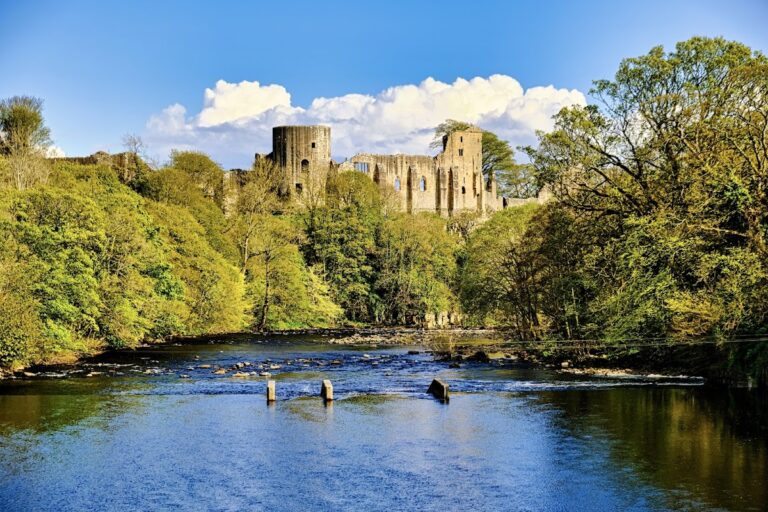
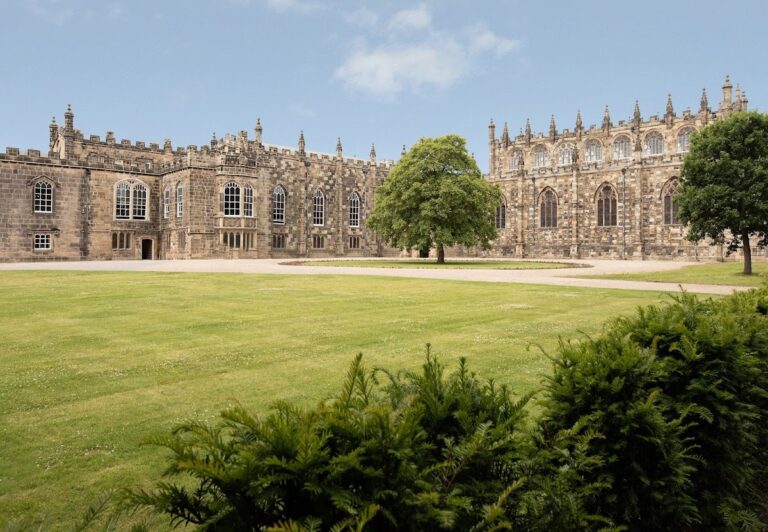
Raby Castle is a medieval castle near Staindrop in England, within the United Kingdom, built during the fourteenth century by the Neville family. Its principal construction took place approximately between 1367 and 1390, transforming an earlier defensible residence into a palace-fortress and the centre of a powerful northern aristocratic estate.
The Neville stronghold
The House of Neville held the manor of Raby from the thirteenth century. Although the family initially had no formal title, its members were summoned to Parliament as Barons of Raby from 1295. Raby became their principal seat and centre of power, and a fortified house may have occupied the site from around 1300.
John Neville, 3rd Baron Neville de Raby, undertook the castle’s major medieval building campaign. In 1378, Thomas Hatfield, Bishop of Durham, granted him a licence to fortify the property, meaning formal authorization to add defensive features. John died in 1388, and his son Ralph Neville continued the family’s rise. The construction date is based mainly on the castle’s architecture because few Neville family documents from the period survive.
Ralph Neville and the English succession
Ralph Neville was created 1st Earl of Westmorland by Richard II on 29 September 1397. After Henry Bolingbroke invaded England in July 1399, Ralph supported him and helped persuade Richard II to abdicate. At Henry IV’s coronation, Ralph received the office of Earl Marshal of England, a senior ceremonial and military position associated with state occasions and heraldic administration. He became a Knight of the Order of the Garter in 1403.
Cecily Neville, who later became the mother of Kings Edward IV and Richard III, was born at Raby Castle.
The Rising of the North and Crown ownership
The Neville family was Catholic. In 1569, Charles Neville, 6th Earl of Westmorland, helped lead the Rising of the North, a Catholic rebellion by northern nobles against the Protestant government of Elizabeth I. The rising sought to support Mary, Queen of Scots. More than 800 rebels were executed, while Charles Neville and another leading participant, Thomas Percy, escaped into exile. An attainder, a formal legal act for treason that confiscated property, was issued against Neville in 1571, and his lands passed to the Crown.
Raby Castle remained Crown property for more than forty-three years. Sir Henry Vane the Elder bought it and neighbouring Barnard Castle from the Crown in 1626. The Vane family later modernized much of the castle, including the medieval chapel and interior rooms. Alterations continued during the seventeenth and eighteenth centuries, although a carriageway driven through the castle caused substantial damage to its medieval fabric.
The Vane family and later alterations
Christopher Smart frequented Raby from the age of eleven, after 1733. At thirteen, he briefly eloped with Anne Vane, daughter of Henry Vane, who later inherited the Barnard title.
The Dukes of Cleveland held the castle from 1833 to 1891. William Burn carried out alterations between 1843 and 1848, including work that reshaped parts of the castle’s roofs and interiors. In 1849, William, then Prince of Orange, was staying at Raby as a guest of the Duchess of Cleveland when he succeeded to the Dutch throne.
After the death of the 4th Duke of Cleveland in 1890, ownership of the castle and estates was uncertain. In 1891, the Committee of Privileges of the House of Lords recognized his relative Henry de Vere Vane as 9th Baron Barnard and heir to the Raby estates. The title of Duke of Cleveland then became extinct.
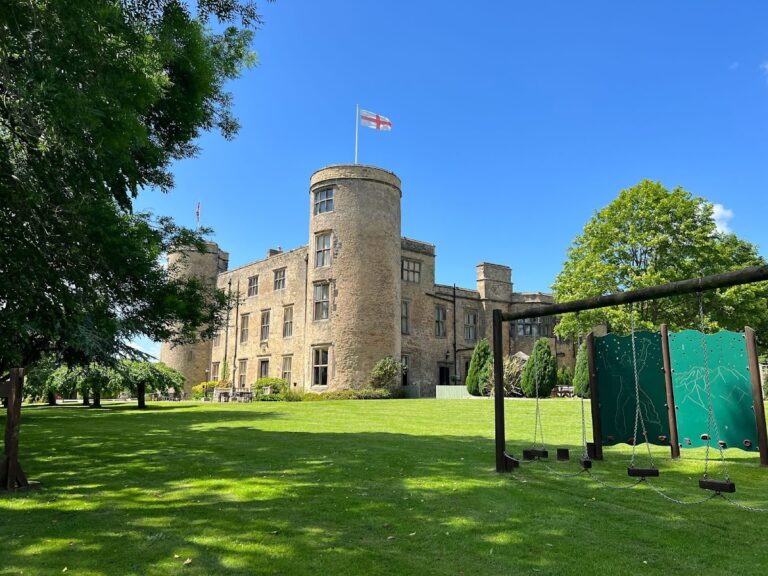
Raby remains a private home and the seat of the Vane family, the Barons Barnard. After inheriting the barony in 1964, the 11th Baron undertook an extensive programme of renovation and restoration that conserved many rare interior architectural features. The castle is a Grade I listed building.
Remains
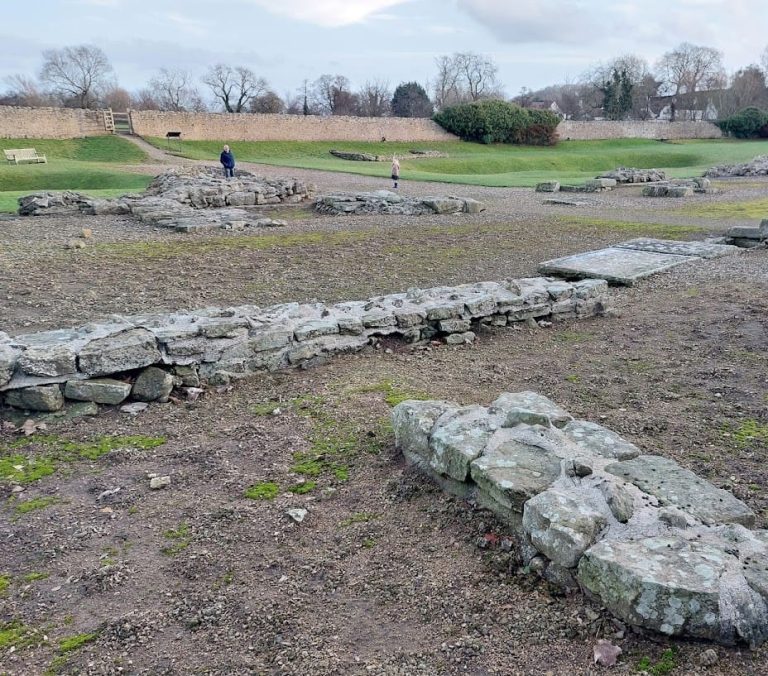
Raby Castle has an irregular plan formed by buildings around a central courtyard, with nine towers arranged along the perimeter. The great hall, also known as the Baron’s Hall, occupies the eastern side. A moat and enclosing curtain wall, the castle’s main defensive wall, organize the outer edge of the medieval complex.
Entrances and defenses
Neville Gateway
The principal entrance lay on the west through the four-storey Neville Gateway. Its approach originally crossed a drawbridge, later replaced by a flagged causeway. The gatehouse contained three portcullises, vertically sliding defensive gates, and the grooves used to operate them remain visible. Two smaller towers beside the gatehouse were added during renovations commissioned by Henry Vane, 2nd Earl of Darlington. These towers were decorative or functional additions rather than defensive structures.
Curtain wall and wall-walk
The curtain wall rises about 10 metres above the moat and is reinforced at intervals by buttress towers. It formed the second line of defence after the moat. A passage along the parapet served as the medieval wall-walk, where guards could be stationed.
Medieval rooms and chapel
The interiors of the medieval kitchen and keep, the principal fortified tower, are mostly intact. The castle also retains a medieval chapel whose interior was renovated by the Vane family. Between 1843 and 1848, William Burn added new roofs to the great hall and chapel and created a Jacobean-style drawing room in one of the towers. Jacobean style was an English architectural and decorative style associated chiefly with the reign of James I in the early seventeenth century.
Gardens and art collections
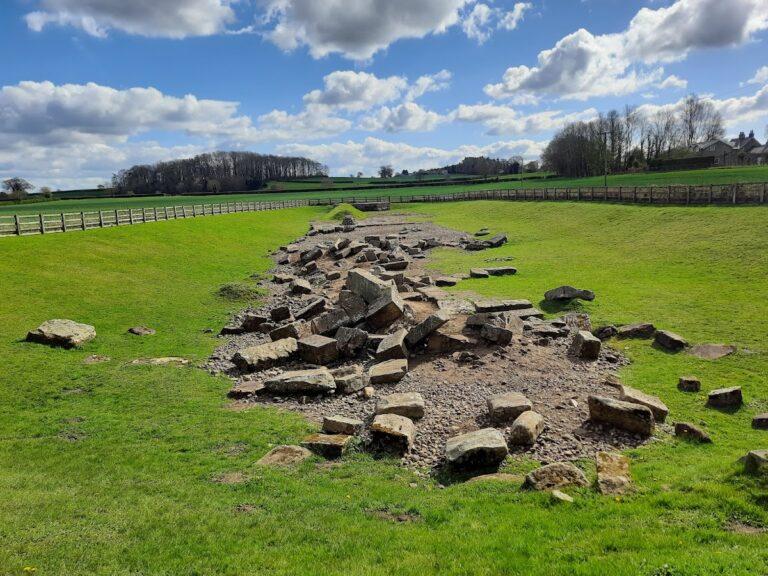
The gardens were remodelled by the Italian garden designer Luciano Giubbilei and Lady Barnard. The East Garden includes a grass amphitheatre described as the first created in northern England.
Paintings in the principal rooms
The art collection, assembled mainly by the Vane family, includes works by Luca Giordano, Anthony van Dyck, and Sir Joshua Reynolds, together with old-master paintings and family portraits. The Small Drawing Room contains sporting paintings by Ben Marshall, Henry Bernard Chalon, and Sir Alfred Munnings, reflecting the family’s interests.
Library and ante-library
The library contains two architectural capriccios, imaginative paintings that combine real or invented buildings in arranged scenes. One is by Marco and Sebastiano Ricci and the other by Antonio Joli. The room also contains portraits by Peter Lely of Lady Mary Sackville and Louise de Kerouaille, a portrait of William Bankes by Pompeo Batoni, and portraits of Sir Henry Vane the Elder and Sir Henry Vane the Younger. Paintings in the ante-library are chiefly associated with Dutch and Flemish schools, including works by Pieter de Hooch and David Teniers the Younger.
Dining room
The dining room contains works by Joshua Reynolds and Anthony van Dyck, chiefly portraits of members of the Vane family and their associates.