Pushkin Monument in Chișinău: A Public Memorial to the Poet
Site at a Glance
- Popularity
- Very Low
- Country
- Moldova
- Primary era
- Modern
- Eras represented
- Modern
- Civilizations
- Russian
- Site type
- Civic
- Remains
- Statue
On this page9 sections
History
The Pushkin Monument in Chișinău, Moldova, commemorates the Russian poet Aleksandr Pushkin’s stay in the city from 21 September 1820 to 25 May 1823. The memorial was inaugurated in 1885 after a campaign led by local students, teachers, and civic authorities.
A civic campaign and a design
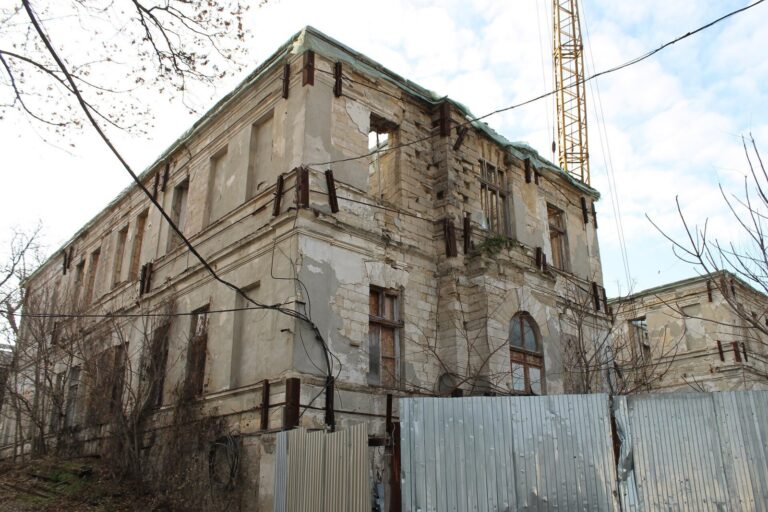
In 1879, pupils and teachers at Chișinău Boys’ Gymnasium No. 1, a secondary school, proposed marking Pushkin’s years in the city. They first hoped to place a bust in the school’s assembly hall or courtyard, but the school lacked the money. Its director, Dmitri Kalovici, appealed to Mayor Carol Schmidt. The city Duma, its municipal governing council, then established a committee to arrange a monument in the public garden on Pushkin Alley. The former school building now houses the National Museum of History of Moldova.
As donations were gathered, A. Lazarev, head of the Society of Amateurs of Theatrical Art, approached sculptor Aleksandr Opekushin, who was then working on a statue of Pushkin in Moscow. Opekushin offered to make a copy of the statue’s upper part, and Chișinău’s authorities agreed. After other architects failed to devise a pedestal that would not seem too bulky beneath the bust, Opekushin sketched a design himself.
Production and postponement
Opekushin cast the bronze bust in Sankt Petersburg in March and April 1881, and it was transported to Chișinău by train. In November 1883, the installation committee considered 24 of Pushkin’s couplets for the pedestal but selected none, sending different inscriptions to be made instead. Merchant Anton Tuzini supervised the pedestal’s casting in Odesa in 1883. Its installation was completed on 20 December, and the bust was set in place later that month.
The inauguration was initially planned for 1884, on the 85th anniversary of Pushkin’s birth. After the ceremony was announced in the press on 18 May, a notice published on 24 May postponed it because of unexpected circumstances. On 30 October, the city authorities sought and received the Interior Minister’s permission to hold the ceremony. It was rescheduled for 1885, following the planned program.
Inauguration and later changes
The monument was inaugurated on 26 May 1885. Mayor Schmidt and other speakers addressed the gathering, poetry was recited, and an orchestra performed the hymn “How Glorious Is Our Lord in Zion.” A literary evening and a party followed in the public garden. Money raised by the festivities went toward a fund to establish a Pushkin school. Successive local newspaper editions devoted nearly all their pages to articles and poems about the poet by townspeople.
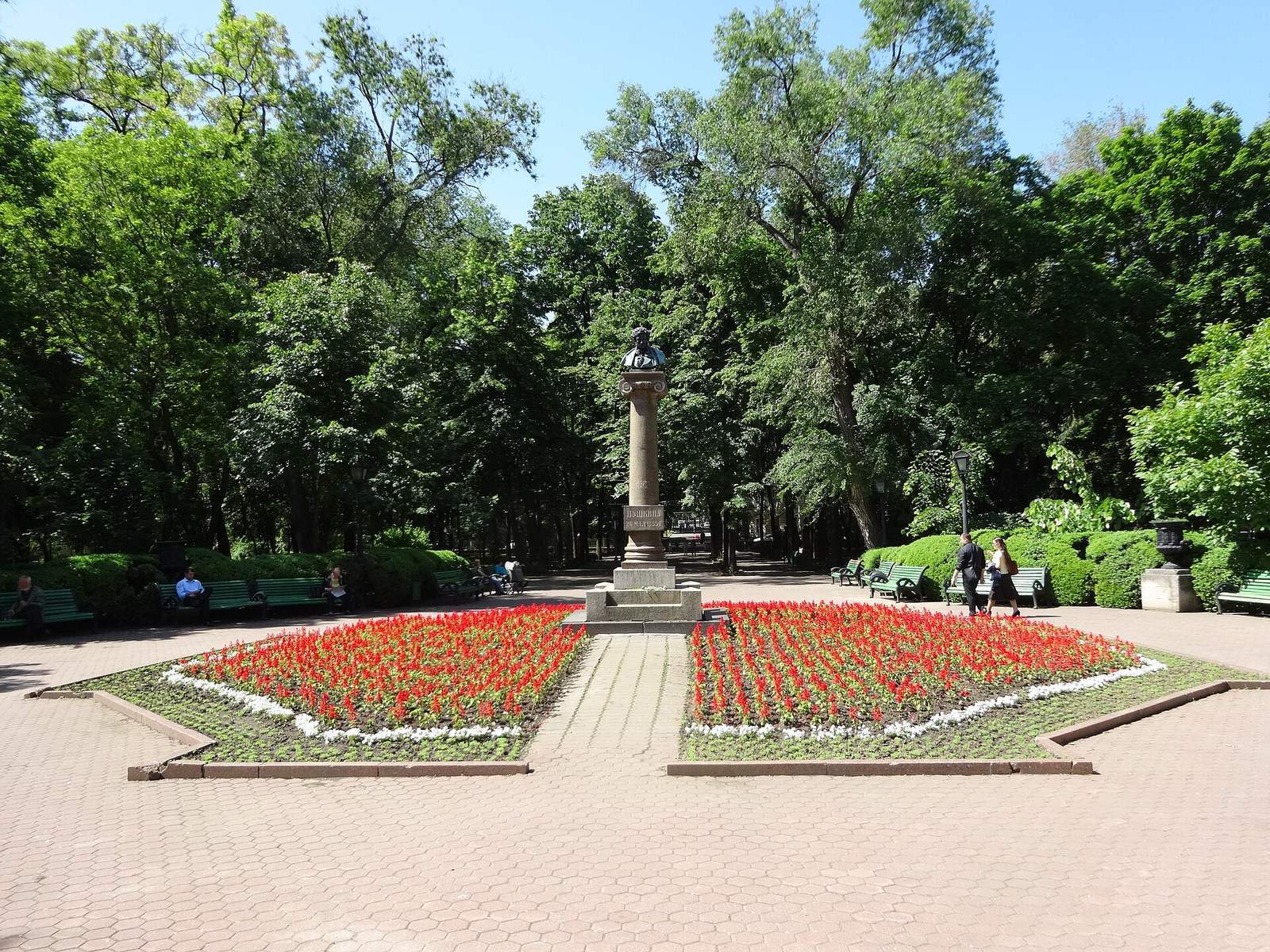
In 1957, the monument was moved to the middle of the park when the Alley of Classics was inaugurated. A plaster replica of the bust had been kept in Schmidt’s house; singer Tamara Ciobanu later mediated its transfer to the Pushkin House-Museum. The monument is listed in Moldova’s State Register of Protected Monuments as a historical and artistic monument of national importance.
Remains
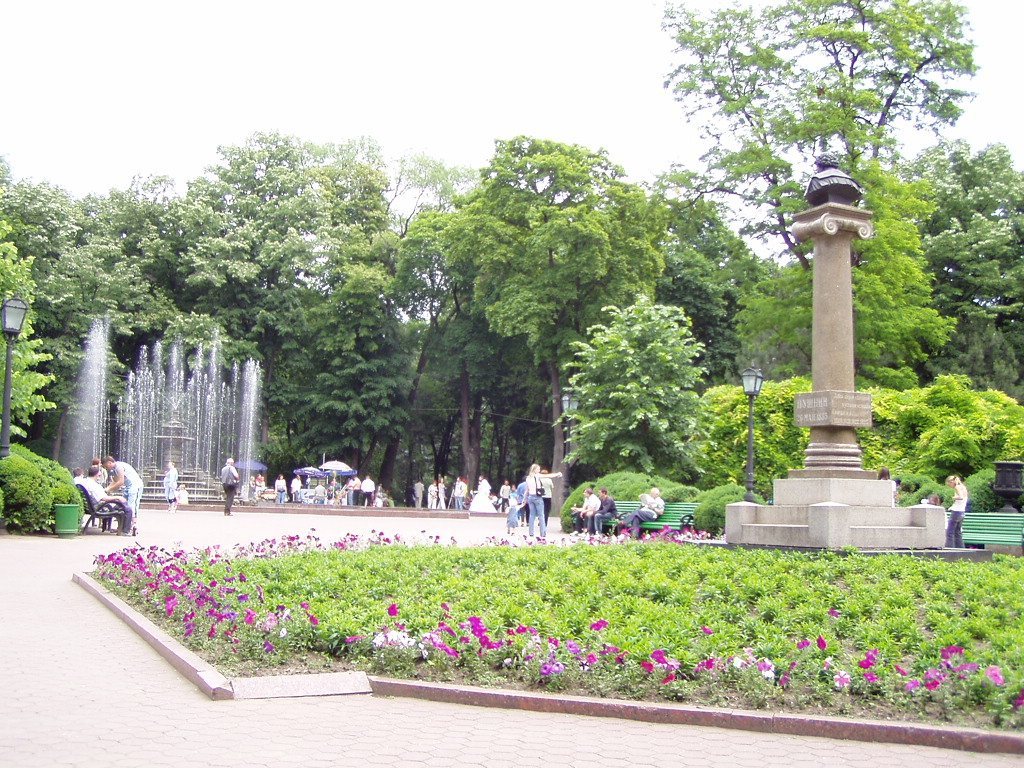
The monument and its garden setting
Form and materials
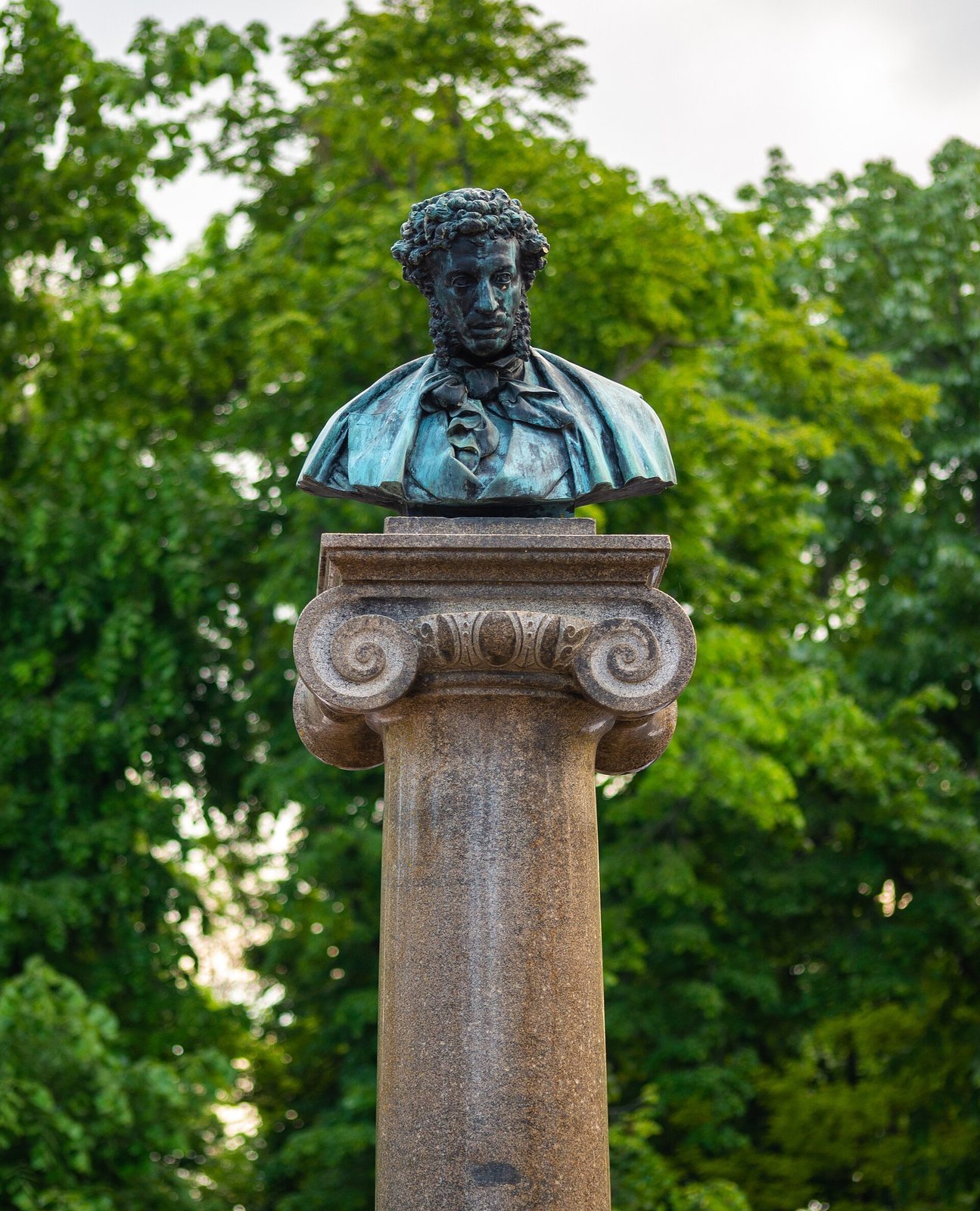
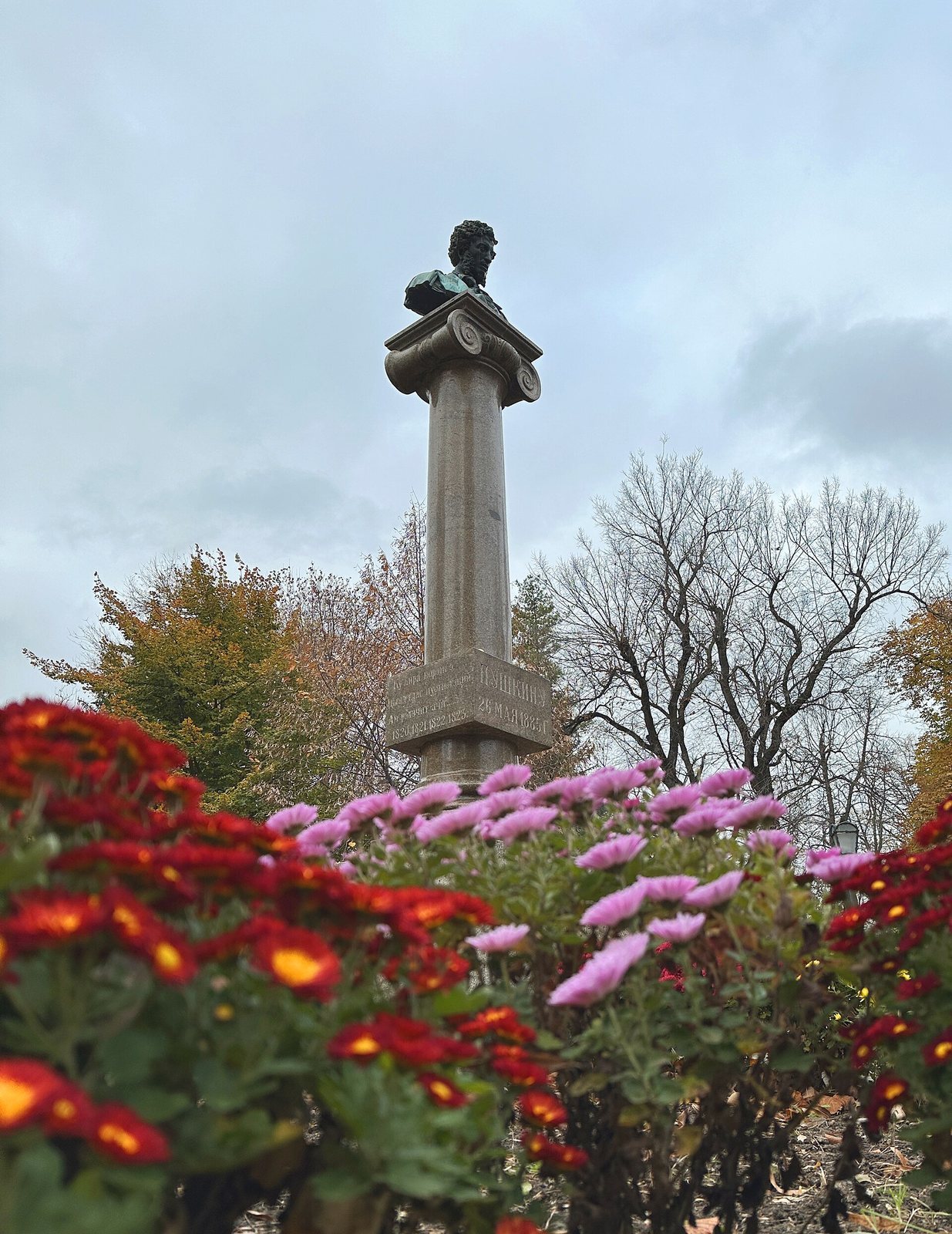
The monument is arranged vertically, with a bronze bust atop a pedestal shaped like an Ionic column, a classical form distinguished by scroll-shaped capitals. The column stands on a square stone base. Granite, donated by an anonymous benefactor, was used instead of the marble originally planned.
Inscriptions
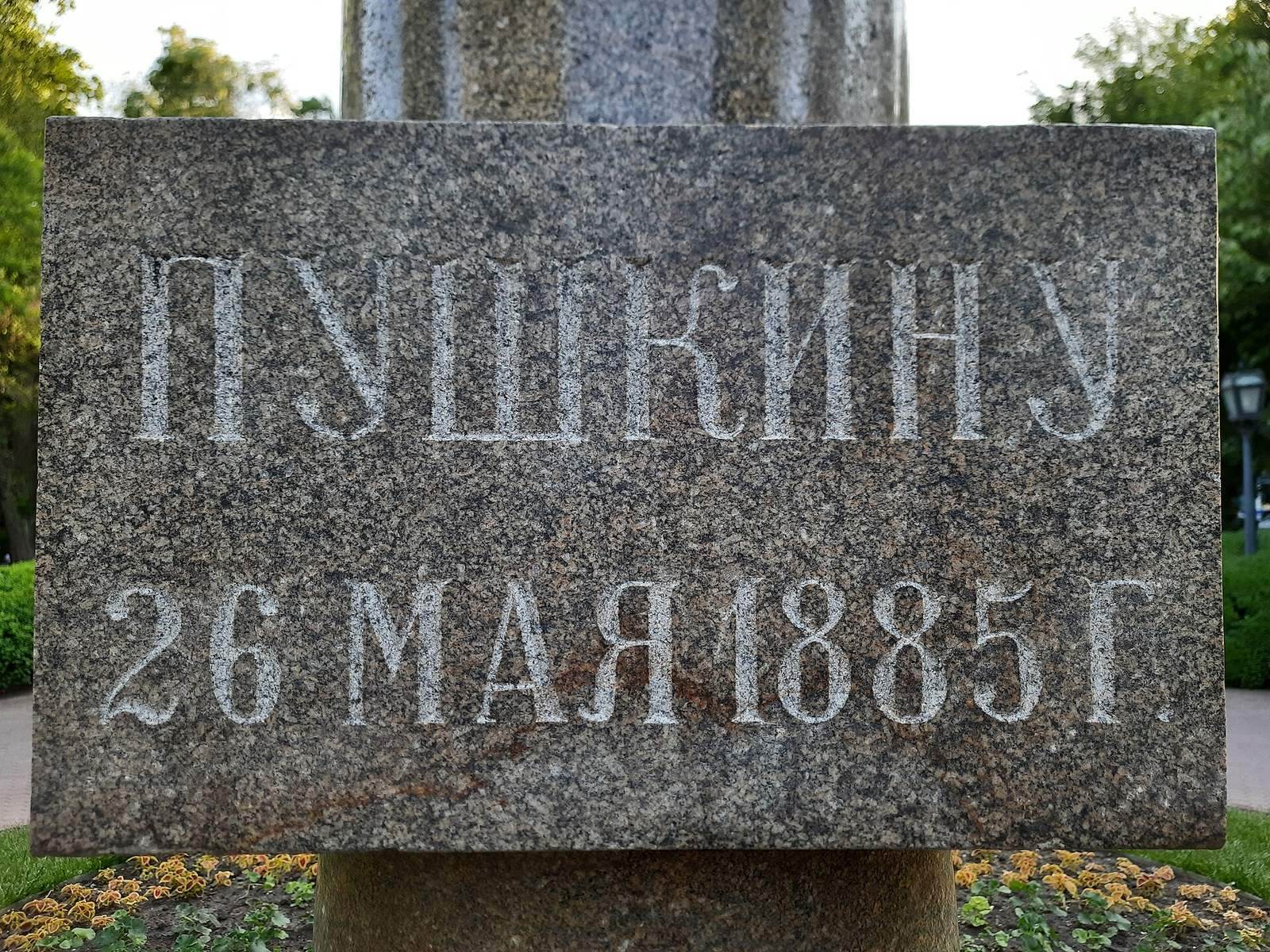
The pedestal’s front bears the inscription “To Pushkin, 26 May 1884,” the date originally intended for the inauguration. On the rear is an extract from Pushkin’s poem “To Ovid,” referring to his northern lyre and the shores of the Danube, followed by the years 1820, 1821, 1822, and 1823. Ovid was the ancient Roman poet addressed in Pushkin’s poem.
Position and replica
The monument was first intended for Pushkin Alley, near the public garden entrance at the intersection of Jukovski and Kiev streets, now Nicolae Iorga and 31 August 1989 streets respectively. That site was slightly south of the monument’s present position in the middle of the public garden. A chain fence once surrounded the monument and was removed in 1957. The plaster replica reproduces the bust and is displayed at the Pushkin House-Museum.