Sant’Andrea Priory: A Medieval Church of the Holy Sepulchre Order
Site at a Glance
- Popularity
- Low
- Country
- Italy
- Primary era
- Medieval
- Eras represented
- Medieval
- Civilizations
- Kingdom of Sicily, Norman
- Site type
- Religious
- Remains
- Church
On this page7 sections
History
Sant’Andrea Priory is a medieval church in northwestern Piazza Armerina, Italy, and the only surviving part of its original religious house. The priory’s foundation is dated to 1096 and attributed to a member of the Aleramici family, a noble family with territories in medieval Sicily, who was close to Roger I of Sicily, a Norman count. The church was built between 1100 and 1130 in a Sicilian form of Romanesque architecture, a medieval European style, with Arab-Norman features reflecting Arab and Norman influences. The priory became part of a network supporting pilgrims travelling to the Holy Sepulchre and helping defend Jerusalem.
Foundation and endowment
In 1106, Count Simone del Vasto, lord of Butera and Policastro, granted the site as a seat for the Knights of the Holy Sepulchre, a Catholic order connected with Jerusalem’s Christian holy sites. In 1148, Simone and his wife, Thomasia, gave the church and its attached monastery to the Order, along with a substantial endowment. The network supported pilgrims and was intended to shelter Christian forces in the event of military defeat. Its endowment contributed to Jerusalem’s defense until the city fell in 1244.
Rebuilding and the priory’s authority
The church may have been rebuilt after Piazza Armerina’s revolt against William I, a Norman king of Sicily, in which Augustinian Canons Regular, clerics living in community under the Rule of Saint Augustine, were involved. A rebuilding after the major earthquake of 1169, which affected east-central Sicily, is considered more likely. Aleramici counts first appointed the prior; later, the kings of Sicily made appointments subject to papal confirmation. For centuries, priors came from among Sicily’s leading figures and held a seat by right in the Sicilian Parliament, the kingdom’s political assembly.
The Grand Priory in the Aragonese period
During the Aragonese period, the priory became a Grand Priory, a senior administrative unit within a religious order, incorporating the priories of Sant’Elia of Adrano and Sant’Andrea of Lentini. At the initiative of Martin I of Trinacria and Maria of Sicily, Giovanni III Suriano, baron of Ramursura, became its first Grand Prior. He received the titles of Patriarch and Prince of Jerusalem and high and low jurisdiction over substantial commanderies, endowed properties or administrative units of the Order, and fiefs in Val di Noto and Val Demone. He was the first Grand Prior outside Palestine.
In 1392, Suriano received ducal rank and the thirty-fifth place among the peers of the kingdom. After Artale II Alagona went into exile, Suriano was recognized as holder of the countly lordship of Piazza, together with the associated captaincy and castellany, offices linked to military command and castle administration, of a new keep built by the rulers of Trinacria and Aragon. The church belongs to the Equestrian Order of the Holy Sepulchre of Jerusalem under the title of Sant’Andrea and Sant’Elia, and is entrusted to the Order’s Piazza Armerina delegation.
Remains
Plan and exterior
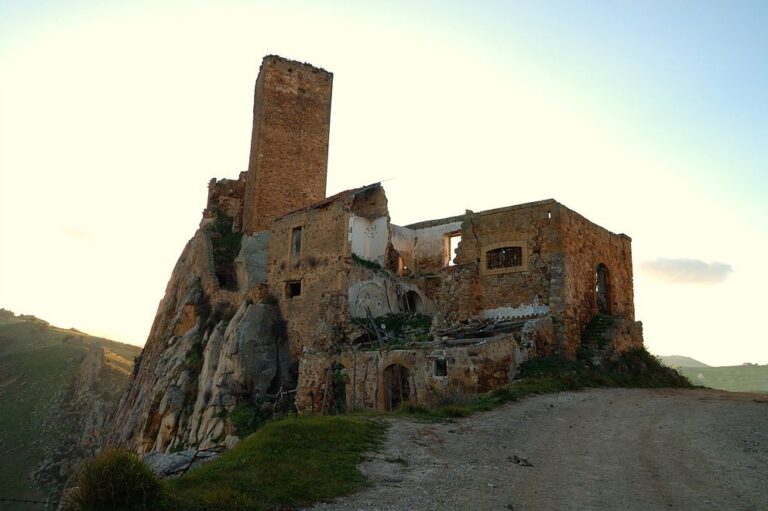
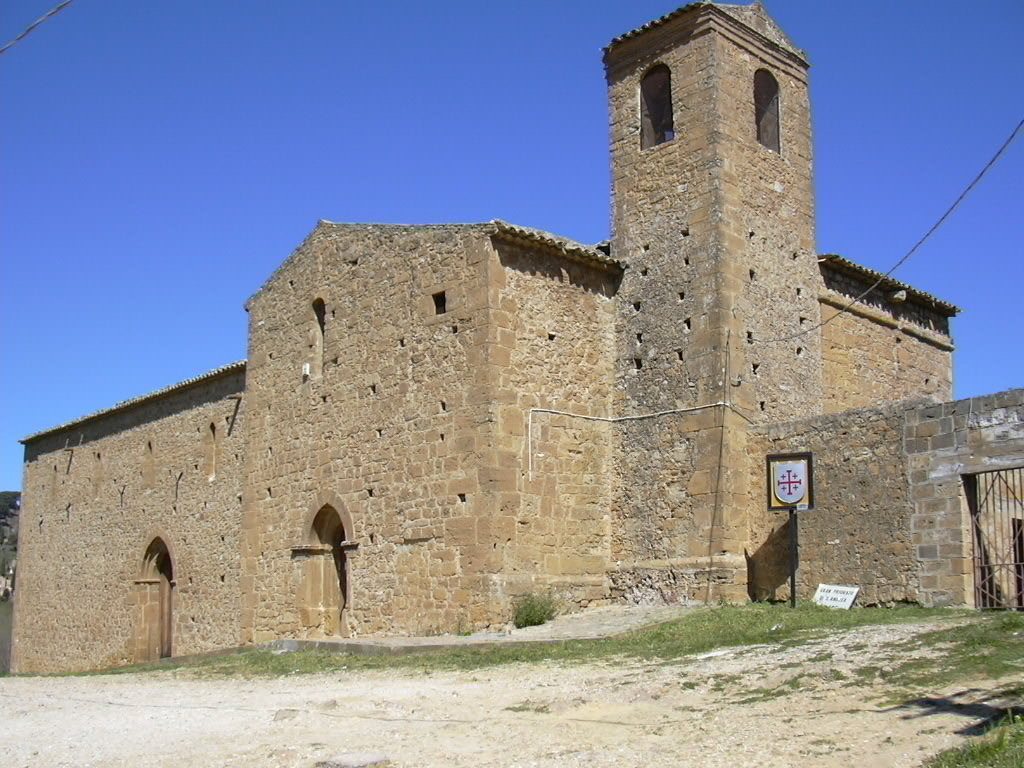
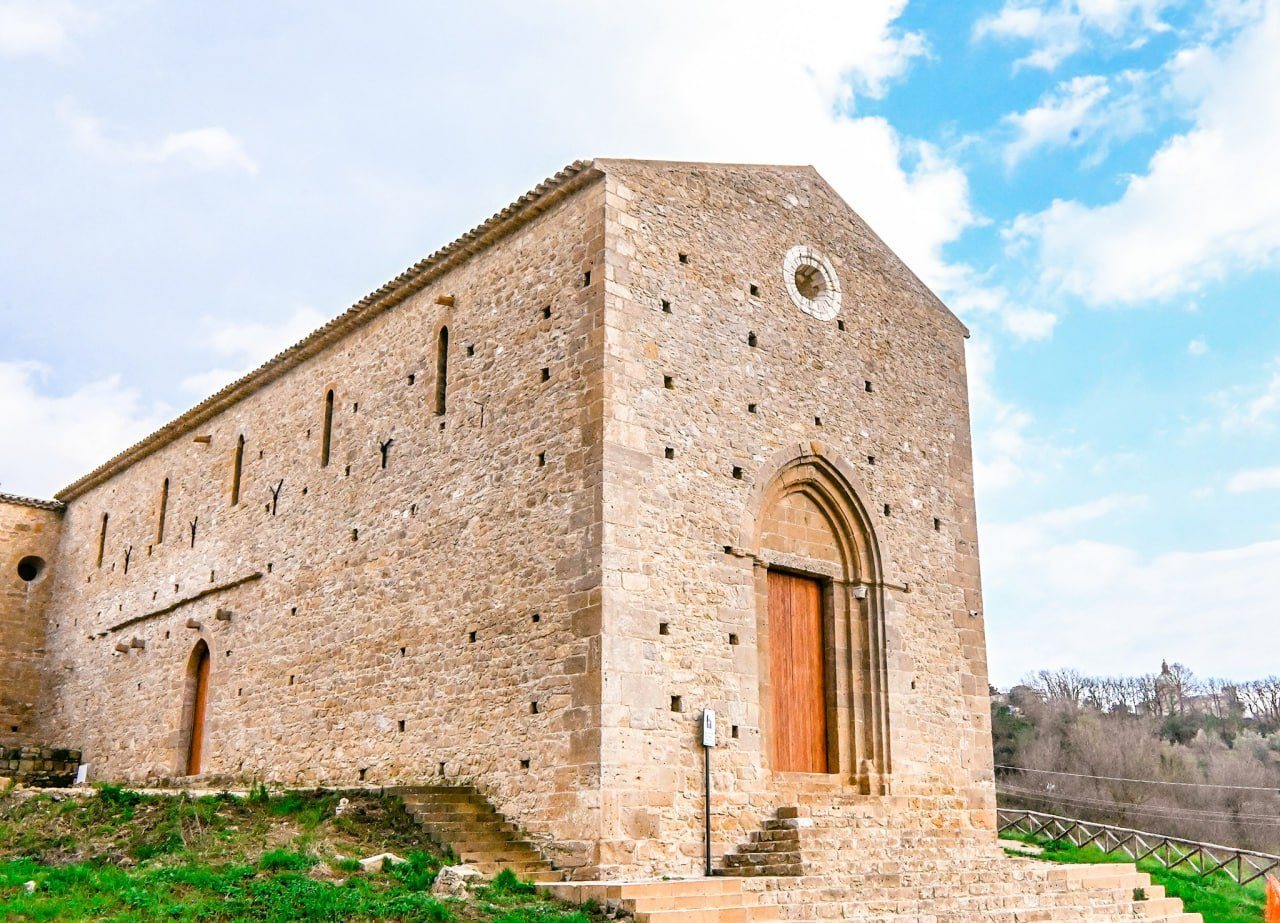
The church has a massive exterior with narrow, slit-like openings. Its plan takes the form of an Egyptian cross, also called a cross of Saint Anthony, a T-shaped design with the crossbar at the top of the upright.
Interior and decoration
A long, single nave, the main space of the church, leads to a raised choir, the area near the altar used by the clergy. The choir has a vaulted ceiling, a ceiling formed as a curve. Three apses, recesses commonly used as sanctuary spaces, are set into the wall, with a small bell tower attached to one of them. The doorways date to the thirteenth century, and the church contains wall paintings from the twelfth through fifteenth centuries.