Prieuré de Vaux-sur-Poligny: A Cluniac Priory in France
Site at a Glance
- Popularity
- Medium
- Country
- France
- Primary era
- Medieval
- Eras represented
- Medieval, Early Modern
- Civilizations
- French, Holy Roman Empire
- Site type
- Religious
- Remains
- Monastery
On this page14 sections
History
Traditions and foundation
The Prieuré de Vaux-sur-Poligny is a former Cluniac priory in the Jura region of France, founded around 1020 as a monastery affiliated with Cluny, a Benedictine abbey. A pre-Christian cult of a “Green Lady,” described as a Celtic deity of woods and springs, is thought to have been practiced at the site. After Christianization, devotion is thought to have shifted to the Virgin Mary, and a chapel may have been built before 1000 to shelter a revered wooden statue.
Otte-Guillaume, count of Burgundy, established the monastery in thanksgiving for surviving a conflict over the Duchy of Burgundy. After his father-in-law, Duke Henry I, died in 1002, King Robert the Pious challenged Otte-Guillaume’s claim. Otte-Guillaume eventually submitted to the king while keeping his lands in the County of Burgundy. A tradition, partly legendary, connects the foundation with a religious figure who had helped him travel from Italy to Henry’s court and later settled at Vaux, possibly where a small monastic community already existed.
Otte-Guillaume and his successors provided the monastery with salt-making rights at Salins-les-Bains and Grozon, land and serfs in Molain, Besain, and Montrond, as well as woodland, vineyards, fisheries, revenues, and tithes. The first church was consecrated in 1029. The monastery’s relationship with Cluny was approved in June 1033 by Hugues of Salins, archbishop of Besançon. A new priory church was dedicated in 1072, and another dedication is recorded around 1086–1090. The institution became a priory during the 12th century, with its first recorded mention under that name in 1109. Earlier charters called it a church or monastery; describing it as an abbey is inaccurate.
The medieval priory and its community
After a fire in 1315, the monastic buildings were reconstructed, and the cloister was completed in 1336 with help from the Cluniac order. The priory’s community was intended to number 16 monks, although recorded totals changed over time: 12 in 1358, 17 in 1377, and only five in 1662, following the Ten Years’ War, a conflict fought in Franche-Comté. The priors undertook inspection duties, including in Germany, and attended Cluniac general chapters between 1485 and 1626. The monks did not elect their prior; the abbot of Cluny appointed him, and he pledged obedience to the abbot.
From the 15th century, financial strain and disputes between priors and monks over religious observance and daily life prompted attempts at reform. In 1451 the priory came under commendam, an arrangement in which a prior held the house as a benefice and could receive its revenues without directing the community’s daily life. Its first commendatory prior was Jean Chevrot, bishop of Tournai and a native of Poligny. The priory also faced competition from Benedictine houses at Baume-les-Messieurs and Château-Chalon, Cistercian abbeys at Balerne and Rosières, and the growing town of Poligny, which developed other religious communities. Its influence remained limited as Cluny’s power declined during the 16th century.
Fire, rebuilding, and reform
Troops of Louis XI burned the priory in 1479. It suffered another fire in the 17th century during the conquest of Franche-Comté, after which the buildings were rebuilt. In 1688, prior Jean Ignace Froissard de Broissia began major works. These included raising the priory building, making the church’s bell tower tall enough for six bells, and rebuilding the convent buildings, including a dormitory designed for 17 monks. The community also pursued reform, including association in the 17th century with the Congregation of Saint-Vanne, a Benedictine reform movement.
Revolution and later uses
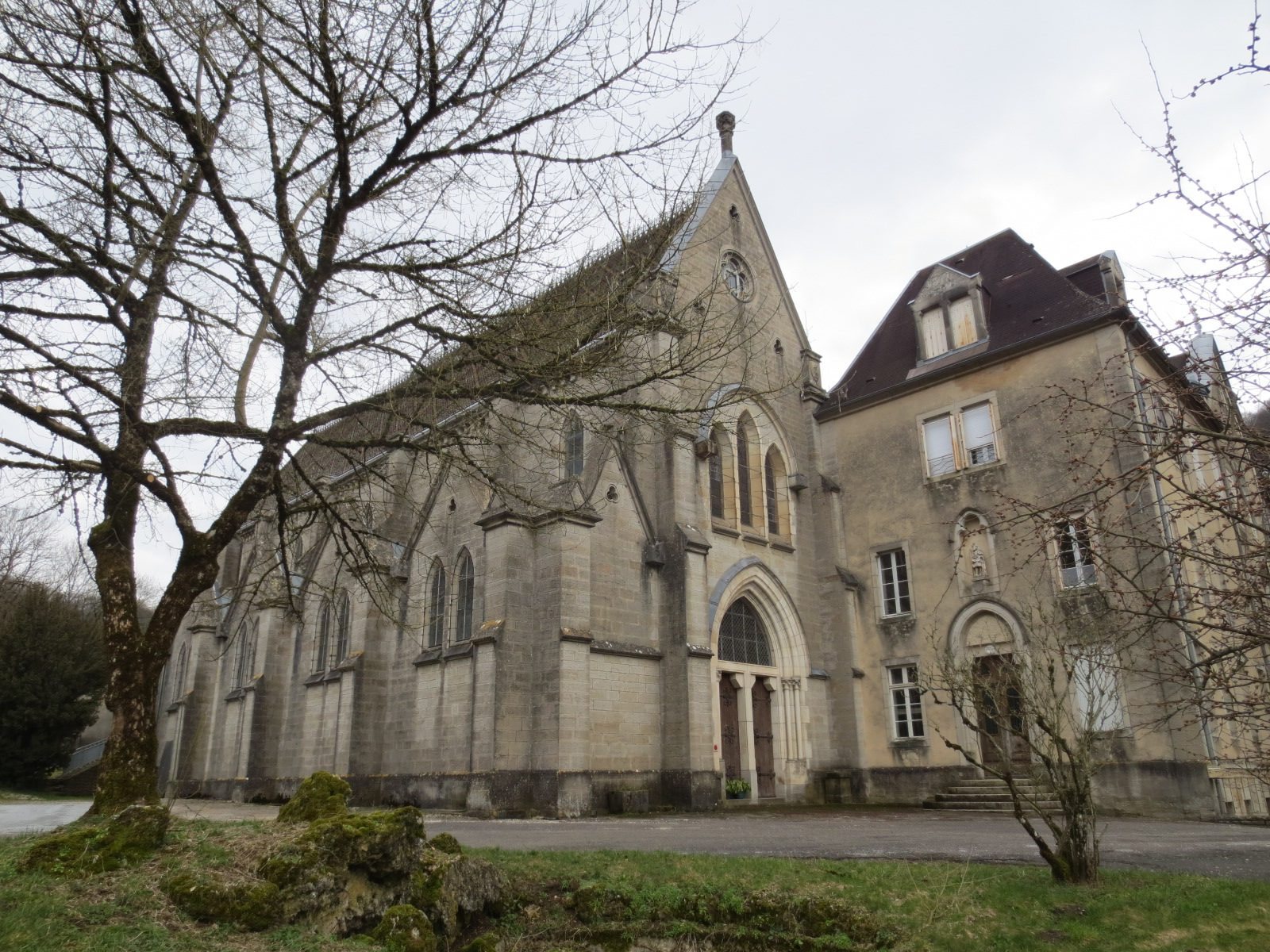
The priory closed during the French Revolution in 1790. The church was demolished, and other buildings were damaged. In 1822 the diocese of Saint-Claude acquired the ruins and rebuilt buildings around the cloister for a minor seminary, a school for boys preparing for the priesthood. After the church was rebuilt in the 1860s, the seminary later became a Catholic school in 1966 and then a private secondary school, which closed in 2009. Following the return of the statue of Notre-Dame de Vaux in 1910, the seminary temporarily operated at Courtefontaine until 1922. After the church was placed under sequestration in 1906, it passed to the commune of Vaux in 1910; the other buildings belong to a diocesan association.
Local people hid the original statue of Notre-Dame de Vaux in a nearby château chapel after the laws separating church and state. It returned to the church in a procession attended by about 1,500 people in 1910. Its painted surface remained intact in 1938, but insect damage led to its treatment in 1939: an artist removed the paint and applied a dark finish resembling waxed oak. A copy was commissioned at the same time.
The church was entered on the register of historic monuments in 1927. In 1998, protection was extended to the stairwell and staircase, interior decoration, and the cloister’s vaults and galleries. Pierre-François Néron (1818–1860), a former pupil who became a Catholic missionary and was later canonized, became patron of the Association of Former Pupils and Friends of Vaux. The association erected an altar with his statue in the 1930s. The bishopric borrowed the statue in 2008 for a celebration in Bornay, and its return was still being sought in 2021.
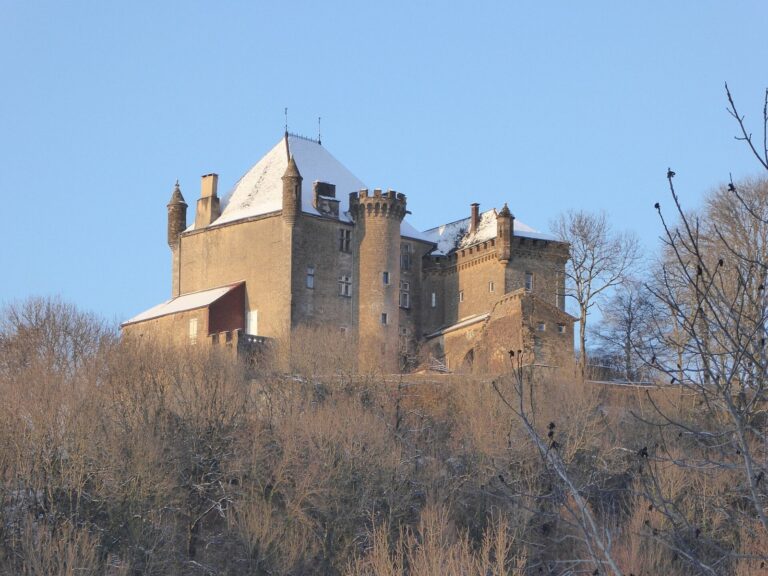
A residential château was built on the site of a priory mill at the initiative of Abbé Petit, seminary director from 1860 to 1876. His heir, Louis Milcent, completed the building.
Remains
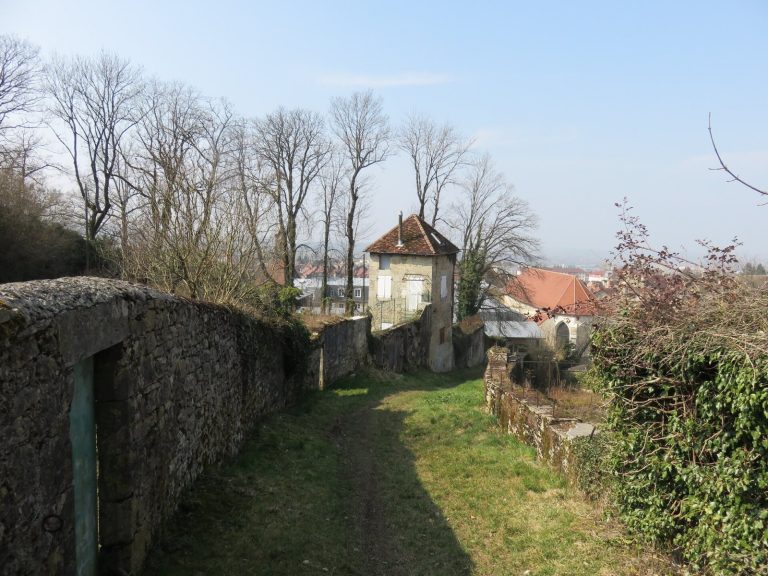
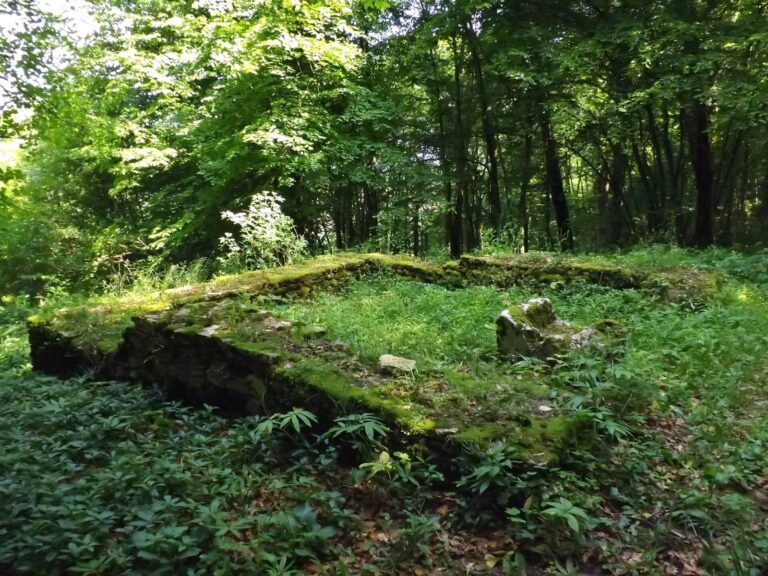
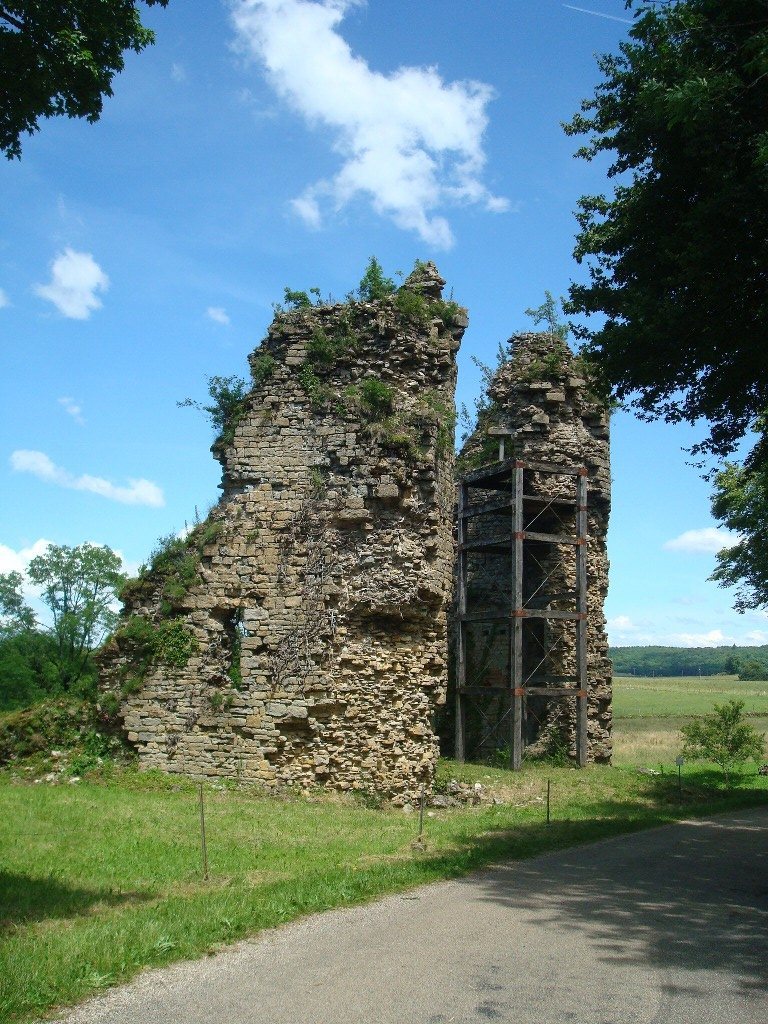
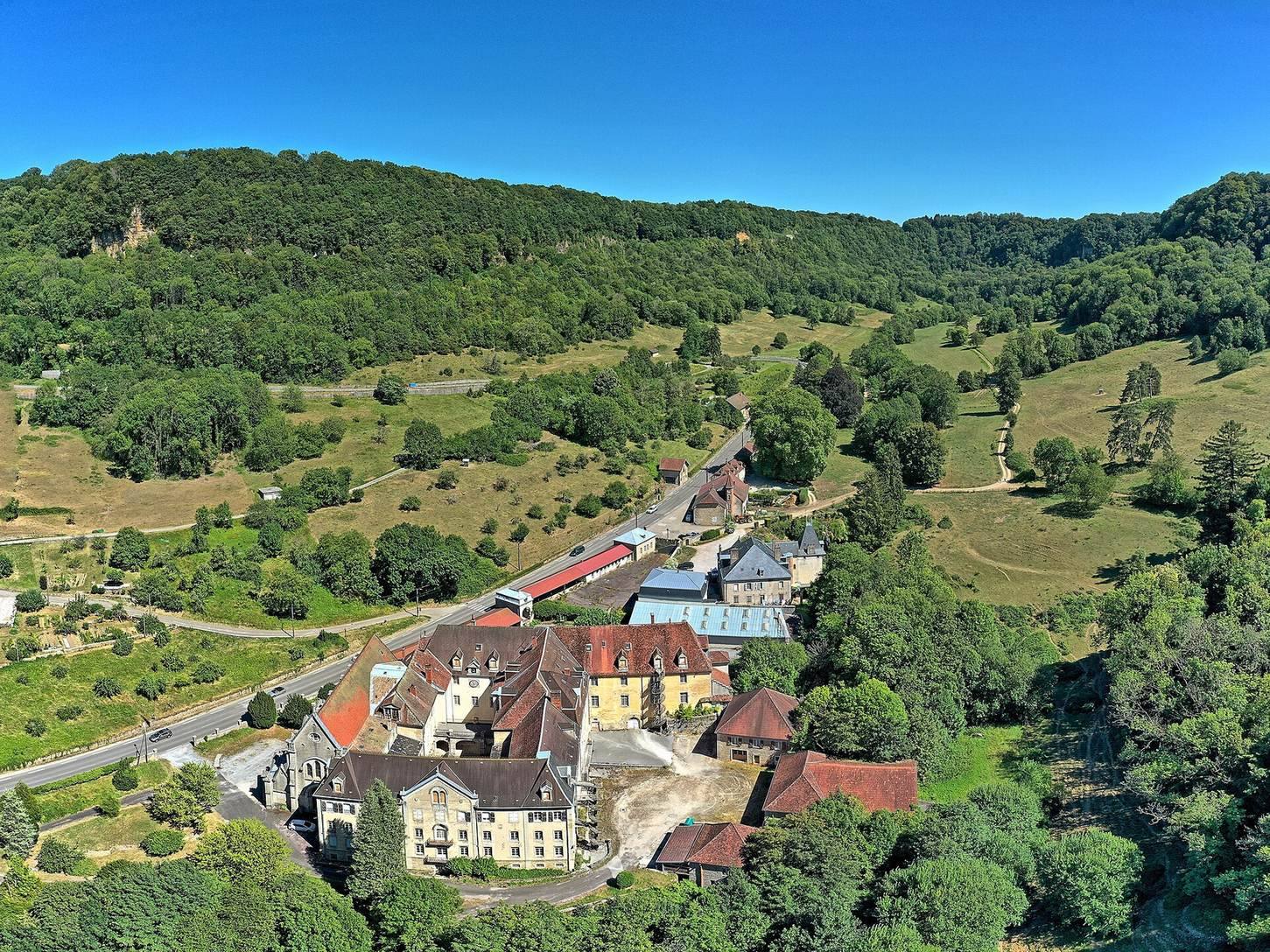
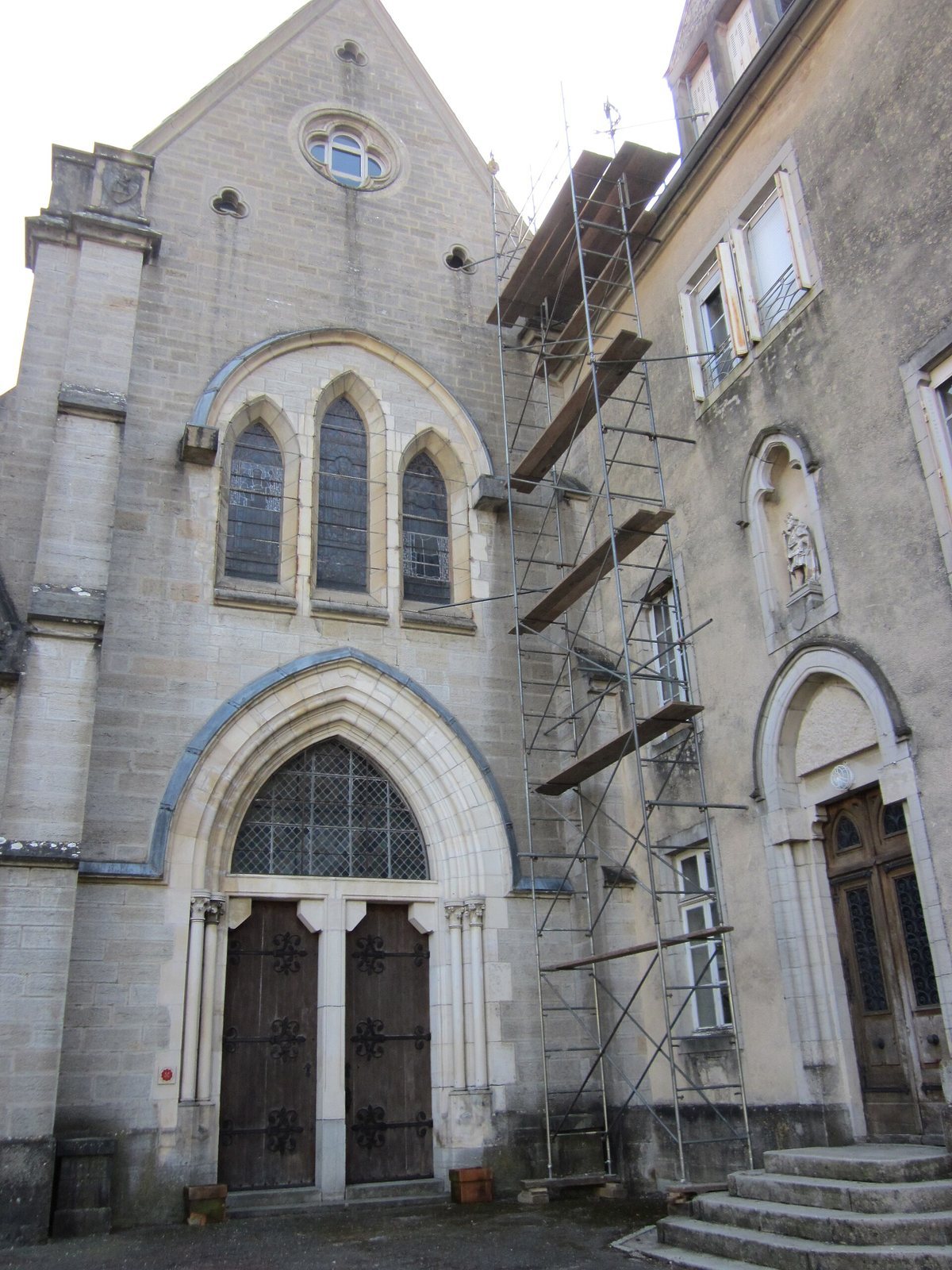
The priory occupies the Vaux-sur-Poligny valley, a steep-sided Jura valley crossed by the Glantine River, near Poligny. Its surviving buildings reflect successive religious and educational uses, with the church and other structures arranged in relation to the cloister. Only the chapel wall and south portal remain from the medieval construction.
Church and cloister
Church
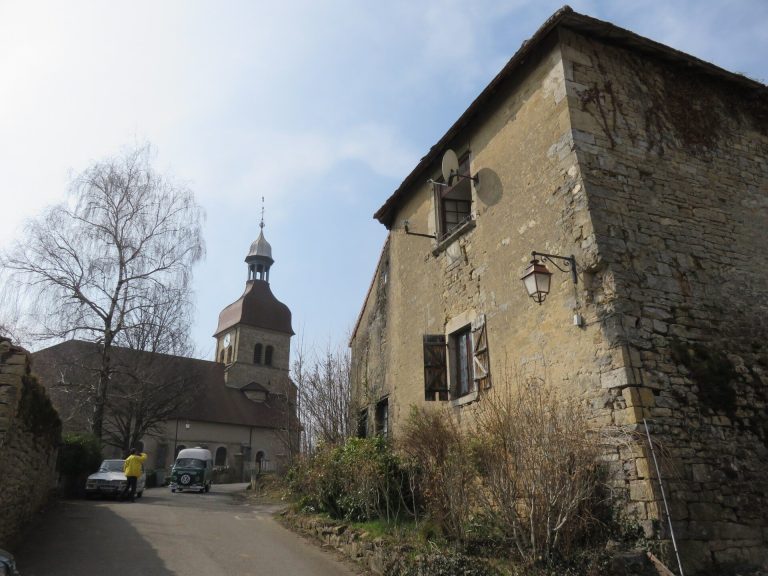
The present church was rebuilt between 1863 and 1866 and has a roof of glazed tiles. Its tall bell tower belongs to the rebuilding begun in 1688, when it was raised to hold six bells. The church preserves the site’s continuing religious use after the earlier medieval church was demolished during the Revolution.
Cloister and convent buildings
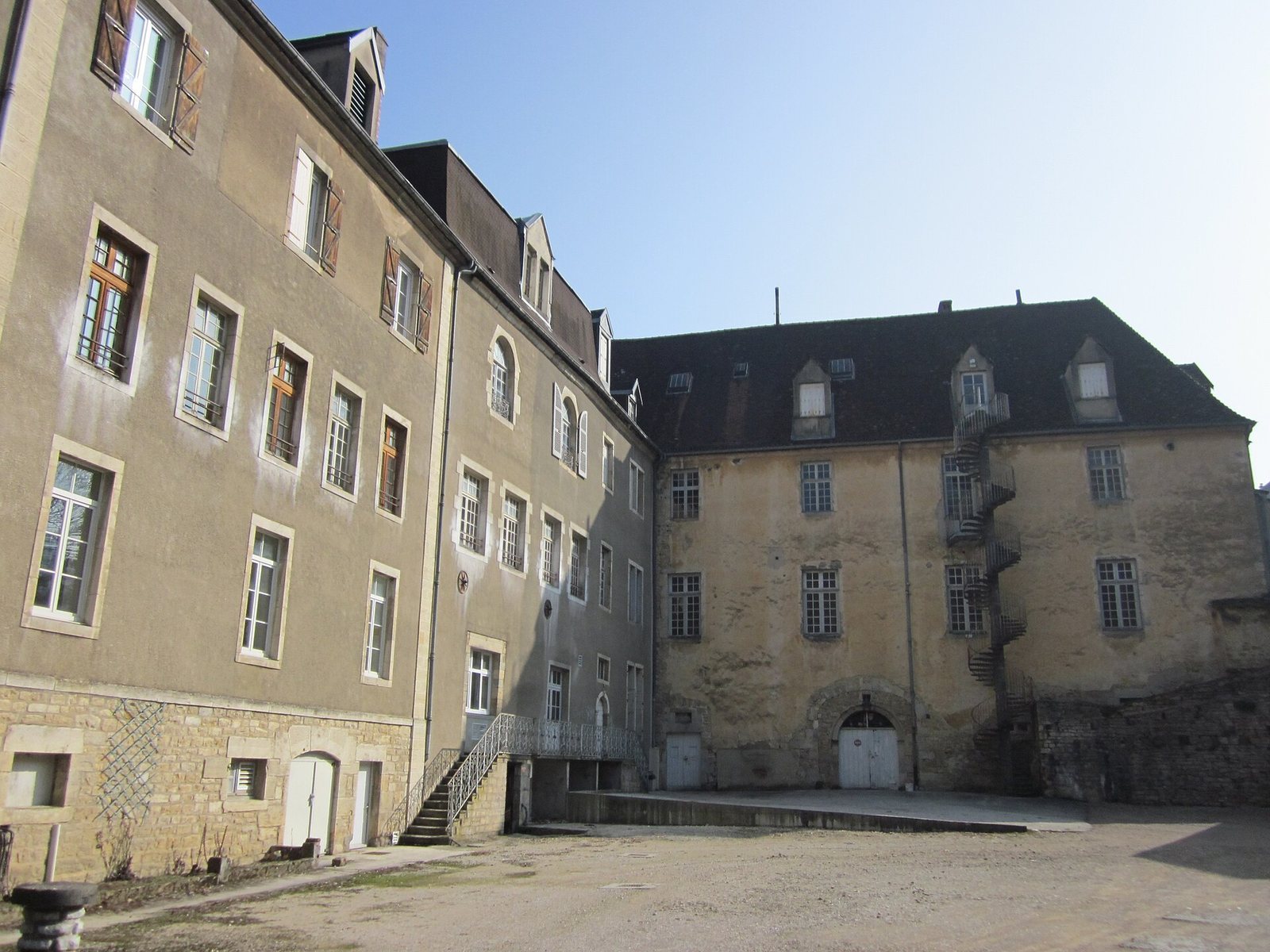
The seminary buildings were arranged around the cloister courtyard. The cloister’s surviving galleries and vaults, along with the stairwell, staircase, and interior decoration, form part of the later complex. The wider group includes the reconstructed convent buildings and the large dormitory intended for 17 monks.
Devotional and commemorative features
Notre-Dame de Vaux
The original 13th-century statue is carved from painted wood and shows the Virgin holding the child on her lap. It was venerated for centuries as miraculous. After its 1939 treatment, it was kept in a small chapel opening onto the upper level of the large chapel; it is now held at the bishopric in Saint-Claude. The commissioned copy stands on the altar dedicated to Notre-Dame de Vallibus.
Néron memorial
The altar erected in the 1930s bears a statue of Pierre-François Néron. The bishopric borrowed the statue in 2008, and it had not been returned to the church by 2021.
Organ
Philippe Hartmann built the church’s neo-Baroque organ, a design that revives features of Baroque-era instruments. Organist Michel Chapuis inaugurated it on 1 May 1963. The former pupils’ association funded and maintained the instrument, which became known for its part in the 20th-century renewal of organ sound and refinement of timbre.
Château and grounds
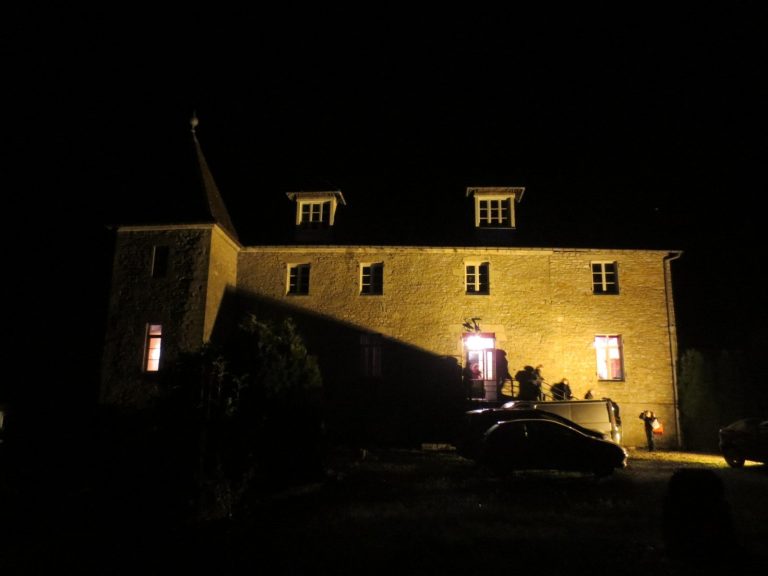
The residential château includes a private funerary chapel. Its landscaped park is crossed by the Glantine and incorporates features around a waterfall 13 metres high.