Prémontré Abbey: Mother House of the Premonstratensian Order
Site at a Glance
- Rating
- 4.8
- Popularity
- Very Low
- Country
- France
- Primary era
- Early Modern
- Eras represented
- Medieval, Early Modern
- Civilizations
- French
- Site type
- Religious
- Remains
- Monastery
On this page5 sections
History
Prémontré Abbey, about 20 km west of Laon in France, was founded in 1120 by Norbert of Xanten as the first and mother house of the Premonstratensian Order of Canons Regular. Its members were clergy who lived in a religious community under a rule. The Roman Catholic abbey stood in the Forest of Voas, on uncultivated land given by Bartholomew, Bishop of Laon. Monks from a Laon abbey had previously tried, without success, to cultivate the site. Prémontré was attached to the Diocese of Soissons.
A tradition about the foundation places Norbert and Bishop Bartholomew at the site in mid-January. It says that on 25 January, the Feast of the Conversion of Saint Paul, the bishop gave Norbert a white religious habit. The name Praemonstratus or pratum monstratum in the land charter may refer to a meadow or clearing in the forest. A life of Godfrey of Cappenberg, written in 1127, interpreted it instead as a place foreshown.
The abbey church was consecrated on 28 April 1122 by Bartholomew and Lisiard, Bishop of Soissons. The community became known as the Premonstratensians, or Norbertines. After the church council at Liège in 1131, Pope Innocent II and Norbert visited Prémontré with Bishop Bartholomew. Around 500 priests, other clerics, and lay brothers lived there under Abbot Hugh of Fosse.
Growth of the order
Premonstratensians initially established communities for both men and women. In 1141, a general chapter of the order decided that women’s convents should be at least a league from men’s abbeys. A league was a traditional measure of distance whose length varied. Hugh died on 10 February 1161 and was succeeded by Philip, previously abbot of Belval. In 1252, Abbot John II founded a college at the University of Paris for Norbertine clerics.
Commendatory abbots and reform
In 1535, after Virgilius, the order’s forty-third leader, Italian cardinal Francesco Pisani took possession of the abbey and its revenues as commendatory abbot. The title gave him the abbey and its income, but did not necessarily mean that he governed the community. Cardinal Ippolito d’Este, a papal representative in France, succeeded Pisani and held the abbey in this capacity until his death in 1572. The historian Charles Taiée later called the two cardinals the scourges of Prémontré.
After d’Este’s death, the community elected Jean Des Pruets as abbot, and Pope Gregory XIII confirmed the election on 14 December 1572. Des Pruets worked to repair the abbey’s financial losses and reinforce discipline at Prémontré and other Premonstratensian houses. He died on 15 May 1596. François de Longpré and then Pierre Gosset followed him; later, French cardinal and statesman Armand-Jean du Plessis de Richelieu held the abbey as commendatory abbot. Jean-Baptiste L’Écuy, elected in 1781, was its last abbot.
Revolution, industry, and institutional use
During the French Revolution, the abbey was suppressed and its property confiscated and sold. The purchaser, Cagnon, demolished several buildings and sold their materials. In the early 1790s, the property became a potash and saltpetre factory. The buyer was also required to establish a glassworks. The Deviolaine family raised the capital, and the glassworks opened in 1803. It first produced champagne bottles, then added window glass, colored glass, and bell-shaped glass covers for gardens from 1807.
Foreign troops occupied France in 1814 and 1815, stayed at the site, and pillaged the factory. Paul Deviolaine restored the works and introduced the manufacture of flat glass sheets in 1826. The factory burned fuel from the Forest of Saint-Gobain, then owned by Prince Louis-Philippe of Orléans. When Louis-Philippe became King of the French in 1830, he granted the factory the supply of bottles and glassware for the royal court. As production grew, Deviolaine moved the works to Vauxrot.
After passing through several owners, the property came to Paul-Armand de Cardon de Garsignies, Bishop of Soissons. His successor sold it to the Department of Aisne in 1861. The former abbey buildings were listed as historic monuments in 1862, and the department converted them into an asylum in 1867. The site continues to house a public mental health institution.
Remains
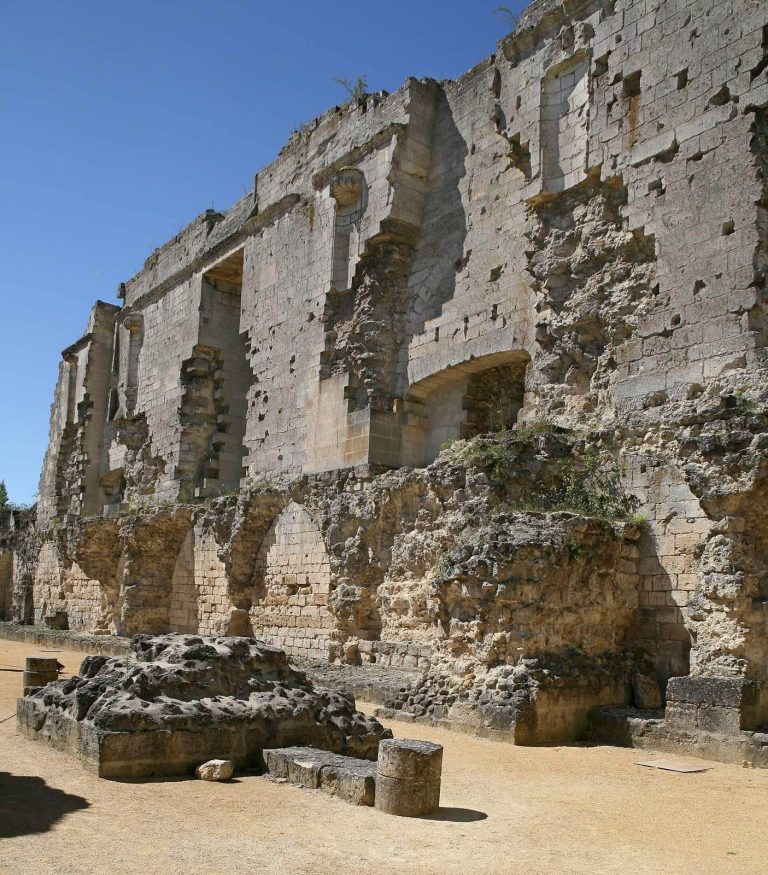
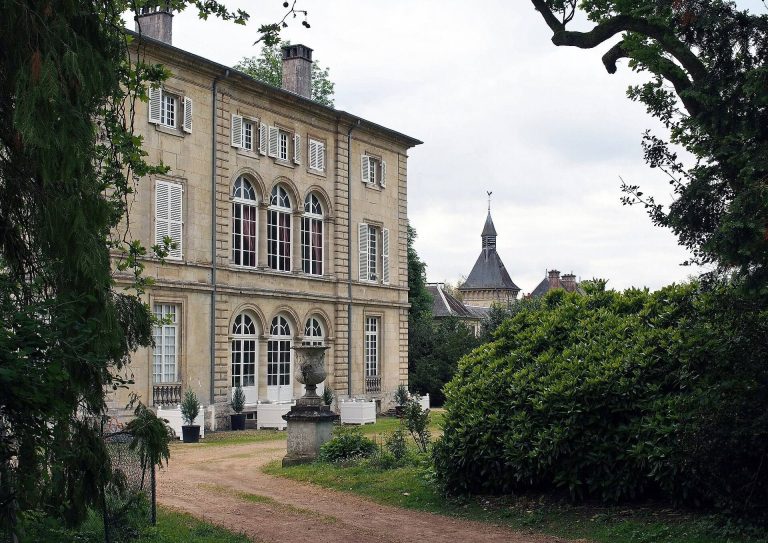
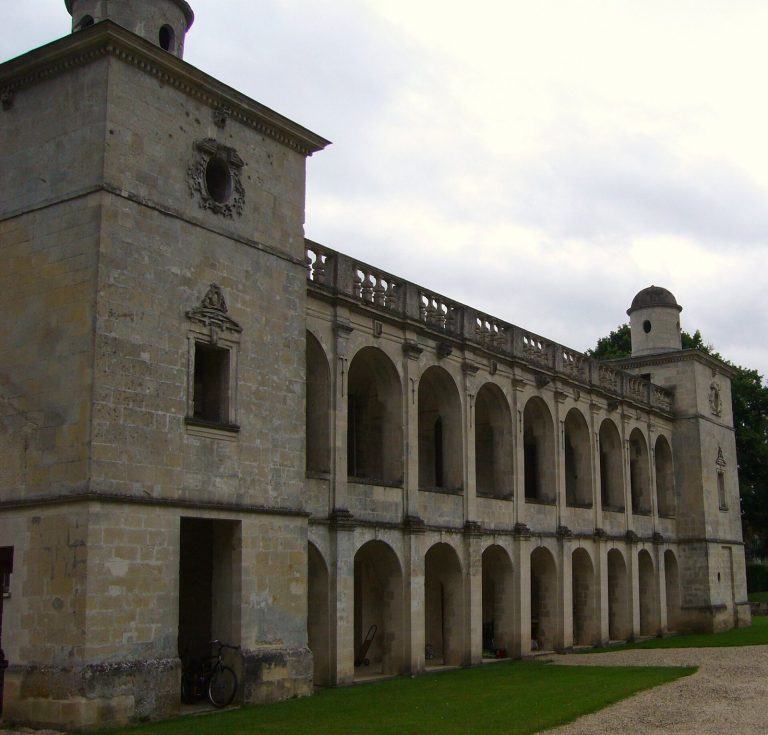
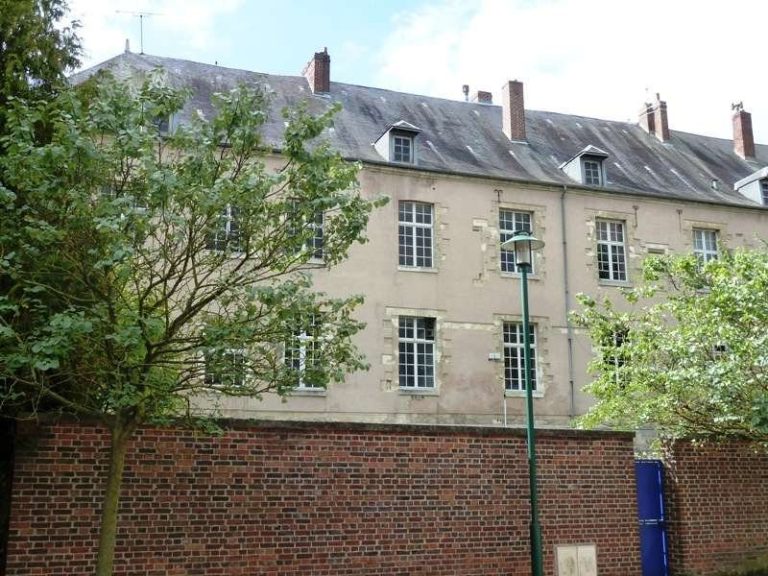
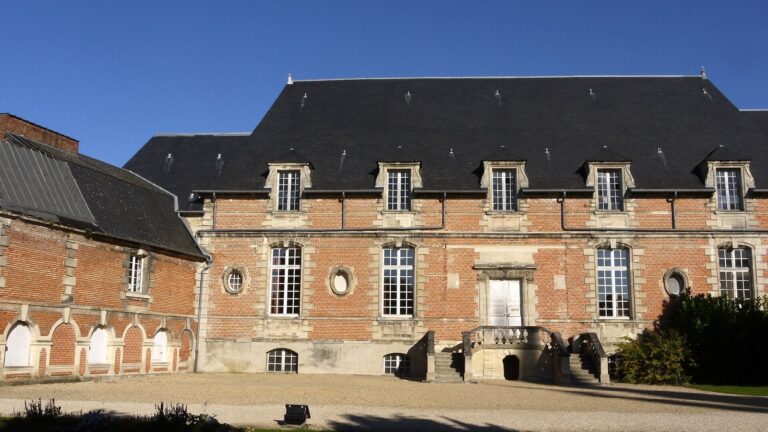
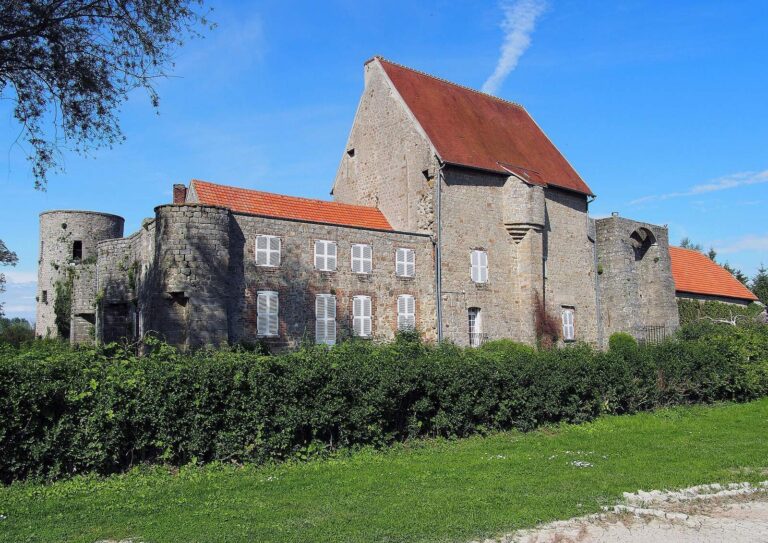
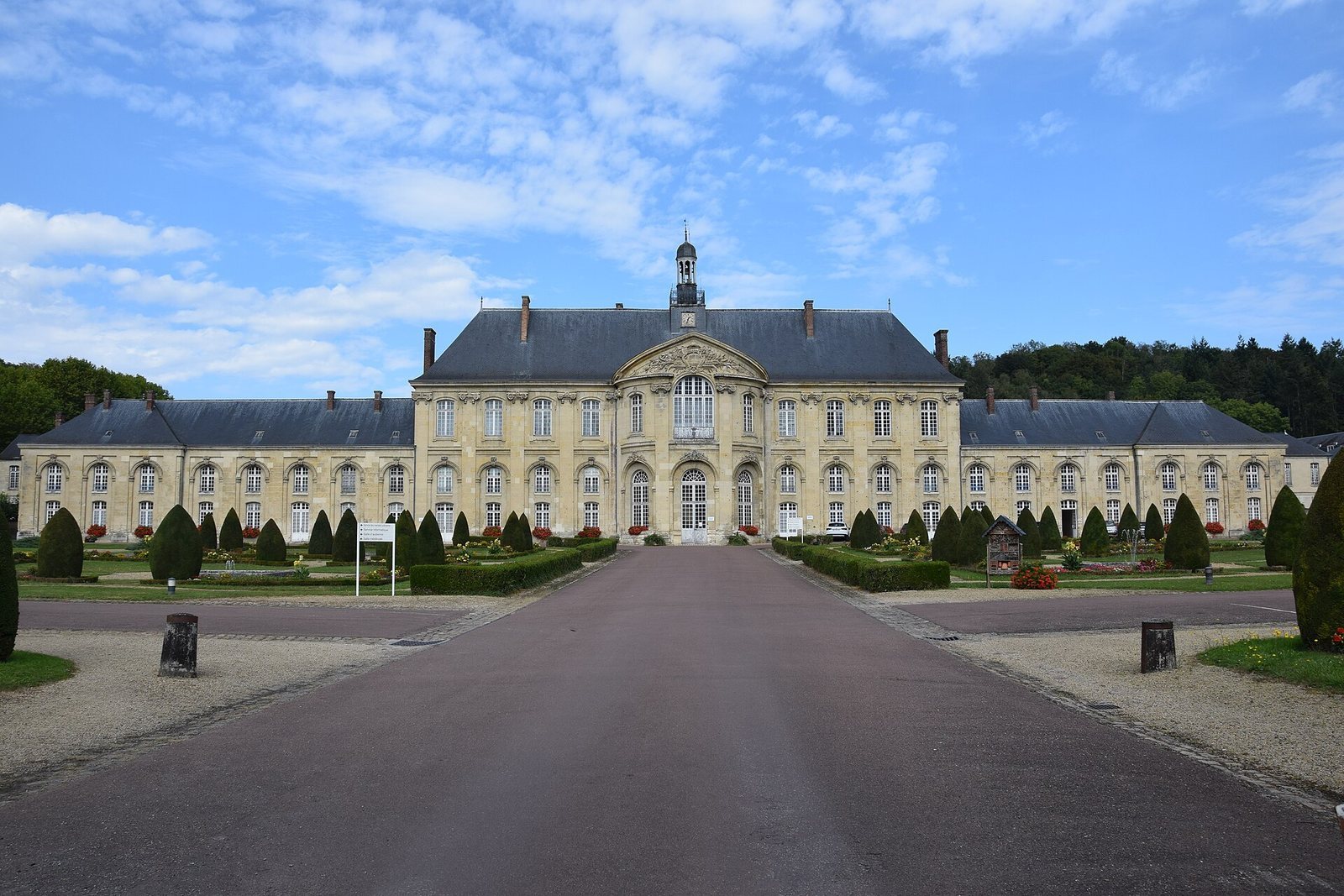
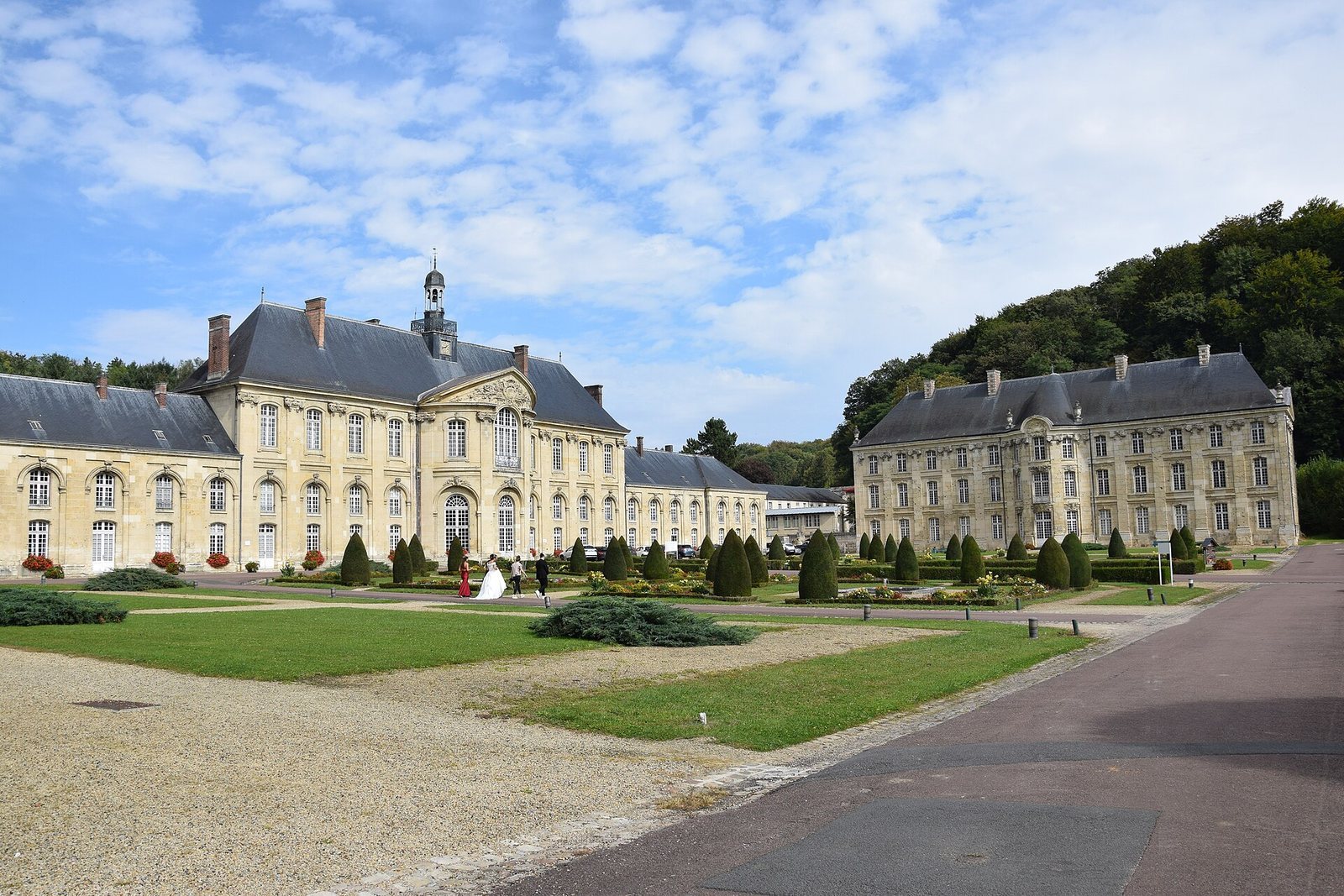
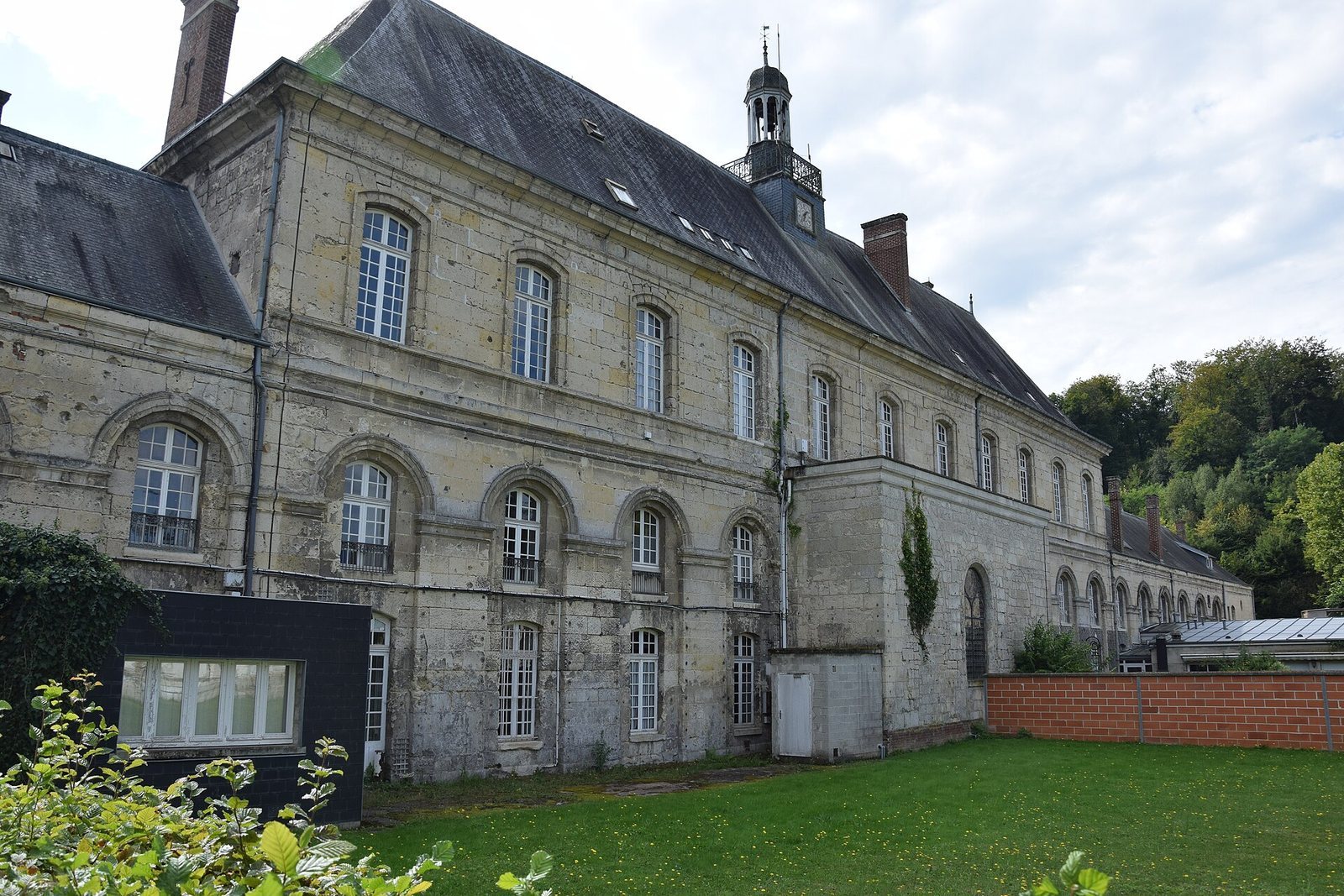
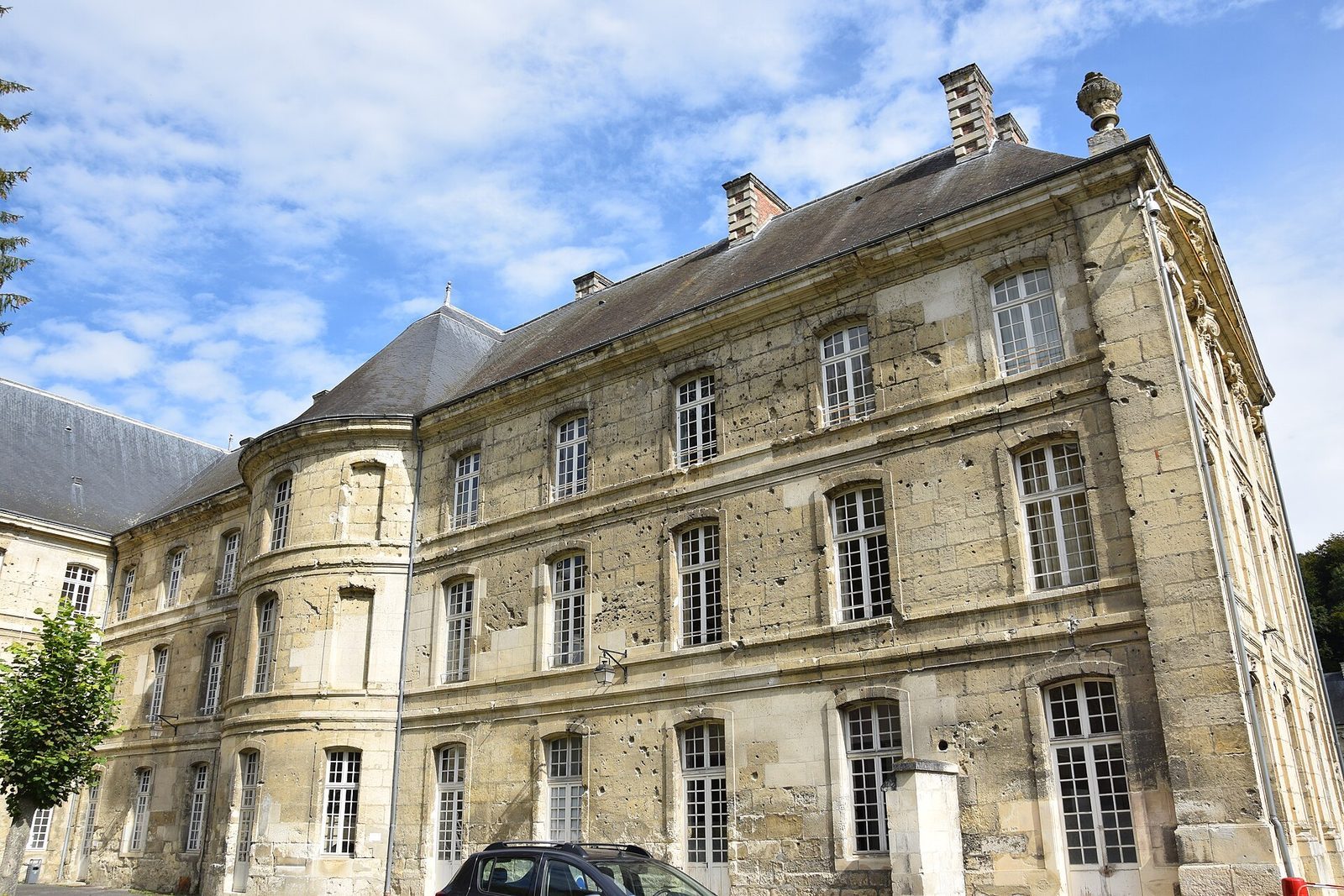
The surviving complex includes three large buildings dating from the seventeenth and eighteenth centuries, while little remains from the abbey’s twelfth- to sixteenth-century phases. The principal abbey building and a chapel are identified within the complex. Part of one building serves as a church dedicated to Saint Norbert, and most of the site is used by the public mental health institution. A monumental staircase is supported by a vaulted structure dating to 1730 and attributed to architect Nicolas Bonhomme.