Sanctuary of Endovélico at São Miguel da Mota: A Roman Religious Site in Portugal
Site at a Glance
- Rating
- 4.5
- Popularity
- Very Low
- Country
- Portugal
- Primary era
- Classical
- External website
- Open
- Eras represented
- Classical, Modern
- Civilizations
- Portuguese, Roman
- Site type
- Religious
- Remains
- Sanctuary
On this page9 sections
History
The Sanctuary of Endovélico at São Miguel da Mota is an archaeological religious complex in Portugal, probably established under Roman rule in the first century AD. It became a center of worship for Endovélico, a god of the Lusitanians, an ancient people of western Iberia.
Pre-Roman Activity and Roman Worship
Human activity on the hill probably began in the Neolithic, the later Stone Age, and the Chalcolithic, or Copper Age. A small defended settlement may have occupied the summit during prehistoric times. Archaeologist José Leite de Vasconcellos initially interpreted the later ruins as a pre-Roman settlement, probably from the Iron Age. Subsequent investigations could not securely assign the finds to that period and instead interpreted the remains as a religious complex. Pre-Roman objects were nevertheless recovered.
Endovélico belonged to a polytheistic religious tradition, in which multiple deities were worshipped, and his cult was later adapted to Roman practice. The god’s name is not Latin in origin, supporting the view that worship began before Roman rule. The cult may have become associated with medicine and the afterlife. Endovélico was first worshipped at a sanctuary now called Rocha da Mina. The Romans probably transferred the cult to São Miguel da Mota in the first century AD, although the older sanctuary may have continued in use during the Roman Republic, the political system that preceded the Roman Empire.
Christian Use and Local Traditions
In the fifth century, the sanctuary was adapted for Christian worship. A nearby chapel dedicated to the Archangel Michael was built with material from the pagan structure. The dedication was considered apt because Michael, like Endovélico, was associated with medicine. The name São Miguel da Mota combines the archangel’s name with that of a nearby place.
The 1758 parish memoirs attributed the sanctuary’s foundation to Maharbal, a Carthaginian commander, in 340 BC. That story was later discredited. The memoirs also equated Endovélico with Cupid, an identification Pedro Azevedo considered a learned invention. They described a silver image with a heart at its mouth and wings at its feet, priestesses, and sacrifices of a white lamb at stone structures regarded as altars. Another story claimed that a marble image had replaced one shattered at the birth of Christ, then been built into the chapel wall and broken by children after it was found.
The memoirs also called the chapel of Nossa Senhora da Assunção, later the Sanctuary of Nossa Senhora da Boa Nova, a temple of Jupiter Endovélico. This identification rested on inscribed stones taken from São Miguel da Mota. An eighteenth-century geographical dictionary described the chapel as very old and believed it predated the church of Nossa Senhora da Boa Nova. Its roof collapsed during interior work in the nineteenth century.
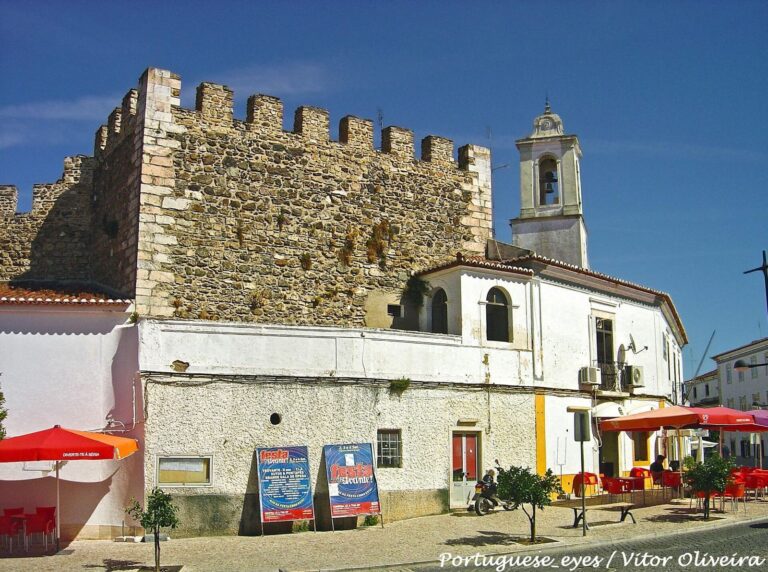
São Miguel da Mota and Rocha da Mina form part of a wider group of sacred sites along the Ribeira de Lucefécit, used from pre-Roman times into the Middle Ages. The area also contains medieval graves and churches, including those at Fonte Santa, São Miguel da Mota, and Nossa Senhora da Boa Nova; some churches were built over pagan structures. Pilgrimages to Nossa Senhora da Boa Nova continue. Leite de Vasconcellos also proposed possible connections with Castelo Velho, a fortified settlement around five thousand years old, and Castelinho, a Roman fort.
Archaeological Study and Recognition
Teodósio, Duke of Braganza, ordered seven inscribed stones from the site to be taken to the Augustinian church in Vila Viçosa, and six more were later added there. Gabriel Pereira surveyed the site’s plan late in the nineteenth century. In 1890, archaeological work by Leite de Vasconcellos demolished almost all of the chapel, including its foundations, leaving only a small section of floor. A geodetic marker, a fixed point used for surveying and mapping, was later placed at the summit. In 1906, King Carlos I presented five Endovélico-inscribed stones to the Portuguese Ethnographic Museum. They were the only survivors of the thirteen stones kept at the church in Vila Viçosa.
Work in 1992 assessed the remains and possible effects of a eucalyptus plantation to the north. A new campaign began in 2002 to interpret the earlier excavations and evaluate the site’s research potential. It found that structural remains were concentrated mainly on the eastern slope, where changes in the terrain suggested buried buildings. Work on part of the chapel floor found no Roman temple beneath its foundations, but recovered sculptures and three further inscribed pieces dedicated to Endovélico. In 2003, investigators concluded that ruins associated with breaks in the terrain probably belonged to a later period, not the ancient temple. A full survey in 2004 confirmed the absence of Roman structures beneath the chapel foundations.
Excavations on the summit and eastern slope in 2006 indicated substantial buildings and recovered Roman-period material in the highest area, along with evidence probably dating to the late Neolithic and early Chalcolithic. Further work in 2007 uncovered additional prehistoric material that may have formed part of defenses for an early settlement. The site was classified as a Property of Public Interest in 1997 under the name Povoado fortificado e Santuário de Endovélico.
Remains
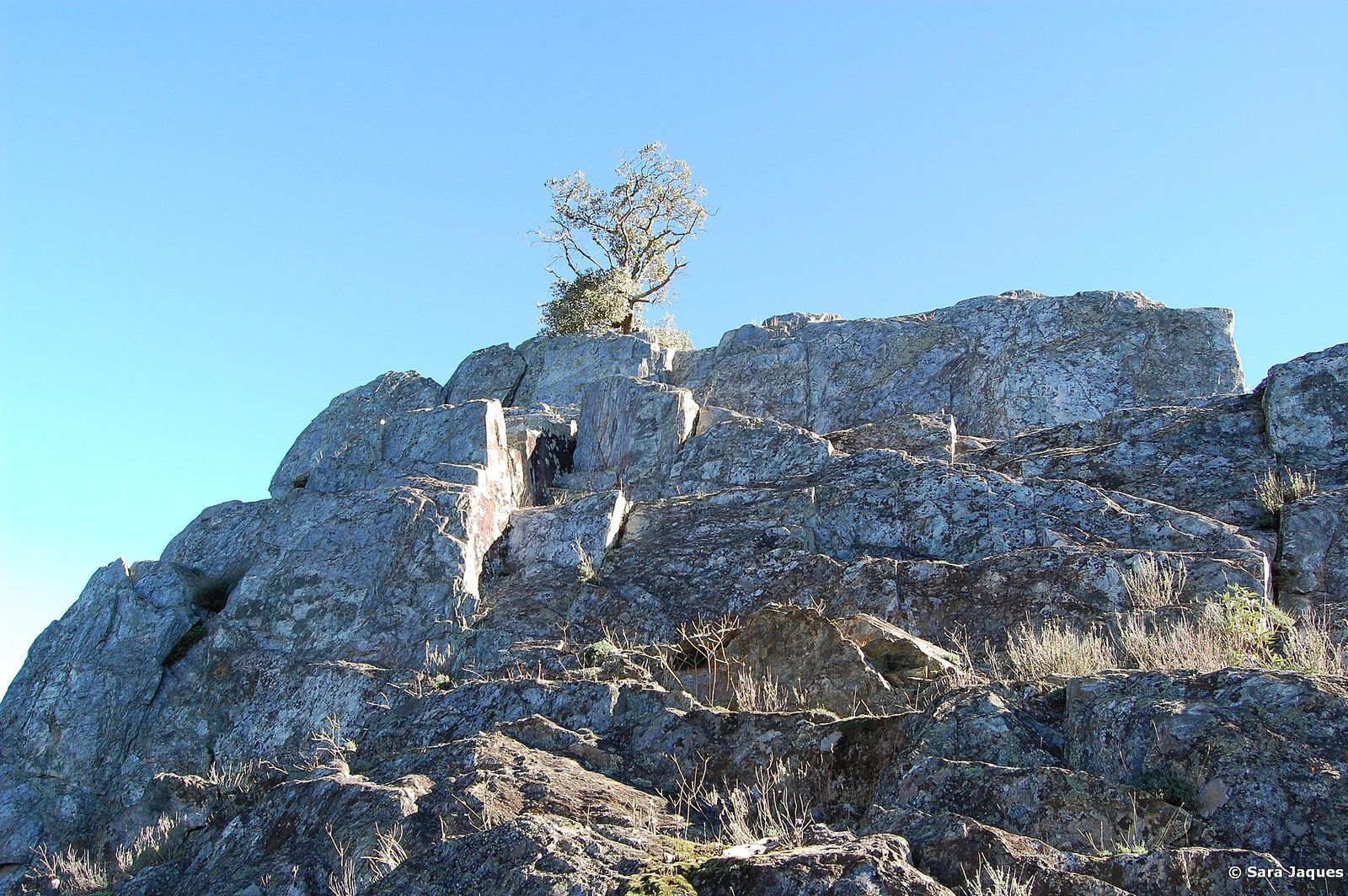
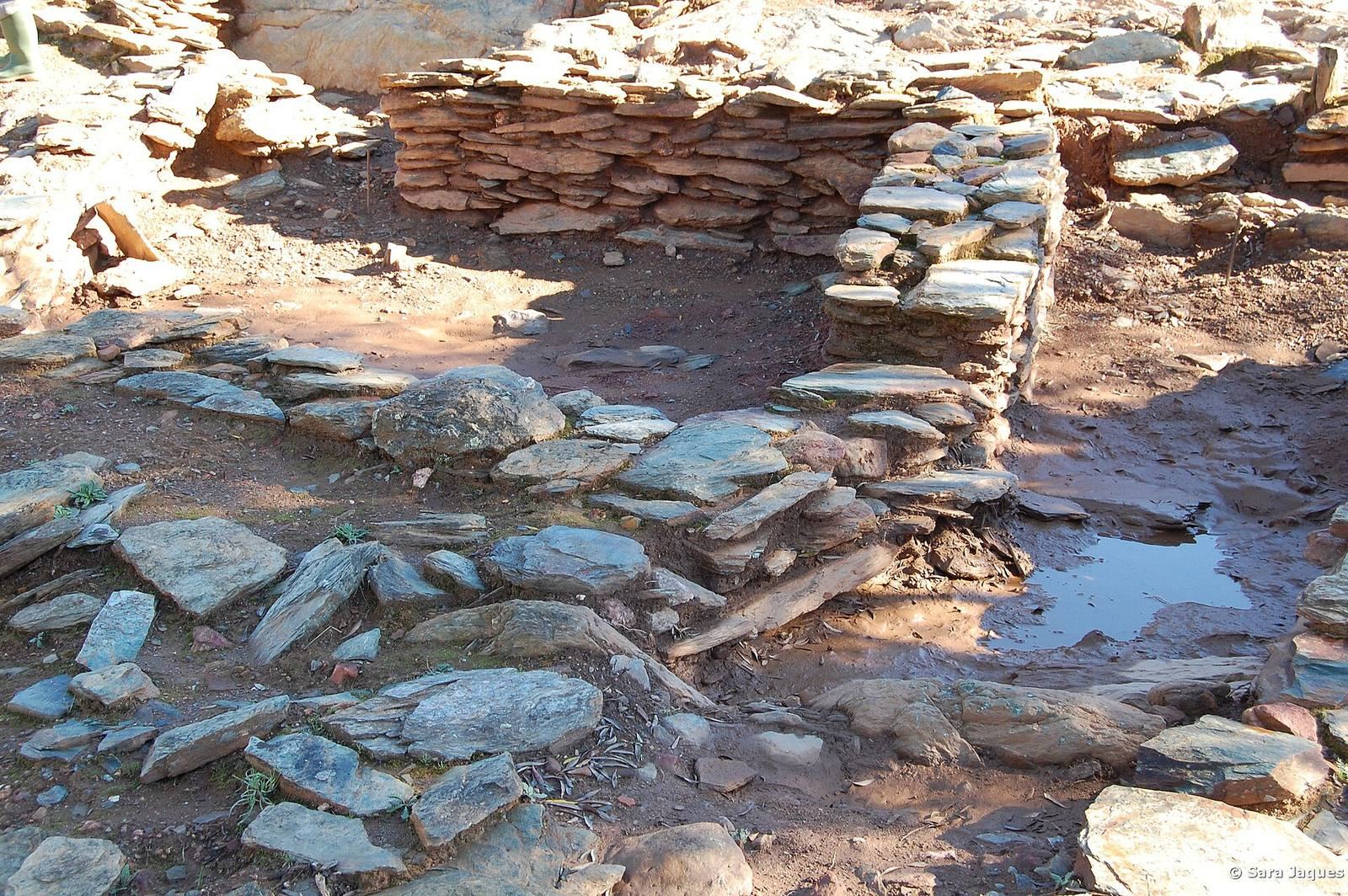
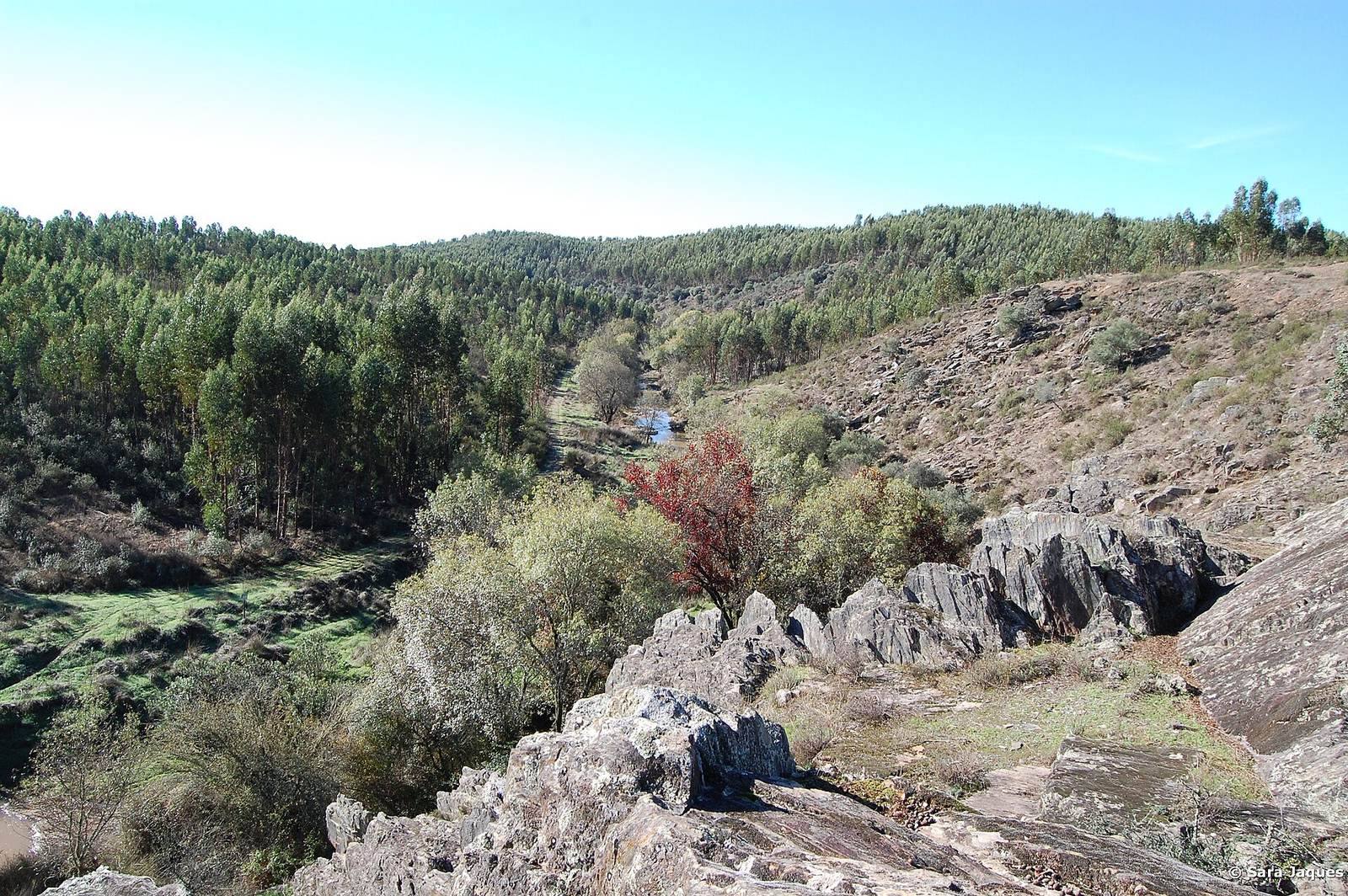
The archaeological site occupies the summit of São Miguel da Mota, near the Ribeira de Lucefécit and about four kilometres northwest of Terena. Its elevated position provided control over a wide area. Structural remains are concentrated mainly on the eastern slope, while earthen embankments, clearest on the southeast side, may conceal further buildings, perhaps including a residential area. A square-plan structure beside the geodetic marker may have supported the sanctuary. The hill also contains modern rural buildings associated mainly with pastoral use. The architectural forms at São Miguel da Mota have been compared with those at the sanctuaries of Panóias and Ulaca in Ávila province, Spain.
Inscriptions and Sculptures
Inscriptions and Altars
More than eighty Latin inscriptions have been identified, and the site may contain one of the largest concentrations of inscriptions and sculpted pieces in the Roman province of Hispania. Finds include inscribed bronze pieces, votive altars dedicated to a deity, and funerary stones. Much of the marble came from Estremoz and Vila Viçosa, with other pieces from Trigaches and Pardais. A marble pedestal bears an inscription on its front dedicating it to Endovélico: M. Fannius Augurinus had rightly honored the god, who had favored him. A pig is carved on the back, while a laurel wreath and palm decorate the sides; triangular marks separate some words in the inscription.
Sculptures
Fragments of three statues depict figures in military clothing, including a Roman legionary, a soldier serving in a legion. A bust of Endovélico found at São Miguel da Mota is now held by the National Museum of Archaeology in Lisbon. Some sculptures and inscriptions are thought to have been damaged or mutilated during the conversion of the site to Christian worship, while others were removed for reuse in buildings.
Other Finds and Reused Stones
Excavations recovered granite blocks, evidence of substantial buildings, as well as pottery from the early centuries of the Roman Empire, especially fragments of large storage jars. Other finds include fragments of ceramic and glass vessels, skeletal remains, bronze coins from the fourth century, and coins from the sixth century.
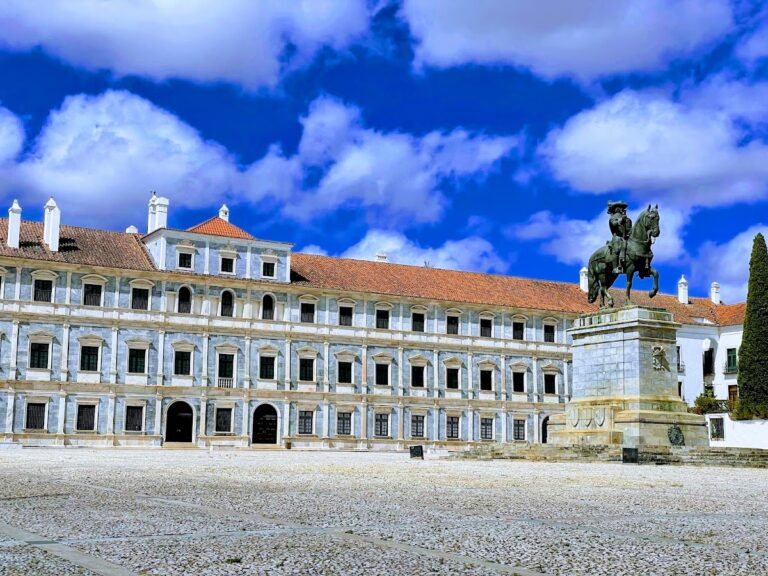
Inscribed stones from the sanctuary were reused in nearby religious buildings. Two pieces were built into the walls of the Sanctuary of Nossa Senhora da Boa Nova in Terena, and seven others were incorporated into the facade of the Monastery of Santo Agostinho in Vila Viçosa.