Potheridge: A Devon Estate and Its Seventeenth-Century Mansion
Site at a Glance
- Popularity
- Medium
- Country
- United Kingdom
- Primary era
- Early Modern
- Eras represented
- Early Modern
- Civilizations
- English
- Site type
- Domestic
- Remains
- Manor House
On this page9 sections
History
Potheridge was an estate in Merton parish, Devon, United Kingdom, about three miles southeast of Great Torrington. Around 1660, George Monck, an English military commander and statesman, rebuilt a grand mansion on the site of an earlier manor house. The estate’s history connects medieval landholding with the changing fortunes of the Monck and Granville families.
Domesday and medieval ownership
The Domesday Book, England’s survey of landholding completed in 1086, lists Potheridge as Porrige. It was the 36th of 176 Devon holdings belonging to Baldwin de Moels, then sheriff of Devon. Baldwin’s tenant was Aubrey, whose name was written as Alberi; before the Norman Conquest, the tenant had been Ulf.
Later, Ralph de Estaneston held Potheridge from the feudal barony of Okehampton, a landholding associated with obligations to a superior lord. The Monk family had made its home there by 1287 at the latest.
The Monck and Granville estates
Most of the mansion was demolished in 1734, after the death of Christopher Monck’s widow. Christopher, George Monck’s son and the 2nd Duke of Albemarle, had died without children in 1688. He had settled much of the Monck estate on his cousin John Grenville, 1st Earl of Bath, who standardized the family name as Granville.
The Earl’s second son, John Granville, became Baron Granville of Potheridge in 1703 and died without issue. The estate passed through the family to William Granville, 3rd Earl of Bath. When William died without issue in 1711, the male line of the Granvilles of Stowe ended. Potheridge then passed to descendants of the Earl’s aunt Jane, wife of Sir William Leveson-Gower, 4th Baronet. The Leveson-Gowers soon sold the estate to the Rolle family.
Later estate and use
By 1850, trustees of John Rolle, 1st Baron Rolle, held Potheridge for the benefit of his adoptive heir, Mark Rolle. Great Potheridge formed part of the Bicton College campus in 1952. In 1968, a tenant of Clinton Devon Estates farmed 500 acres there and bred Devon cattle. By 2014, Great Potheridge was being used as an outdoor activity centre for young people. The building is Grade I listed, England’s highest category of listed-building protection.
Remains
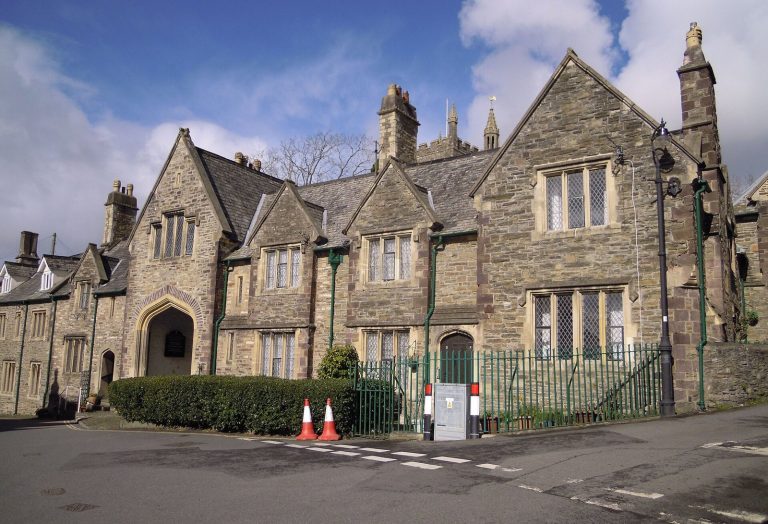
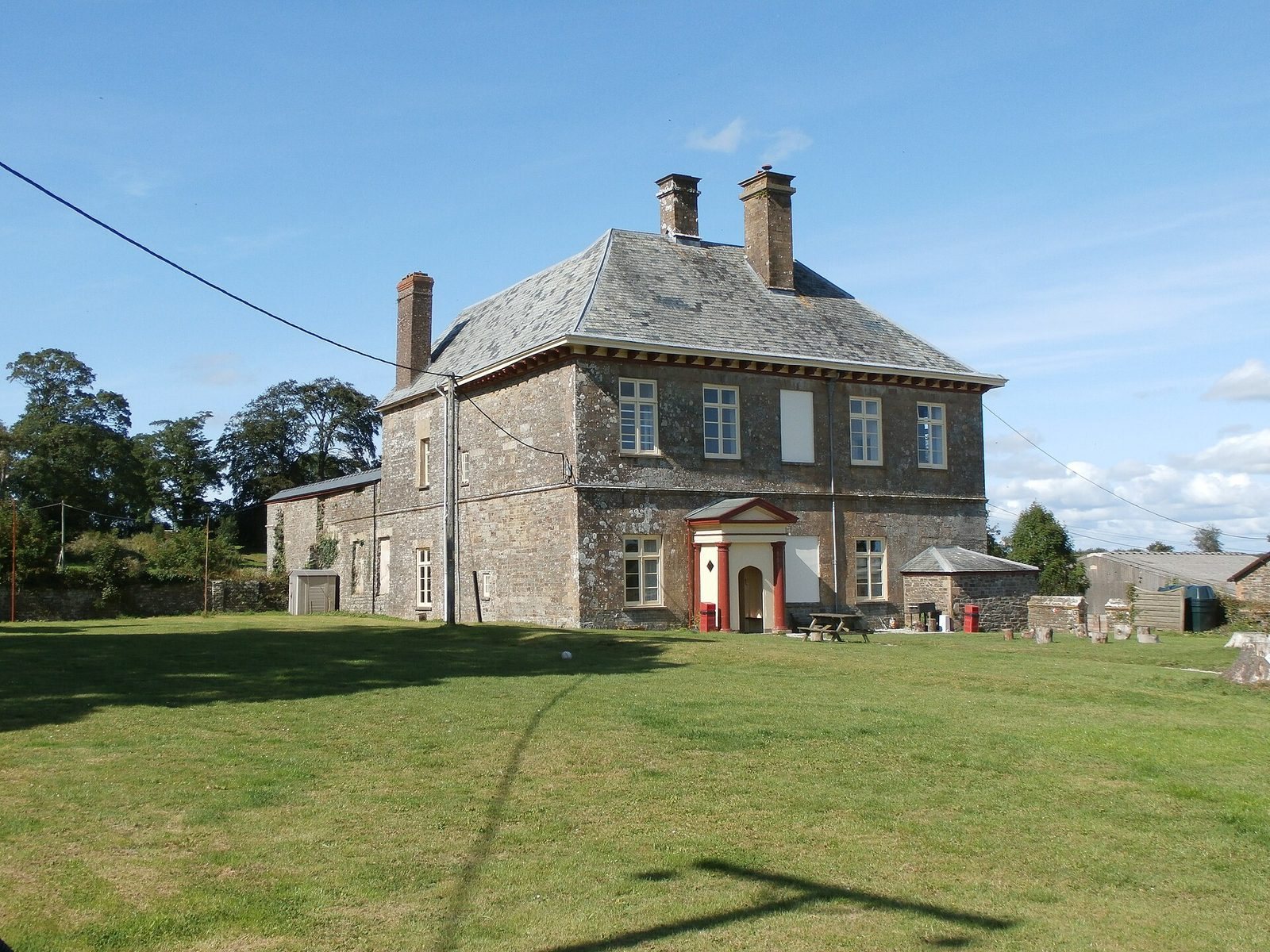
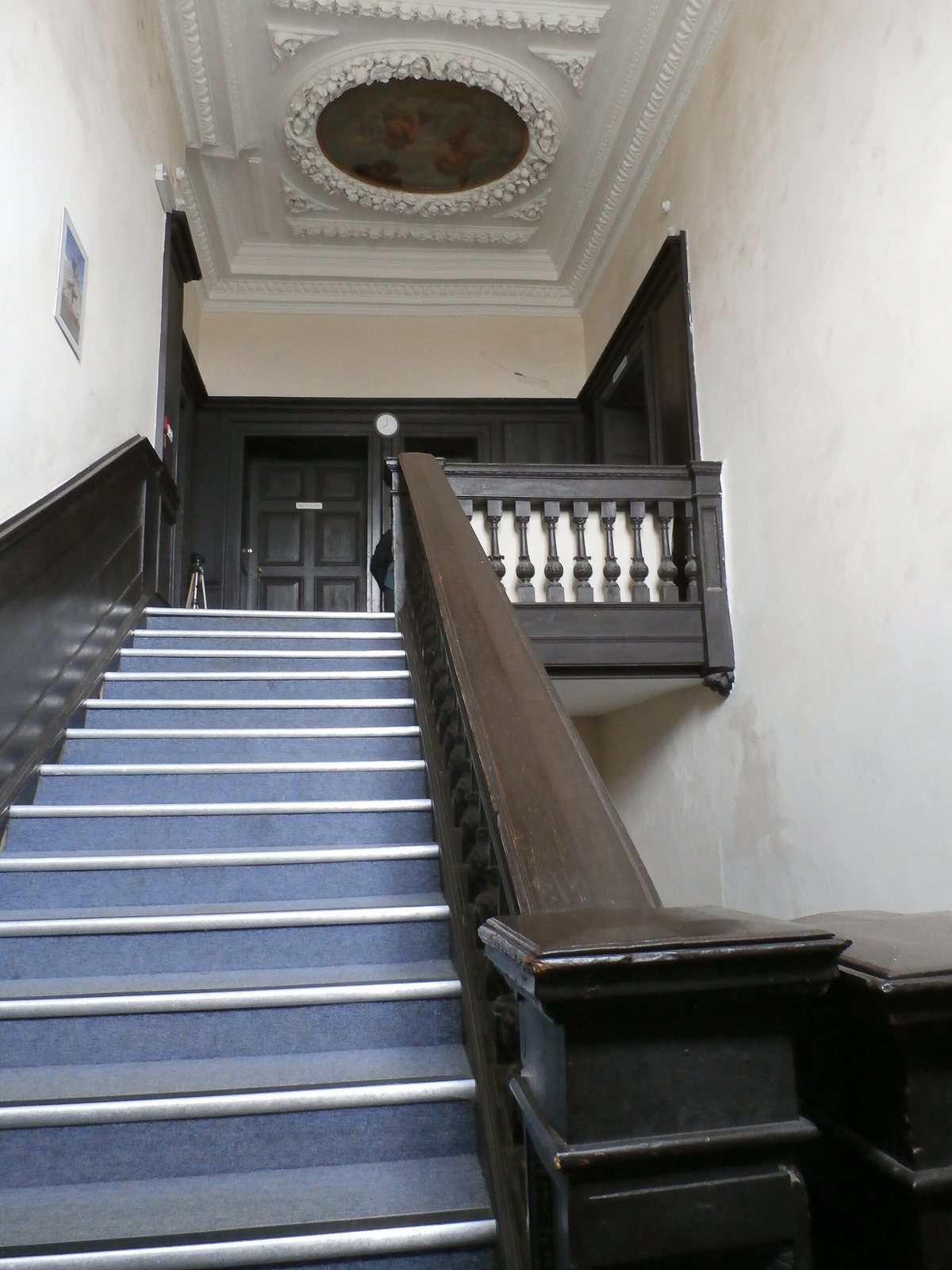
The surviving portion of the former mansion forms Great Potheridge farmhouse. By 2014, six acres of the former estate remained with Great Potheridge, which is distinguished from nearby Little Potheridge, a separate house formerly on the estate. The mansion’s surviving interior features sit alongside the remains of its chapel and the historical record of its stables.
The farmhouse
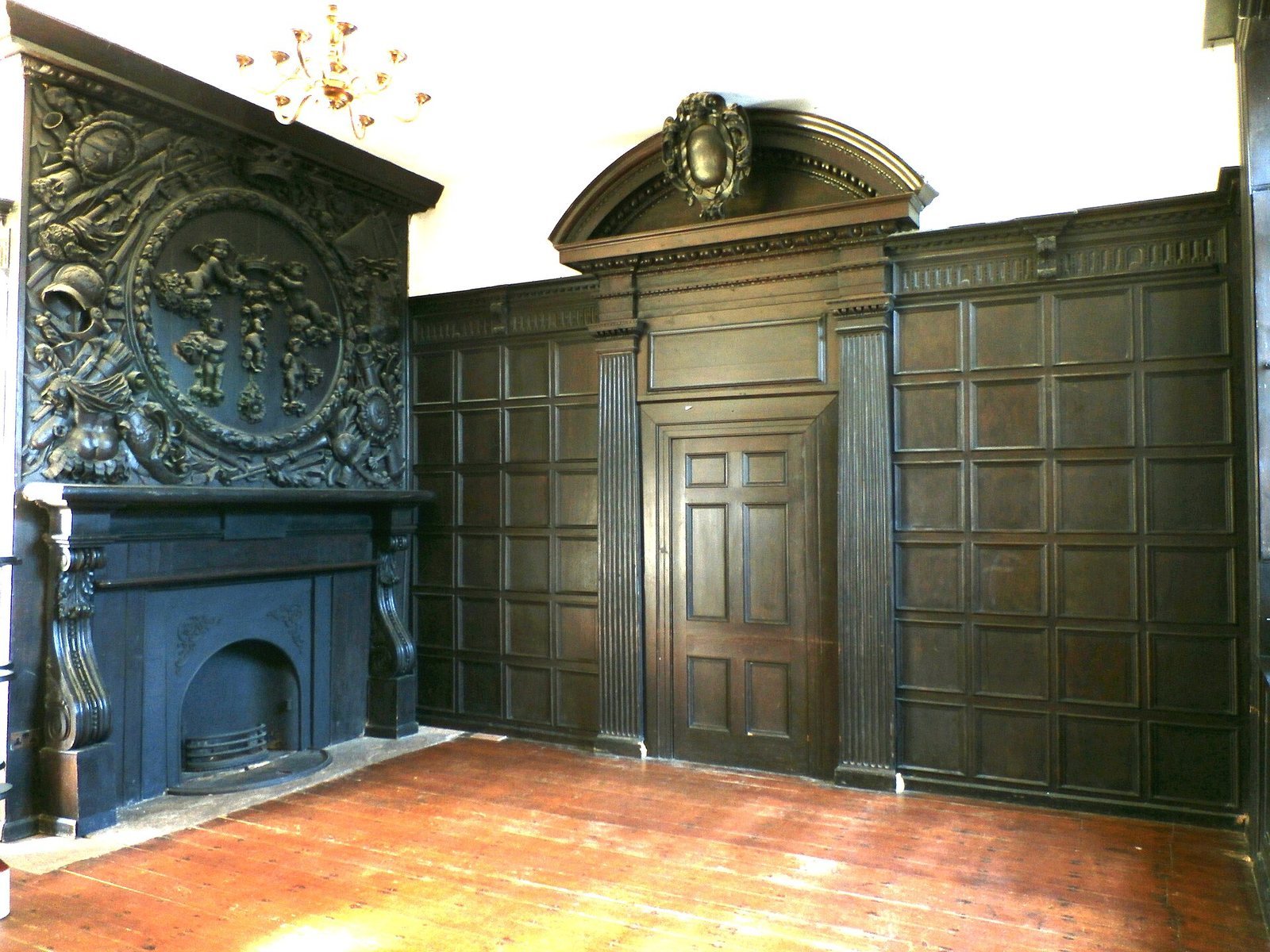
Inside the farmhouse are remnants of the mansion, including a grand staircase, two massive 17th-century doorcases in classical style, and a large carved wooden overmantel. The overmantel shows five putti, childlike figures used in European decorative art, within a wreath of flowers and before an elaborate display of weapons. Two figures shown in flight hold a crown between them, an allusion to Monck’s role in the Restoration, the return of the monarchy under Charles II after republican government.
Other mansion buildings
Chapel
The mansion’s chapel was described as “Grecian,” meaning classical in style. It was in ruins by 1770 and was almost entirely demolished before 1822, leaving its west wall standing.
Stables
The stables were still standing in 1879, and their scale was considered an indication of the former mansion’s grandeur.