Roman Bridge of Longroiva: A Roman-Era Crossing in Portugal
Site at a Glance
- Popularity
- Very Low
- Country
- Portugal
- Primary era
- Classical
- Eras represented
- Classical
- Civilizations
- Roman
- Site type
- Infrastructure
- Remains
- Bridge
On this page4 sections
History
Roman construction
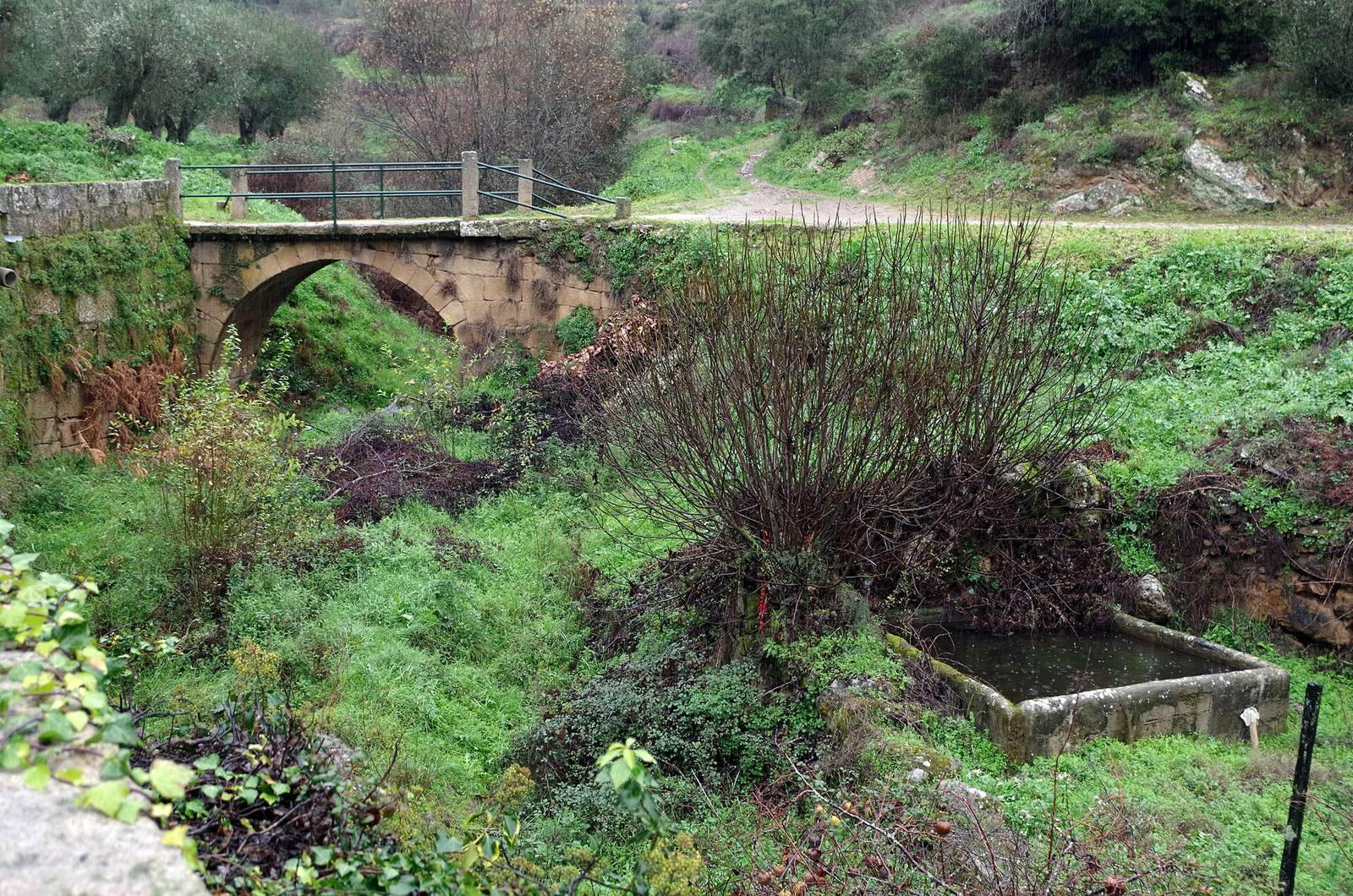
The Roman Bridge of Longroiva is a stone crossing over the Piscos stream at Coitada, in the municipality of Mêda, Portugal. Roman military engineers are believed to have built it between the second and fourth centuries CE to improve access between settlements, particularly S. João da Pesqueira and Marialva, identified with Civitas Aravorum, a Roman civic community and its territory.
Later use and protection
The bridge may have been widened at a later date. By 1971 it no longer carried road traffic, and a new crossing had been built almost parallel to it. On 29 September 1977, the bridge was designated a Property of Public Interest.
Remains
The bridge is built of stone masonry and crosses the Piscos stream, a tributary of the Coa River. Its single arch is formed from regular wedge-shaped stones. The stone-slab deck is about 20 metres long, with large rectangular blocks along its edges forming parapets and increasing its width. The arch directs its weight outward toward its supports and downward into the ground.
Small cavities on opposite sides of the stones are lifting marks, made to let scissor-shaped or pincer-shaped tools grip and position the blocks. The stones were probably bonded with Roman concrete, a concrete-like building material. Weathering and human intervention have altered the bridge, which is in poor condition; its surrounding setting also makes its architectural form harder to discern.