Pont Saint-Martin: A Roman Road Bridge in Italy
Site at a Glance
- Popularity
- Medium
- Country
- Italy
- Primary era
- Classical
- Eras represented
- Classical
- Civilizations
- Roman
- Site type
- Infrastructure
- Remains
- Bridge
On this page4 sections
History
Roman roads across the Alps
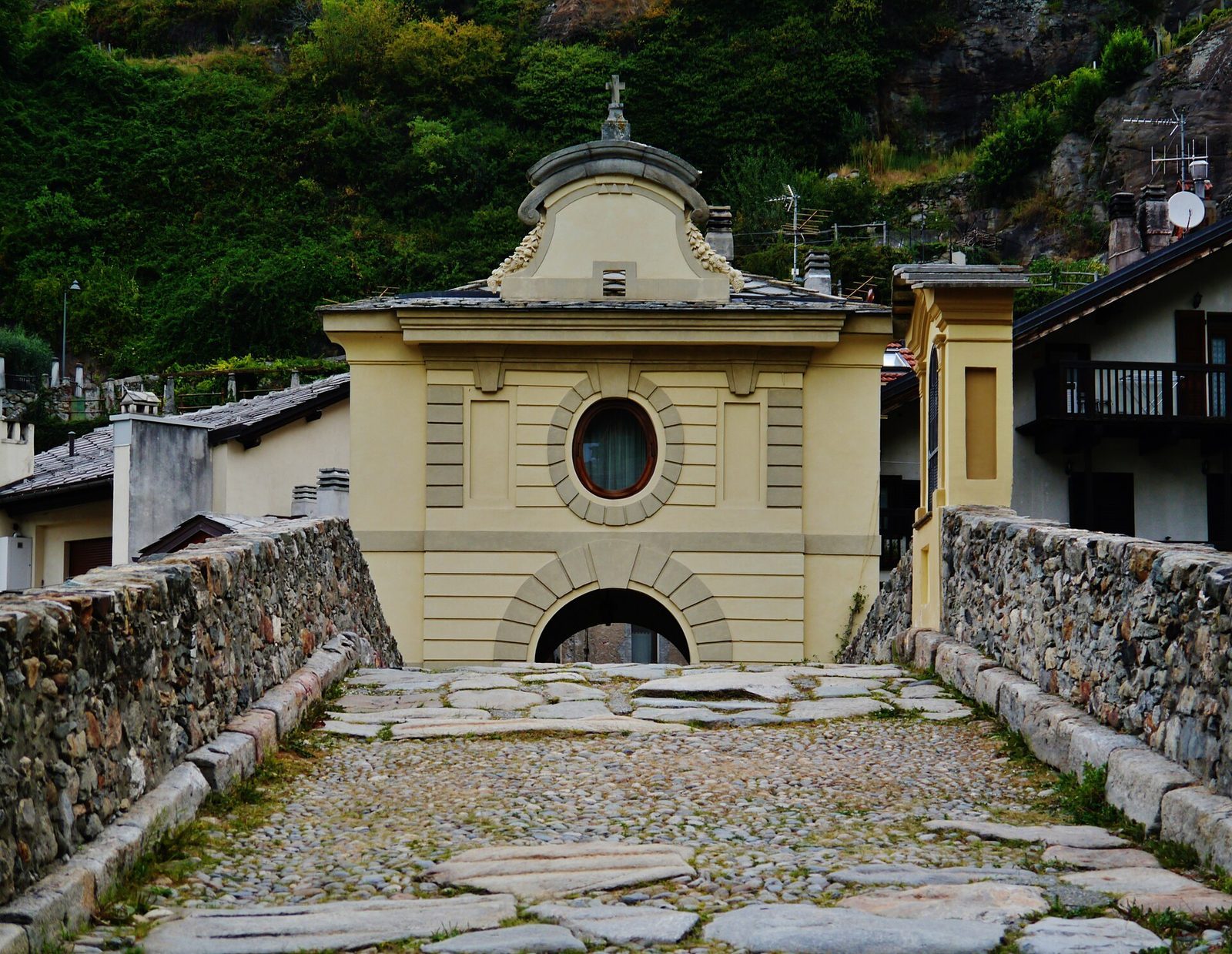
Pont Saint-Martin is a Roman bridge over the Lys at Pont-Saint-Martin in Italy, probably built during the reign of Augustus, Rome’s first emperor (27 BC to AD 14). It formed part of the Roman road across the Alps through the Aosta Valley. As Rome expanded into the region, the road network developed during the second and first centuries BC. At Aosta, routes led toward the Great and Little St Bernard passes and onward to Gaul.
A predecessor bridge with a similarly broad span may have been built in either 141 or 120 BC, during construction of the valley’s first military road. It may not have survived because concrete-building methods were not yet sufficiently developed.
Augustan bridge
Rome annexed Aosta in 25 BC and re-established it as Augusta Praetoria, a Roman colony. The surviving bridge was probably built during Augustus’s reign, when the local road system was renewed. It has carried traffic for more than two thousand years.
Remains
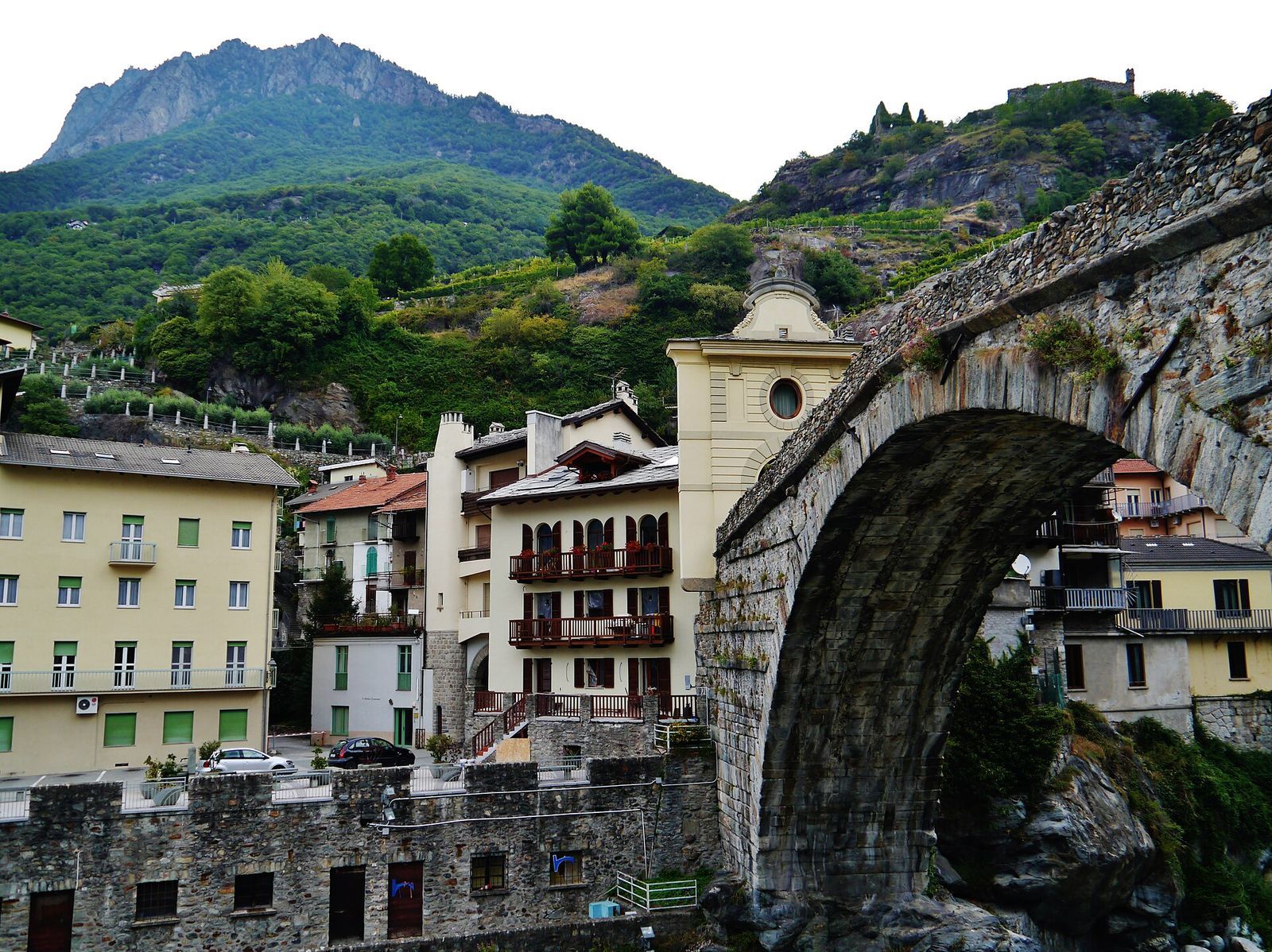
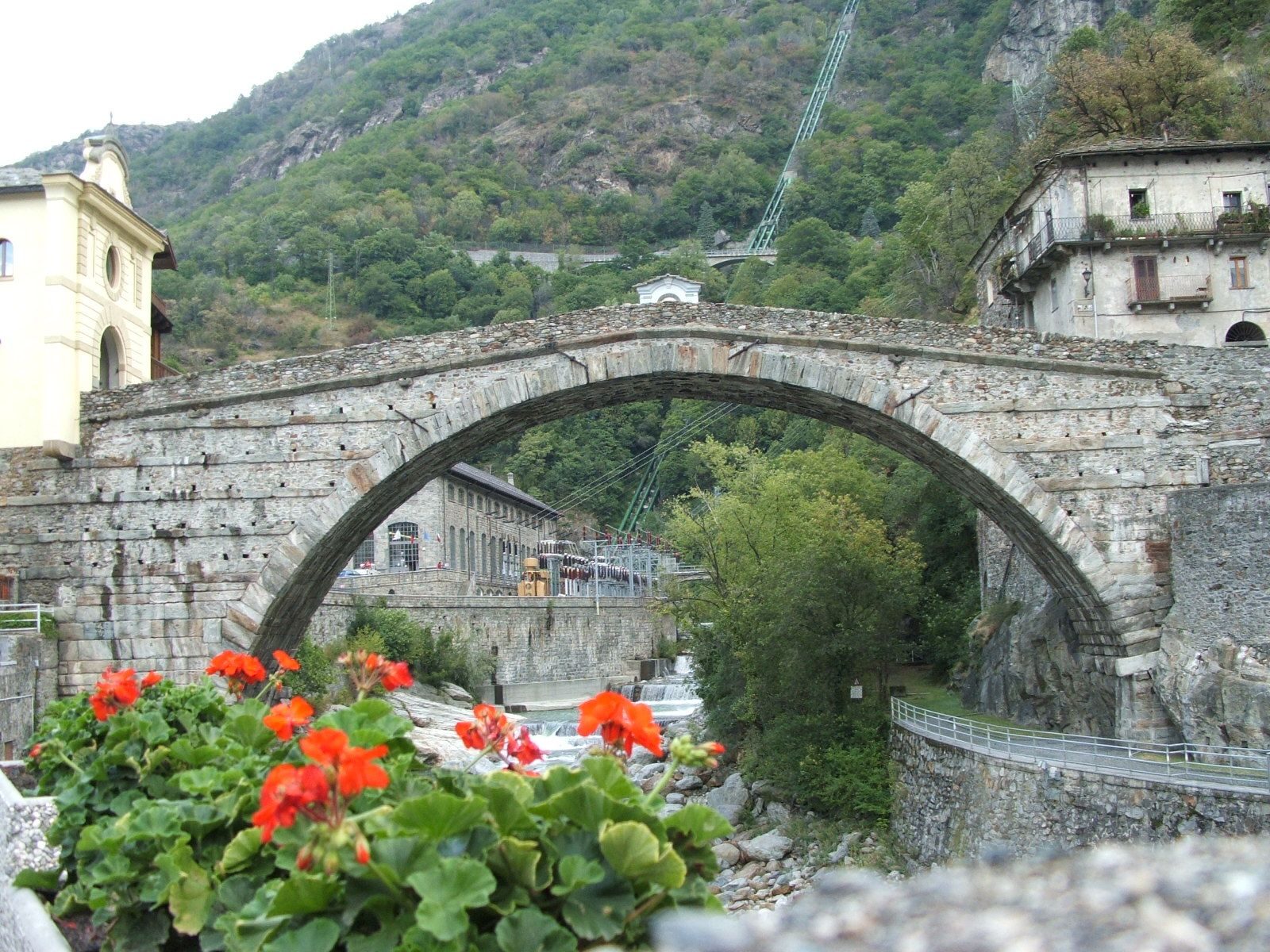
The stone bridge crosses the Lys shortly upstream from its confluence with the Dora Baltea. It has a single span formed by a shallow segmental arch, meaning an arch flatter than a semicircle. The bridge is about 36 m long, while its clear span has been measured at either 31.4 m or 36.65 m. It is 5.8 m wide, with parapets that narrow the roadway to 4.6 m. Its height is listed as 20 m; measurements from where the arch rises above its supports give 12 m to the roadway and 13.6 m to the parapet top.
The arch’s center lies 5.8 m below the points where it begins above its supports, and its curve forms a 144-degree segment of a circle. The opening is about 3.3 times as wide as the arch’s rise, compared with about 2:1 for a typical Roman semicircular arch. This flatter shape saved material vertically but placed greater sideways force on the banks, requiring strong abutments.
Seventy-one load-bearing, wedge-shaped stones form the arch, which is about 1.03 m thick at its crown. Its thickness-to-span ratio is about 1:34. Roman builders generally avoided ratios below roughly 1:20 on larger bridges, and this was the lowest ratio in a comparative study of more than 40 Roman bridges. Dressed-stone blocks in the foundations are visibly distinct from the rubble-stone facing above them. The bridge resembles the Pont de Pierre at Aosta, another bridge on the same road section built under Augustus. This similarity has been taken to suggest that segmental-arch construction became established locally during his reign. Pont Saint-Martin is among the largest surviving Roman bridges and one of the few known ancient bridges with a flat arch.