Fort Bard: A Savoyard Fortress in Italy


Site at a Glance
- Rating
- 4.5
- Popularity
- High
- Country
- Italy
- Primary era
- Modern
- External website
- Open
- Eras represented
- Modern
- Civilizations
- Kingdom of Sardinia
- Site type
- Military
- Remains
- Fort
On this page14 sections
History
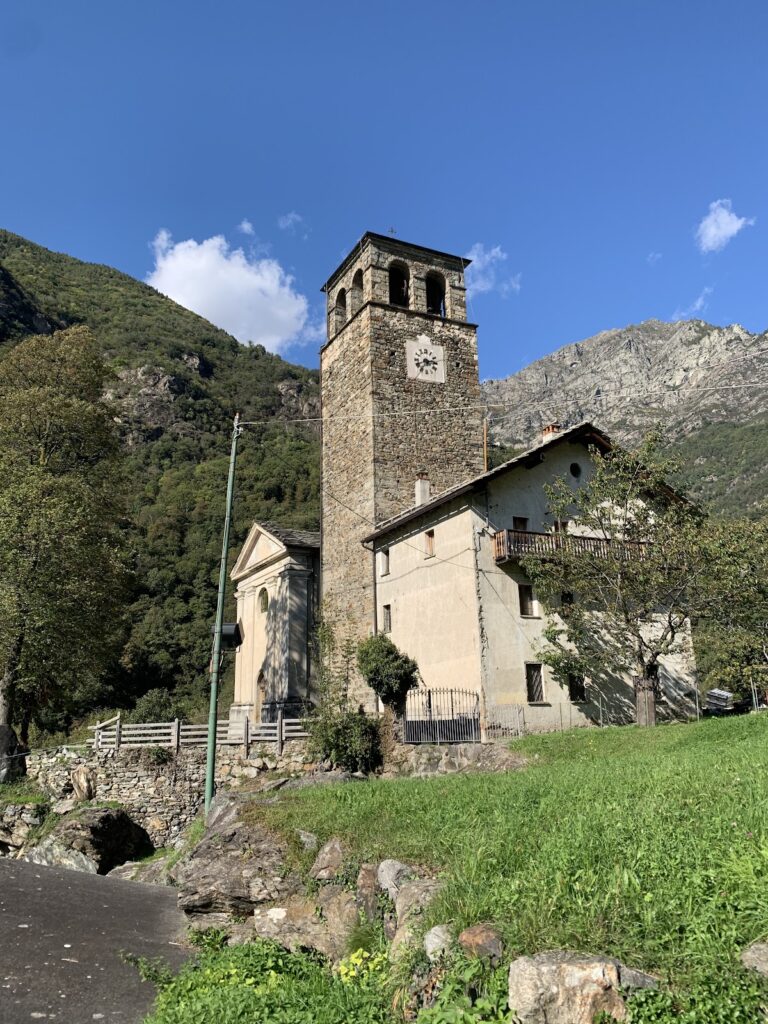
Fort Bard is a fortified complex in Italy, above the town of Bard in the Aosta Valley, rebuilt by the Savoy dynasty in the nineteenth century on the site of earlier defensive works. Its rocky position controlled movement through a narrow passage between the Po Plain and Savoy, giving the site a lasting military role in Alpine history.
Early stronghold and Savoyard control
During the sixth century, under Theodoric the Great, the Ostrogothic king in Italy, the area contained a garrison of 60 men. It formed part of the Clausurae Augustanae, an Ostrogothic frontier defensive system in the Aosta region. The fortress appears repeatedly in early medieval travel chronicles. In 1034, it was described as an “impregnable oppidum”, meaning a fortified settlement or stronghold. At that time, Boson, Viscount of Aosta, controlled it, and his successors retained possession until the middle of the thirteenth century.
The local lords of Bard later governed the castle, probably as dependants of the Bishopric of Aosta. Hugues of Bard was the last member of the family to rule it. Around the middle of the thirteenth century, Count Amadeus IV of Savoy seized personal control and installed a substantial garrison. The complex then remained under Savoyard rule for a long period.
Ducal fortress and Napoleonic siege
In 1661, Duke Charles Emmanuel II of Savoy made Bard the principal ducal stronghold in the valley. Artillery was concentrated there after the nearby fortifications at Verrès and Montjovet had been dismantled. The defensive works continued to be strengthened during the seventeenth and eighteenth centuries. During the War of the Spanish Succession, a European conflict over the inheritance of the Spanish monarchy, Victor Amadeus II of Savoy prevented the French from entering Italy through the valley in 1704.
On 14 May 1800, Napoleon Bonaparte’s Reserve Army crossed the Great St Bernard Pass during the Italian campaign. The force numbered about 40,000 men, but its advance was stopped at Bard by an Austro-Piedmontese outpost commanded by Captain Stockard von Bernkopf and defended by about 400 soldiers. The siege lasted two weeks. Most of the French army bypassed the position through the nearby Albard pass, after which the garrison capitulated with the honours of war. French forces captured the fort on 1 June 1800.
Napoleon ordered the fortification destroyed because of the resistance it had offered. Its bastions were demolished, and the site remained ruined and abandoned for about thirty years.
Nineteenth-century reconstruction and later uses
Fearing renewed French aggression, Charles Felix of Savoy commissioned the military engineer Antonio Francesco Olivero to design a modern replacement. Reconstruction lasted from 1830 to 1838. The new fortress combined defensive works with barracks, workshops, and arsenals, and remained an important military complex until it fell out of military use at the end of the nineteenth century.
Fort Bard was later used as a military prison and, until 1975, as a gunpowder store for the Italian Army. After 1975, ownership passed to the Autonomous Region of Valle d’Aosta. Partial reopening in the early 1980s was followed by more than ten years of conservation-based restoration. The complex reopened in January 2006, and the Museum of the Alps opened there the same year.
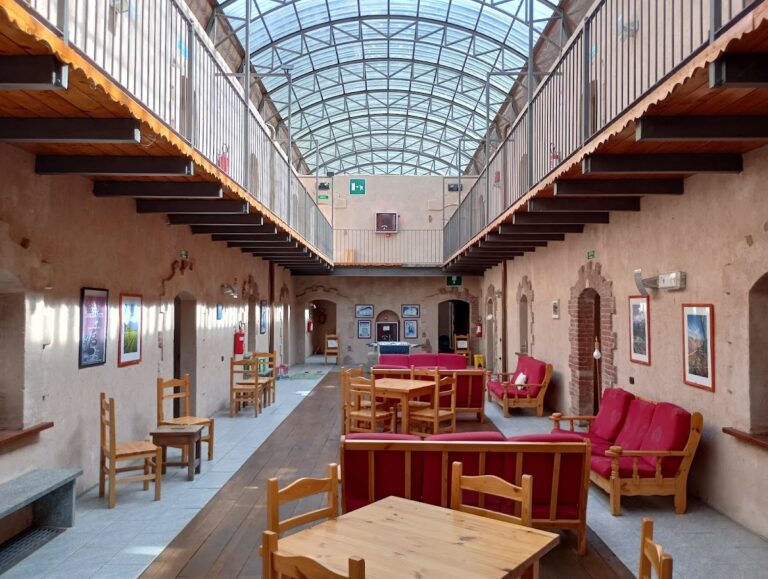
Fort Bard now functions as a museum and cultural centre. Its permanent routes include the Museum of the Alps, the Alps for Children, the Prisons, and the Museum of the Fort. The Alps for Children and the Stairway of Time opened in 2007. Since 2017, the Museum of the Fort has presented the history of fortresses, defensive techniques, and changing ideas of borders in peacetime. The complex also hosts exhibitions of ancient, modern, and contemporary art and photography, alongside educational, conference, event, restaurant, and hotel facilities.
Remains
Setting and fortress layout
Fort Bard stands on the left bank of the Dora Baltea at about 384 metres above sea level, on the summit of a rocky promontory above Bard. Here the valley narrows into a gorge, forming the passage controlled by the fortress. At the foot of the promontory, along the SS26 road toward Donnas, lies a Neolithic geosite.
The nineteenth-century fortress covers approximately 14,467 square metres. Its autonomous structures are arranged across different levels, creating a multi-tiered defensive complex. Built principally of stone, brick, and concrete, the fortress contained 283 rooms, 176 service rooms, and a large internal courtyard designed as a parade ground. It could accommodate 416 soldiers, or twice that number when floor bedding was used. Protective casemates, which are fortified chambers for artillery or troops, were arranged to allow the separate works to support one another during an attack. About fifty cannon guarded the fortress.
Lower and central works
Opera Ferdinando and Opera Mortai
Opera Ferdinando and Opera Mortai form the lower works. They are two pincer-shaped fortified complexes positioned on separate levels. Opera Mortai contained large stores of ammunition and food supplies calculated to sustain the garrison for three months. It also houses an educational area with a classroom for lessons, meetings, and screenings, together with the Powder Magazine.
Opera Vittorio
Opera Vittorio occupies the central section of the fortress. Its ground floor contains the Alps for Children and the Stairway of Time. Using images and sounds, the route presents major historical events in the Western Alps.
Upper works and cultural spaces
Opera Carlo Alberto
Opera Carlo Alberto stands among the higher works. The ground and first floors contain the Museum of the Alps, while temporary exhibition spaces and the Vallée Culture centre occupy part of its ground floor. The basement contains the Prisons, whose architectural presentation follows the development of the site from the medieval castle to the nineteenth-century fortress. Courtyard space and the White Arches Hall and Olivero Hall provide settings for cultural and conference activities.
Opera Gola
Opera Gola is another of the structures positioned higher on the promontory. Its courtyard, like the courtyard of Opera Carlo Alberto, provides an open-air space for music and theatre.
Upper Opera Ferdinando
The ground floor of Upper Opera Ferdinando houses the Museum of the Fort. Its displays address the history of fortresses, defensive methods, and changing concepts of borders in peacetime.
Napoleonic representations
A wooden bust of Napoleon Bonaparte is kept at Bard. Nicolas-Antoine Taunay’s 1801 painting of Napoleon’s passage through the Alps shows the First Consul resting in the foreground, while the form of Fort Bard appears among cliffs and difficult paths in the background.