Grotte de la Tête du Lion: A Paleolithic Painted Cave in France
Site at a Glance
- Popularity
- Medium
- Country
- France
- Primary era
- Stone Age
- Eras represented
- Stone Age
- Civilizations
- Unclassified
- Site type
- Civic
- Remains
- Rock Art
On this page7 sections
History
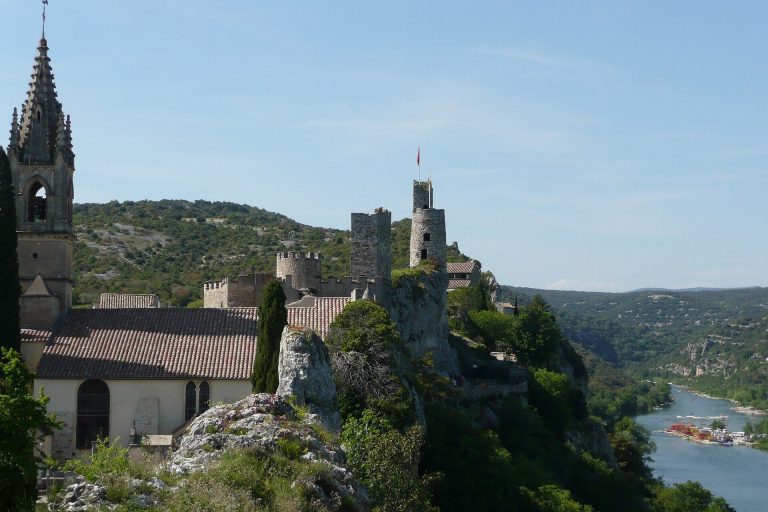
Grotte de la Tête du Lion is a Paleolithic painted cave in Aiguèze, France. Its wall paintings are assigned to the late Gravettian or early Solutrean, successive cultural periods of the Upper Paleolithic.
Discovery and protection
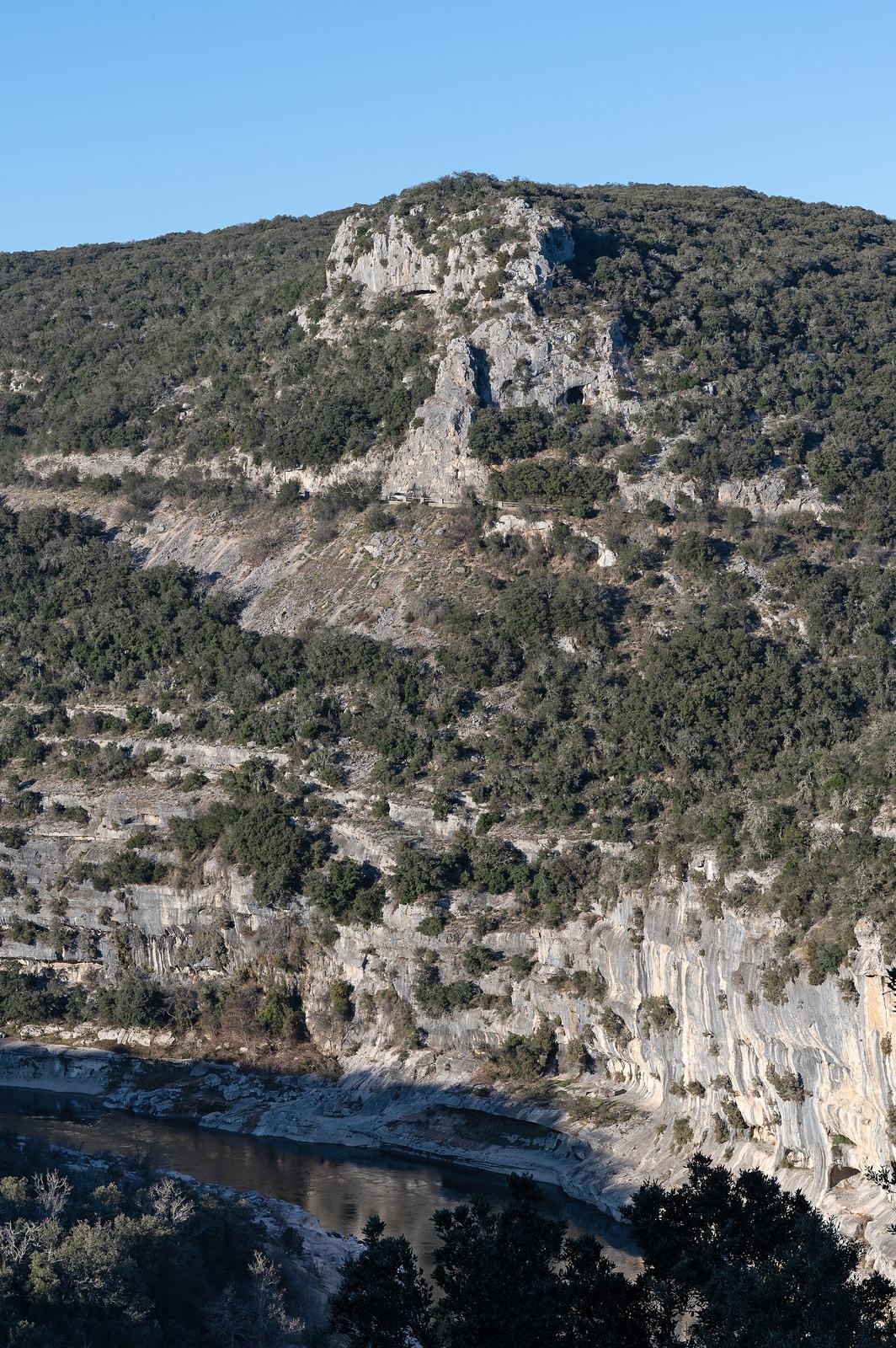
A blast during construction of road D 290 opened the cave in early March 1963. Speleologists Robert Brun and Michel Pagès began exploring it on 15 March and found a panel of paintings. The planned road alignment would have destroyed the rocky outcrop, so the route was changed to preserve it. An order dated 15 June 1964 gave the cave French historic-monument protection.
The cave takes its name from the rock in which it lies. Boatmen carrying tourists through the Ardèche gorges gave the rock its modern name. The municipality of Bidon owns the cave.
Dating and access
Excavations near the entrance in 1972 and 1973 led archaeologist Jean Combier to identify an occupation layer containing red pigment associated with the paintings. Charcoal from that layer, thought likely to come from the painters’ torches, received a radiocarbon date in 1972 of 21,650 ± 800 BP, or approximately 19,700 BCE. In radiocarbon dating, BP uses 1950 as its reference year. The paintings have been attributed to the late Gravettian or early Solutrean.
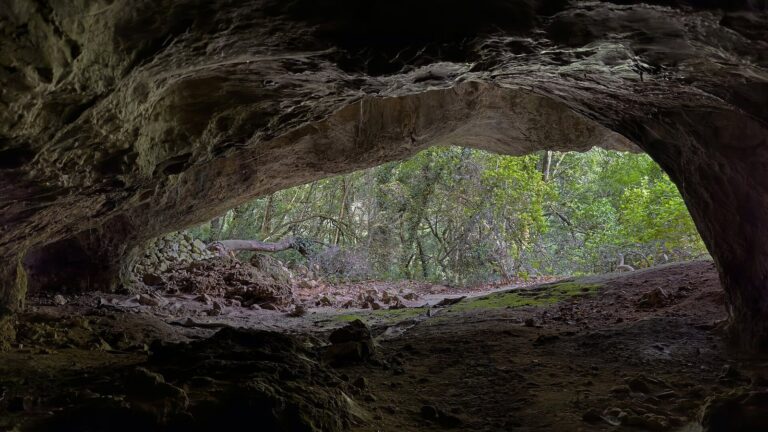
A further charcoal measurement in 2009 gave 22,120 ± 150 BP, approximately 20,120 BCE, comparable to the earlier result. Study of the cave resumed that year to examine its dating. Researchers have also investigated how people could have reached it in the Paleolithic. Entry may then have required a narrow crawlway, which the 1963 blast destroyed; a 2022 study returned to the question of access.
Remains
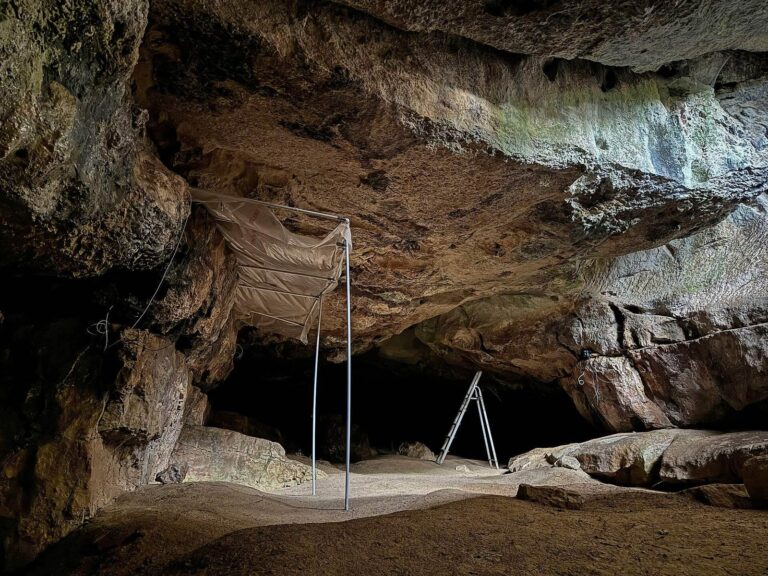
The limestone cave lies at 165 m above sea level on the left bank of the Ardèche, set back from the gorges at the foot of the Colombier massif. It has been explored for 70 m. Narrow constrictions divide it into three sections: a short gallery, a small round central chamber called the Rotunda, and a long terminal passage. The main paintings occupy a recessed side space, or apse, in the central chamber.
The terminal passage became accessible after a crawlway was cleared in 1973. The main occupation layer lies about 30 cm below the present floor.
Painted surfaces
Main panel
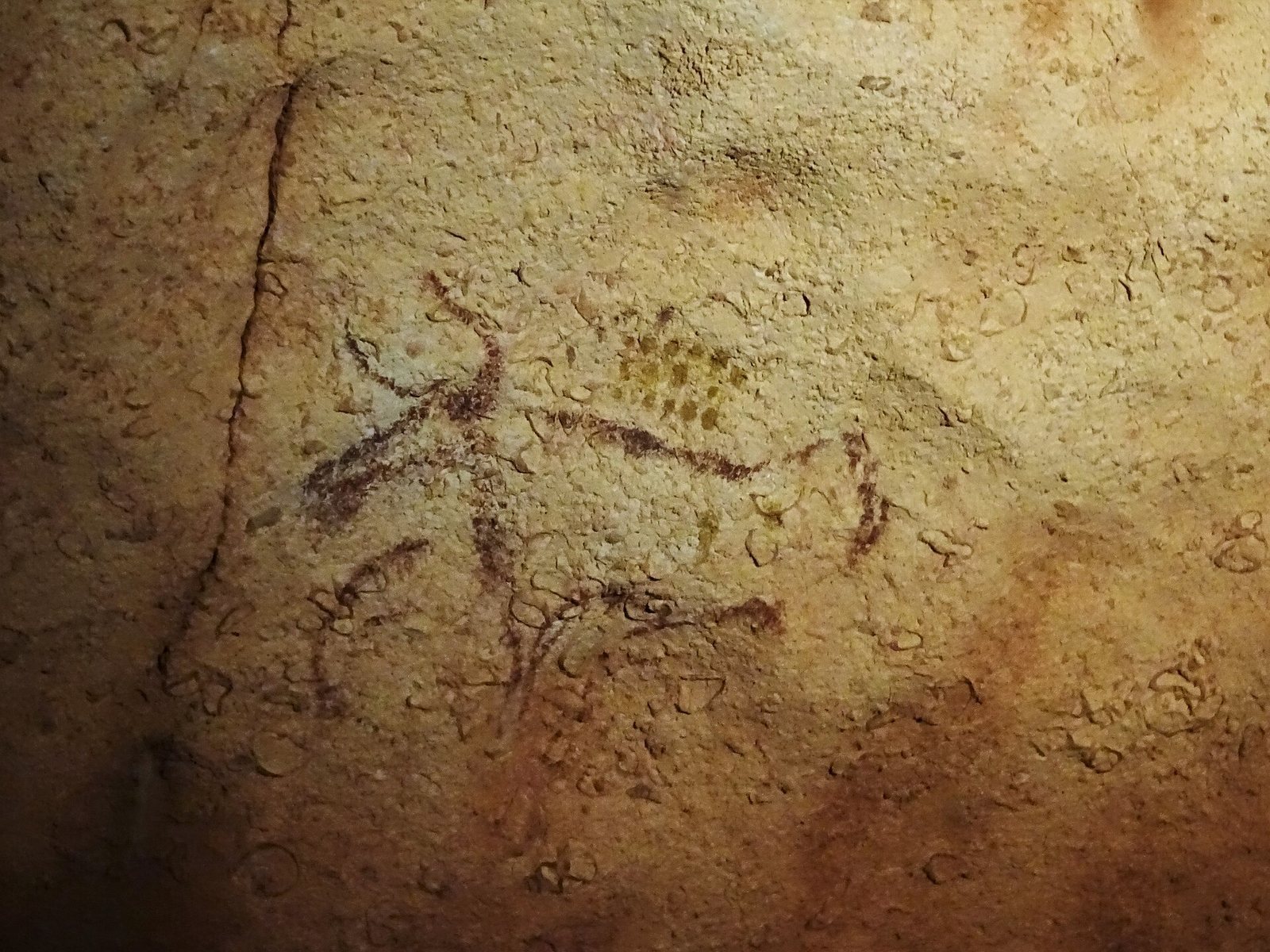
The panel depicts a bovine, two ibex heads, groups of dots, and an incomplete deer. The bovine is about 65 cm long and probably represents a female aurochs, an extinct wild bovine known scientifically as Bos primigenius. Painted in red ochre, it faces left; its head is narrow, its horns turn partly toward the viewer, and its forelegs are drawn to show depth. A flow of clay covers its hind legs. The two red-painted ibex heads have large horns. One appears in front of the bovine’s chest, the other beneath its belly. Above the animal, 17 yellow-green dots form a rectangle, with another group of seven along its flank. Four red dots make an oblique line, while a fifth stands apart. An incomplete deer, painted in red ochre 60 cm to the left, faces the bovine.
Other painted and engraved marks
Near the entrance, the cave walls carry a few very faded traces of paint, a red dot, and two engraved strokes. The apse also contains red-ochre traces and two oval marks.