Plymouth Castle: A Fifteenth-Century Harbour Fortification
Site at a Glance
- Popularity
- Medium
- Country
- United Kingdom
- Primary era
- Medieval
- Eras represented
- Medieval
- Civilizations
- English
- Site type
- Military
- Remains
- Castle
On this page5 sections
History
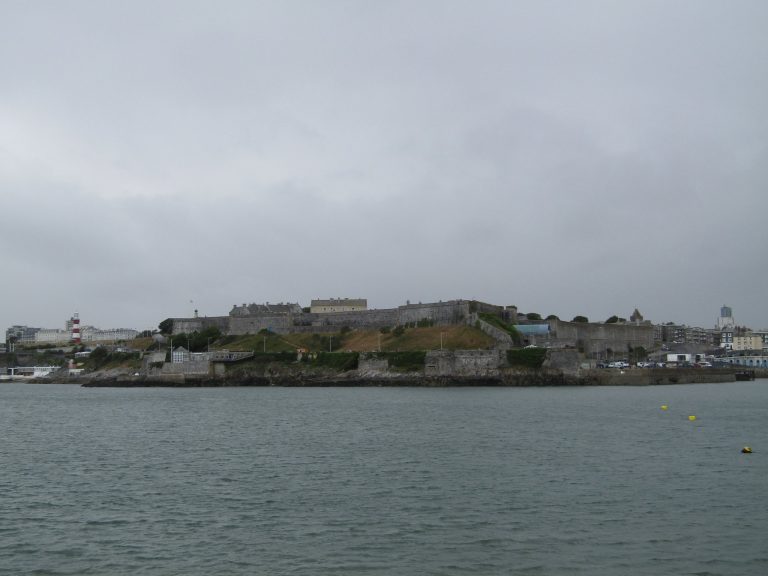
Plymouth Castle was a fortification built in the early fifteenth century in Plymouth, United Kingdom, to defend the town and its harbour. Its exact construction date is uncertain, but its development followed the growth of the settlement and the increasing value of Sutton Pool as a natural harbour.
The town’s early defences
In 1066, Plymouth, then called Sutton, was too small to need fortifications. A castle combining an earth mound with an enclosed courtyard had instead been built at nearby Plympton. As Sutton grew, a murage grant in 1377 authorized revenue to help pay for the town’s defences.
After a French raid in August 1403, Henry IV ordered the prior of Plympton and the abbot of Tavistock to strengthen the town with walls and towers. Crown funding does not appear to have followed, and Edmund Lacey, bishop of Exeter, later encouraged contributions. The castle was commanded by the mayor, not by a baron or royal officer. The town’s aldermen oversaw its defence, with each of the four wards responsible for one tower. All four towers appear in Plymouth’s coat of arms.
Changing military role
During the Prayer Book Rebellion of 1549, an uprising against religious changes in England, the castle sheltered the town’s officials. It was manned again in 1588, when the Spanish Armada, a Spanish naval expedition against England, threatened the country. A modern artillery fort farther south, at the eastern end of Plymouth Hoe, took over the harbour’s main defence. Francis Drake secured royal funding for its construction.
By the end of the sixteenth century, the castle had ceased to serve a military purpose and was falling into disrepair. During the English Civil War, the conflict between Parliamentarian and Royalist forces, Plymouth declared for Parliament and came under Royalist siege in 1643. The castle was prepared for defence but saw no action.
Reuse and decline
After the siege, the castle was used as a prison and later as a workhouse. As Plymouth expanded, its fabric was taken for building material. By the nineteenth century, the structure had been almost entirely demolished. The surviving fragment is protected as a Grade II listed building and a Scheduled Ancient Monument, forms of statutory protection in England.
Remains
The castle’s defences formed a four-sided structure with a large round tower at each corner, rather than a line of town walls. In 1542, the English antiquary John Leland, a scholar who recorded historic places, described this arrangement and judged that the castle did not look very old.
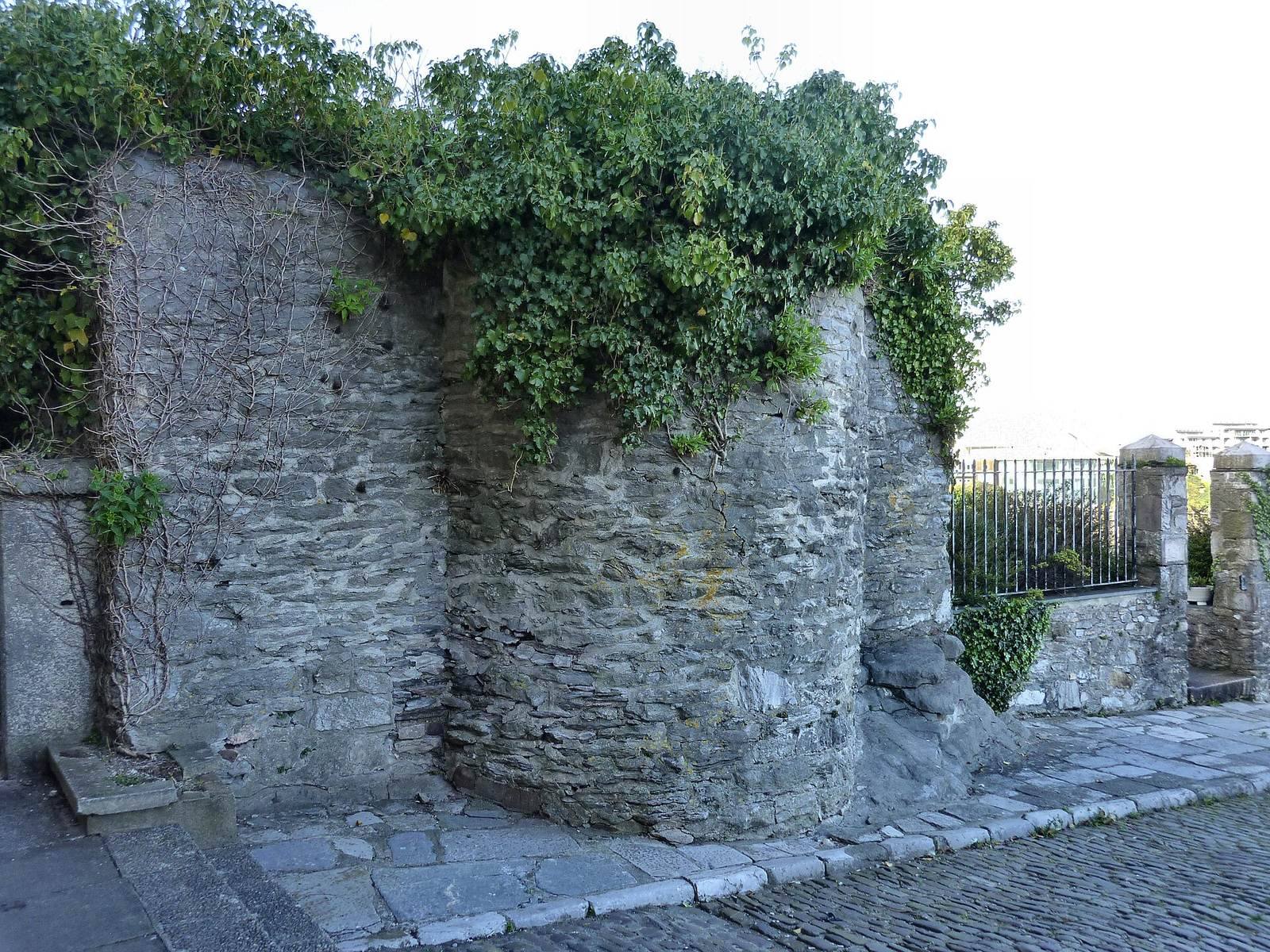
A small fragment survives in Plymouth’s Barbican area, on Lambhay Street. It is thought to be part of an outer gatehouse called the South Port, at the top of stairs descending to the Mayflower Steps on the quayside. The remains consist of a short stretch of rubble wall about three metres high, with a central semicircular projection representing a gatehouse turret.