Płonina Palace: A Renaissance Residence in Poland
Site at a Glance
- Popularity
- Low
- Country
- Poland
- Primary era
- Early Modern
- Eras represented
- Medieval, Early Modern, Modern
- Civilizations
- Holy Roman Empire, Kingdom of Bohemia, Kingdom of Prussia
- Site type
- Domestic
- Remains
- Elite Residence
On this page9 sections
History
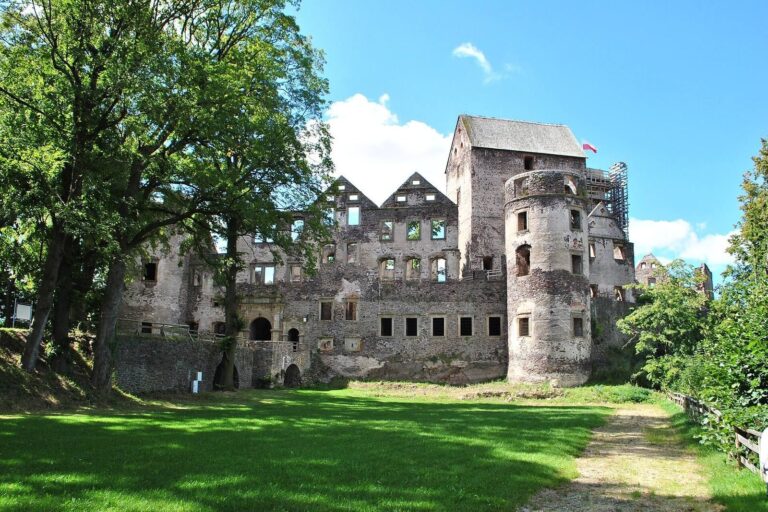
Płonina Palace is a Renaissance residence in Poland, built in 1545 by members of the family of Jacob von Zedlitz, a Silesian nobleman. The Renaissance was a European artistic and architectural period marked by renewed interest in classical forms.
Early ownership and restoration
During the seventeenth century, the estate passed in turn to the von Glaubitz, von Redern, von Maltzan, and von Neidschut families. From 1798 to 1810, military prosecutor David Konrad von Graeve restored the neglected palace. A military prosecutor handled prosecutions within military justice.
Nineteenth-century expansion
Friedrich Wilhelm von Perposchar (1819–1893), a marshal of the royal court in Berlin, gave the palace the name Wilhelmsburg. A court marshal was a senior official responsible for administering a royal household. An expansion directed by Juliusz von Bulov added new features to the estate and included work to secure part of the medieval castle. Further modernization and repairs took place in 1871–73 and around 1908–09. Edward Weber oversaw work in 1871, while Eberhard, Count Saurma-Jeltsch, directed later work in 1909.
Wartime and postwar use
During the Second World War, the palace first housed an educational institution for German girls selected on racial grounds. It later served as a transit camp for people from Upper Silesia who had worked with the Abwehr, Nazi Germany’s military intelligence and counterintelligence organization, and for Russians serving in RONA, the Russian National Liberation Army, a collaborationist force that fought on Germany’s side. German aviators also stayed at the palace while preparing for deployment to the Eastern Front. The building sustained minor damage in 1945.
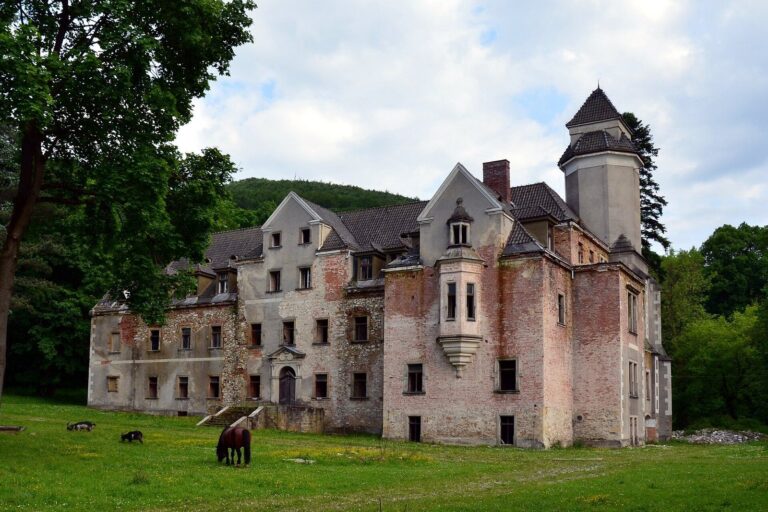
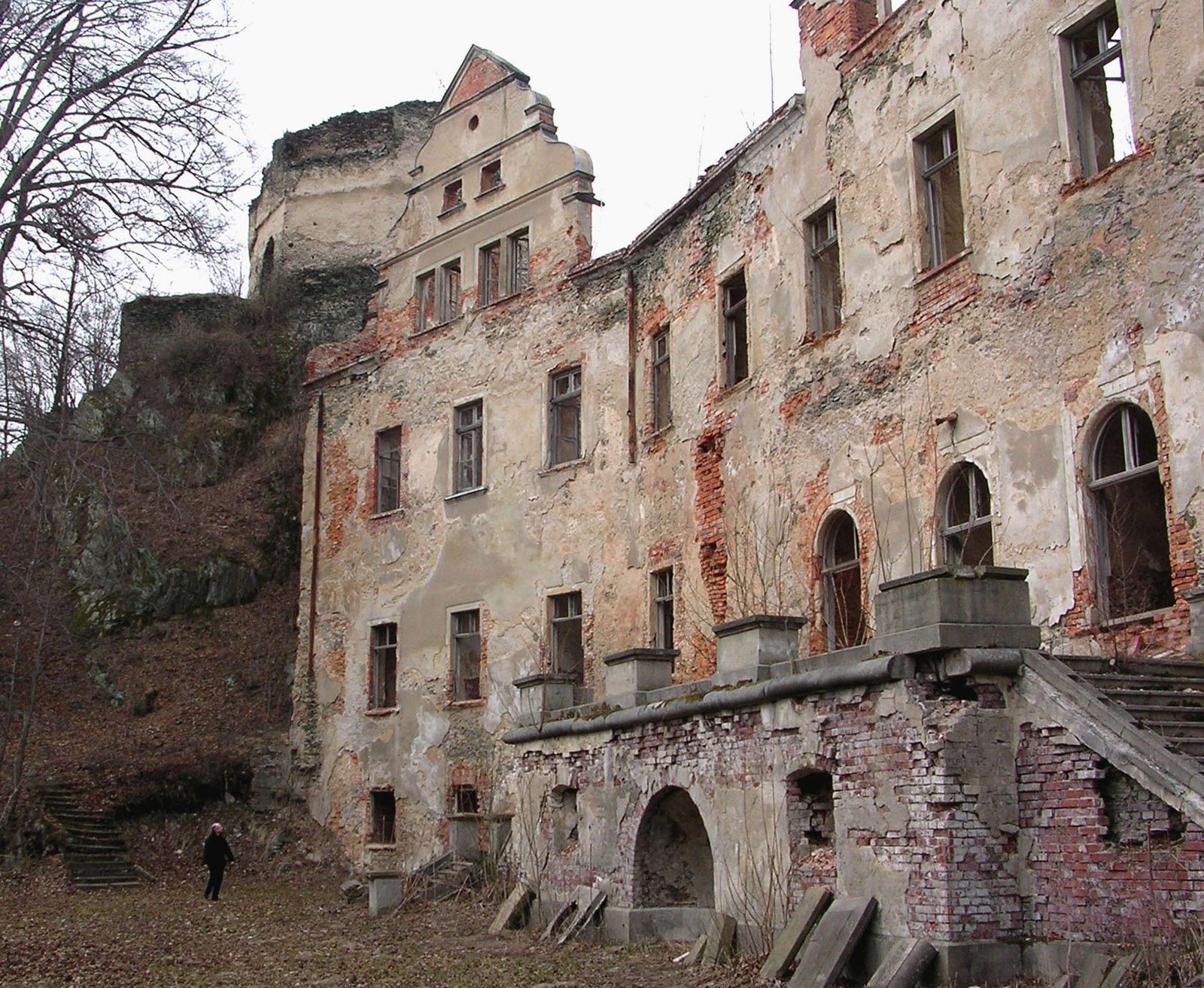
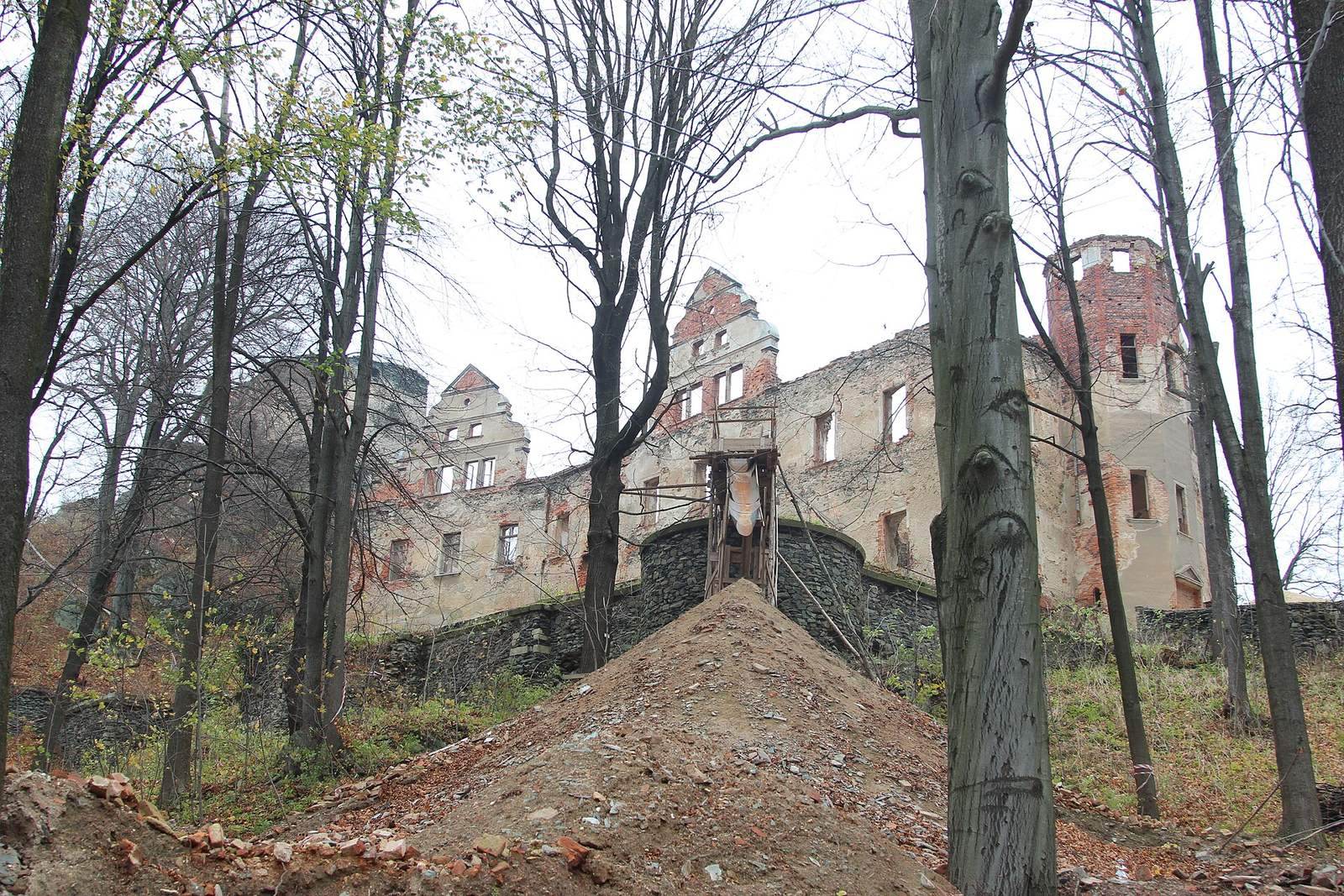
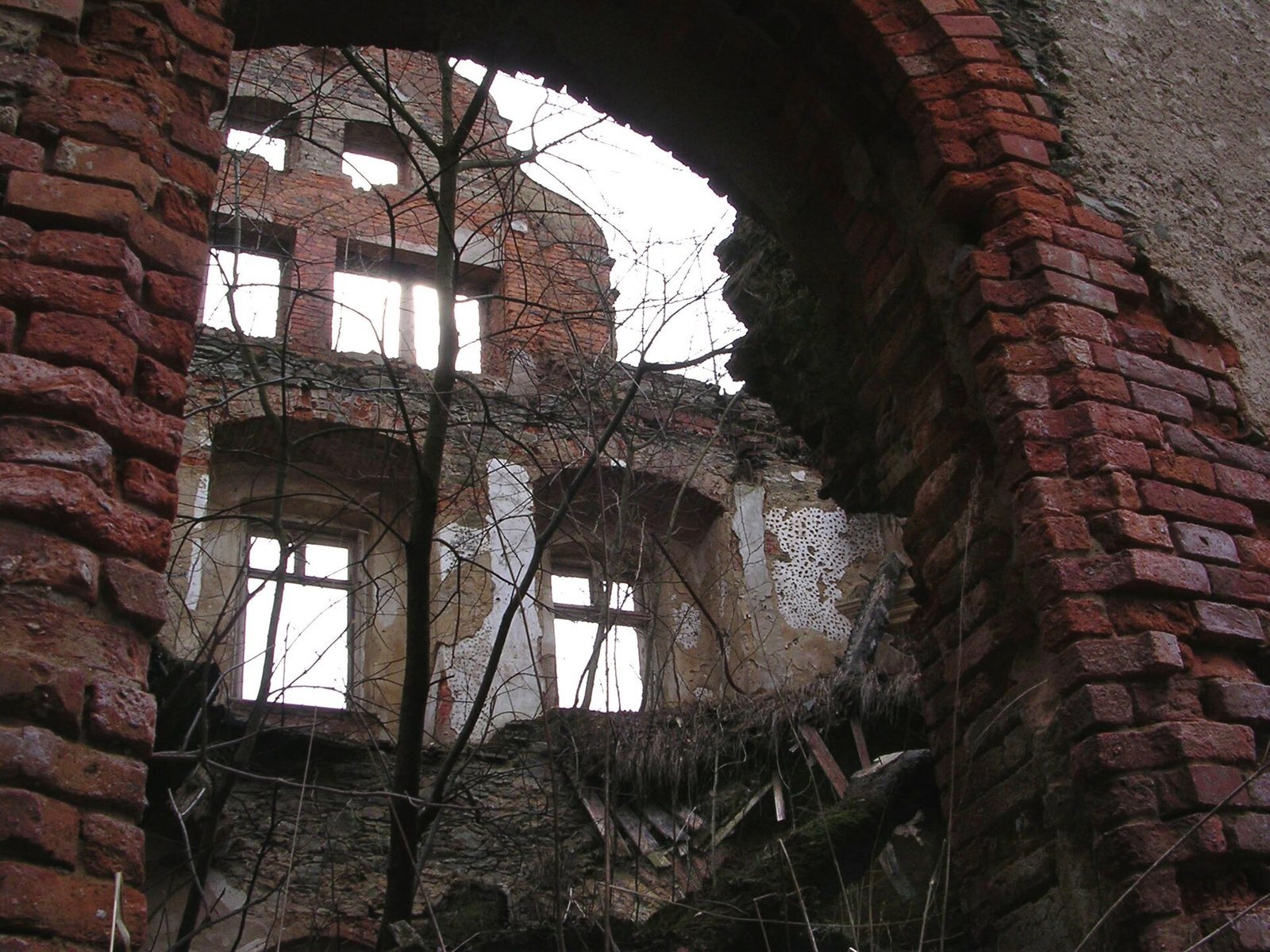
After the war, the palace became a summer holiday center and gradually deteriorated. The Lublin Truck Factory later owned it and attempted repairs, but local residents stole building materials. Elżbieta Zawadzka-Malicka became the owner in 1984. On 2 July 1992, arson caused a fire that left the palace in ruins, and the remaining structures were further vandalized. New owners took over in 2012 and began repair work.
Remains
The complex stood west of Bolków and southeast of Niesytno Castle, combining a Renaissance residence with later courtyard and garden works. An image printed by Alexander Duncker between 1857 and 1883 shows the palace alongside the castle ruins.
Palace complex
Residence
The original stonework included a main portal and window openings framed by broad, flat bands of stone. A wing and clock tower were added to the residence during its restoration from 1798 to 1810. The palace now survives as a ruin.
Courtyard, garden, and defenses
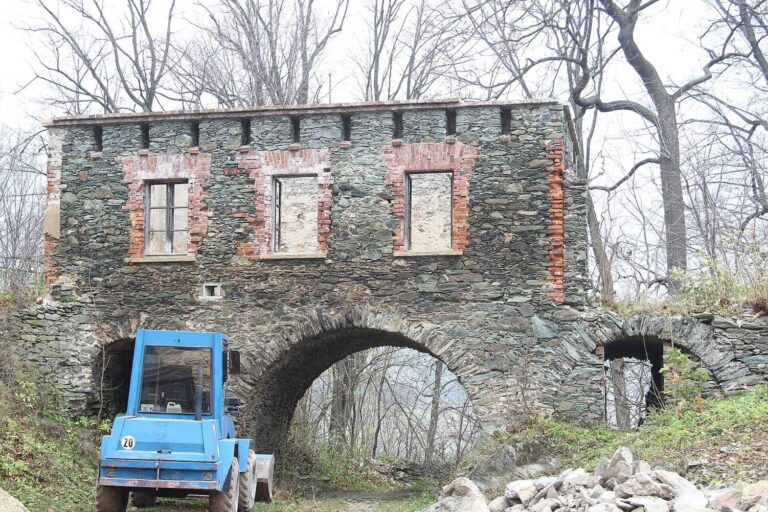
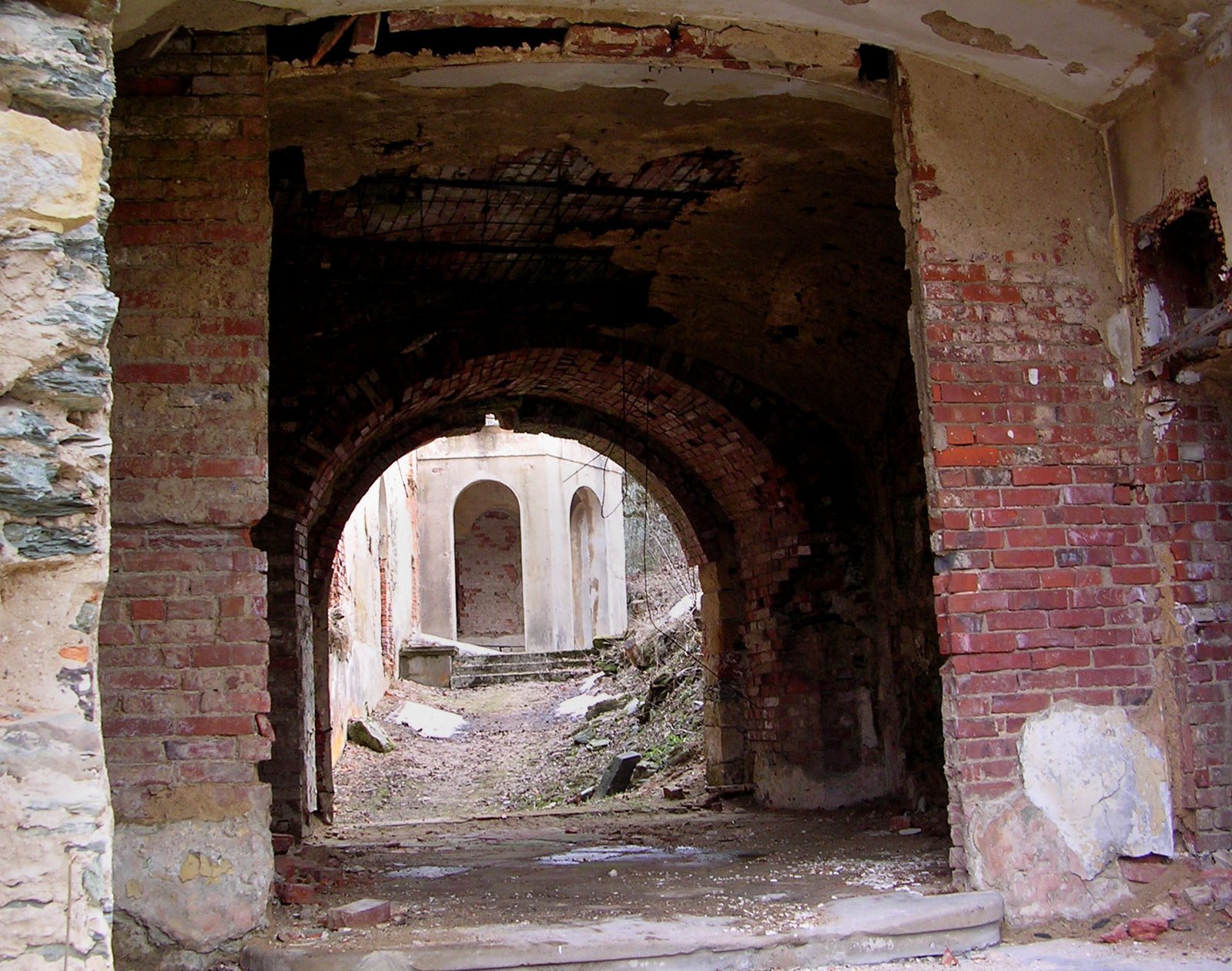
The expanded complex included a wall enclosing the lower courtyard, a gatehouse, and a garden terrace. The gatehouse dates to the nineteenth century and survives in fragments. A pavilion from the terrace was removed for conservation and rebuilt in the park of Stare Tarnowice Castle. Depictions of the complex also include early-modern bastioned fortifications, defensive projections designed to shield walls.
Carved stonework
The Renaissance portal, dated to 1545, was removed and incorporated into the restored Stare Tarnowice Castle. Between 2000 and 2003, the palace owner sent the portal and other carved stonework for conservation without notifying the heritage conservator; the castle’s owner took possession of the objects. A heraldic cartouche, a framed panel bearing a coat of arms, was also detached. The portal could return to Płonina if the palace is rebuilt, although removing it from its present setting could damage the stonework.