Pierre Levée: A Neolithic Dolmen in France
Site at a Glance
- Popularity
- Very Low
- Country
- France
- Primary era
- Stone Age
- Eras represented
- Stone Age
- Civilizations
- Unclassified
- Site type
- Burial
- Remains
- Tomb
On this page11 sections
History
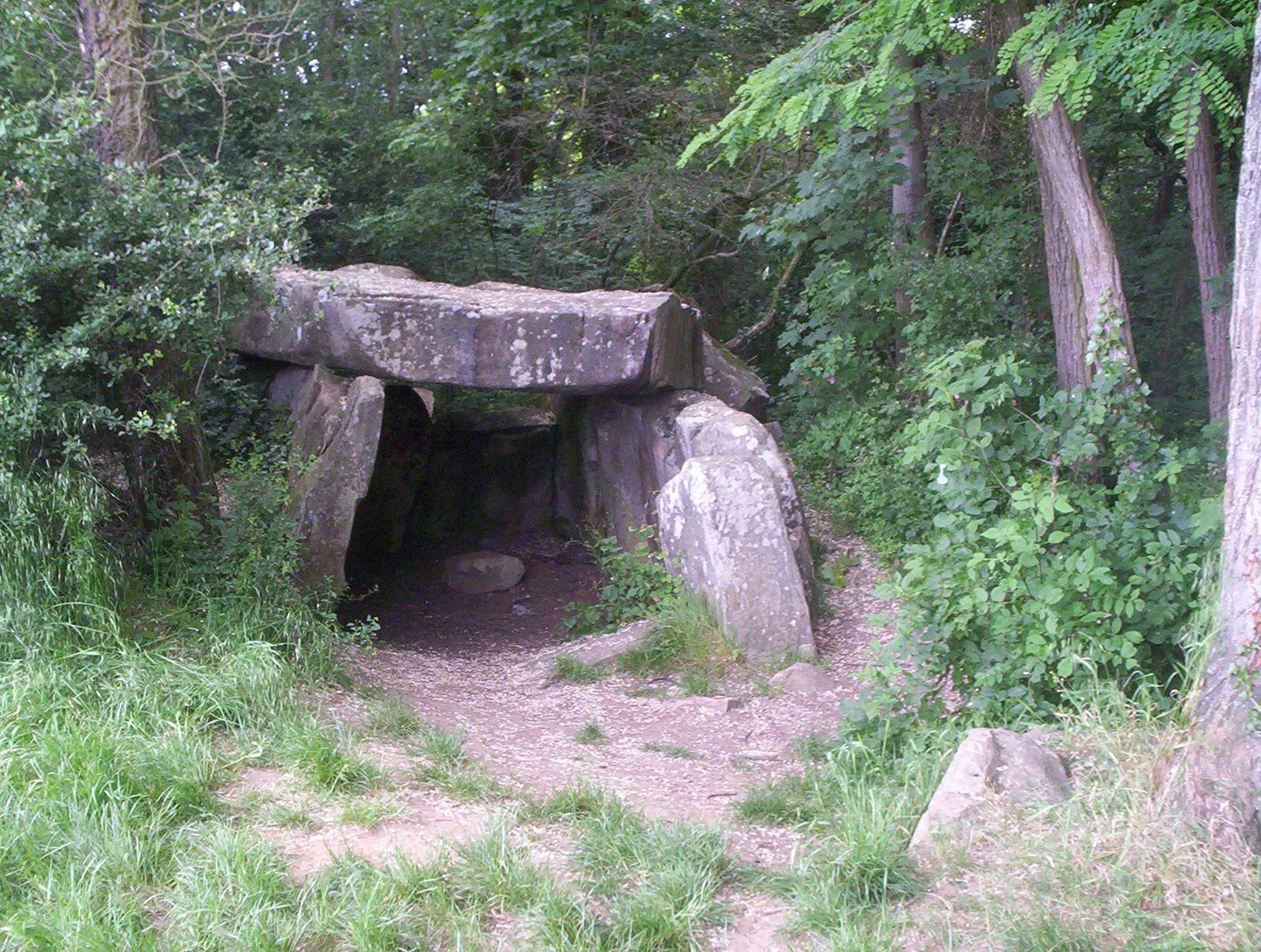
Pierre Levée is a Neolithic dolmen, a monument built from large stones, at Janville-sur-Juine, France. The Neolithic was the later part of the Stone Age, when farming and settled communities became widespread in many regions.
Uncovering and disturbance
The monument came to light around 1850–1860, when stones covering it were taken away for road surfacing. Its concealment may not have been continuous. The Napoleonic cadastre, France’s land register and map system established under Napoleon, names the field Champtier de la Pierre Levée; a nearby place was called Sous La Pierre Levée.
Around 1860, local farmers dug out the chamber and lowered its floor to make a shelter. They scattered its contents into nearby fields.
Excavation and protection
An amateur archaeologist bought Pierre Levée in 1872 to prevent further stone removal. In 1880, E. Delessard excavated the surviving archaeological layer and sent a report to Gabriel de Mortillet, a French archaeologist and prehistorian. The French Prehistoric Society became the monument’s owner in the early twentieth century. Pierre Levée was classified as a historic monument in 1889 and again in 1949.
Remains
The dolmen is aligned east–west and opens to the east. It consists of eleven Fontainebleau sandstone stones: nine supports and two capstones. Natural outcrops of this sandstone lie less than 200 metres away.
The mound
A mound of earth and stones covers the monument. It probably incorporated material from the original covering, while stones cleared from adjacent fields were later added to the pile.
Chamber and entrance
Main chamber
The main chamber is about 4.3 metres long, 2.4–2.6 metres wide, and 1.7–1.9 metres high. Its south side is a single slab measuring 4.65 metres in length and 1.75–1.90 metres in height, with an estimated weight of 8.5 tonnes. Four smaller slabs form the north side; they are about 1.25 metres long and average 1.55–1.70 metres high. The side supports lean slightly inward and average about 2.5 metres in overall length. At the rear, two slabs, each 1.25 metres wide, stand 1.50 and 1.15 metres high. Small blocks probably once filled the gap beneath the capstone, which measures 4.70 by 4 metres, is about 0.50 metres thick, and weighs an estimated 16 tonnes. Grooves on its rear were interpreted by Delessard as marks from a polishing stone, though their size and arrangement more likely indicate abstract engravings.
Antechamber
The antechamber is entirely ruined. It probably measured 1.15 metres long, 1.40 metres wide, and 1.20 metres high. An upright slab remains on its north side, while another lies across the entrance on the south. The antechamber’s capstone is broken, and a fragment lies on the ground in front of the monument. Upright and fallen slabs at the front may have formed a portico. If so, the dolmen would belong to the Angevin type, a Loire-region gallery tomb with a recessed entrance formed by two upright stones and a horizontal stone.
Burial evidence and finds
Human remains and chamber floor
The chamber floor may have been covered with small, rounded pebbles, possibly carried from the Juine, about 750 metres away. The pebbles show traces of burning. Human remains found in the chamber have been estimated as either seven adults and one child or about twelve people. The seven adults lay side by side with their heads oriented east.
Excavated objects
Delessard found ashes, fragments of human bone, a blade, and several flints; these objects are now lost. He also noted a stationary millstone near the dolmen. It measures 0.75 by 0.62 metres and is 0.35 metres thick. Since 1989, it has been held by the Departmental Museum of Prehistory of Île-de-France at Nemours.