Château de Mesnil-Voisin: A Seventeenth-Century Château in France


Site at a Glance
- Rating
- 4.4
- Popularity
- Very Low
- Country
- France
- Primary era
- Early Modern
- External website
- Open
- Eras represented
- Medieval, Early Modern
- Civilizations
- French
- Site type
- Domestic
- Remains
- Castle
On this page14 sections
History
Château de Mesnil-Voisin is a seventeenth-century classical château in France, located in Bouray-sur-Juine on the right bank of the Juine near Lardy. Built in 1635–36 on the foundations of a medieval building, it reflects the restrained symmetry of French high classicism and is associated with the mason and architect Michel Villedo.
Medieval Estate and Early Owners
At the end of the twelfth century, the estate was reportedly held by Gautier, a knight and lord of Mesnil who served as a liege vassal of King Philip Augustus. In the fifteenth century, ownership passed through the Karnazet family until Jean de Vaillant took control in 1455.
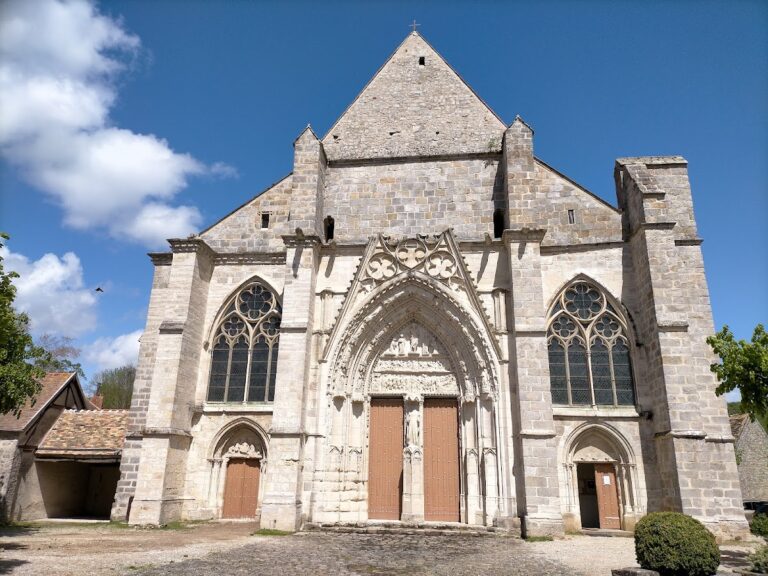
Renée Sabathier, the wife of Guillaume Hérouard, commissioned the chapel of Mesnil in 1611. She was buried there in 1616, linking the chapel to the family’s presence on the estate.
Rebuilding in the Seventeenth Century
The medieval château was demolished in 1633–34 by François Jameau, a mason from nearby Lardy. Reconstruction began for Pierre Hérouard in 1635, but financial difficulties led him to sell the property before the work was complete. The purchaser, Claude Cornuel, was a councillor of King Louis XIII and superintendent of finances. Michel Villedo completed the rebuilding in 1636.
In May 1652, the young Louis XIV stayed at Mesnil-Voisin with Cardinal Mazarin during the siege of Étampes in the Fronde, a series of rebellions and civil conflicts during Louis XIV’s minority. During Louis XIV’s reign, the château became the residence of Daniel Voysin de La Noiraye, secretary of state for war and later chancellor of France. His name gave the estate its historical form, “Mesnil-Voysin,” which remains preserved in the property’s name.
Inheritance and Later History
The estate remained in Daniel Voysin de La Noiraye’s descendants for more than two centuries. It passed to his daughter Marie-Madeleine Voysin de La Noiraye, who married Charles Guillaume, Marquis de Broglie, a lieutenant general of the king’s armies. Their daughter Marie-Françoise de Broglie inherited it and married Charles Joseph Robert, Marquis de Lignerac. The property then passed to their son Achille Joseph Robert, Marquis de Lignerac, and to their daughter Marie Josephe Vincente Robert de Lignerac.
Marie Josephe Vincente Robert de Lignerac married François Pierre Olivier de Rougé, who died at Mesnil-Voisin in 1816. Their daughter Catherine Innocente de Rougé brought the estate to her husband, César René de Choiseul-Praslin, son of Renaud César de Choiseul, Duke of Praslin. It later passed to their daughter Clotilde de Choiseul-Praslin, wife of Count Jules de Polignac, and then to their daughter Calixte de Polignac, who married the Marquis d’Argentré.
Around 1845, dredging of the Juine beside the château uncovered a Celtic statuette known as the Dieu de Bouray. The object became the property of the Marquise d’Argentré. At the beginning of the twentieth century, the estate was leased to the Mexican Count Subervielle and was put up for sale in 1939. A private company acquired it with plans for restoration and modernization, but the work stopped after German and later American troops occupied the premises during the Second World War.
Restoration and Protection
The Mansillon family acquired the property in 1954 and sold it in 1993 to Baron Bertrand d’Estreux de Beaugrenier. That year, craftsmen began a major restoration intended to recover the character of the château, grounds, late-seventeenth-century park, and hydraulic features. The château remains under restoration, including the renewal of 360 windows.
All façades and roofs, the two corner pavilions, and the outbuildings with their enclosing wall were classified as historic monuments in 1980. The interior was registered in 1994, and the small park was classified in 1995. These protections cover the principal architectural fabric and historic grounds.
Remains
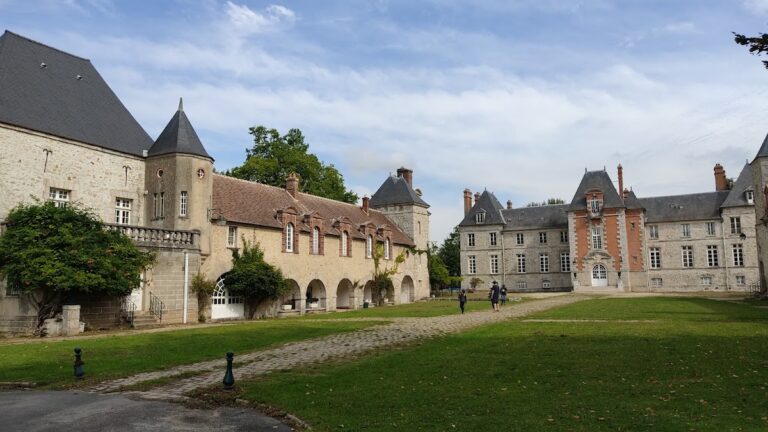
The estate is arranged around the château and an extensive group of service buildings on the right bank of the Juine. Its surviving features include dry moats, an entrance portal, two corner pavilions, and outbuildings that include an orangery, kitchens, coach houses, and workshops. The château stands at the heart of the Mesnil-Voisin hamlet, closer to the centre of Lardy than to that of Bouray-sur-Juine.
Château and Service Buildings
Main Château
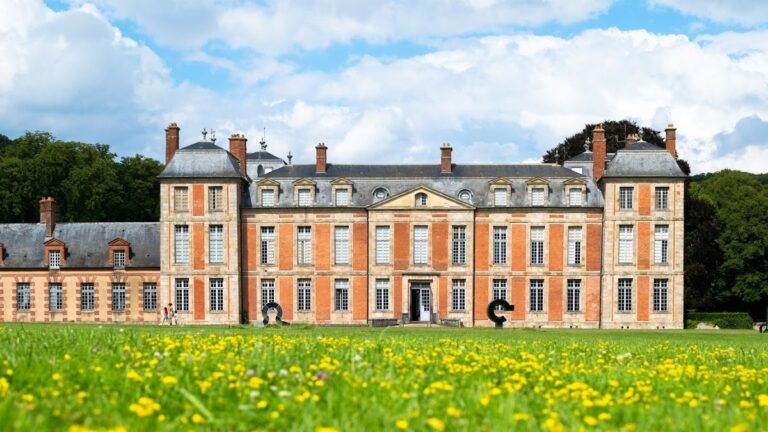
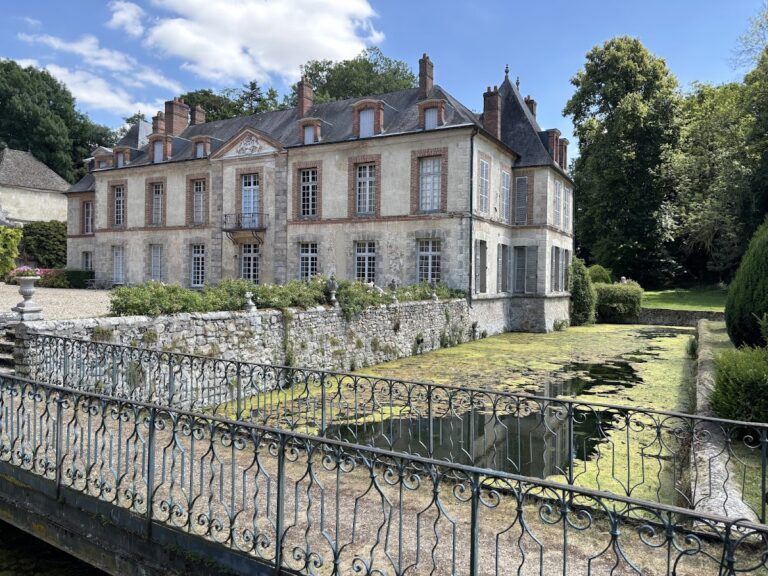
The present château dates from 1635–36 and occupies the foundations of the medieval building. Its symmetrical, restrained composition belongs to the seventeenth-century classical tradition associated with French high classicism and Michel Villedo. Dry moats and an entrance portal form part of the surviving approach and defensive arrangement, while the façades and roofs are included in the protected architectural fabric.
Outbuildings and Dovecote
The outbuildings surround a courtyard that contains a large dovecote, a building for keeping domestic pigeons. The structure is topped by a conical turret roof and contains approximately 3,500 internal nesting compartments. Its timber roof structure survives with a movable internal staircase and a mobile device for removing nests, an unusual survival of the building’s working equipment.
Park and Waterworks
Formal Park
André Le Nôtre designed the park at the end of the seventeenth century. Le Nôtre was the principal landscape designer of the formal French garden tradition associated with the royal court of that period. The park includes the tower of Pocancy, built by Charles Guillaume, Marquis de Broglie.
Canal and Juine
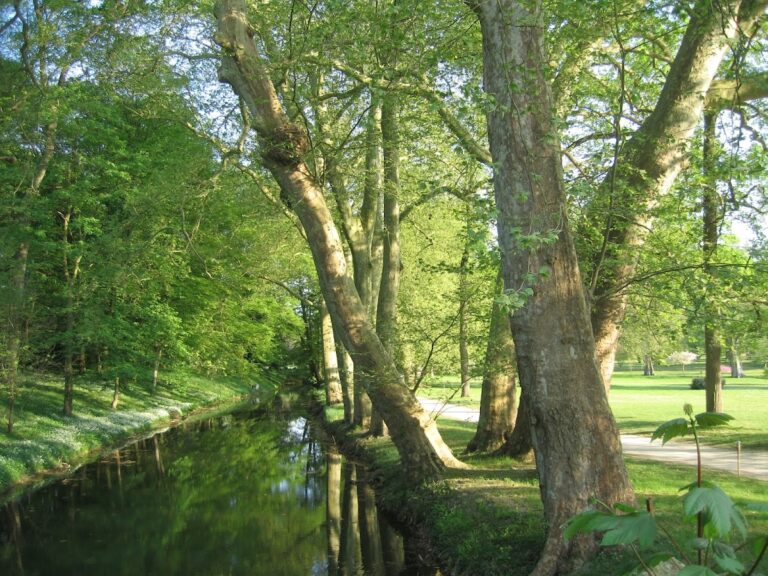
A canal borders the rear of the château and follows a course connected with the Juine. It was completely re-excavated between 1999 and 2001, restoring the route by which it leaves the river a short distance upstream from the château and rejoins it downstream immediately before the Cochet bridge.
Archaeological Find
Dieu de Bouray
The Dieu de Bouray, a Celtic statuette, was found during dredging of the Juine beside the château around 1845. It subsequently became the property of the Marquise d’Argentré, preserving a physical link between the river and the estate’s nineteenth-century history.
Nearby sites