Piccolomini Tower: The Keep of Pescina’s Medieval Castle
Site at a Glance
- Country
- Italy
- Primary era
- Medieval
- Eras represented
- Iron Age, Classical, Medieval, Early Modern, Modern
- Civilizations
- Italian, Kingdom of Naples, Kingdom of Sicily, Roman
- Site type
- Military
- Remains
- Castle
On this page11 sections
History
An ancient defensive position
Before Roman rule, the Marsi, an ancient people of central Italy, occupied a defensive position on the site. The installation was strengthened during Roman times and later fell out of use.
A medieval stronghold
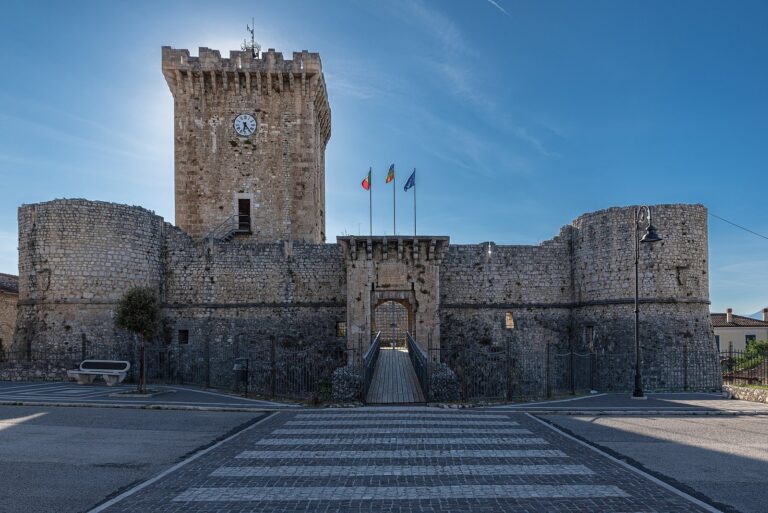
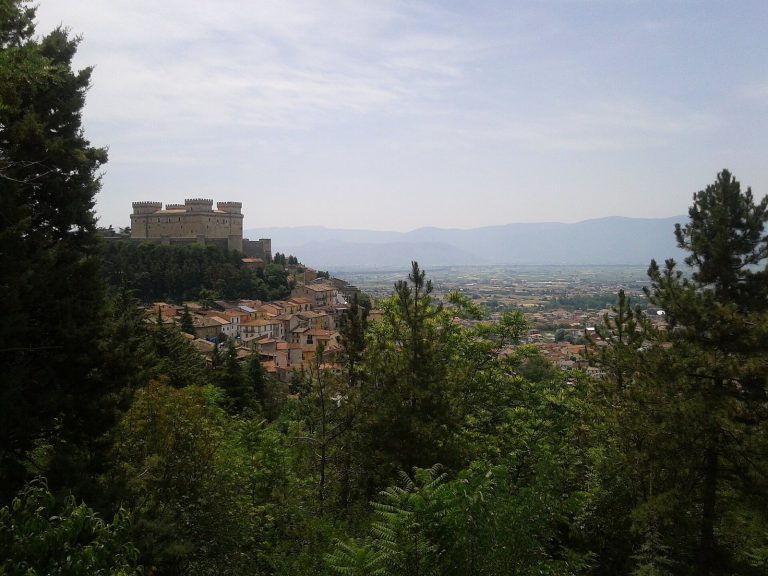
Piccolomini Tower is the keep of the medieval castle at Pescina, Italy. The Counts of the Marsi built the fortress between the 11th and 12th centuries, making it one of the County of the Marsi’s most important castles. Along with the Tower of Venus, it formed part of a defensive line across the Giovenco valley, a route linking eastern Marsica with the Peligna valley and Sulmona.
Under Norman rule, Pescina’s territory became part of the County of Celano, a feudal jurisdiction, and was raised to a barony, another feudal territory, with the establishment of the Kingdom of Sicily. From the early medieval period, people from nearby settlements took refuge in the fortress. They came from Castelrotto, already in ruins, as well as Ansano, Apamea (Casella), Apinianici, Atrano, Bozzano, Cardito, Geno, Leone, Malleano, Preziolo, and Vezzano.
The fortress and Pescina were drawn into a struggle between Count Tommaso Berardi and Frederick II of Swabia, king of Sicily and Holy Roman Emperor. After Frederick took the counties of Celano and Albe from his rivals, he retaliated against settlements that supported the Berardi. The castle was nearly destroyed, then rebuilt at Frederick’s order around 1232.
From the Berardi to the Piccolomini
Around 1300, the fief belonged to Ugo del Balzo, a supporter of the Angevin dynasty who encouraged the territory’s development. It returned to the Berardi near the end of the 14th century. A prosperous period followed under Lionello Accrocciamuro and Jacovella da Celano. Antonio Piccolomini, a nephew of Pope Pius II, later acquired the barony. His family held it from the second half of the 15th century until the end of the 16th, restoring the castle in Renaissance forms. The tower took its name from the Piccolomini.
Later ownership and conservation
The Peretti owned the castle from the late 16th century, followed by the Savelli, who held it until 1712. The castle had been abandoned by the time it passed to the Cesarini-Sforza, who retained it until feudalism was abolished in the 19th century.
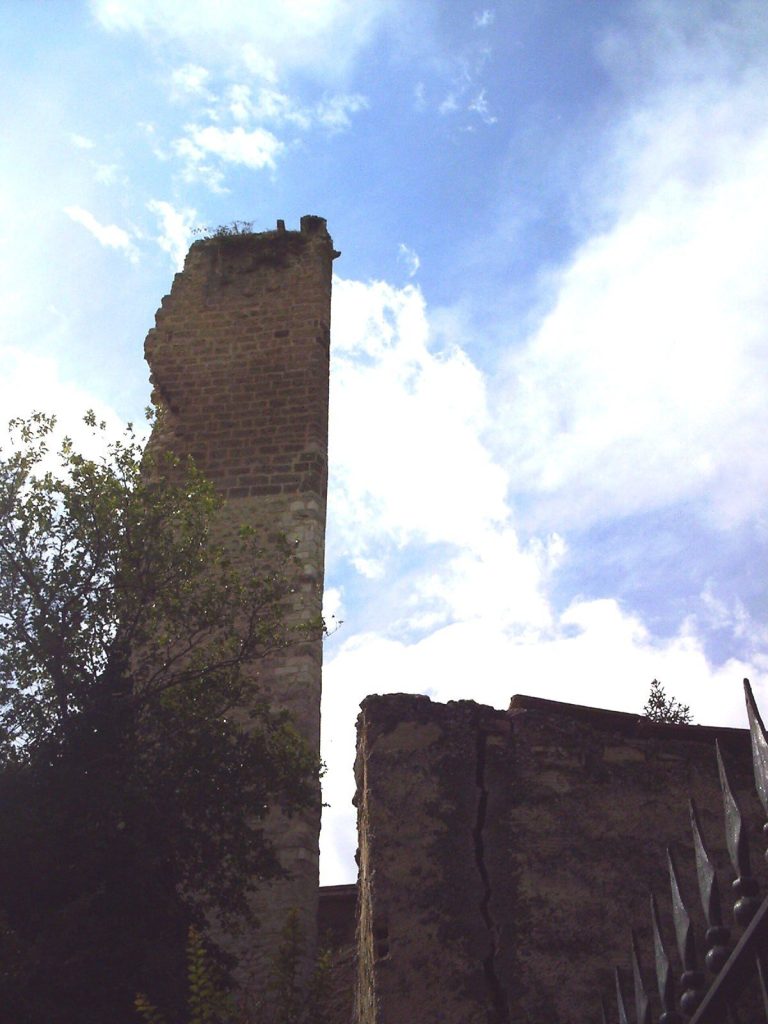
In 1902, the Ministry of Public Instruction declared the structure a monumental building worthy of preservation. The 1915 Marsica earthquake severely damaged the castle: the upper part of a second tower fell, and the enclosure walls suffered the worst damage. Consolidation and safety work began in 2020. The tower’s restoration was completed in 2022, when an elevated walkway was also installed.
Remains
The castle and its setting
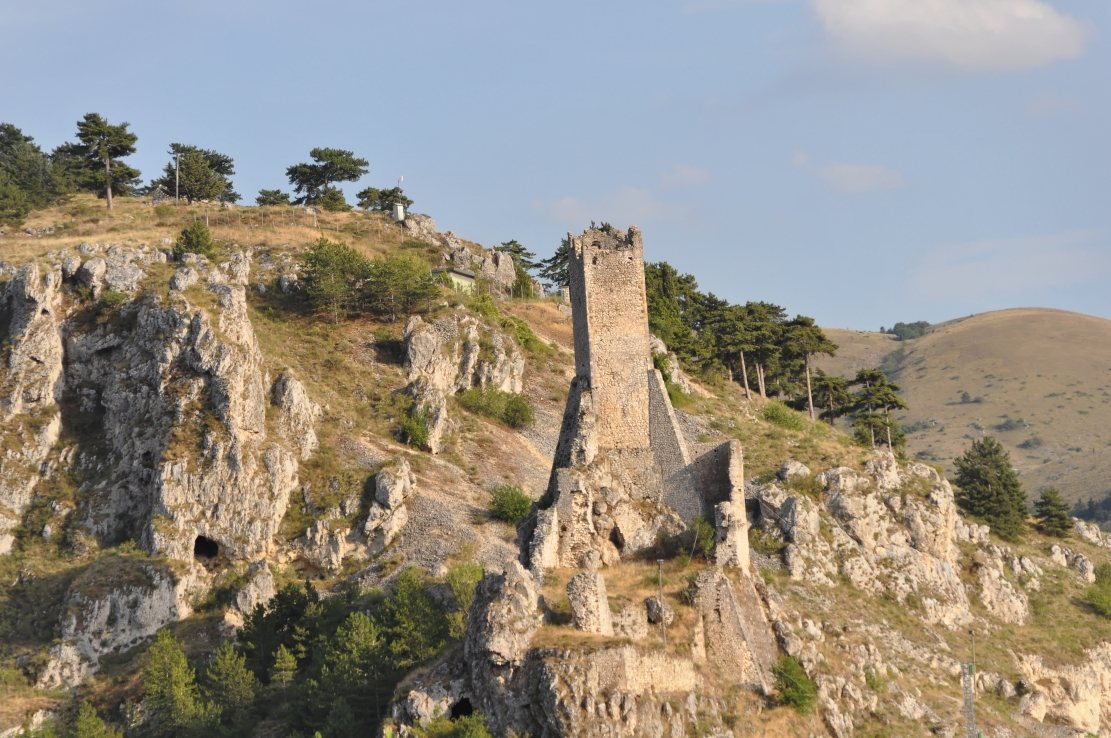
The surviving site centers on a stone keep that formed part of a larger defensive complex, of which only remains survive. The castle stood on a rocky spur above the Fucino plain, within a wider defensive landscape that included large-stone walls in the Giovenco valley.
Piccolomini Tower
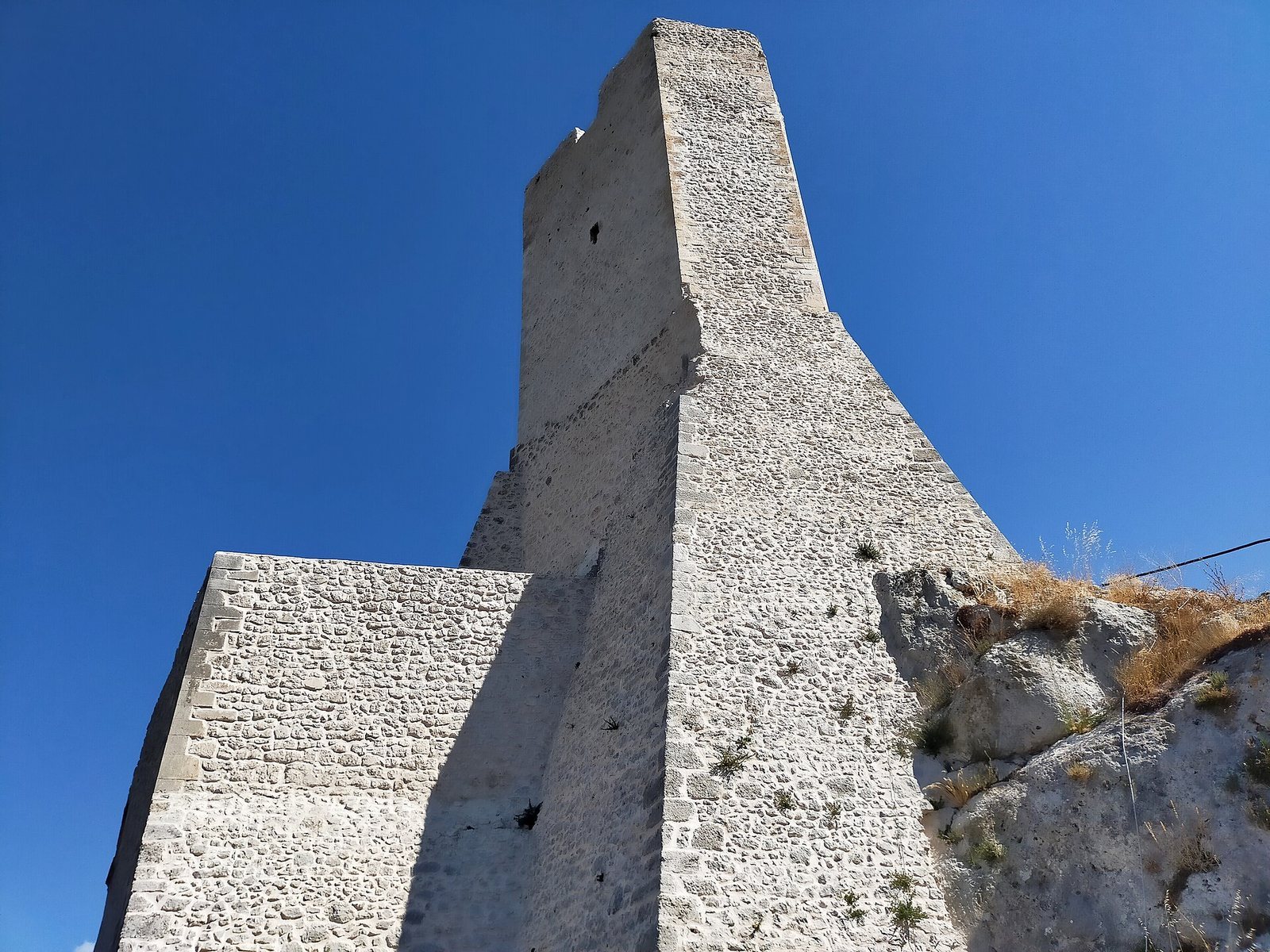
The tower stands 942 metres above sea level on a spur with a steep drop. Its pentagonal base supports an upper section with outward-sloping walls. Built to control the western approach to the Fucino, it now includes the elevated walkway installed during its restoration.
Castle complex and gates
The wider fortress had five gates. These were the Castle Gate, the People’s Gate, the Central Gate (also called the Clock Gate), the Southern Gate (also called the Nuns’ Gate after the nuns of the Saltarello convent), and the Execution Gate, later renamed the Gate of Saint Nicholas.
Walls in the Giovenco valley
Remains of walls made from very large stones in the Giovenco valley relate to the area’s defensive importance and the control of access to the Fucino.
Church of Saint Berardo
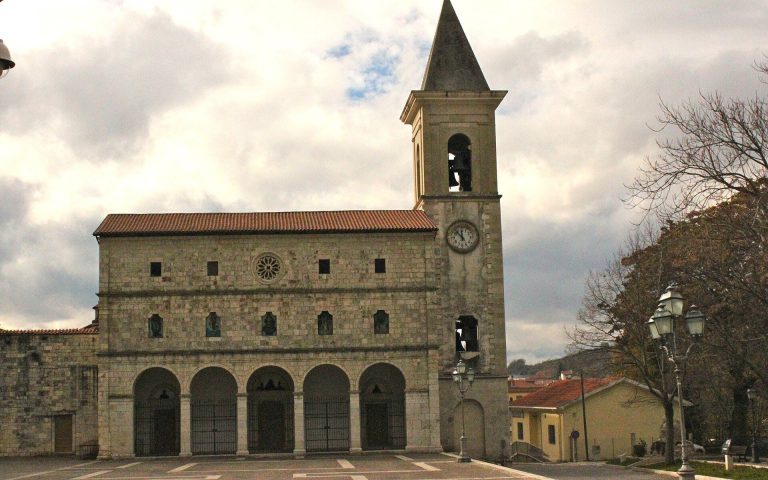
A short distance below the tower stands the square bell tower associated with the Church of Saint Berardo. The church was originally called the Church of Saint Mary of the People, also known as the Church of Saint Mary of the Gate, and was restored in the 18th century. The tomb of the 20th-century writer and intellectual Ignazio Silone lies at the base of the bell tower.