Pfarrkirche Sankt Moritz, Ingolstadt: Historic Parish Church


Site at a Glance
- Rating
- 4.5
- Popularity
- Low
- Country
- Germany
- Primary era
- Medieval
- External website
- Open
- Eras represented
- Medieval, Early Modern
- Civilizations
- Carolingian, Duchy of Bavaria, Holy Roman Empire
- Site type
- Religious
- Remains
- Church
On this page7 sections
History
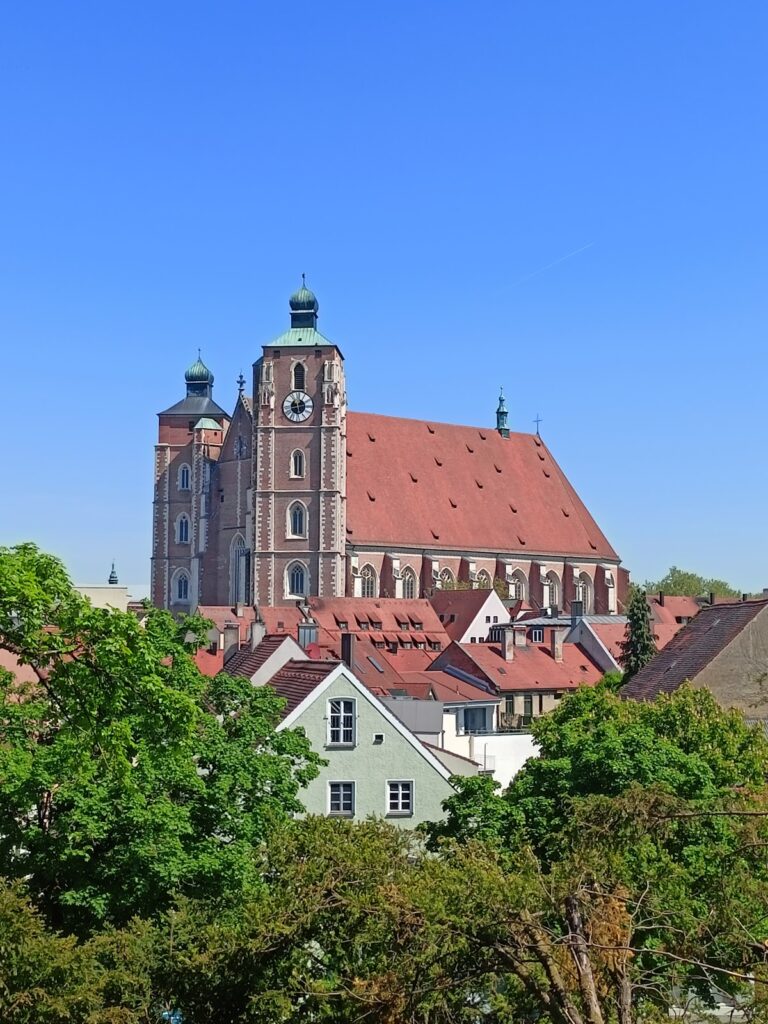
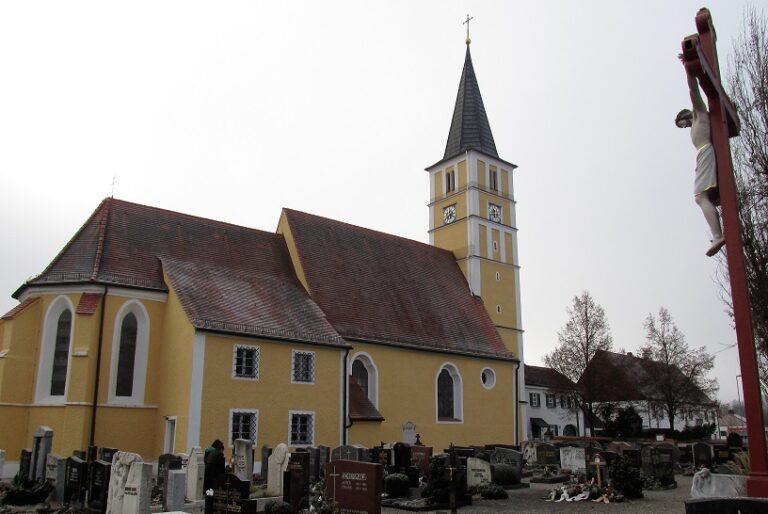
Pfarrkirche Sankt Moritz is a historic Catholic parish church in Ingolstadt, Germany. Its oldest parts date from the ninth century, the period associated with the city’s foundation, while its present form dates from 1234. The church is therefore the oldest surviving building in Ingolstadt. It belongs to the Catholic Diocese of Eichstätt and rises to nearly 70 metres.
Medieval parish church
In 1148, the church was dedicated to the Saviour and Mary. It was later placed under the patronage of Saint Maurice, a Christian martyr traditionally associated with the Theban Legion and venerated in Western Christianity. Until the completion of the Liebfrauenmünster, known also as the Upper Parish, in the early fifteenth century, Sankt Moritz was Ingolstadt’s only church. Afterward, it became known as the Lower Parish, or Untere Pfarr.
The church also played a role in the development of organized schooling in the city. A parish school connected with Sankt Moritz is recorded in 1328, making the institution one of the starting points of formal education in Ingolstadt.
Later alterations and commemorations
During the eighteenth century, Johann Baptist Zimmermann, a Bavarian painter and stuccoist associated with the Rococo style, introduced decorative elements in the church. Rococo was an ornate style characterized by light, curving forms. The decoration was removed in 1880, and part of it was restored after 1945.
Franz von Mercy, a seventeenth-century military commander and nobleman who served Bavaria and the Holy Roman Empire, is buried behind the choir. He was commander-in-chief of the imperial-Bavarian army of the Catholic League during the Thirty Years’ War, the European conflict fought from 1618 to 1648 amid religious, dynastic, and political struggles. In 2004, the parish of Sankt Moritz was united with that of the Liebfrauenmünster. The church is recognized as a historic monument.
Remains
The surviving church is a three-aisled Gothic basilica, meaning that a central nave is flanked by lower side aisles. It incorporates numerous Romanesque elements, including the massive construction and rounded forms associated with that earlier architectural style. Later chapels occupy the side aisles. The building has a strongly recessed polygonal choir, a sacristy-associated corner tower, and a single bell tower east of the nave. Ten massive round limestone columns support the nave vault.
Choir and interior furnishings
The elongated choir and altar area is covered by a star-shaped vault. Two rows of simple choir stalls line the space, with procession banners or candelabra bearing figures of saints positioned behind them. The high altar, two side altars, and pulpit are Rococo furnishings. Other recorded features include a representation of the Virgin in glory within a candle-bearing mandorla, an almond-shaped aureole around a sacred figure, and an image of Thérèse of Lisieux, the French Carmelite nun and Catholic saint.
Bells and organ
The eastern tower contains six bronze bells with the note sequence B0, D1, E1, F-sharp1, A1, and B1. The Saint Maurice bell, sounding D1, dates from 1642; the other five bells date from the 1990s. The organ was built in 1964 by E. F. Walcker & Cie. as Opus 4487. It has 51 stops, four manuals, and a pedal.
Pfeifturm and exterior monument
The Pfeifturm is a separate municipal watchtower at the southwest corner near the church and is architecturally distinct from the church’s eastern bell tower. Dating from the fourteenth or fifteenth century, it housed a watchman until 1938. His duties included reporting fires and other dangers in the city. Near the tower stands a statue of the Suffering Christ dating from the beginning of the sixteenth century. Franz von Mercy’s burial place lies behind the choir.