Pepys Library: Samuel Pepys’s Collection at Magdalene College
Site at a Glance
- Popularity
- Medium
- Country
- United Kingdom
- Primary era
- Early Modern
- Eras represented
- Early Modern
- Civilizations
- English
- Site type
- Civic
- Remains
- Library
On this page10 sections
History
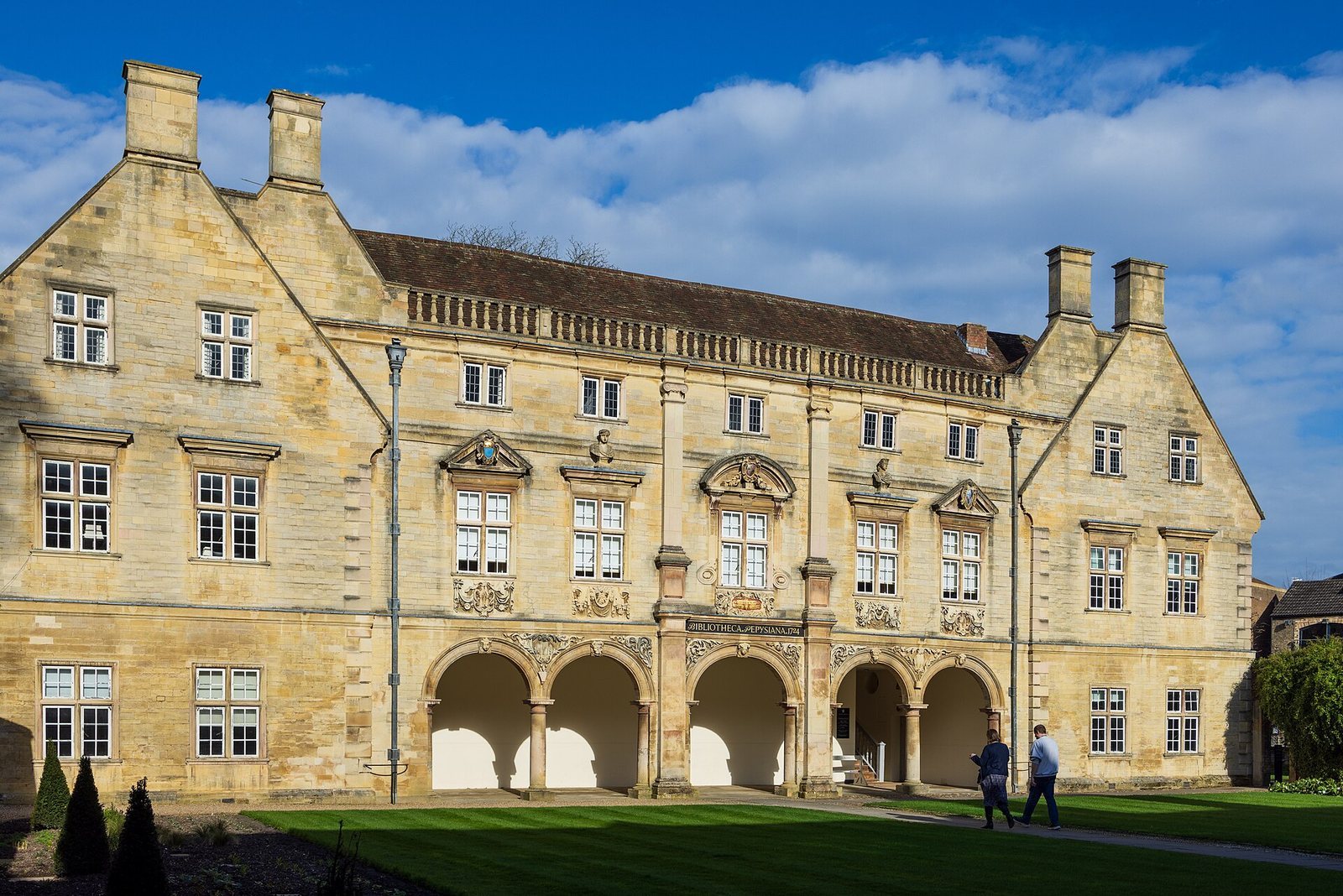
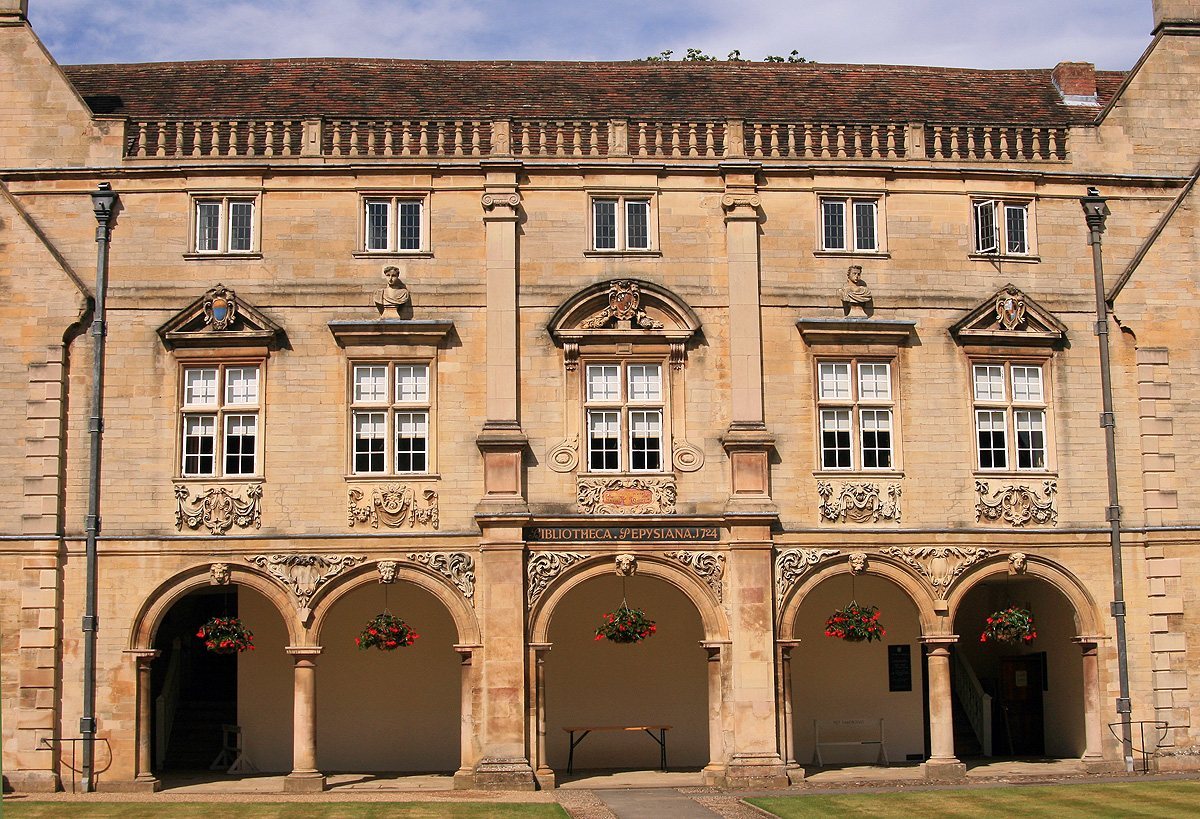
The Pepys Library is Samuel Pepys’s seventeenth-century collection of books, manuscripts and prints, housed at Magdalene College in Cambridge, United Kingdom. Its home, the Pepys Building, was constructed between 1670 and 1703 and has a Neoclassical front, a style based on classical Greek and Roman forms.
Pepys and the library
Pepys, an English naval administrator and diarist, assembled the collection. At his death in 1703 it contained more than 3,000 volumes and was considered one of the most important surviving private libraries of the seventeenth century.
Work on the Pepys Building proceeded slowly because of a lack of funds. The project gained new momentum after advice from Robert Hooke, an English natural philosopher and architect, in 1677. Pepys contributed to the building fund three times.
The bequest and the diary
Pepys’s will left the collection to Magdalene College after the death of his nephew and heir, John Jackson. It required the library to be preserved, kept the books in their original cases, prohibited their sale or the addition of new books, and called for their arrangement to be reviewed and adjusted where needed. Jackson died in 1723, and the collection was transferred intact to the college in 1724.
Pepys kept his diary from 1660 to 1669, writing about daily life and events such as the Great Plague of London, the Great Fire of London and the Second Anglo-Dutch War. He stopped because of eyesight problems and did not wish to dictate. Written in Thomas Shelton’s shorthand system, the diary remained unread in the college library until the early nineteenth century. John Smith deciphered it, and it was first published in 1825.
Remains
The Pepys Building and library room
The library occupies a first-floor room in the Pepys Building, in the second court of Magdalene College. The building has a comparatively plain brick rear and a Neoclassical front faced with Ketton stone. Its façade carries the painted inscription Bibliotheca Pepysiana 1724, marking the collection’s arrival. Above it are Pepys’s painted coat of arms and the motto Mens cujusque is est quisque, translated as “The mind’s the man.” The motto comes from Cicero’s work De re publica (6.26).
The collection and its arrangement
Books and original bookcases
The library holds about 3,000 books on subjects including fiction, history, visual art, music and science, alongside manuscripts and prints. Pepys’s original bookcases still hold the books, arranged by size according to his catalogue. The cases were made to fit the collection and may be those that Pepys’s journal attributes to Sympson the Joiner, a maker of fitted woodwork and furniture.
Diary manuscripts and naval records
Six original bound manuscripts of Pepys’s diary are among the holdings. His naval records, assembled while he was Secretary to the Admiralty, include two illustrated Anthony Rolls. These inventories depict ships in the English royal fleet around 1546, including the Mary Rose.
Early printed books and music
Early printed holdings include books printed before 1501 by William Caxton, Wynkyn de Worde and Richard Pynson. The library also has sixty medieval manuscripts, including the Pepys Manuscript, an English choirbook, or book of music for choir performance, from the late fifteenth century.
Other notable holdings
The collection includes Pepys’s copy of Isaac Newton’s Mathematical Principles of Natural Philosophy, published in 1687, and Sir Francis Drake’s personal almanac, a calendar or annual reference book. It also holds the earliest copy of John Heywood’s The Play of the Weather, published in 1533 shortly after it was performed for Henry VIII. More than 1,800 printed ballads form a collection regarded as one of the finest surviving examples of its kind and used by Thomas Percy for his Reliques of Ancient English Poetry.