Bălăbănești Dendrological Park: A Protected Landscape in Moldova
Site at a Glance
- Popularity
- Very Low
- Country
- Moldova
- Primary era
- Modern
- Eras represented
- Modern
- Civilizations
- Russian
- Site type
- Domestic
- Remains
- Park
On this page9 sections
History
Bălăbănești Dendrological Park is a five-hectare collection of trees and shrubs on a hill southeast of Bălăbănești, Moldova, established around the turn of the nineteenth and twentieth centuries in a landscape style, with naturally arranged paths and planting. The park formed part of the village estate and is associated with a manor built nearby.
Estate and park foundation
Bălăbănești village was founded in 1825. After passing through several names, it returned to a name associated with boyar Bălăban, a high-ranking noble in eastern European and Russian societies. He built a manor on a hill near the village.
The park’s founder and designer are uncertain. A French count has been proposed as its creator, but this remains conjectural. The estate later passed to Korsakov, a Russian boyar.
Changing use and decline
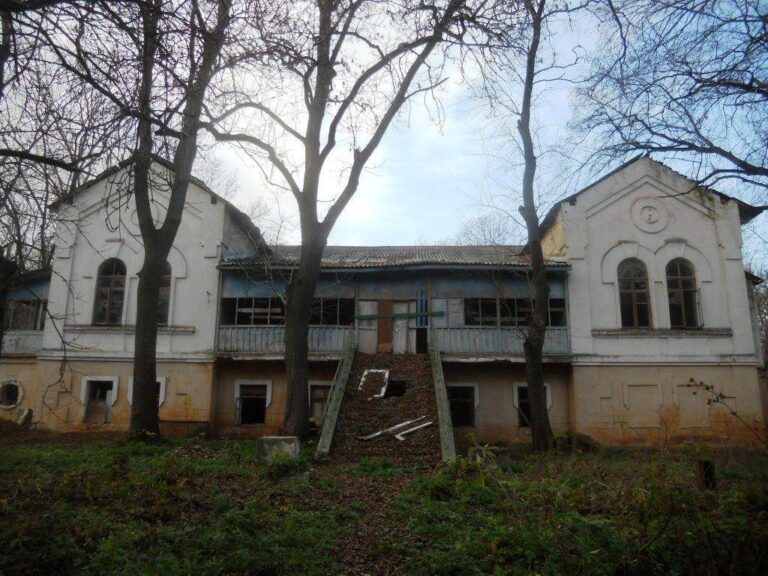
In the 1960s, engineer P. Leontiev counted 44 woody plant species in the park. By then, its original arrangement could no longer be restored. During the Soviet period, the manor housed the village collective farm administration. A collective farm organized agricultural production under the Soviet system. After the administration moved elsewhere, the manor disappeared.
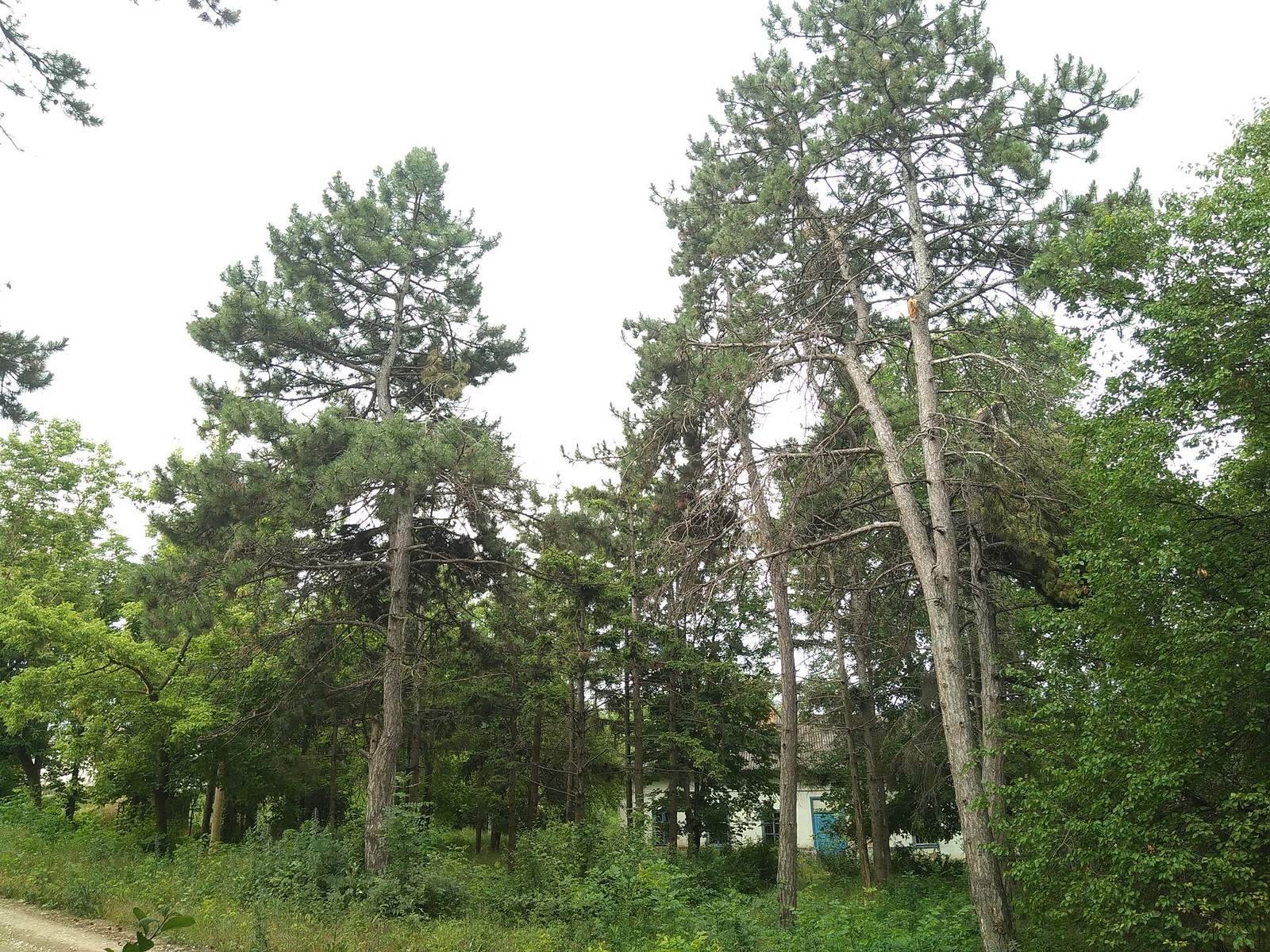
Without maintenance, native vegetation spread through the park, which became increasingly forest-like. The park is protected in Moldova as a landscape-architecture monument, a designation for a site valued for its designed landscape. A fragment is also listed as an architectural monument of national importance in the state register under number 249 for Criuleni District.
Remains
Setting and design
The park occupies a north-facing slope and covers five hectares on a hill southeast of Bălăbănești, about 25 kilometres south of Criuleni and roughly the same distance from Chișinău. Its planting and paths follow the landforms in a naturalistic composition. There is no protective belt. The position shelters plants from northeasterly winds but leaves them exposed to northwesterly winds, which are more harmful to species of southern origin. This exposure, along with the spread of native plants, has changed the character of the grounds.
Roads, paths, and entrance
A gravel road crosses the park and is used by vehicles travelling to villagers’ farmland, although vehicle traffic is meant to be prohibited in state-protected parks. A status panel and fountain stand near the entrance, where two sycamore maples (Acer pseudoplatanus) grow on opposite sides of the road. Farther along, a row of Maclura aurantiaca was planted on the left and conifers on the right; five Maclura and two Siberian pines (Pinus sibirica) remain from these plantings. Two paths branch from the road. One, lined with Celtis occidentalis, leads toward the former manor; the other, bordered by conifers, leads to the dining room. Some former park alleys have narrowed into paths or disappeared, while paths from the manor clearing are neglected and impassable.
Former manor clearing
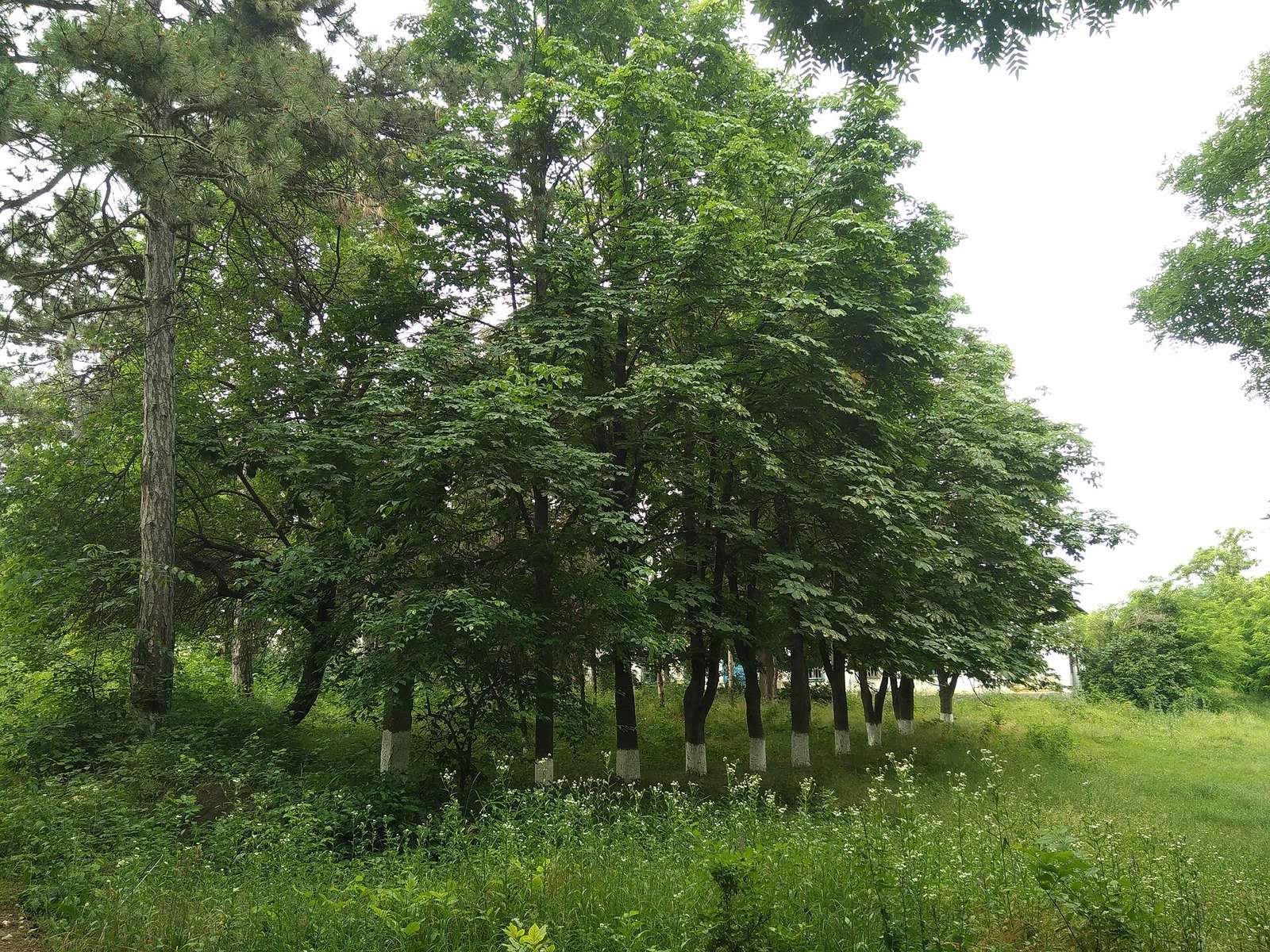
The largest clearing marks the former manor site. Trees around it include Acer platanoides, Sophora japonica, Acer campestre, Aesculus hippocastanum, Quercus imbricaria, Koelreuteria paniculata, Celtis occidentalis, Fraxinus pennsylvanica, Syringa persica, Syringa vulgaris, Robinia pseudoacacia, Morus alba, Acer negundo, and Tilia tomentosa, as well as several conifers. The horse chestnuts (Aesculus hippocastanum) were planted toward the end of the 1970s. A second clearing in the middle of the park is enclosed and neglected.
Ornamental trees and shrubs
The park contains about 30 to 40 ornamental tree and shrub species. Most planted shrub species have disappeared, although dog rose (Rosa canina) and common lilac (Syringa vulgaris) remain among the exceptions. Native shrubs have also spread, their seeds carried by wind or birds. Tree species still represented include Sophora japonica, Quercus imbricaria, Koelreuteria paniculata, Maclura aurantiaca, Pinus sylvestris, and Pinus strobus. Several introduced species have disappeared or are at risk of disappearing, including Juniperus virginiana, Quercus alba, Biota, Pinus nigra, and Gymnocladus dioicus.
Native trees and condition
Native trees were in better condition than many of the ornamental plantings. They include Quercus robur, Quercus petraea, Fraxinus excelsior, and Ulmus laevis. Common ash (Fraxinus excelsior) predominates in the central, lower part of the park. Most species are endangered and aging prematurely; some oaks are almost completely dried out, as are some conifers. In their natural ranges, certain oak species can live for more than a thousand years, while some conifers can reach 400 to 600 years.