Palazzo Visconti di Modrone: A Rococo Palace in Milan
Site at a Glance
- Popularity
- Medium
- Country
- Italy
- Primary era
- Early Modern
- Eras represented
- Early Modern, Modern
- Civilizations
- Austrian Empire, Habsburg, Italian
- Site type
- Domestic
- Remains
- Elite Residence
On this page7 sections
History
Eighteenth-century development
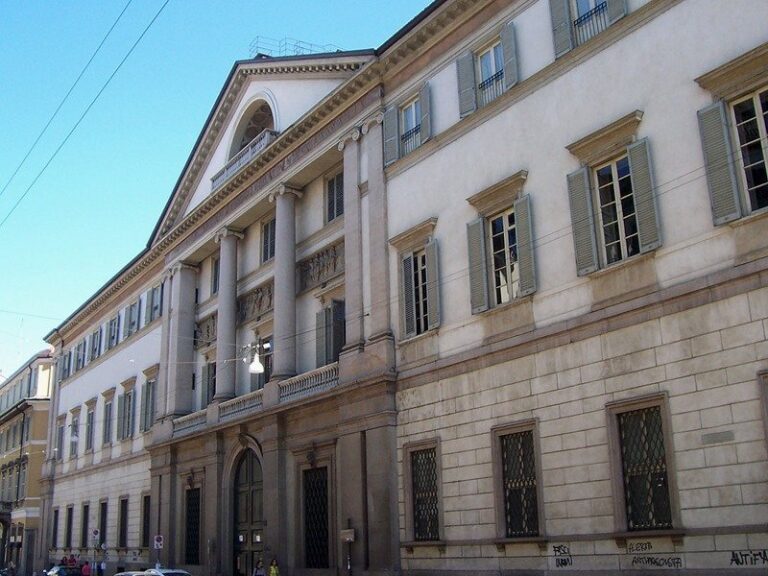
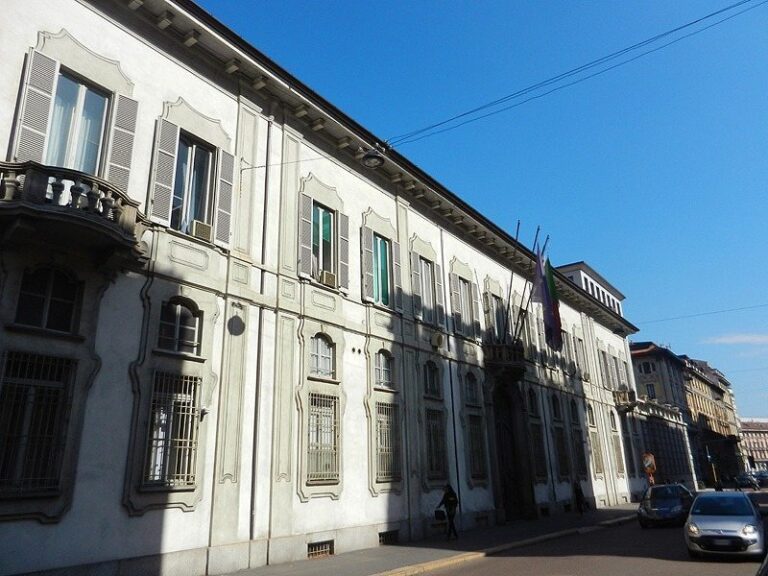
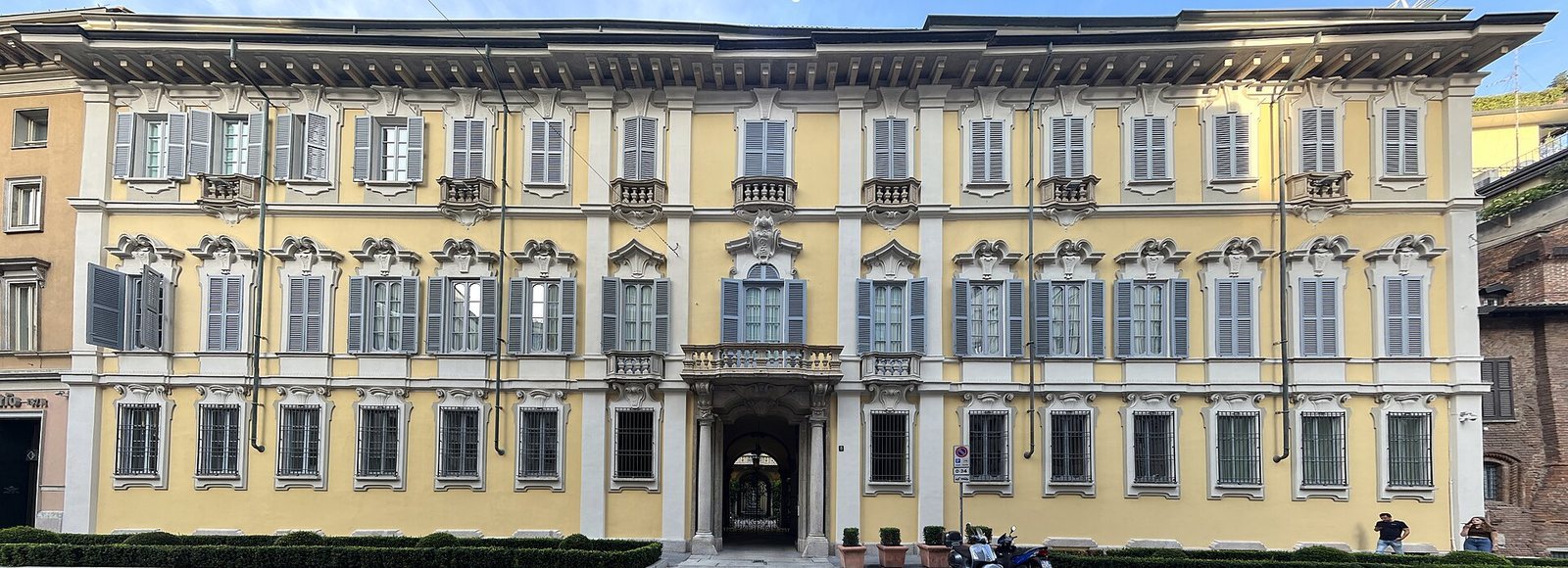
Palazzo Visconti di Modrone is a historic palace in Milan, Italy. Its development began when Giuseppe Bolagnos remodeled and enlarged several existing buildings, including a house his wife, Isabella Boselli, had received as a dowry. By the eighteenth century, the palace was known in Milan for its unusually rich and exuberant Rococo style, an ornate European style that flourished during that century. It is described as one of the richest and most elaborate examples of Milanese Rococo.
After Bolagnos died, his second son Carlo inherited the property. Carlo died without heirs, and his father’s will transferred it to the Ospedale Maggiore di Milano, a major hospital institution in Milan. In 1759, the institution sold the palace at auction to the nobleman Giuseppe Viani. He enlarged and embellished the complex by acquiring and incorporating neighboring palaces, a process that continued until at least 1770.
Nineteenth-century ownership
Carlo Finelli bought the property in 1833 for 360,000 Milanese lire, the currency used in Milan. A few years later, the Dukes Visconti di Modrone acquired it for 750,000 lire. They belonged to a related branch of the Visconti, the ruling family of the Duchy of Milan.
War damage and restoration
Bombing during the Second World War heavily damaged the palace. Postwar restoration followed, while speculative development altered parts of the complex.
Remains
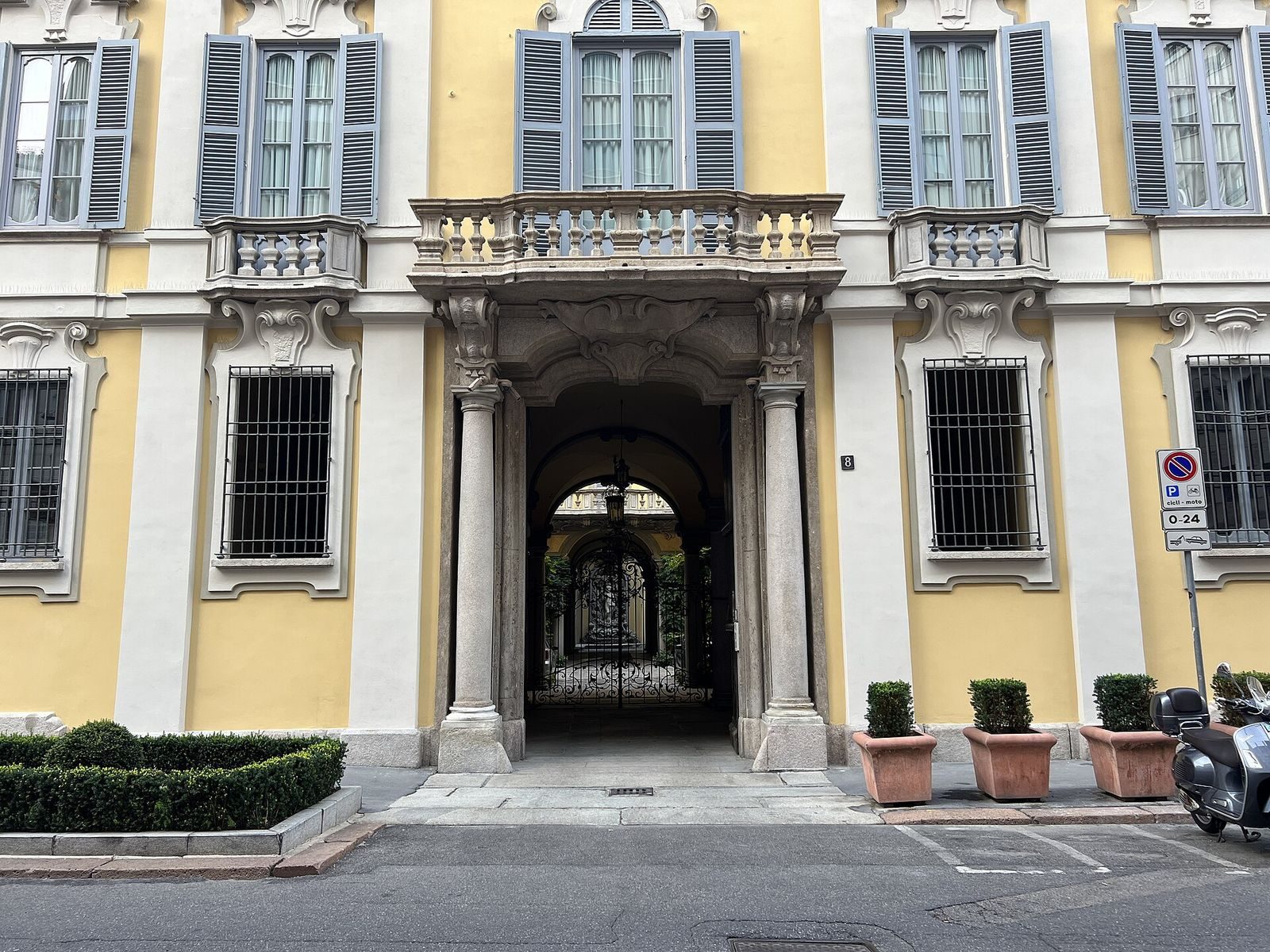
The three-storey palace is arranged around a main entrance and two courtyards. Its richly decorated exterior reflects Milanese Rococo design.
Entrance and courtyards
A large, irregular balcony rises above the main entrance at the piano nobile, the principal reception floor of an Italian palace. The windows have pediments that combine straight and curved outlines. Beyond the entrance, paired columns support porticoes around the first courtyard, which opens directly onto a second courtyard containing a small artificial grotto.
Interiors and decoration
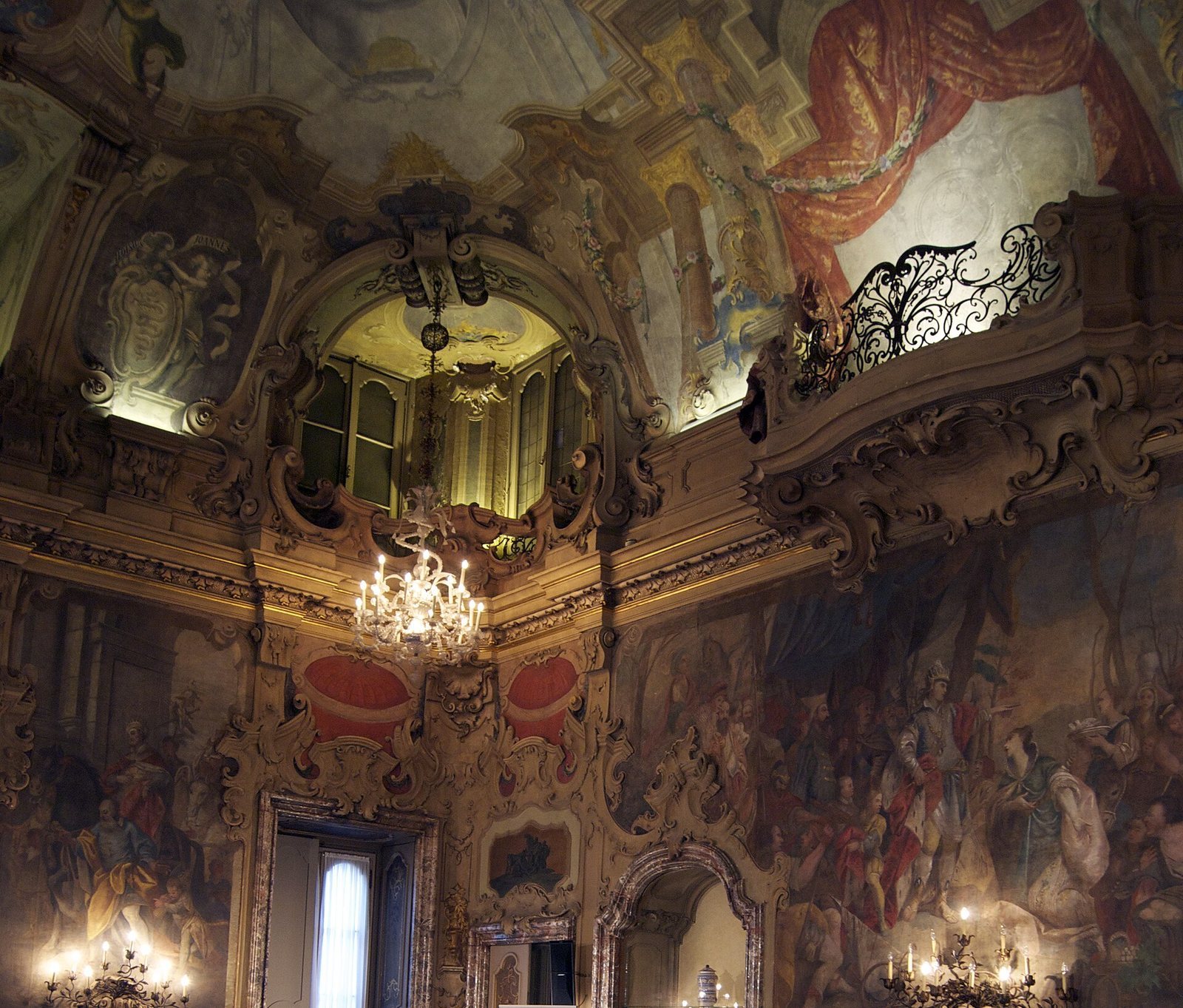
The interiors reflect work carried out over two centuries. The ballroom has eighteenth-century frescoes by Nicola Bertuzzi. A Spring composition by Filiberto Sbardella decorates the piano nobile, and the Visconti arms adorn the palace.