Palazzo Nicolò Lomellini: A Historic Palace in Genoa
Site at a Glance
- Popularity
- Medium
- Country
- Italy
- Primary era
- Early Modern
- Eras represented
- Early Modern, Modern
- Civilizations
- Genoese, Italian
- Site type
- Domestic
- Remains
- Elite Residence
On this page10 sections
History
Foundation and reconstruction
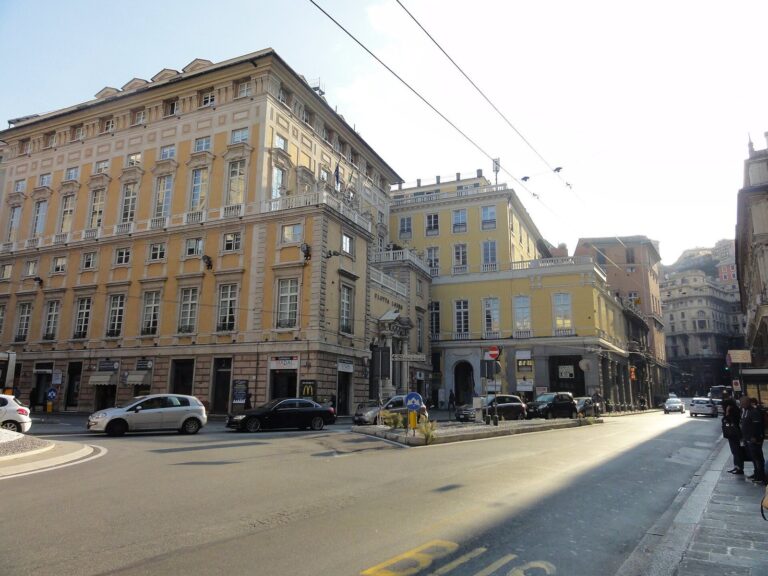
Palazzo Nicolò Lomellini is a palace in Genoa, Italy, founded by Nicolò Lomellini in 1567, when he also enlarged its garden. The building was reconstructed in the seventeenth century. It later joined Genoa’s Rolli palaces, residences designated by the Republic of Genoa to lodge high-ranking guests during state visits. It was not included among the Rolli palaces on UNESCO’s World Heritage list.
Changing ownership
In 1797, the palace was listed among Genoa’s most splendid buildings under the name of Giuseppe Lomellini. Giuseppe soon transferred it to Marquis Giacomo Durazzo. During the nineteenth century, ownership passed several times between the Durazzo and De Mari families.
War damage and restoration
Bombing during the Second World War damaged the palace. In 1949, its new owner, shipowner and political figure Achille Lauro, commissioned architect Robaldo Morozzo della Rocca to restore and partly reconstruct it. After Lauro died in 1982, the building stood neglected for about two decades. A company acquired it in the early 2000s and restored it over several years. Also known as Palazzo Lauro, it is now used for residences and offices.
Remains
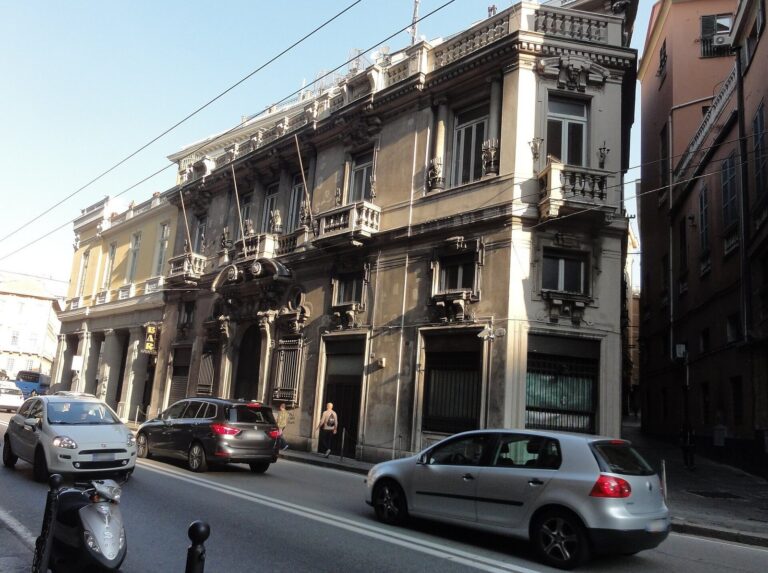
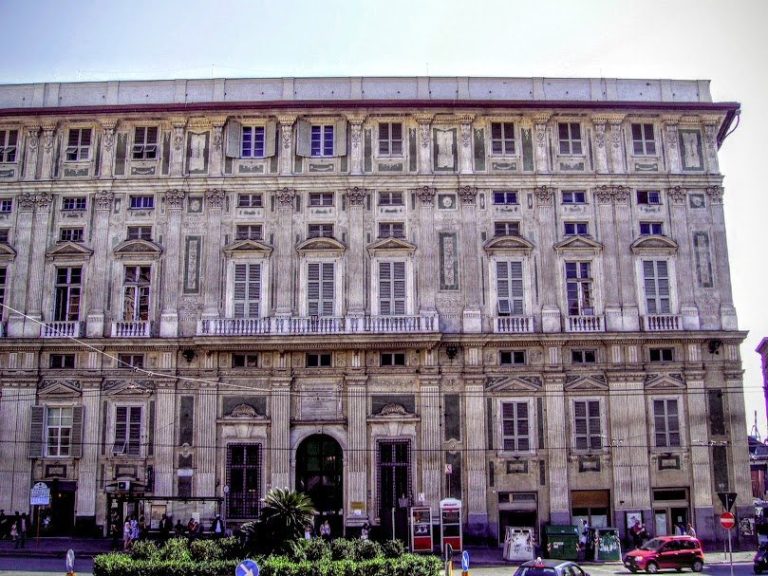
The palace’s present fabric reflects its seventeenth-century reconstruction and later rebuilding. Its documented layout includes two street-facing facades, an atrium, a staircase, and an internal lightwell, a vertical space that brings daylight into the building.
Facades
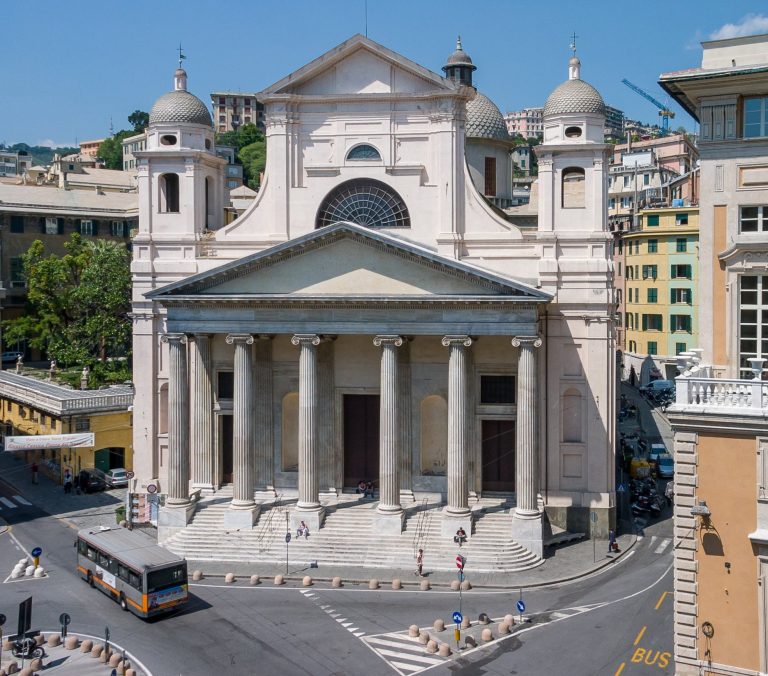
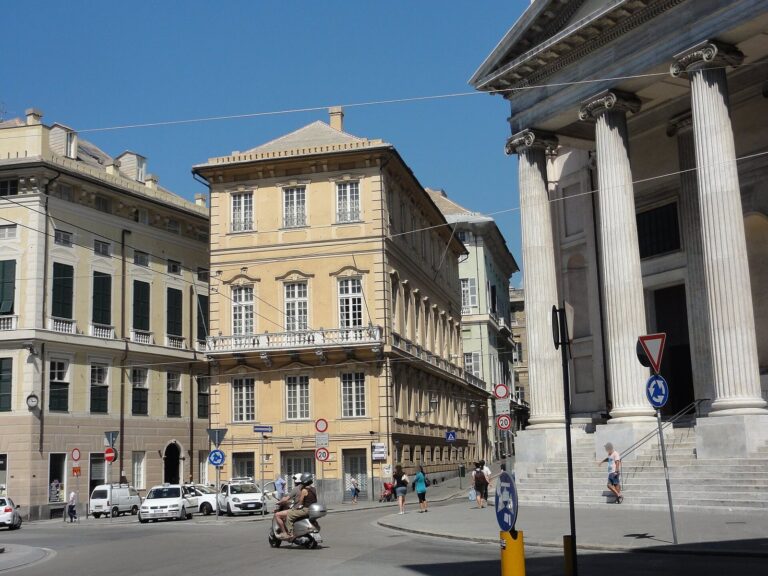
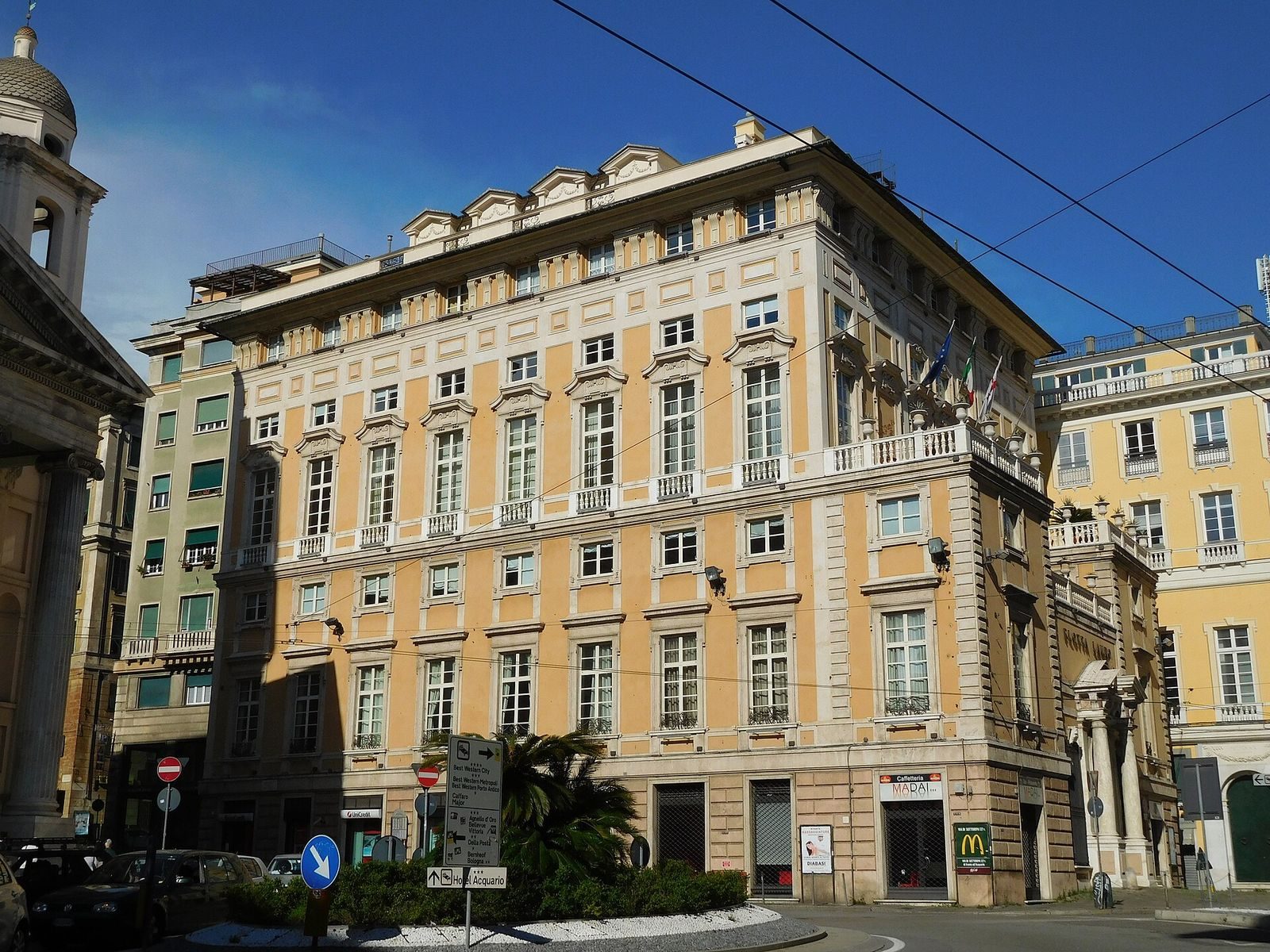
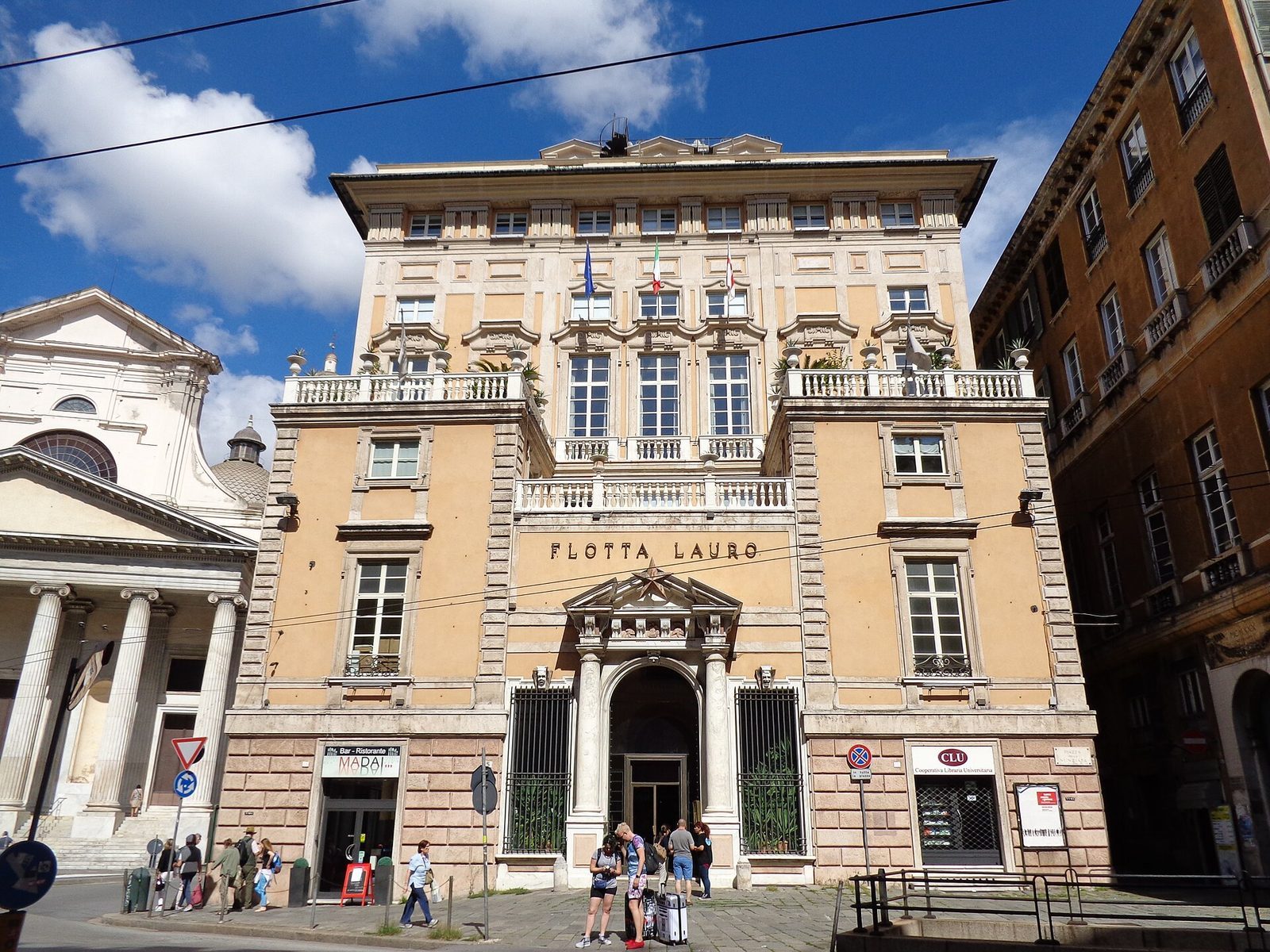
The original facade facing Piazza della Nunziata was retained during the postwar work, while another facade faces Via Bensa. Above the arched doorway, the central projecting section bears the inscription “Flotta Lauro,” meaning “Lauro Fleet,” which Achille Lauro placed there.
Interior
Atrium
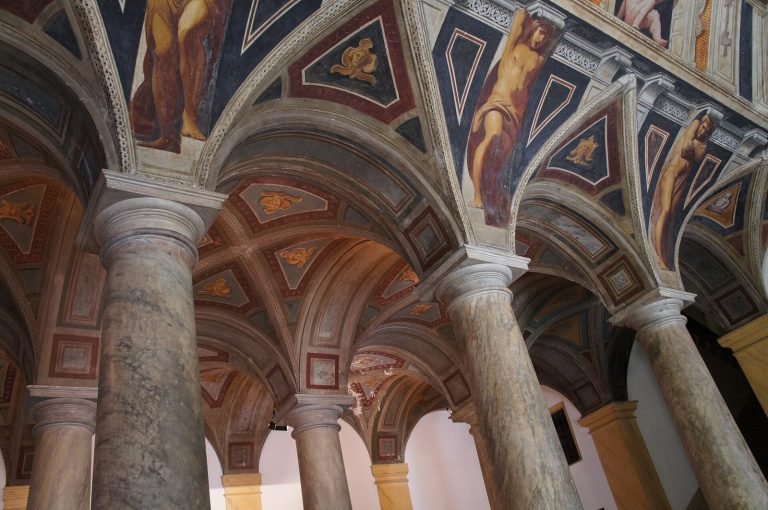
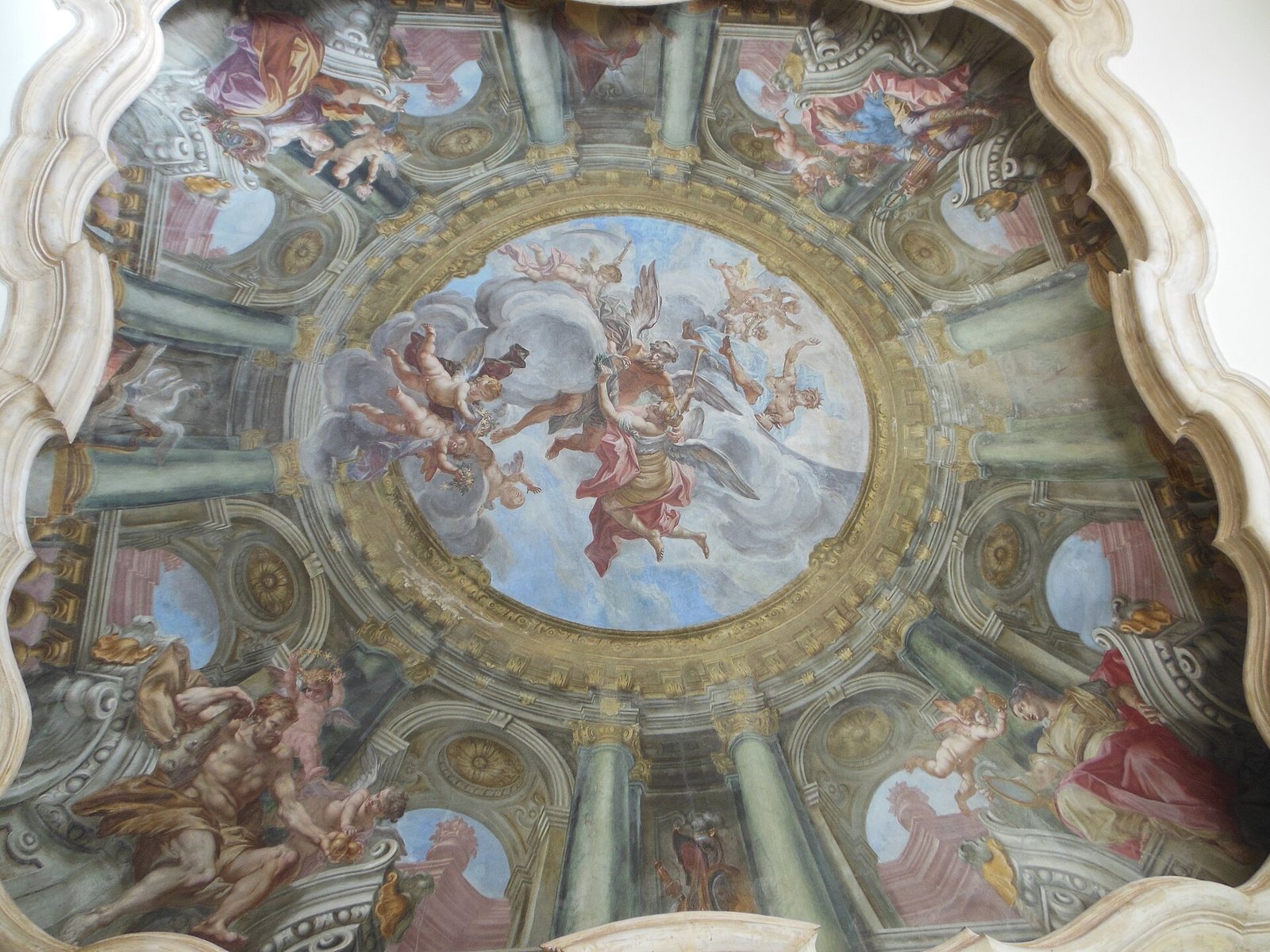
The atrium has an umbrella vault, a ceiling whose curved sections rise from a central area. A large fresco by Francesco Campora decorates it with angels and architectural forms arranged in illusionistic perspective. The painting was transferred from the hall of a Grimaldi palace on Via San Luca.
Staircase and lightwell
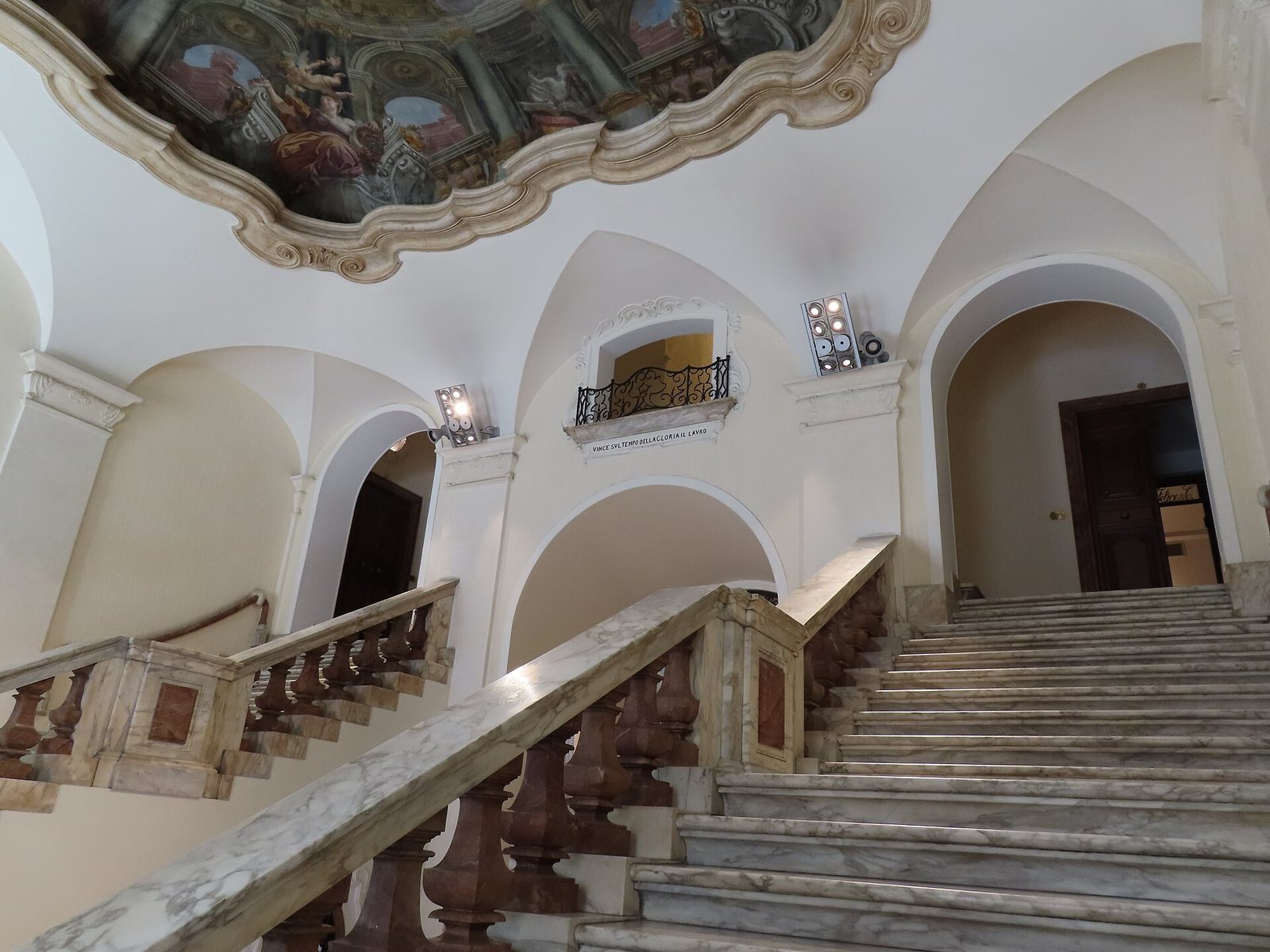
A staircase rises to the top floor and opens toward the internal lightwell. Its walls carry frescoes painted in 1952. They depict Genoa, Venice, Pisa, and Amalfi, the seafaring city-states known as maritime republics, as well as Lauro represented as Neptune, the Roman god of the sea.
Principal floor
On the piano nobile, the palace’s principal formal floor, a star associated with Lauro’s shipping company and a laurel motif honoring him survive in the marble of tables and in the stucco decoration.