Palazzo di Baldaccio d’Anghiari: A Historic Palace in Italy
Site at a Glance
- Popularity
- Very Low
- Country
- Italy
- Primary era
- Medieval
- Eras represented
- Medieval, Early Modern
- Civilizations
- Grand Duchy of Tuscany, Republic of Florence
- Site type
- Domestic
- Remains
- Elite Residence
On this page7 sections
History
Origins and ownership
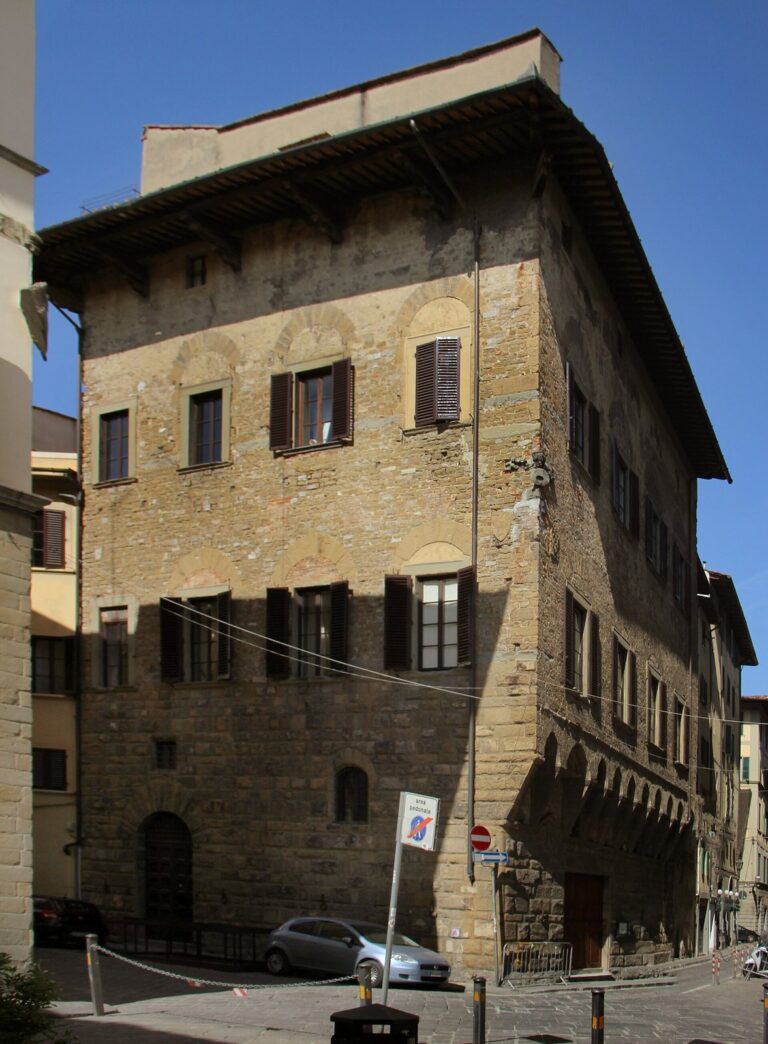
Palazzo di Baldaccio d’Anghiari is a historic palace in Italy, with origins placed between the 13th and 14th centuries. It is almost certainly the building that the Municipality of Florence granted in 1435 to Baldaccio d’Anghiari, a military commander who led troops under contract and held the title of count of Anguillara. Baldaccio was killed in 1441. The palace is also known as Palazzo dell’Anguillara.
The Riccialbani family owned the building before selling it to the Pepi in 1498. In the early 16th century it passed to the Seriacopi, who rented part of it for a long period to the post office. Before mail was delivered to homes, residents collected their letters there on designated days. This use gave the palace another name, Palazzo or Casa della Posta. Later owners included the Bartolini-Bardelli and Pecori-Suarez families.
Street names and later history
The name Via dell’Anguillara was in use by the early 13th century, so it may not have come from Baldaccio or his palace. It more likely relates to anguillare, bundles of vine shoots; vineyards may once have grown nearby, around Via della Vigna Vecchia. A nearby well called the Anguillara was associated with the naming of Via dell’Acqua.
Sixteenth-century alterations gave the palace’s main front its present form. The facade was restored in 1902, and the 1966 flood later damaged the building. A major restoration by Daniele Catarzi’s firm followed in the mid-1970s and received recognition from the Giulio Marchi Foundation in 1977. A subdivision project begun in 2006 led to a judicial seizure in January 2009, amid allegations of unauthorized building work and breaches of cultural-property protections. After the issues were resolved, extensive restoration and conservation work took place.
Remains
Street facades
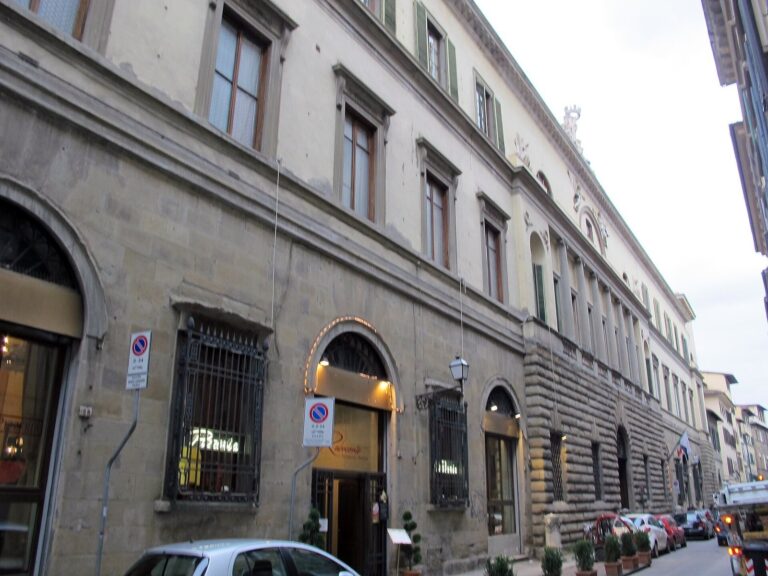
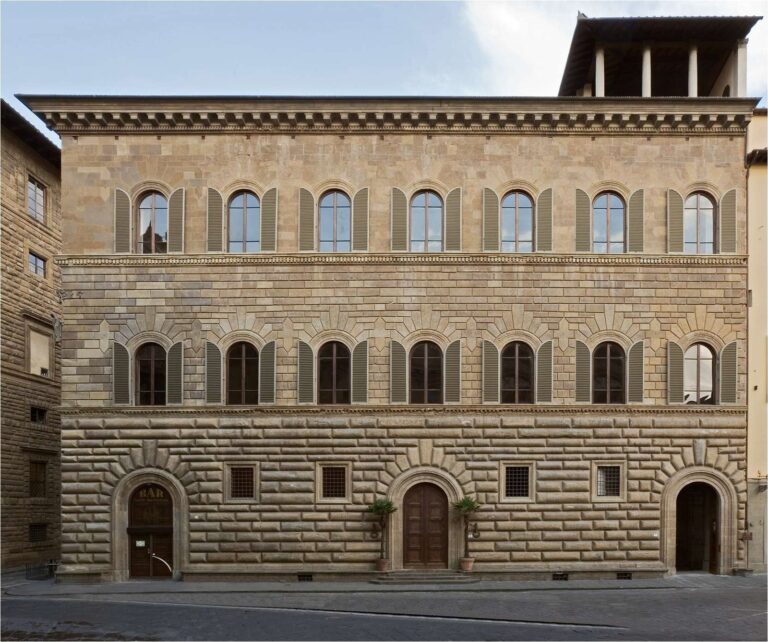
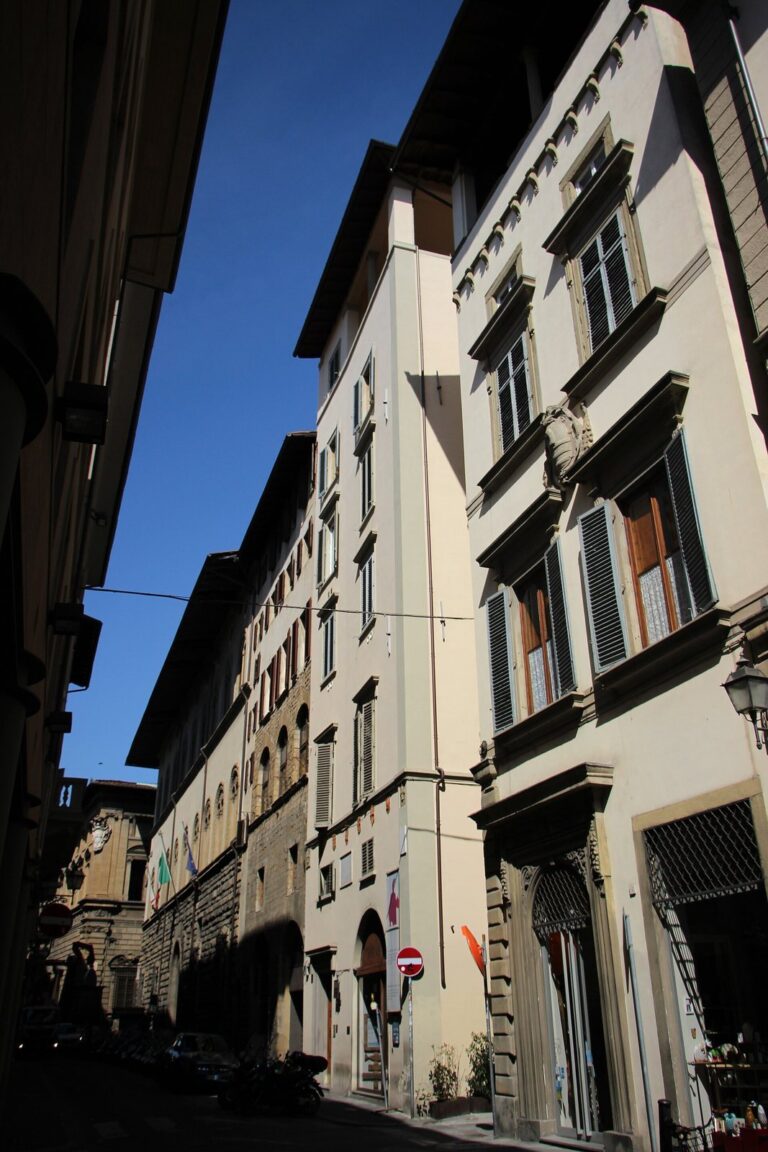
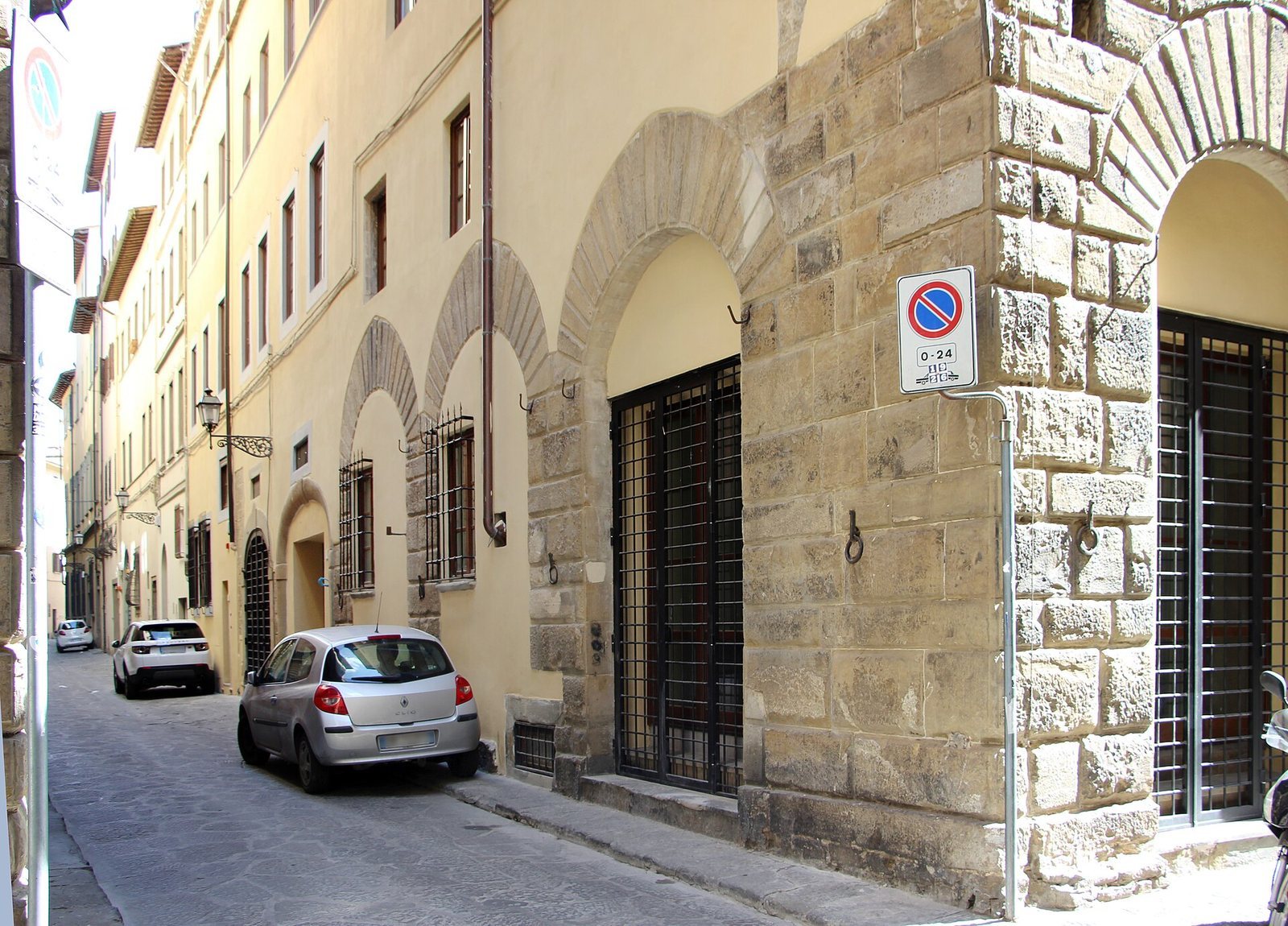
The palace stands at Via dell’Anguillara 14 and extends along Via dell’Acqua and Via delle Burella. Secondary entrances, stables, and carriage sheds were located on the latter two streets. The main facade has a tall ground floor containing a mezzanine, or intermediate level. A horizontal band marks the level of round-headed windows, whose openings have carved stone surrounds. The upper floor repeats this arrangement and is topped by a projecting cornice and a broad Florentine roof, a traditional local roof form. At ground level, a round-arched doorway has a carved stone surround; rectangular windows with 15th-century frames flank it, protected by elaborate 17th-century iron grilles. At the corner of Via dell’Acqua and Via delle Burella, a substantial section of 14th-century structure survives, and 14th-century architecture also continues along Via delle Burella.
Courtyard and interiors
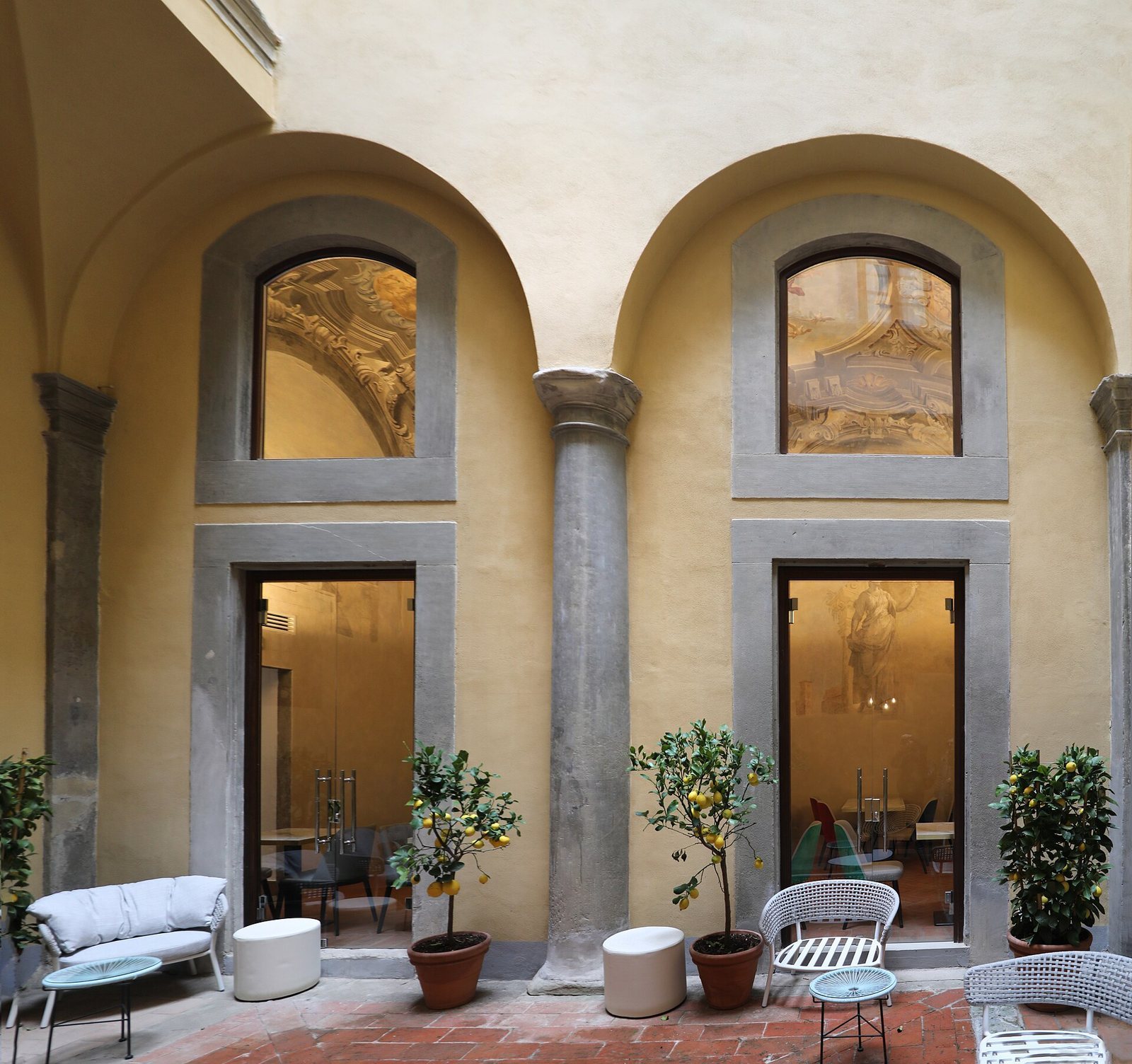
In the courtyard, small vaults support projecting upper floors. A roofed, open-sided gallery, or loggia, occupies the upper level; it is now enclosed and rests on columns in the Tuscan order, a relatively plain classical style. Opposite the entrance, a round-arched doorway in a 15th-century style is surmounted by a late 16th- or early 17th-century relief sculpture of a female profile within a central medallion. Another doorway aligned with it is in the Mannerist style, a late Renaissance approach marked by deliberate stylization and complexity, and dates to the 17th century. Decorative work in the interiors is attributed to the 18th century. Two courtyard plaques record the building’s inclusion in a protection register and an award-winning restoration carried out in 1976.
Street shrine
At the corner of Via dell’Anguillara and Via dell’Acqua, a shrine dating to the late 16th or early 17th century contains a marble Madonna and Child. Its niche is made of pietra serena, a gray sandstone widely used in Tuscan buildings, and framed by an arch and pilasters. The standing Madonna holds the child beneath a softly draped mantle. The figure’s proportions and drapery suggest the work of a 16th-century Florentine artist, while traces of gold indicate that the shrine may once have been fully gilded. An inscription at the Madonna’s feet reads “ITER PARA TVTVM,” meaning “Make our journey safe.” Paola Rosa restored the shrine in 1998, with Gennaro Grosso involved in the work.