Palazzo Del Bembo: A Medieval Palace in Florence
Site at a Glance
- Popularity
- Very Low
- Country
- Italy
- Primary era
- Medieval
- Eras represented
- Medieval, Modern
- Civilizations
- Italian, Republic of Florence
- Site type
- Domestic
- Remains
- Elite Residence
On this page5 sections
History
Palazzo Del Bembo is a medieval palace in Florence, Italy, built for the Bezzole family in the early 14th century. The family, from Forte Bezzole, later became known as Bezzoli or Bezzuoli. The building is also called Palazzo Bezzoli and Palazzo Martelli.
Early history and later alterations
Arnolfo di Cambio, a medieval architect and sculptor who served as a master builder on nearby Florence Cathedral, is traditionally associated with the palace. He is said to have established a workshop on its ground floor and may have lived there, but neither claim is directly documented.
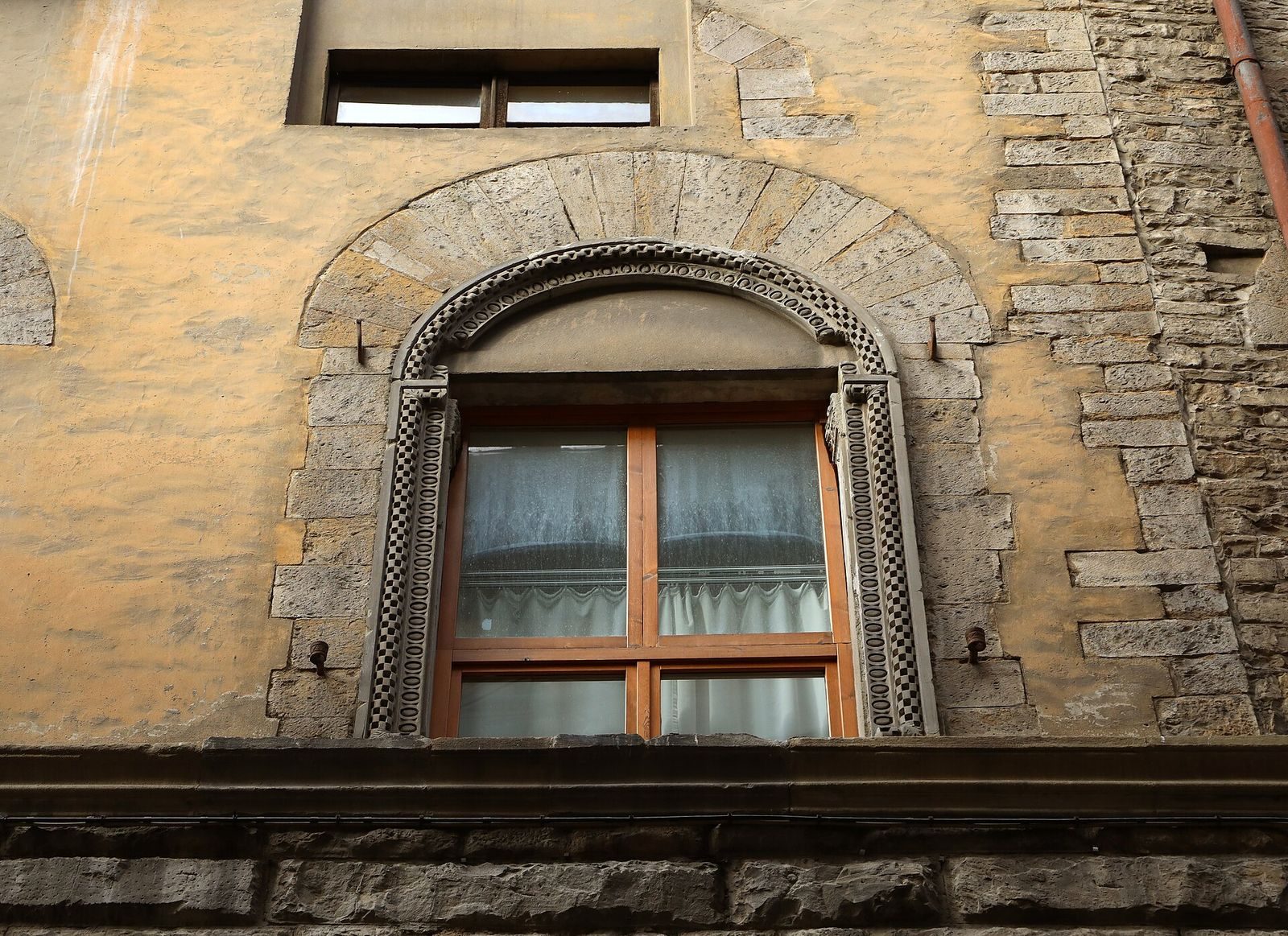
In the 15th century, an effort may have been made to give the palace a more elegant, less severe appearance. Work began on a decorated window but was left unfinished. Tradition attributes the design to Filippo Brunelleschi, a major Renaissance architect, though documentary evidence does not support the connection. The palace may later have passed to the Del Bembo family and then to the Martelli family.
The inn and Mozart’s visit
The Black Eagle Inn operated in the building from the late 18th century into the early 19th. Wolfgang Amadeus Mozart stayed there in spring 1770, aged 14, during his first journey to Italy.
In the 19th century, the palace remained standing when Via dei Cerretani was widened because it lay on the side of the street unaffected by the work. In 1901, it was included in a list of monuments regarded as part of Italy’s national artistic heritage.
Piero Santi and the L’Indiano gallery
Writer and critic Piero Santi lived in the palace from 1918 to 1962. Friends gathered at his home in the latter half of the 1930s, and in 1950 he founded the L’Indiano art gallery there. Paolo Marini directed the gallery until 1985. Artists associated with it included Ottone Rosai, Ernesto Treccani, and Renato Guttuso.
Remains
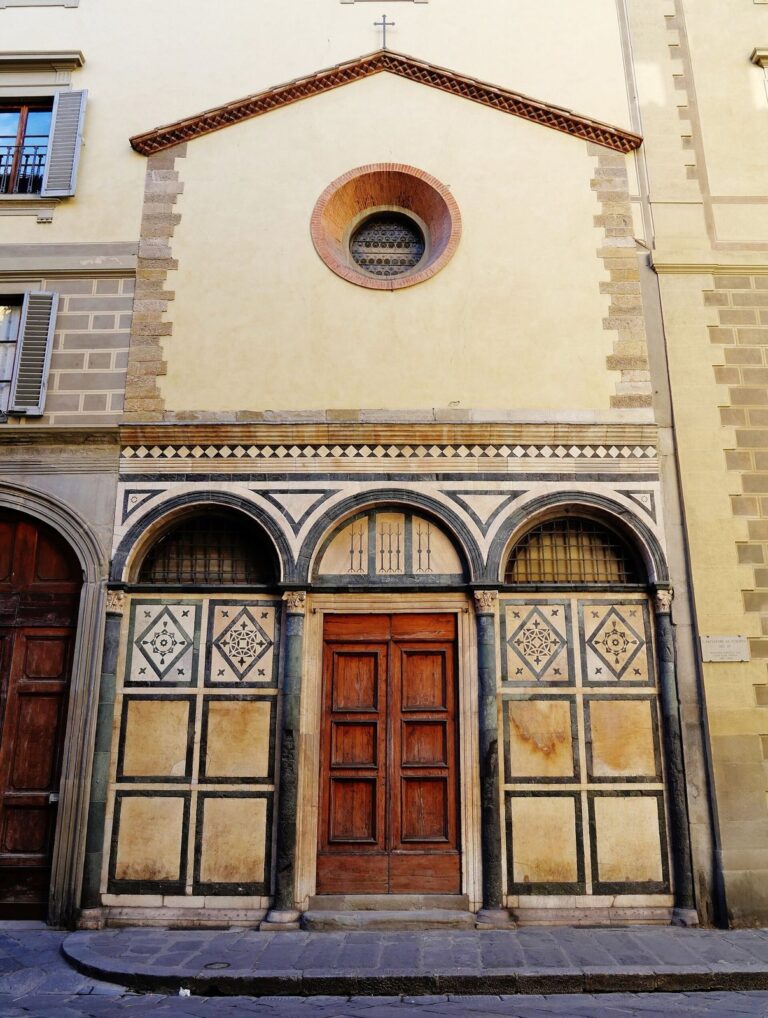
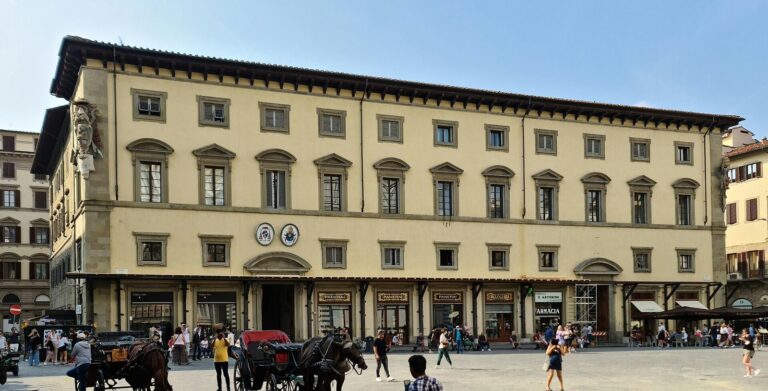
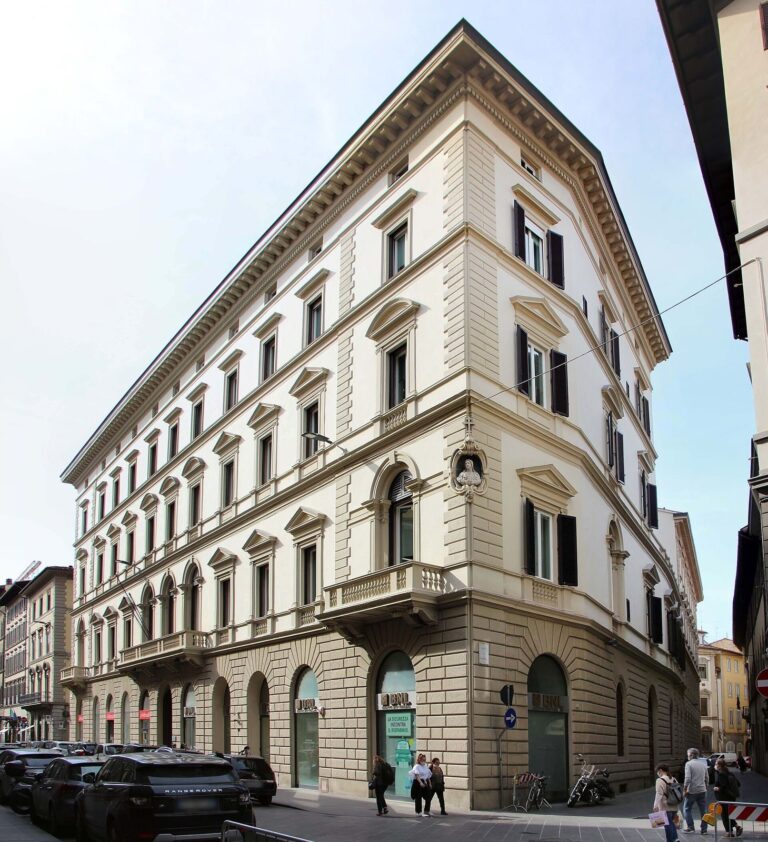
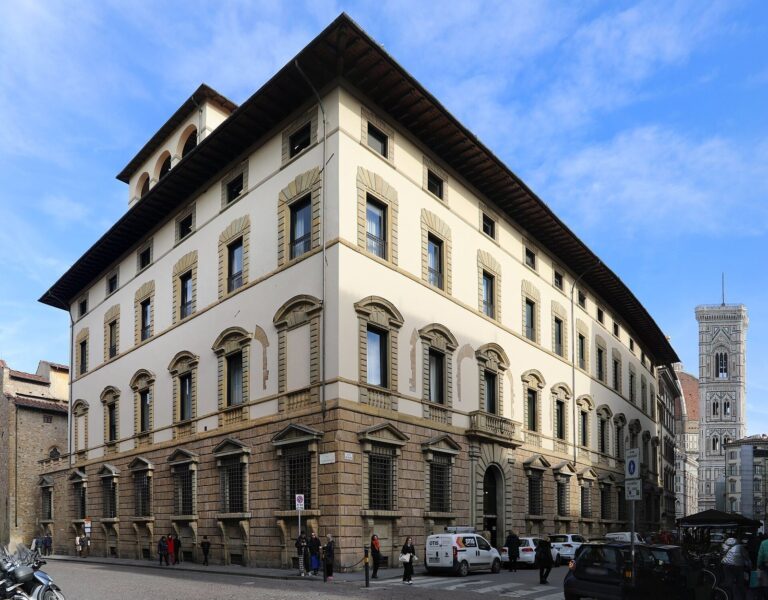
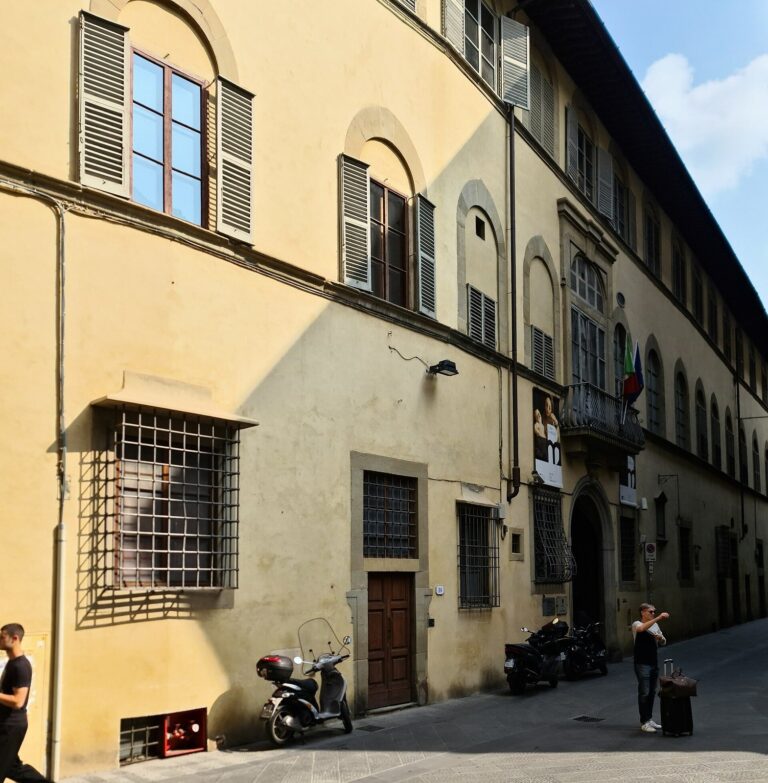
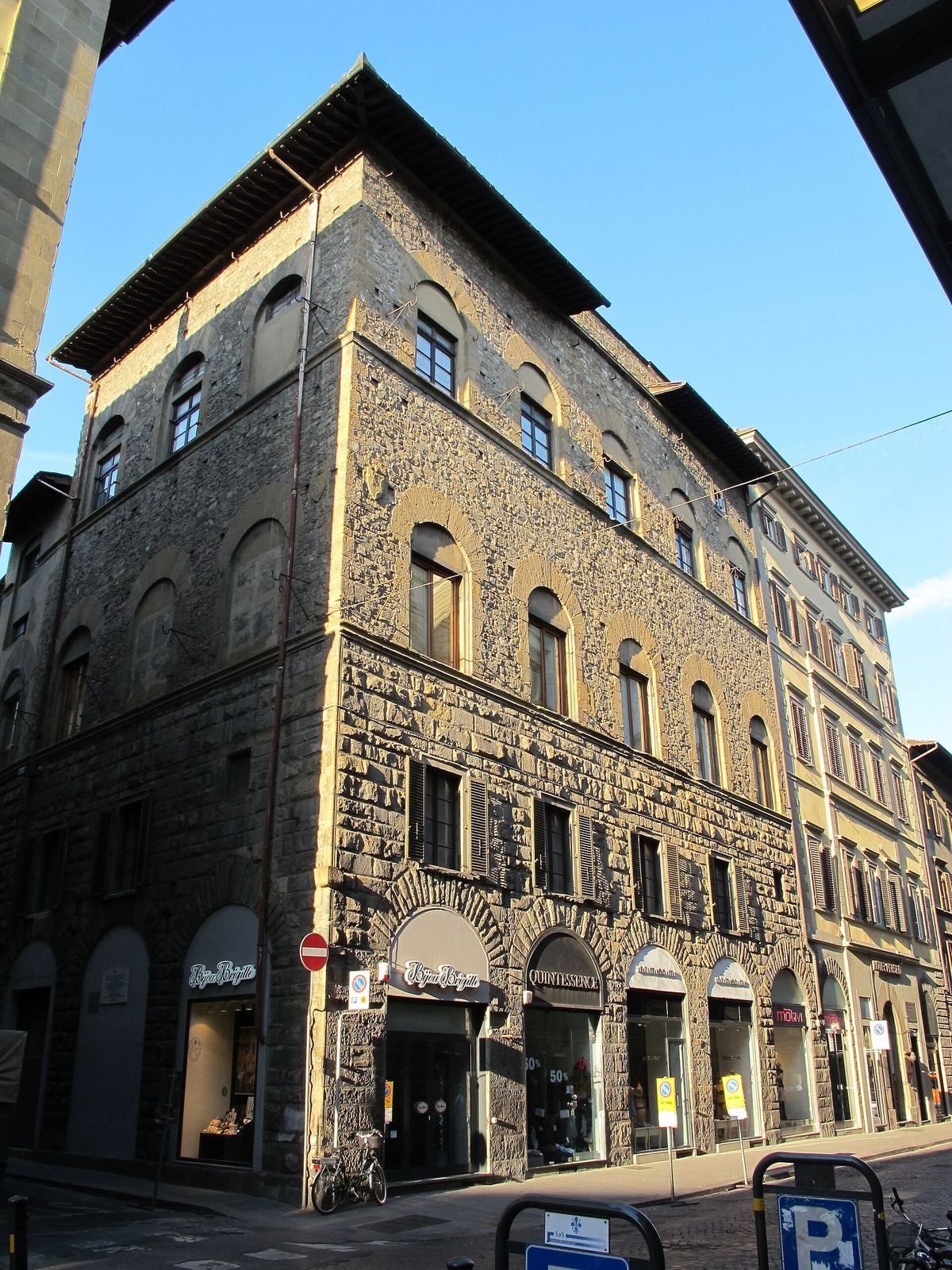
The palace stands between Via dei Cerretani and Piazza dell’Olio in Florence’s historic centre. Its four-storey form is broader than a compact tower residence, and its structure rests on four principal vaults. The section at Via dei Cerretani 1 retains medieval traces on the ground floor and was remodeled in the 19th century. The building is also classified as Mannerist, a style chiefly associated with the 16th century and known for departing from balanced Renaissance conventions, although its architectural character is described as medieval Florentine.
The façade is built of pietra forte, a durable sandstone used in Florentine buildings. Arched windows with bars align above continuous, robust stone bands. At ground level, large arches rest on piers faced with rough-cut stone. The spacious ground-floor rooms have arched entrances and were originally suited to workshops and fondaci, commercial storage premises. These spaces remain in commercial use.
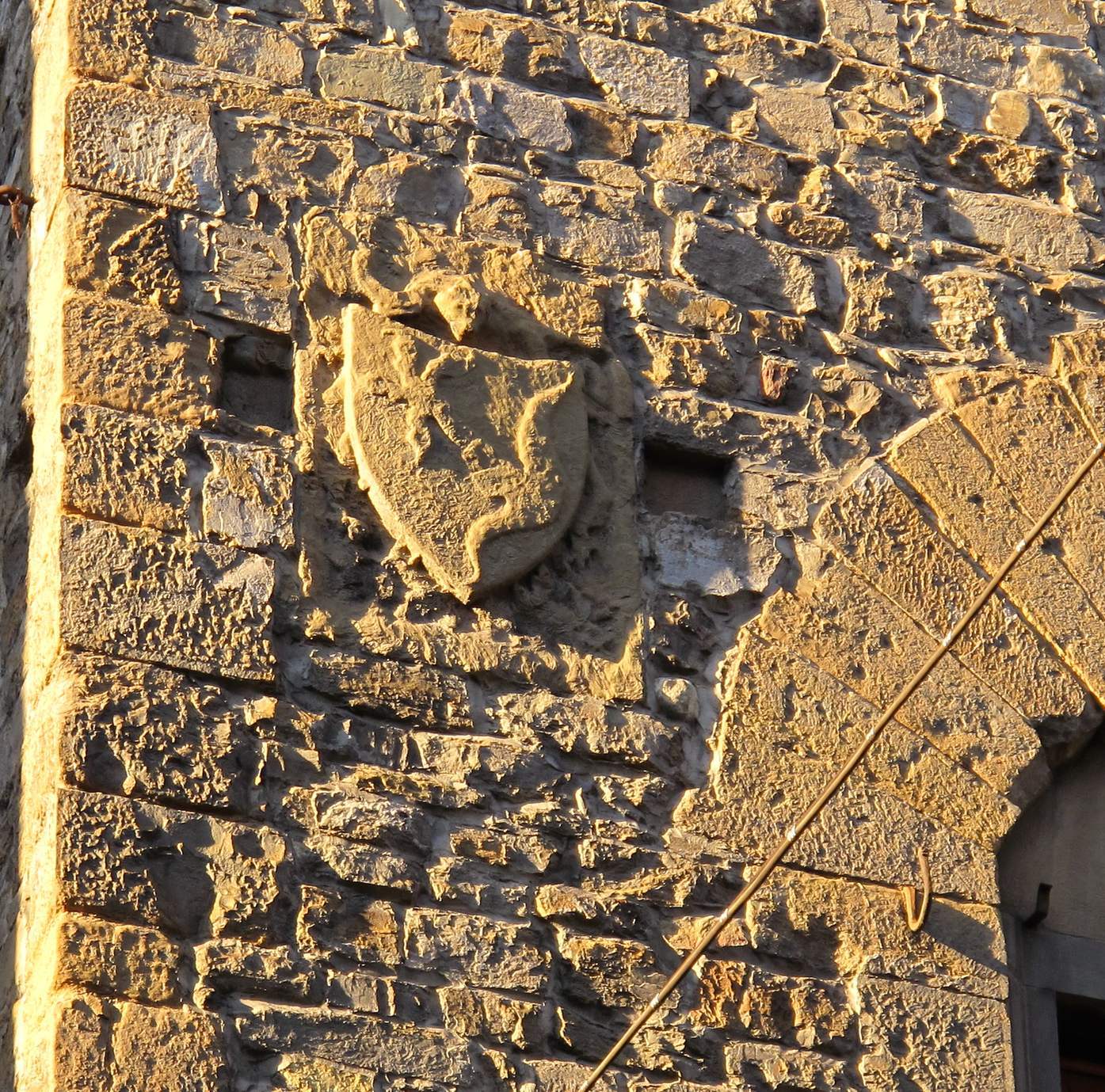
Two weathered shields at the corner on the second floor bear the Bezzoli arms. Their heraldic design remains legible as a griffin’s forelimb set diagonally across the shield. An ornately framed window faces Piazza dell’Olio, and the palace preserves forms identified as 13th-century despite its early 14th-century construction. A plaque on the piazza commemorates Mozart’s 1770 stay. Installed on 30 April 2006 by the Municipality of Florence, the Institut Français de Florence, and the Friends association of the Maggio Musicale Fiorentino, it describes Mozart as 14 years old and refers to the visit as the first of his three Italian journeys. It also says that he revealed his musical genius to Florence.