Palazzo dell’Arte dei Mercatanti: A Florentine Guild Palace
Site at a Glance
- Popularity
- Low
- Country
- Italy
- Primary era
- Medieval
- Eras represented
- Medieval, Early Modern, Modern
- Civilizations
- Grand Duchy of Tuscany, Republic of Florence
- Site type
- Civic
On this page7 sections
History
Palazzo dell’Arte dei Mercatanti is a 13th-century building in central Florence, Italy. It served as the seat of the Arte dei Mercatanti, a Florentine guild, or trade association, through which members organized their commercial and civic interests. Also called the Arte di Calimala, the guild was known as the French Cloth Guild, or Francesca, reflecting its commercial ties with France. The building is also known as Palazzo di Calimala.
The guild and the street
The guild established its residence in the building in 1359 and owned it, along with several neighboring houses, until 1570. In 1383, a republican urban plan widened the street in response to the area’s growing commercial importance. The first stretch reached its present width under this plan.
Pharmacy and civic memory
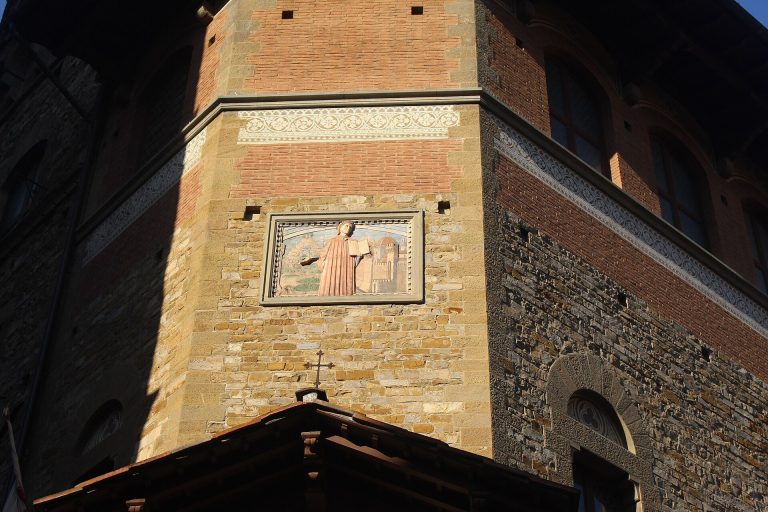
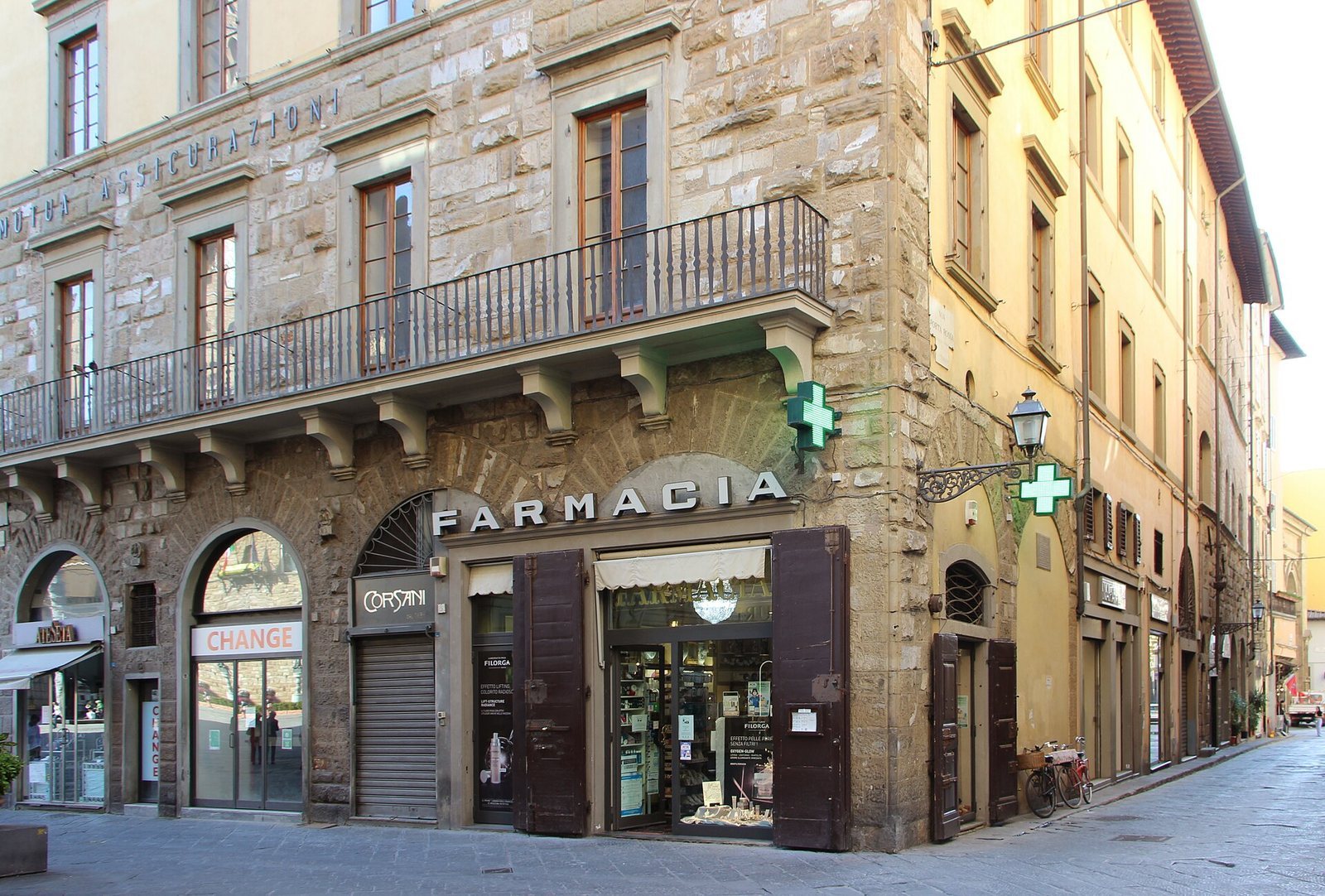
An apothecary operated at Canto Diamante from the late 13th century. The corner took its name from a pharmacy whose sign showed a diamond, and tradition associated the pharmacy with Dante Alighieri as a customer. A memorial installed in 1766 records that rooms adjoining the pharmacy had served as the guild’s audience chamber. It recalls the Bolognese friars Roderigo and Catalano and their roles as peacemakers and governors. The Molteni pharmacy opened in 1892 on the site of the older apothecary.
Remains
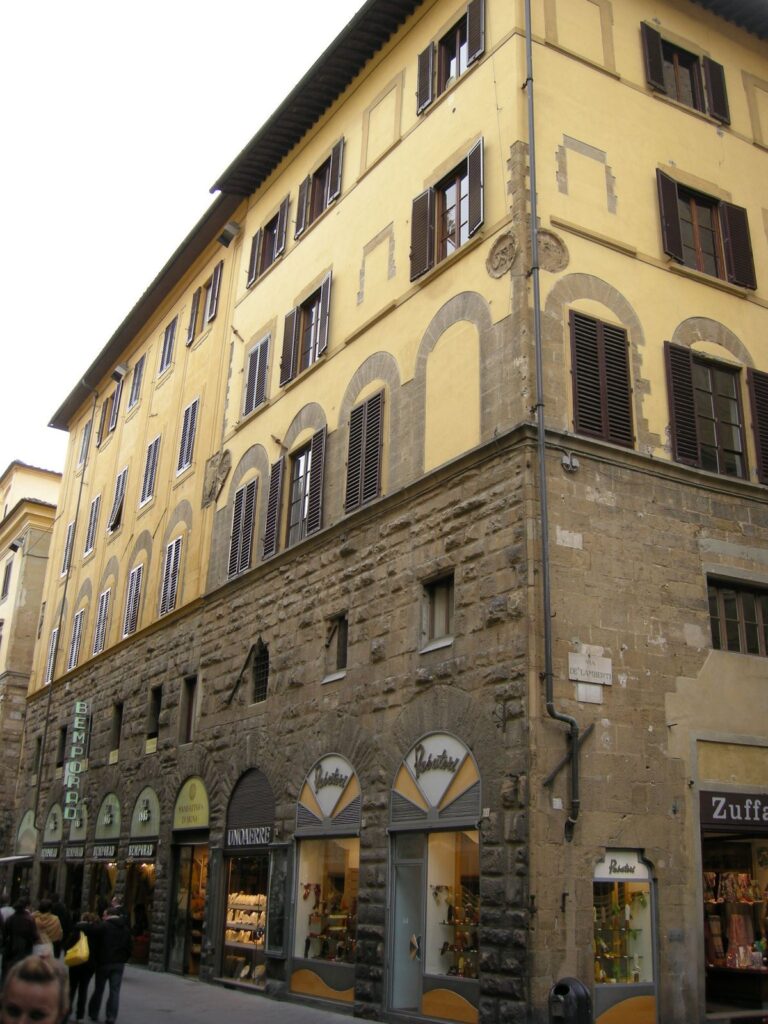
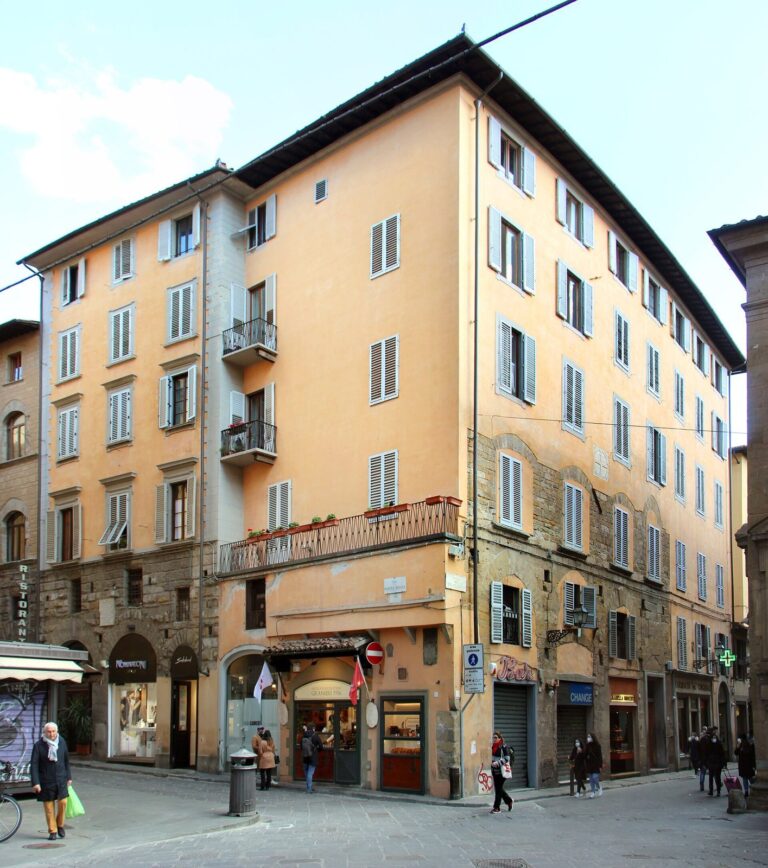
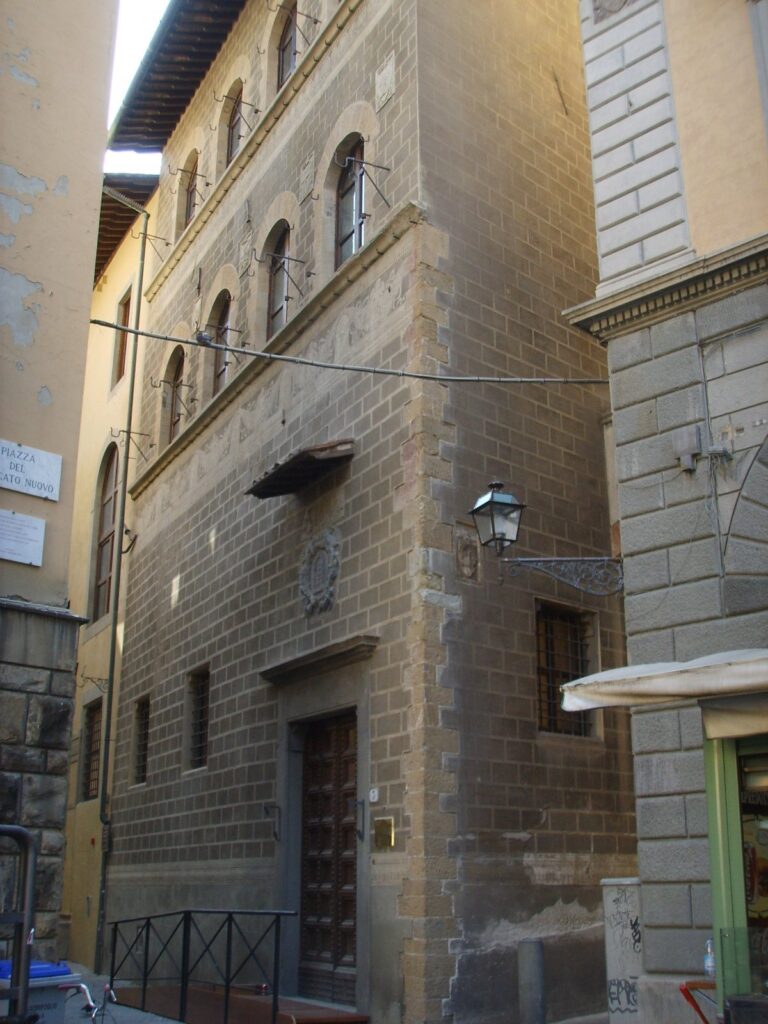
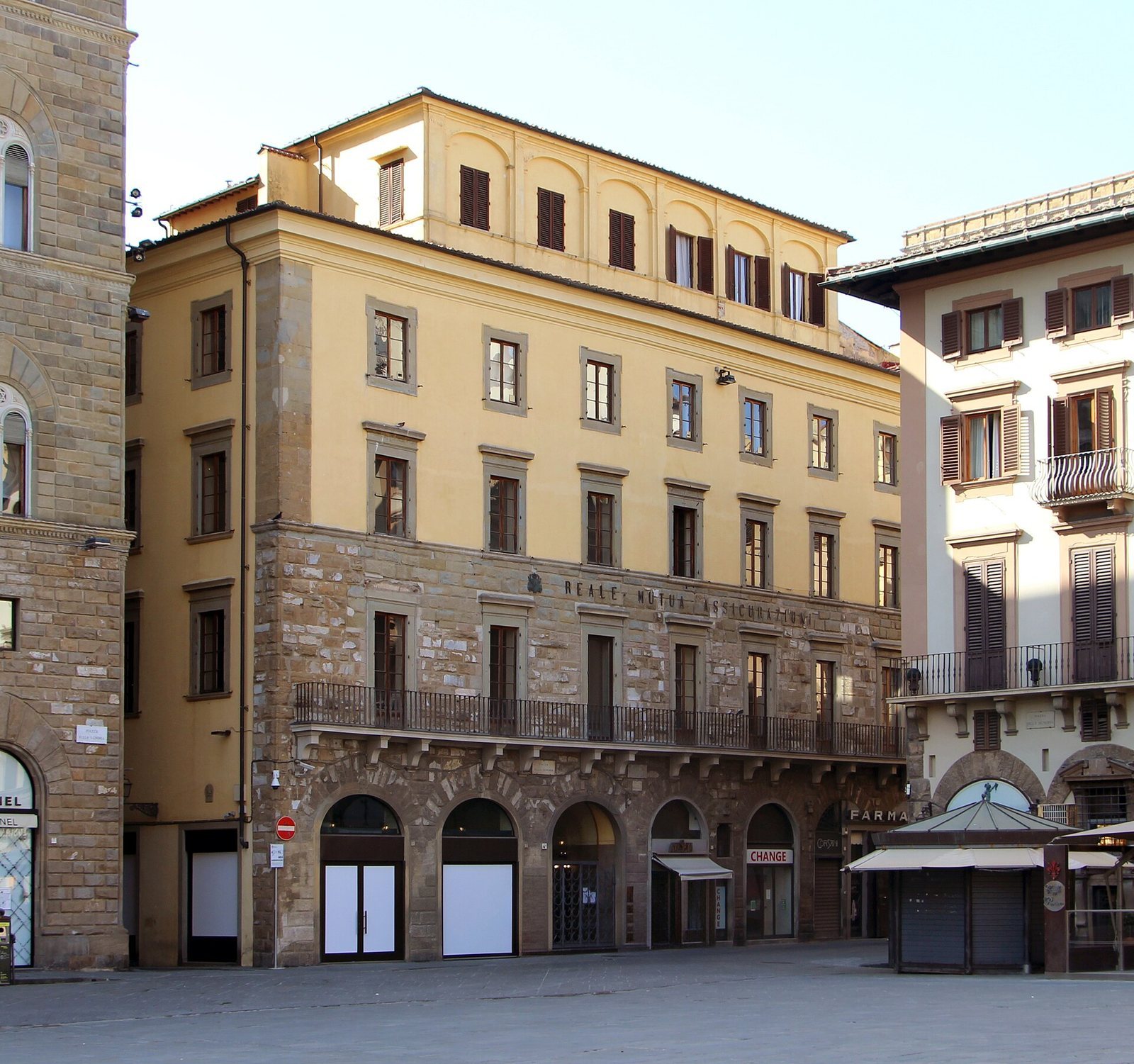
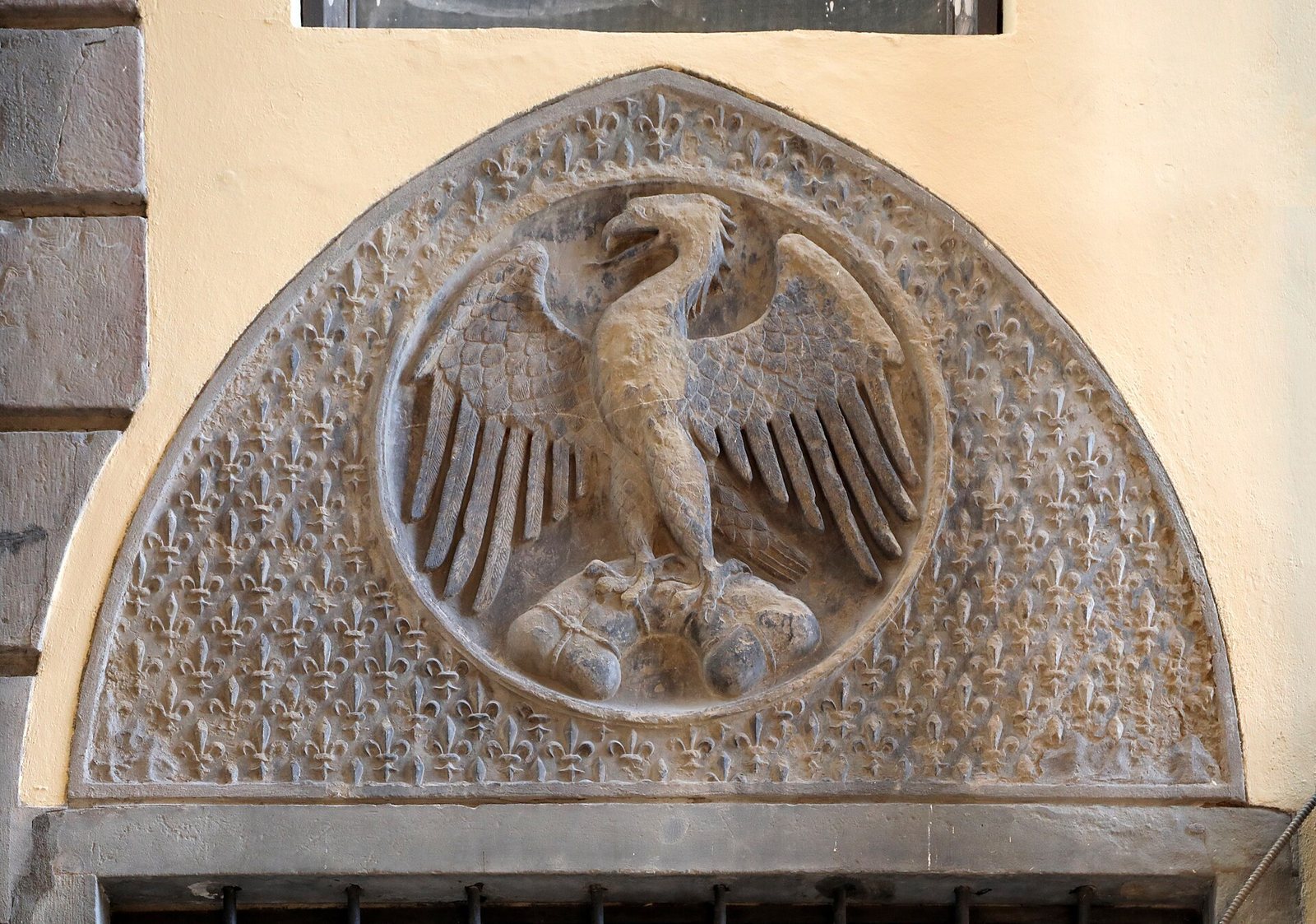
The building extends along the block from Piazza della Signoria to Canto Diamante, at the corner of Via Porta Rossa. Its seven façade bays rise through four floors, with an additional raised volume. The lower two levels retain rusticated stonework, finished with deliberately rough or strongly outlined surfaces, associated with the medieval street plan. The ground-floor arches belong to that phase, though later stone and artificial-stone additions have altered them. Small circular plaques on the arches bear the Arte di Calimala emblem, an eagle gripping a bale of wool; most original stone plaques have been replaced by copies. A balcony and the upper floors reflect work from the mid-18th century. The 1766 memorial is set into the second blocked arch on Via Porta Rossa. On Via Calimaruzza, a large relief once marked the guild’s residential rooms. It showed an eagle against a field of lily flowers and was later moved above the entrance to an adjoining house that Fantozzi identified as Casa Garbi.
Interior spaces
Guild audience hall
The guild’s audience hall has been identified with a former pharmacy on Piazza della Signoria. It is a spacious vaulted room, with the vaults resting on unusually carved, paired stone column tops.
Molteni pharmacy
The Molteni pharmacy still occupies the corner. Its surviving fittings and interior decoration are in a late Neoclassical style and date to the second half of the 19th century. They are attributed to Giovanni Duprè, an Italian sculptor of that century. The building also accommodates historic Florentine businesses and offices of Reale Mutua Assicurazioni.