Palazzo Conestabile della Staffa: A Historic Palace and Library in Perugia
Site at a Glance
- Popularity
- Low
- Country
- Italy
- Primary era
- Early Modern
- Eras represented
- Early Modern, Modern
- Civilizations
- Italian, Papal States
- Site type
- Domestic
- Remains
- Elite Residence
On this page8 sections
History
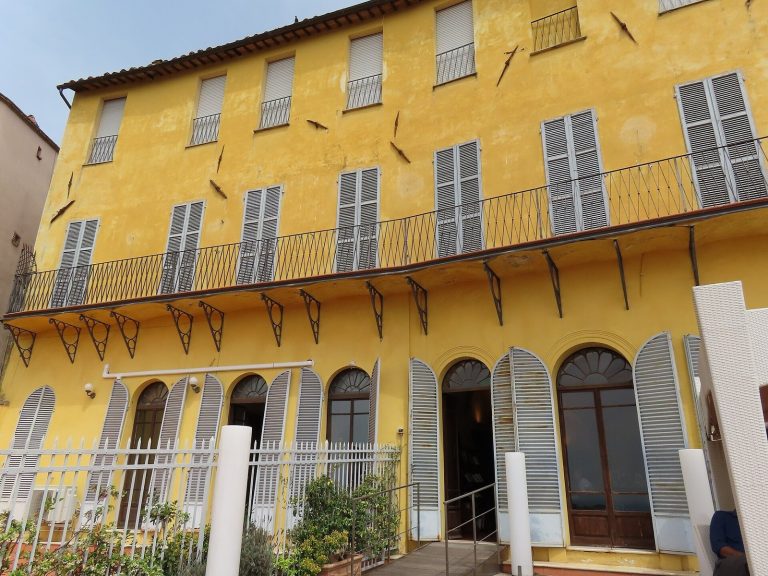
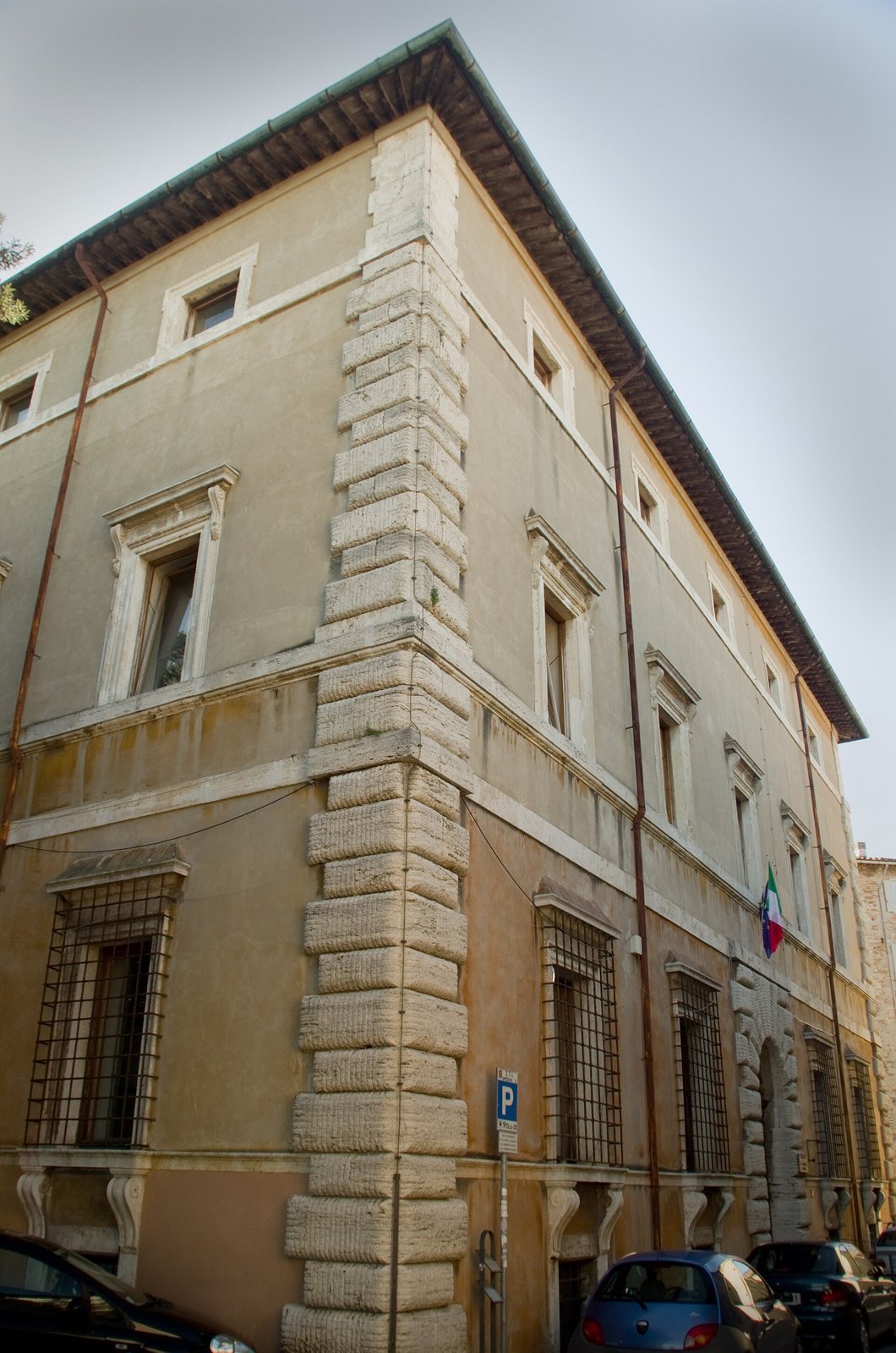
Palazzo Conestabile della Staffa is a historic palace in Perugia, Italy, commissioned in 1629 by Ottavio di Grimano Ferretti to a design by Rutilio Clementi. Ferretti had acquired an unfinished, roofless house from the heirs of Gio. Ant. Parli before asking Clementi, a Jesuit (member of the Society of Jesus, a Catholic religious order), to design the palace.
Commission and early occupants
By at least the late eighteenth century, the Piazza family lived in the palace and commissioned its painted decorations. The family had entered the nobility through wealth gained in commerce.
Political and social life
In 1849, the palace became the residence of Princess Maria Bonaparte Valentini, daughter of Luciano, a brother of Napoleon Bonaparte, the French military and political leader who became emperor. Her husband, Count Valentini, had served as finance minister of the Roman Republic, a short-lived republican government in Rome during the upheavals of 1848–49. Maria held a celebrated salon attended by people active in Perugia’s liberal and patriotic movement, as well as writers and scholars.
Toward the end of the nineteenth century, the Conestabile della Staffa family acquired the palace. In the twentieth century, Counts Giancarlo and Alessio became prominent in local Catholic life. After the Second World War, the building housed a local circle of the Federation of Italian Catholic University Students, or FUCI, named for Giuseppe Toniolo, an Italian Catholic economist and sociologist. The circle later became the Giancarlo Conestabile and Luigi Piastrelli Institute.
The Biblioteca Augusta
In 1959, Perugia’s municipal technical office decided to move the Biblioteca Augusta, the city’s library, into the palace. The municipality purchased the building in 1963 and entrusted its restoration and adaptation to architect Daniele Calabi. After Calabi’s death in 1964, his collaborator Mario Dalla Costa continued the work. The library opened in the palace on 19 January 1969.
Remains
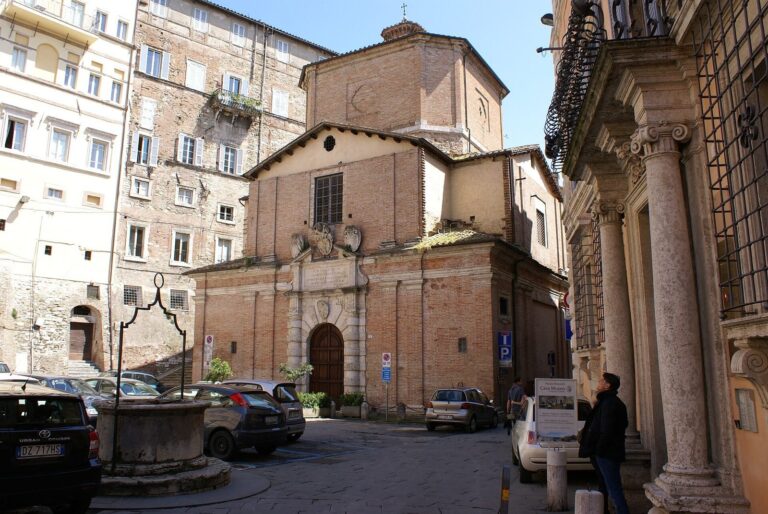
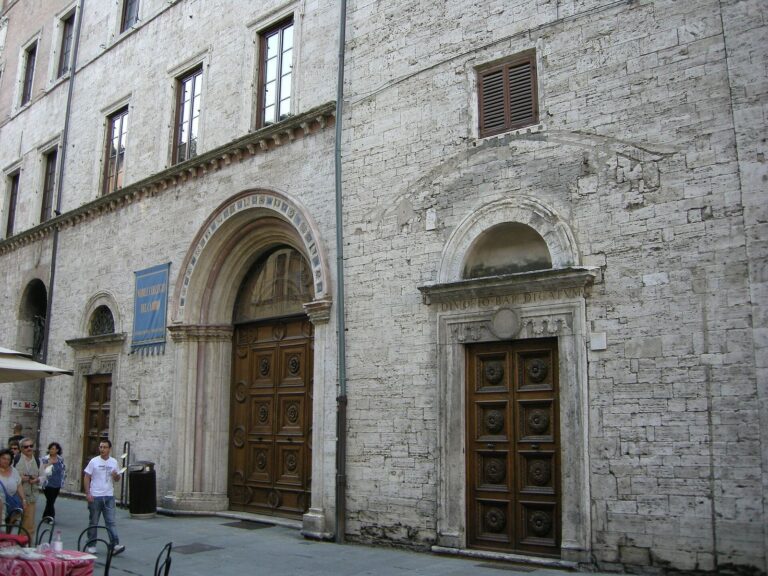
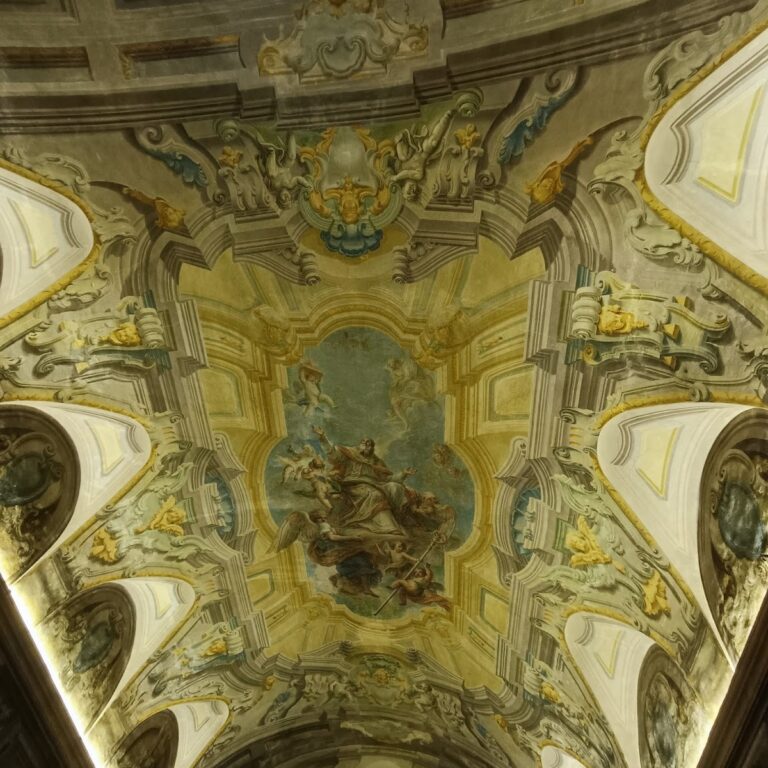
The palace stands on the hill of Porta Sole, on Via delle Prome. Its historic building is associated with a separate book-storage tower, while the Church of Sant’Angelo della Pace, also called the Oratory of the Angel of Peace, forms part of the palace. In 2009, the church became the Biblioteca Augusta’s Sala Binni.
Painted interiors
Principal-floor wall paintings
Seventeenth-century wall paintings survive in some rooms on the principal floor. Among the oldest are allegorical depictions of Temperance and Fame, which may be the work of Clementi.
Second-floor ceiling paintings
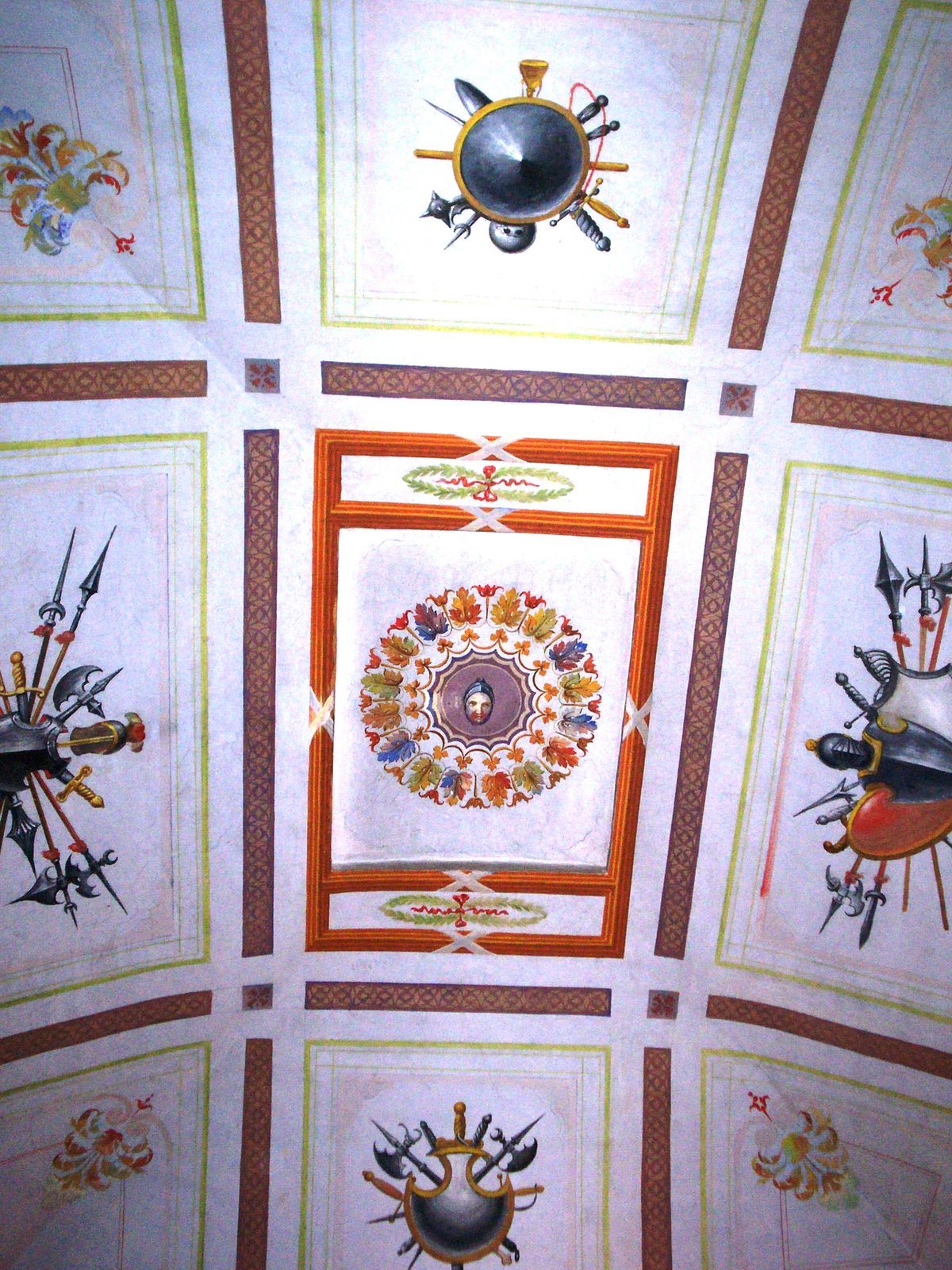
Felice Giani’s later ceiling paintings, made in tempera (pigments combined with a binding substance), decorate small rooms on the second floor. The rooms are known as the Abduction of Europa Room, the Four Elements Room, and the Apollo Room, which bears the date 1797. The decorations originally extended across six rooms. The surviving painted rooms have close connections with Giani’s earlier decorations in the Hall of Triumphs at Palazzo Altieri in Rome.