Palazzo Comunale in Narni: A Medieval Civic Palace in Italy
Site at a Glance
- Popularity
- Medium
- Country
- Italy
- Primary era
- Medieval
- Eras represented
- Medieval, Early Modern
- Civilizations
- Papal States
- Site type
- Civic
- Remains
- Town Hall
On this page9 sections
History
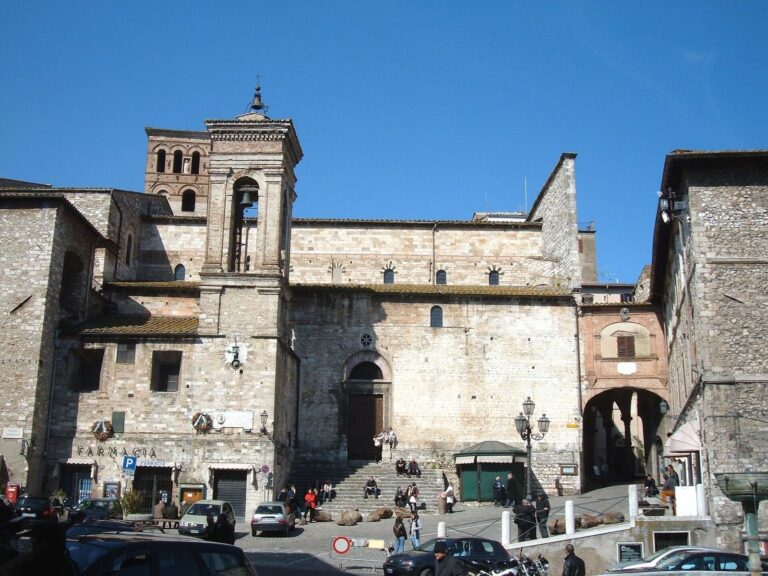
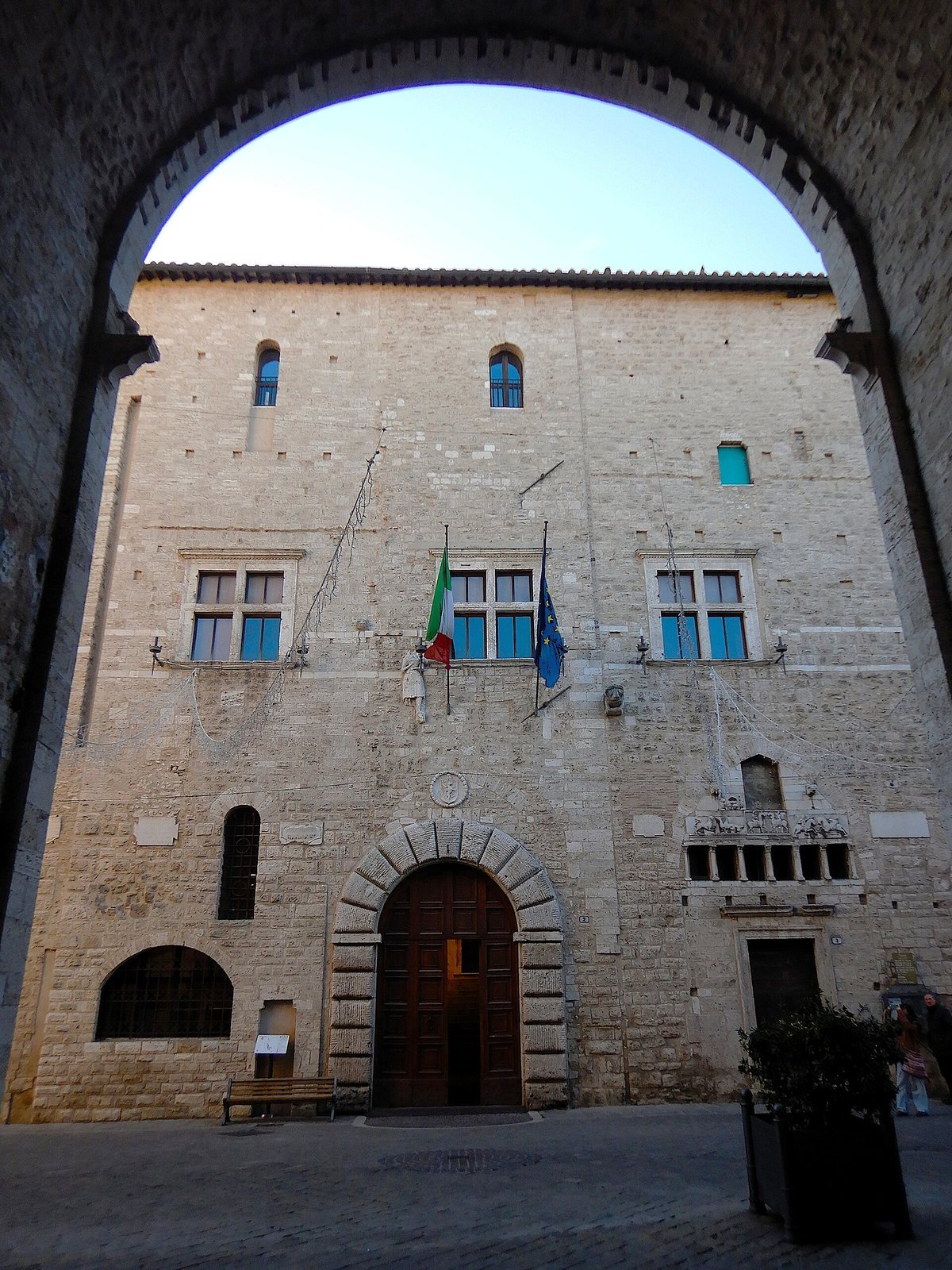
Palazzo Comunale in Narni is a medieval civic palace in Italy, formed toward the end of the thirteenth century as a seat of communal government. It stands on Piazza dei Priori, opposite Palazzo dei Priori, and continues to serve as the municipal seat.
Foundation and medieval role
Between 5 and 19 August 1273, the municipality acquired three residential towers and adjoining houses in the parish of San Salvato, at Piazza Priora, to establish a centre of civic authority. The towers were joined into one complex. The palace’s alternative names, Palazzo del Podestà and Palazzo del Vicario, reflect its association with the podestà, a chief magistrate in an Italian commune, and the vicario, an official acting as a deputy or representative. It previously served as the podestà’s residence.
Renaissance civic and theatrical uses
The palace underwent repeated changes as its public functions developed. In the sixteenth century, the civic magistracy established itself there permanently, although part of the building still belonged to the Eroli family. During that century, the large upper hall served as a temporary theatre; subsequent alterations turned it into a permanent theatre.
Remains
The complex brings together three medieval tower-houses. Its central tower contains a broad atrium, while the façade and upper-floor rooms preserve features from later periods of alteration and use.
Façade
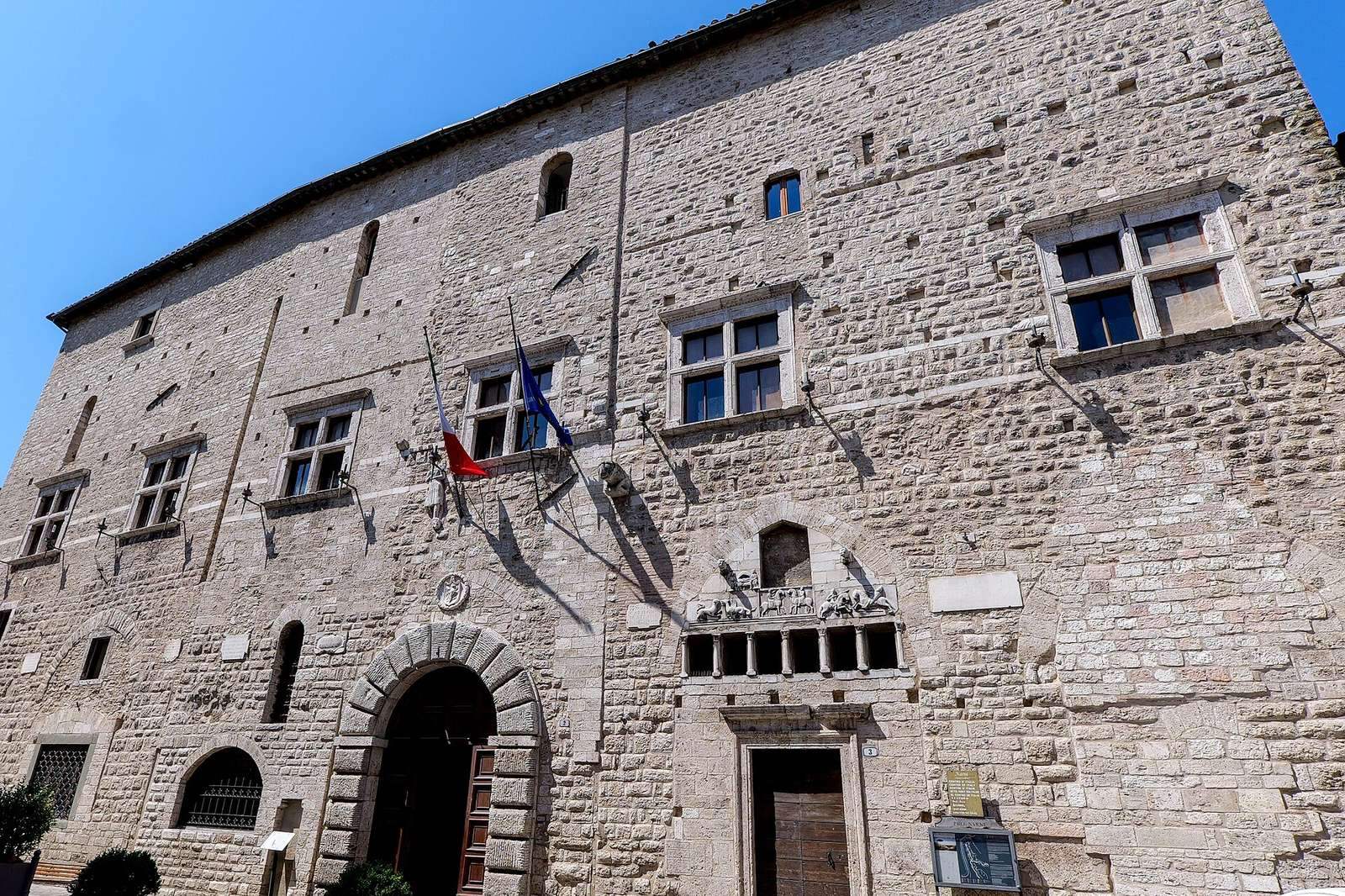
The façade was raised over time, openings were blocked, and ornament was added. Around the middle of the fifteenth century, six wide travertine windows replaced earlier windows divided into one or two openings. Their cross-shaped stone divisions were understood as a stone version of a wooden frame. Similar window forms appear at Palazzo Venezia and Palazzo della Rovere in Rome and at the Palazzo del Capitano in Perugia. The work has been attributed either to Bernardo Rossellino, who was in Narni in 1449 to work on the fortress, or to the Narni-born architect Nuccio de Risis, active in Rome for Pope Paul II between 1455 and 1470. Sixteenth-century decoration includes coats of arms of podestà, governors, and cardinals, some still visible. A walled-up part of the façade contains fourteenth-century bas-reliefs with biblical and chivalric scenes, brought from the suppressed church of San Salvato.
Atrium and staircase
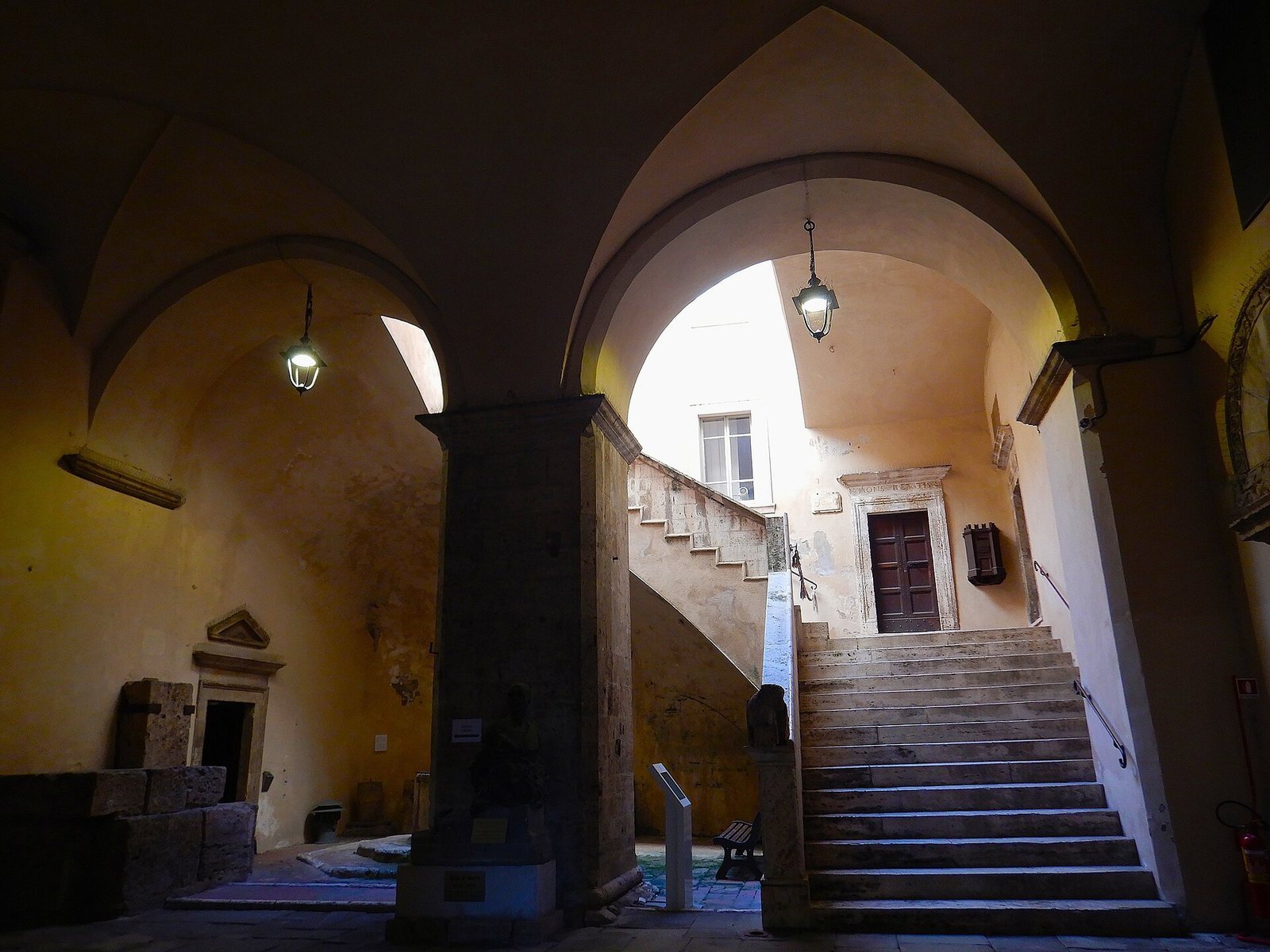
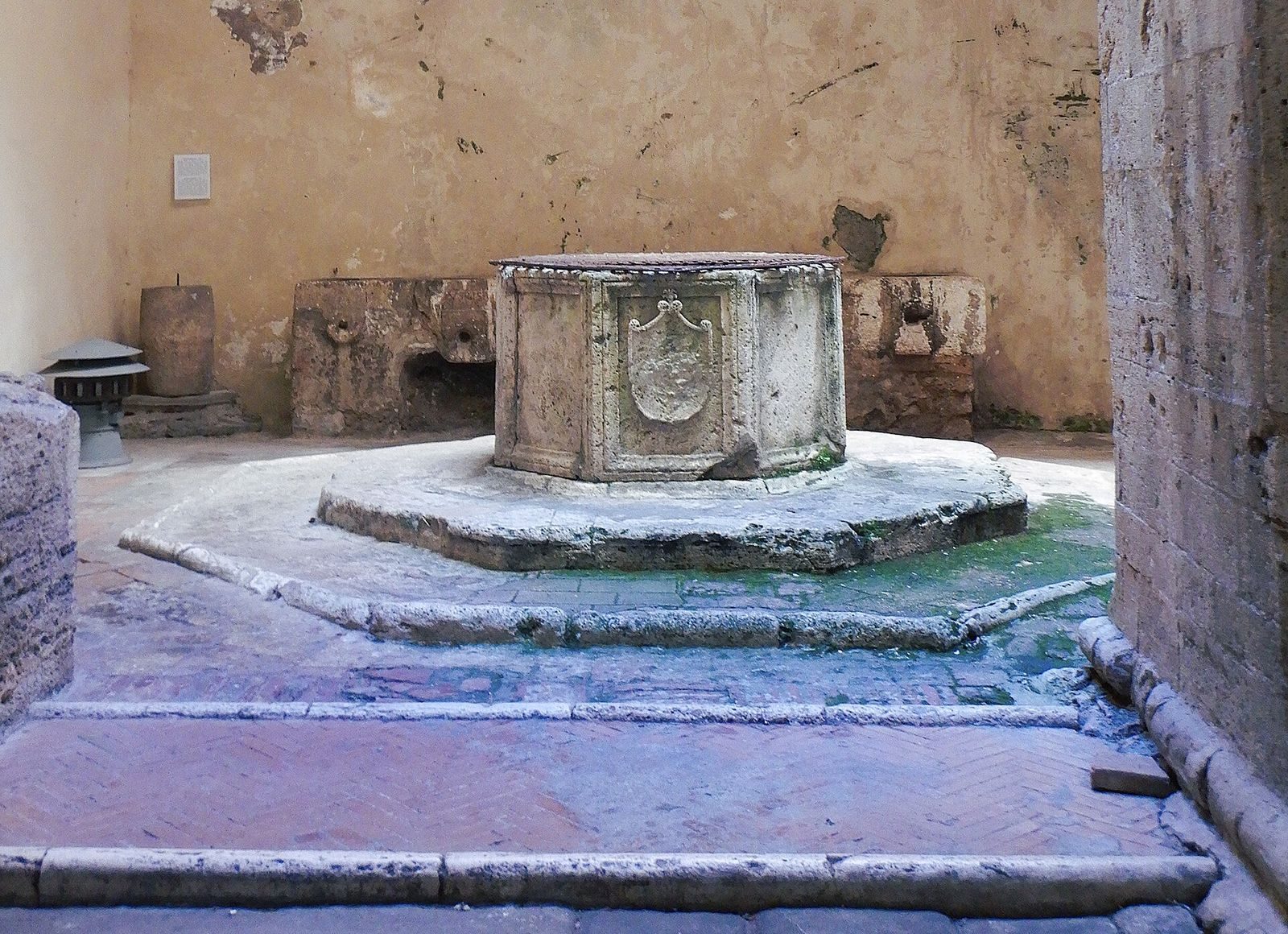
A Renaissance entrance opens into a spacious atrium formed within the central tower. Roman and medieval stone fragments are displayed there, along with a mensa ponderaria, a public stone measuring table used for grain. A central pillar supports the vaults above. On the lintel above the main staircase, the inscription “Mons Pietatis” commemorates Narni’s fifteenth-century Monte di Pietà, a charitable lending institution that provided credit, often against pledged goods. It was described as among the earliest institutions of its kind in Italy.
Upper-floor rooms
Theatre hall and ceiling
The upper hall’s theatrical use is reflected in traces of sgraffito, a decoration made by cutting through a surface layer to reveal a contrasting layer beneath. Examination of building layers also identified later changes associated with the creation of a permanent theatre. A wooden coffered ceiling on the upper floor, dating to the late sixteenth century, was later rediscovered.
Council chamber
The council chamber has painted imitations of coffered panels, cardinal-red walls, and heraldic and landscape imagery. Its portrait displays included the Roman emperor Nerva and Erasmo da Narni, known as Gattamelata, a fifteenth-century military commander. The chamber also contains a fresco by Spagna, generally identified as Giovanni di Pietro, showing Saint Francis with the stigmata, dating to around 1500, and a portrait of the fifteenth-century humanist Galeotto Marzio. A painting of the Coronation of the Virgin by the Florentine Renaissance painter Domenico Ghirlandaio, formerly in the chamber, is now in the Eroli Museum.