Palazzo Castani: A Renaissance Palace and Fascist Headquarters in Milan
Site at a Glance
- Popularity
- Medium
- Country
- Italy
- Primary era
- Medieval
- Eras represented
- Medieval, Early Modern
- Civilizations
- Duchy of Milan, Habsburg, Habsburg Spain, Holy Roman Empire, Spanish
- Site type
- Civic
- Remains
- Palace
On this page6 sections
History
Origins and rebuilding
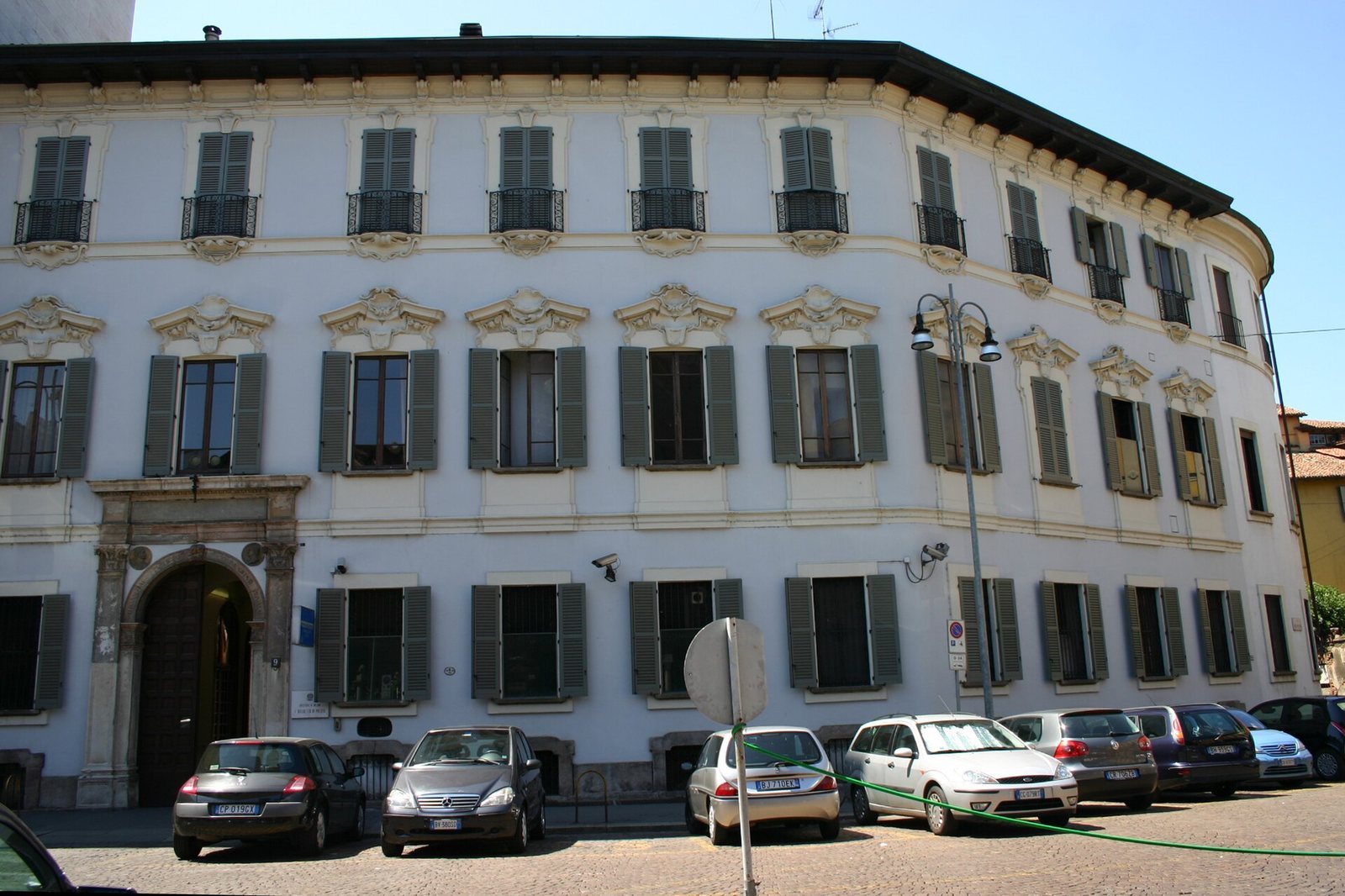
Palazzo Castani is a Renaissance palace at Piazza San Sepolcro in central Milan, Italy, whose original structure dates to the fifteenth century. Almost all of its façade was rebuilt in the seventeenth century. The early movement and ideas of Italian Fascism became known as Sansepolcrismo, a name derived from Piazza San Sepolcro, where the palace stands.
Fascist headquarters
The palace served as the headquarters of the Federation of the Milanese Fasci, local Fascist organizations associated with Benito Mussolini, Italy’s Fascist leader and dictator. From 1921 to 1924, it was the national headquarters of the National Fascist Party, the ruling party of Fascist Italy. From 1943 to 1945, it housed the Republican Fascist Party’s national headquarters. That party belonged to the Italian Social Republic, a German-backed state. The building now houses the Centro precinct of the Italian State Police.
Remains
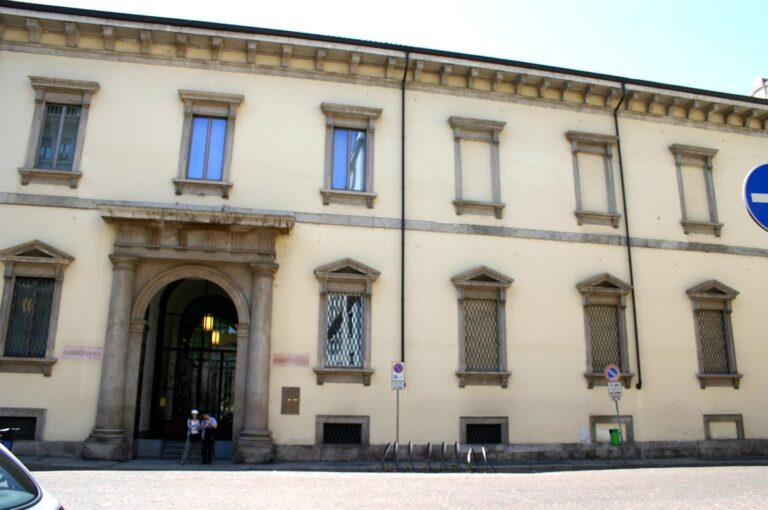
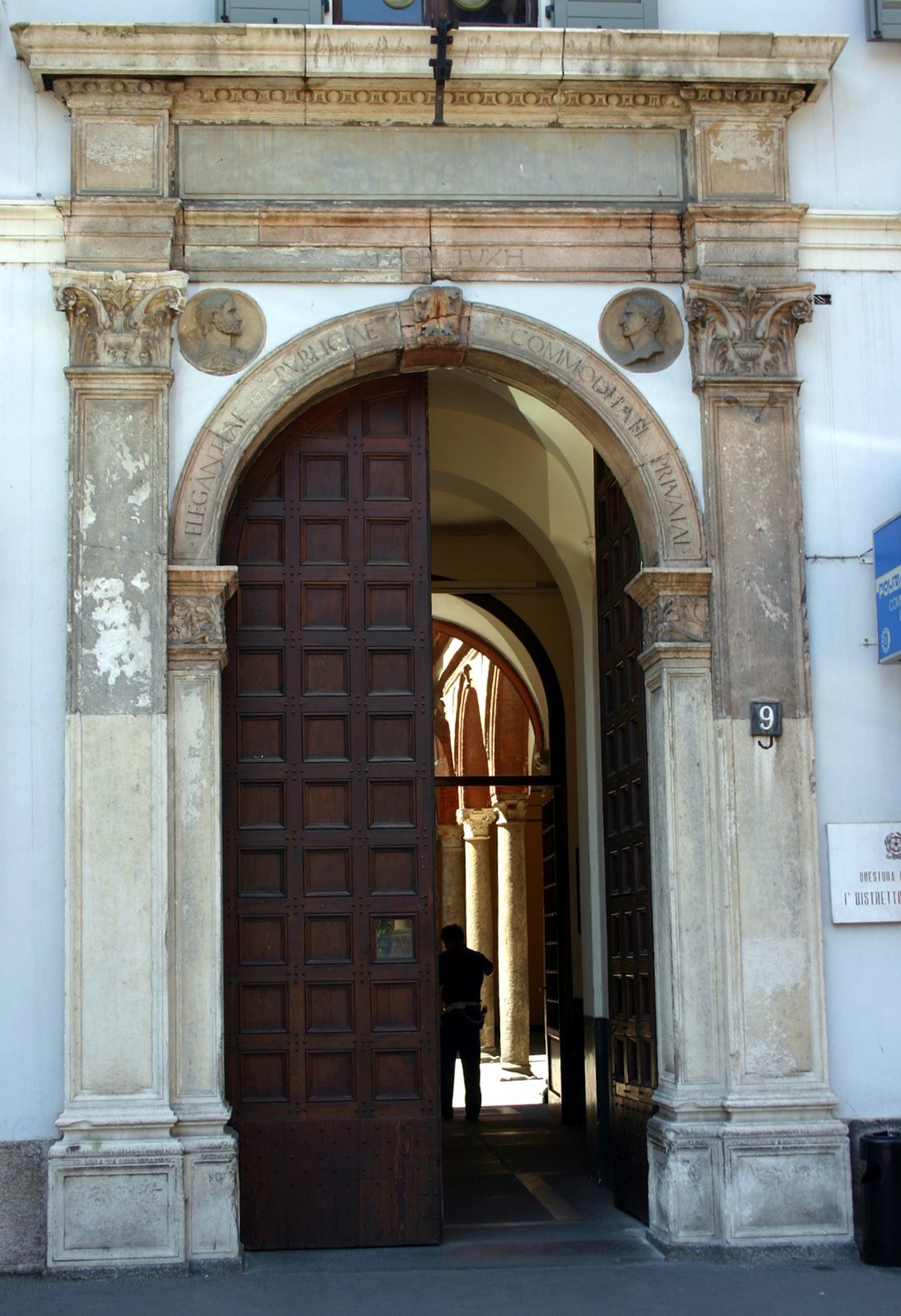
The three-storey palace is built in the Renaissance style. Its exterior combines a rebuilt façade with an off-centre portal that survives from the earlier front, while the interior courtyard has covered passages on three sides.
Façade
A stone base course runs along the ground floor. The off-centre portal, the sole surviving part of the earlier façade, combines marble and Angera stone, quarried in Lombardy, and retains terracotta decoration. Above it, the first upper storey has broken pediments, ornamental tops with interrupted outlines, decorated with shell figures. Small wrought-iron balconies on the second upper storey have outlines combining curves and straight lines.
Courtyard
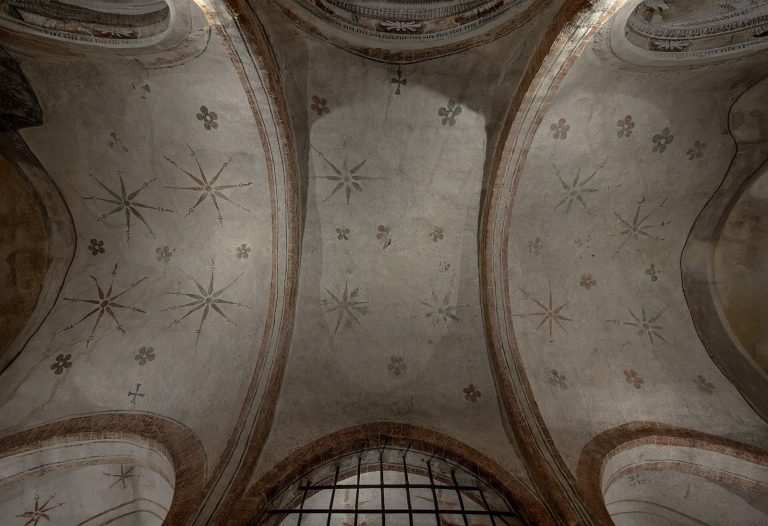
The interior courtyard has porticoes on three sides. These covered, column-supported passages have cross vaults, formed where barrel-shaped vaults intersect. Round arches made of terracotta rest on Corinthian columns with capitals decorated in stylized leaf forms.