Palazzo Carafa della Spina: A Renaissance and Baroque Palace in Naples
Site at a Glance
- Rating
- 4.4
- Popularity
- Medium
- Country
- Italy
- Primary era
- Early Modern
- Eras represented
- Early Modern
- Civilizations
- Habsburg, Habsburg Spain, Kingdom of Naples, Spanish
- Site type
- Domestic
- Remains
- Elite Residence
On this page7 sections
History
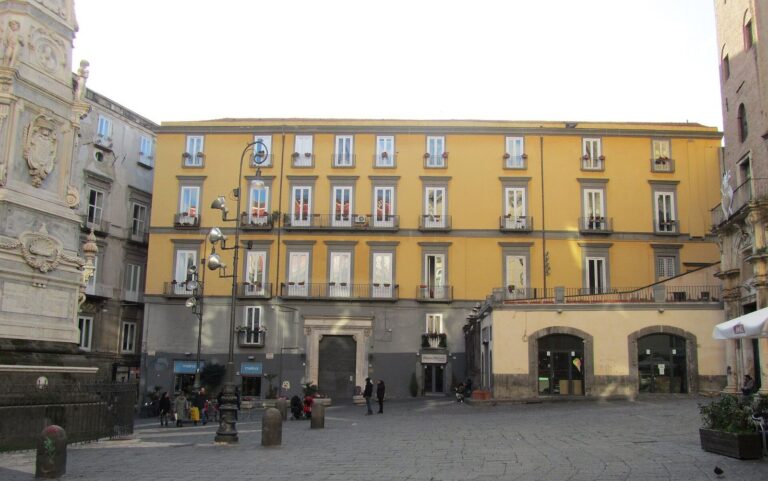
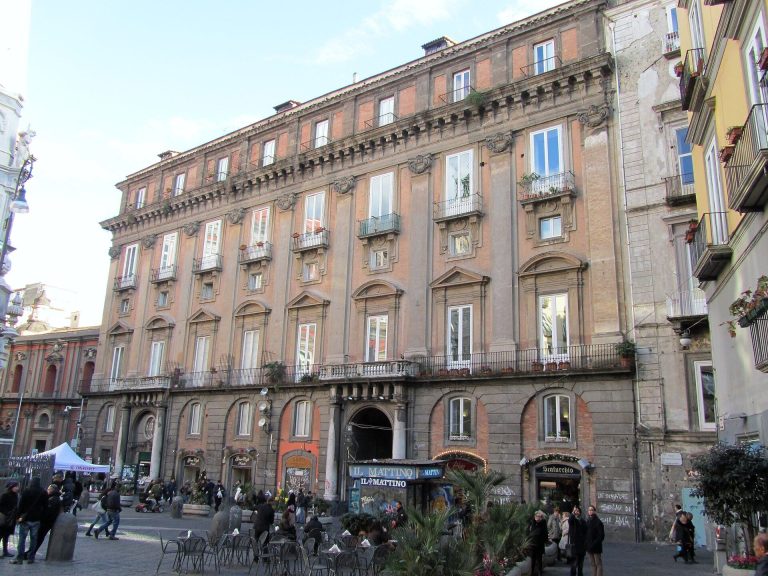
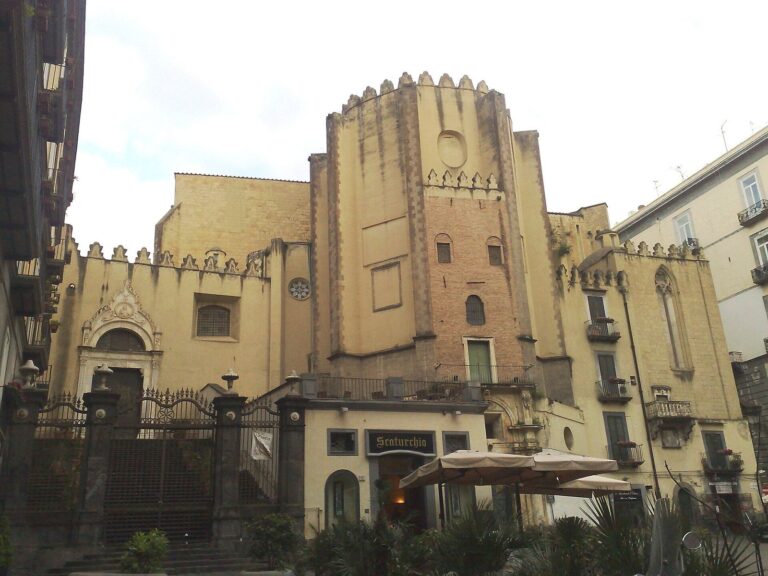
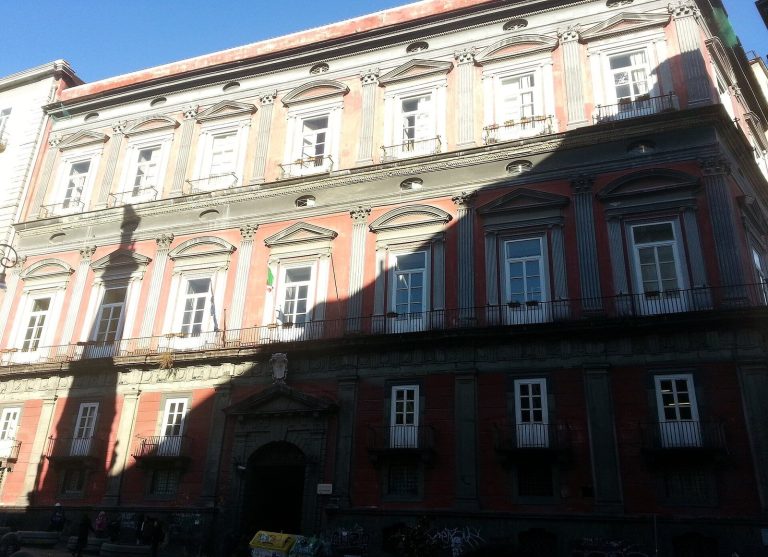
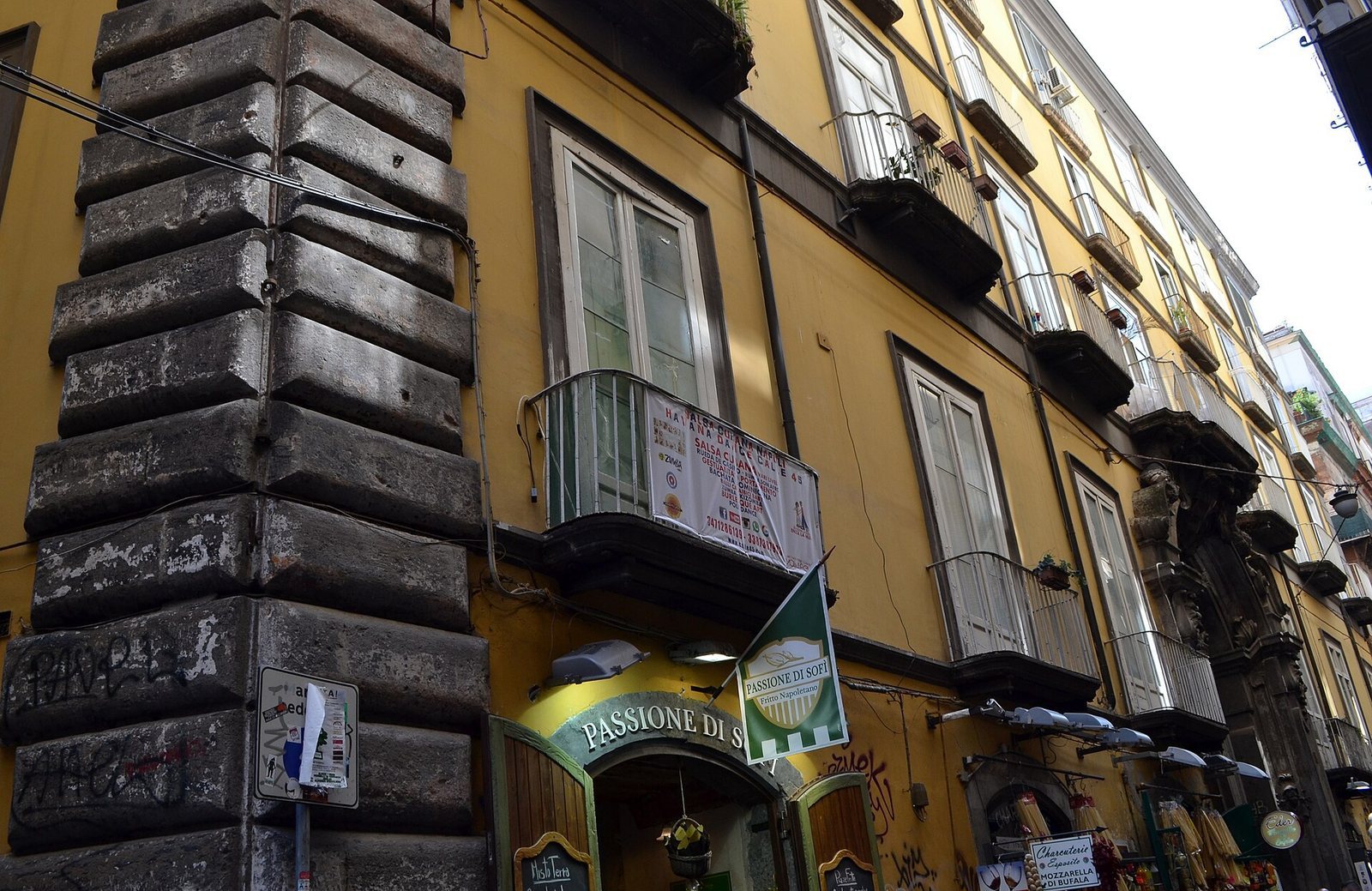
Palazzo Carafa della Spina is a residential palace in Naples, Italy, along the lower decumanus, a principal street in a Roman town layout. It stands in the historic center near Piazza San Domenico Maggiore, within the area known as Spaccanapoli. Rebuilt in the late sixteenth century with Renaissance features, it was later altered in the Baroque period.
Late sixteenth-century rebuilding
In the late sixteenth century, Fabrizio Carafa della Spina, prince of Butera and Roccella, acquired an earlier palace and its garden from Andrea Matteo IV Acquaviva d’Aragona, the second prince of Caserta. Carafa demolished the existing building to erect a new palace, probably following a design by Domenico Fontana, an Italian architect and engineer active in the late Renaissance. Carafa died in 1629.
Baroque alterations and restoration
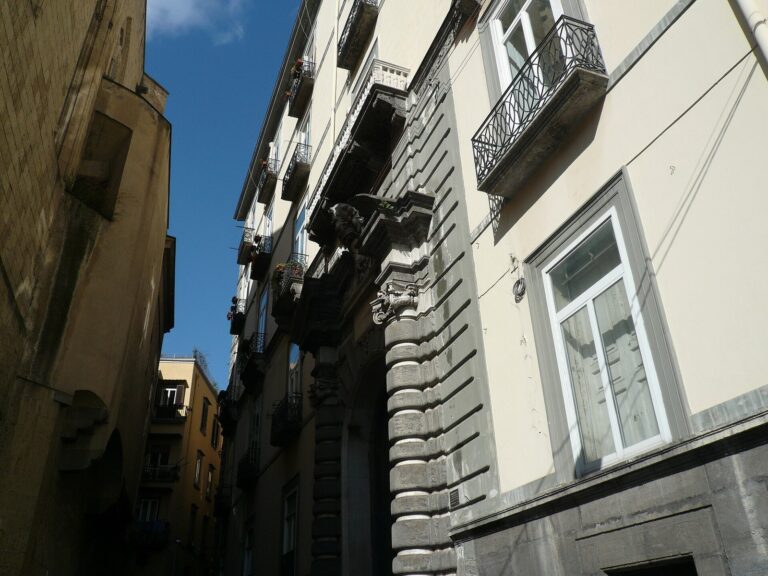
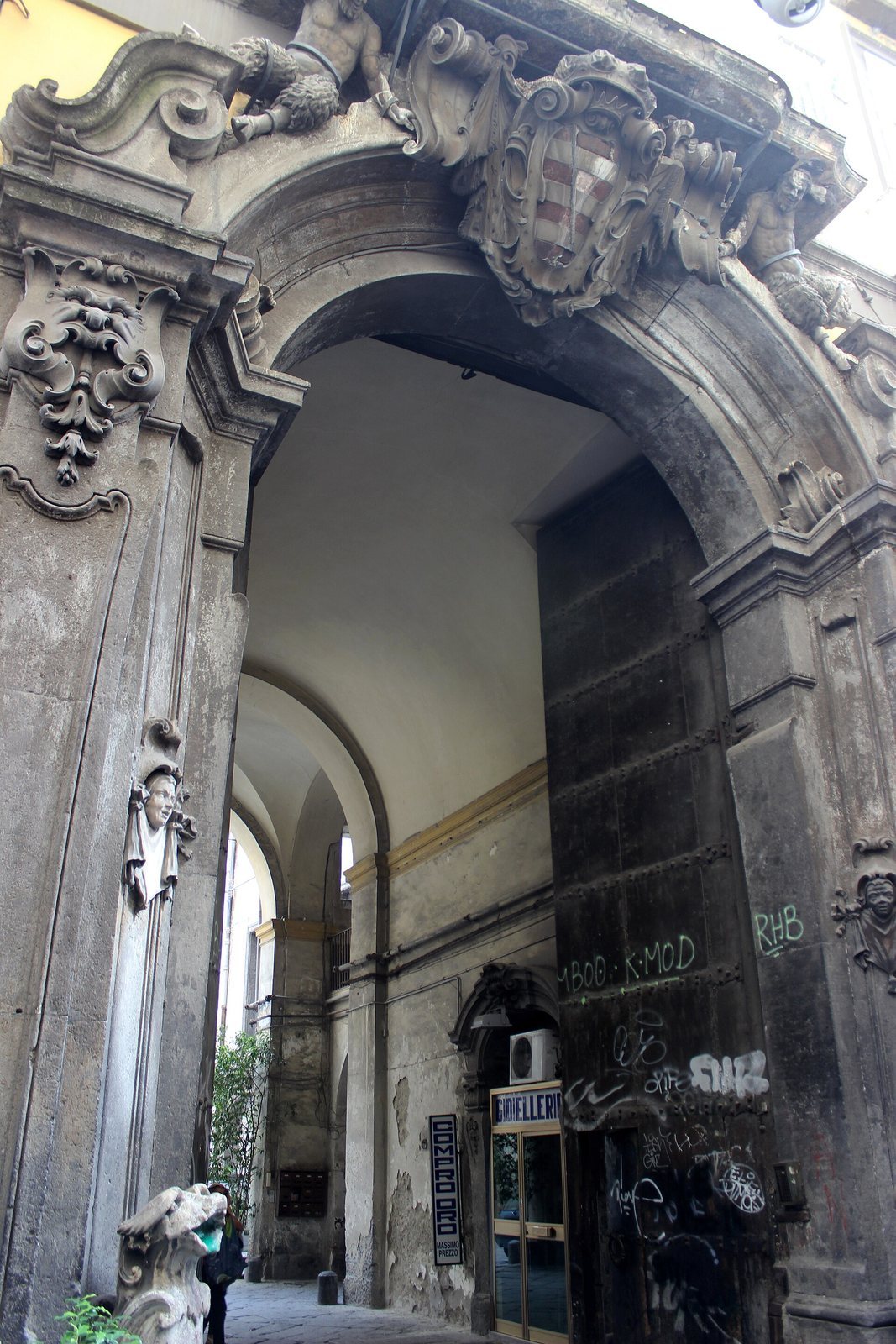
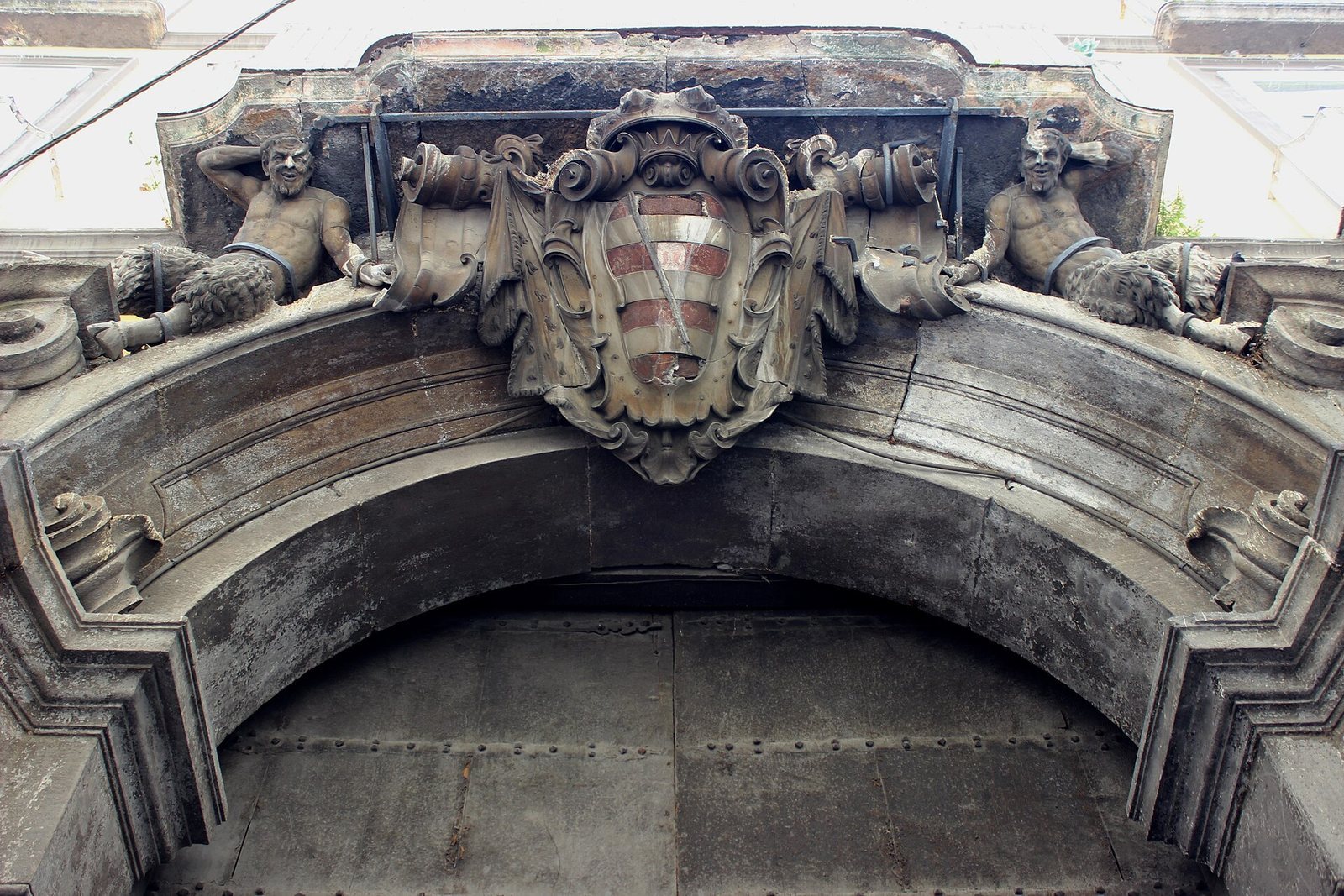
The palace was modified during the Baroque period and restored in the eighteenth century by an unidentified architect. Its entrance portal was remade as part of this work. The portal has been attributed either to Martino Buonocore or to Ferdinando Sanfelice; the Sanfelice attribution rests on stylistic similarities to the portal of nearby Palazzo Filomarino.
Remains
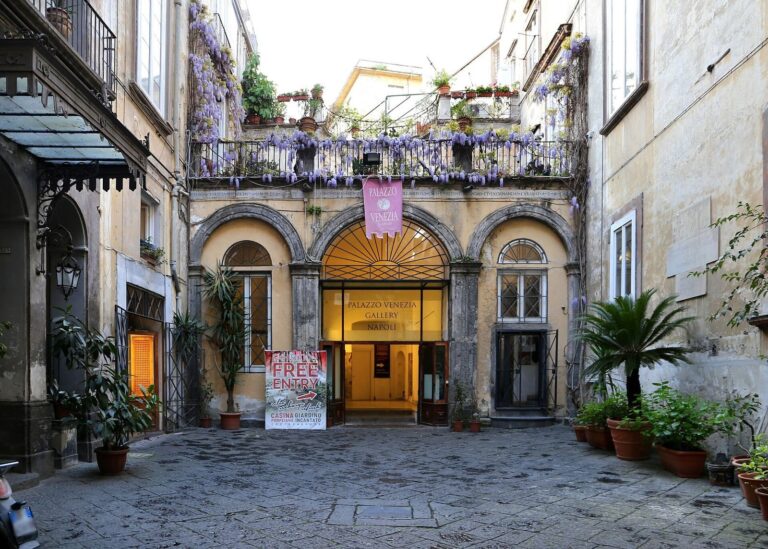
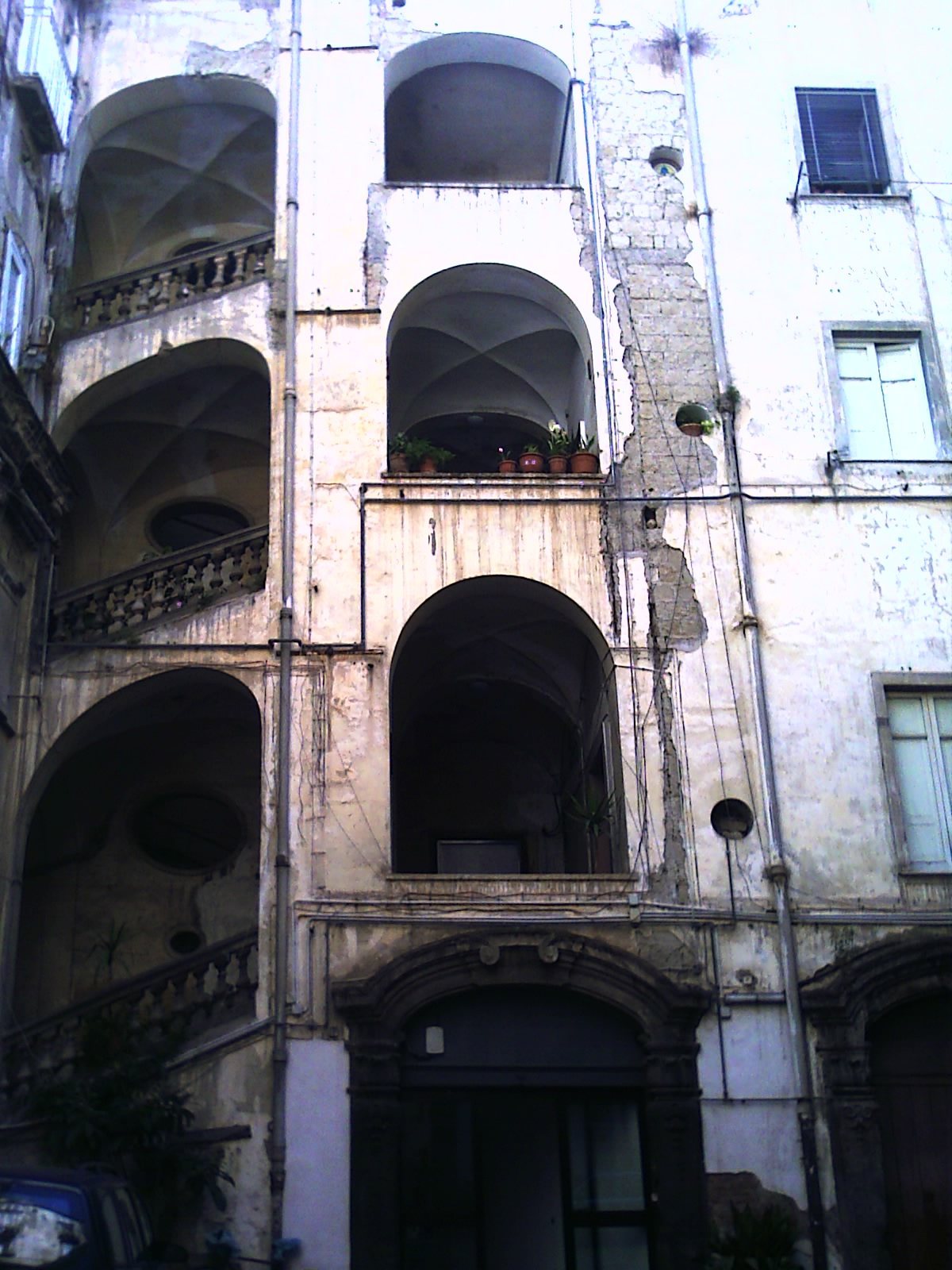
The palace combines Renaissance and Baroque features. Its entrance passage leads toward an inner courtyard, with a monumental staircase immediately to the left beyond the entrance.
Entrance and courtyard
Eighteenth-century portal
The imposing entrance portal is made of piperno, a volcanic stone used in the Naples region. Substantial shaped piers end in masks carved in high relief. Broad scroll-shaped elements support satyr figures beneath the balcony; these figures serve as caryatids, sculpted supports. The Carafa della Spina coat of arms sits between them. Faces carved into the inner corners of the columns may depict people associated with the patrons. At the base, two marble sea monsters with open mouths served to extinguish torches.
Courtyard and staircase
The courtyard includes piperno columns, other architectural elements, and posts. The monumental staircase is connected visually to the inner courtyard by two round arches that open from the stair and follow its height.