Palazzo Bovara: Lecco’s Town Hall and Former Hospital
Site at a Glance
- Popularity
- Low
- Country
- Italy
- Primary era
- Modern
- Eras represented
- Modern
- Civilizations
- Austrian Empire, Habsburg, Italian
- Site type
- Civic
- Remains
- Town Hall
On this page9 sections
History
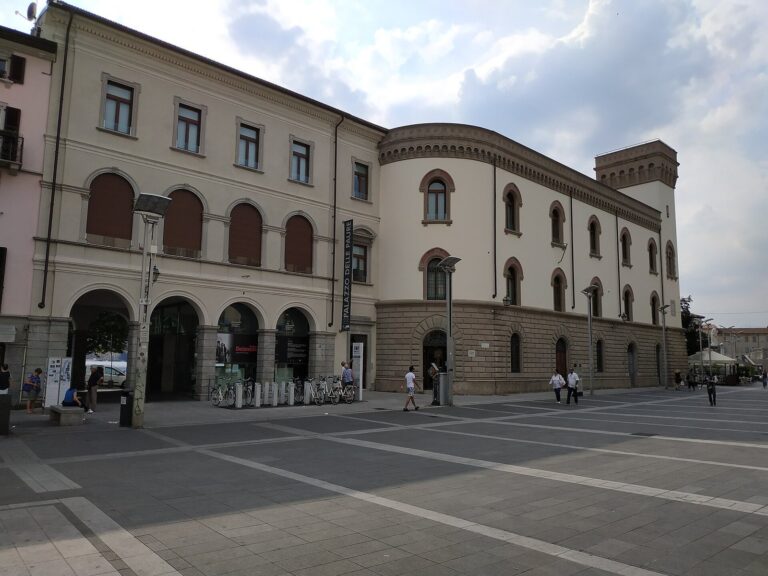
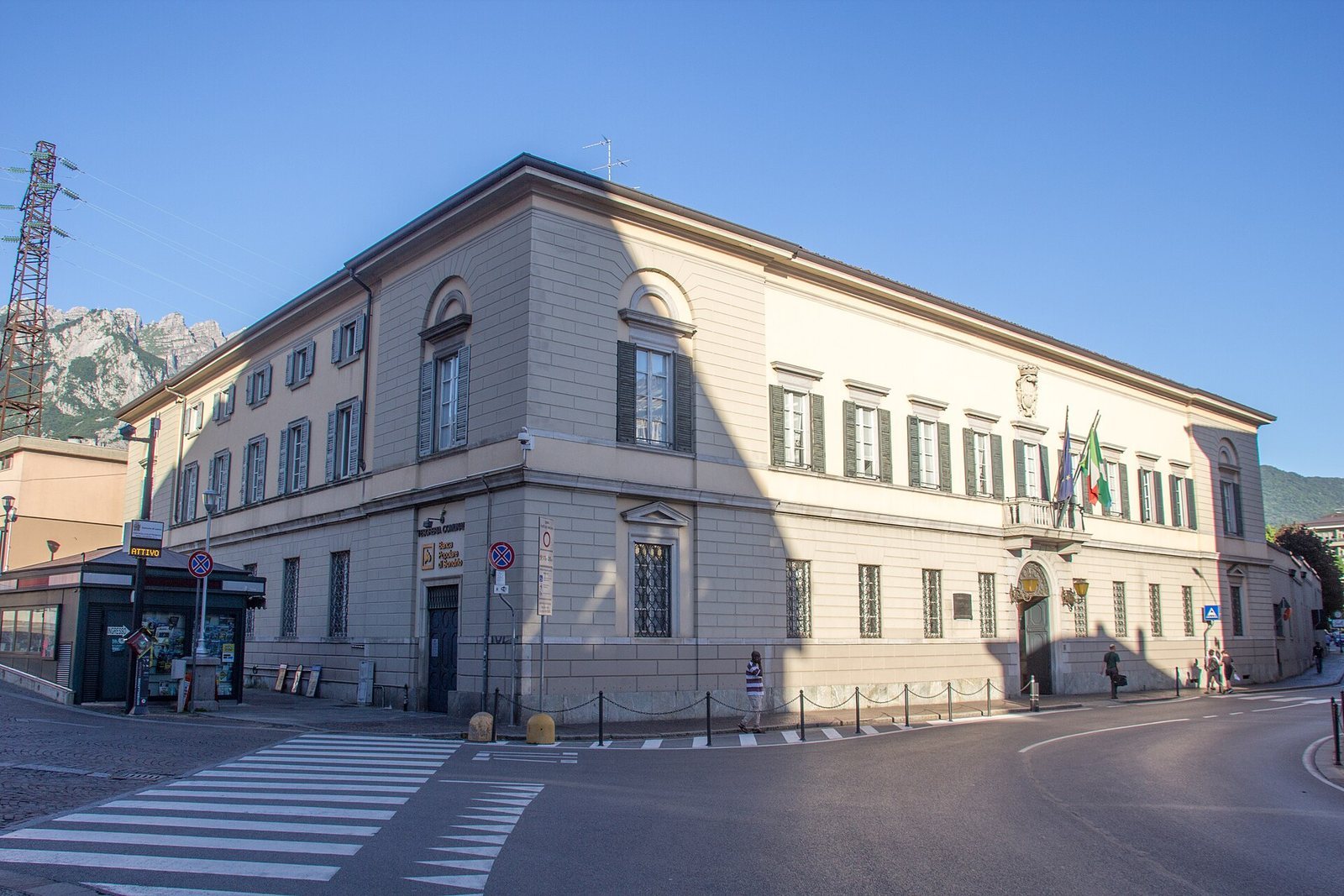
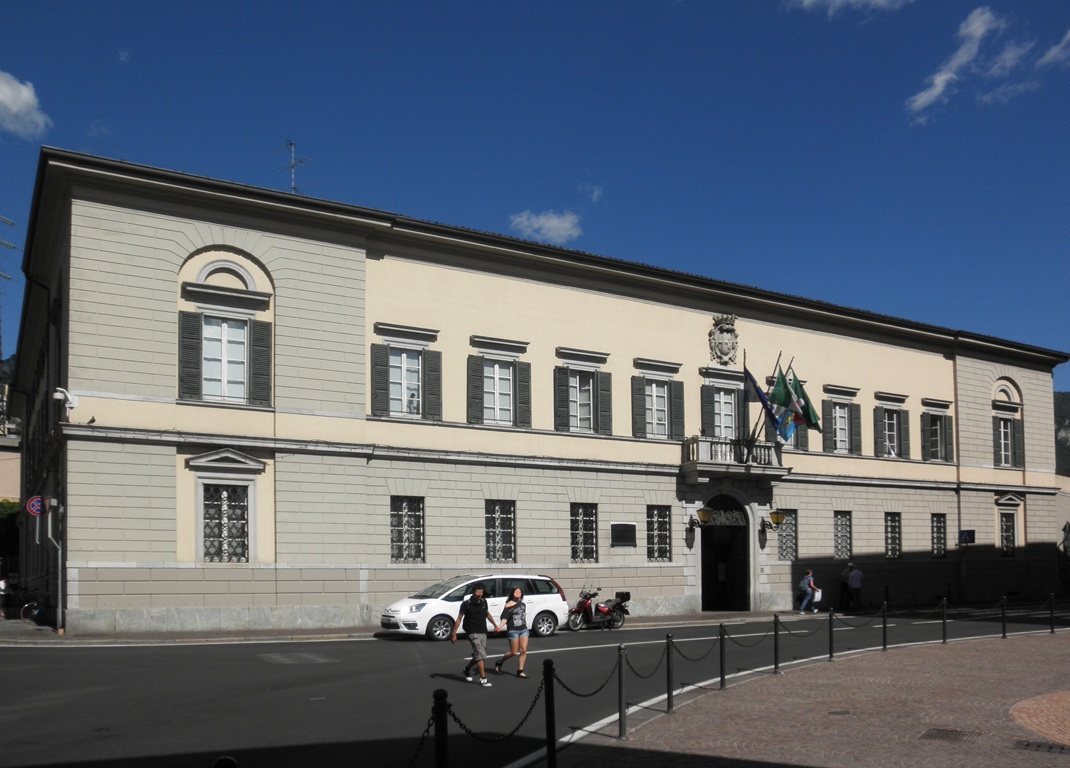
Palazzo Bovara is Lecco’s town hall in Italy, a two-storey Neoclassical building, a style drawing on ancient Greek and Roman forms, begun in 1836 as the city’s first modern hospital. Lecco architect Giuseppe Bovara designed its oldest section around 1830.
Hospital project and construction
In 1836, Vittorio Cremona, Pompeo Redaelli, and Antonio Muzzi commissioned a much larger hospital project, and construction began that year. A shortage of funds halted the work in 1843, but the completed part was inaugurated in June.
Lecco’s civic administration
Lecco was granted city status in 1848 by the Provisional Government of Lombardy, formed during the upheaval of that year. The decision recognized local patriots’ part in the Five Days of Milan, an uprising against Austrian rule, including their early support for Milan’s insurgents. After Austrian rule was restored, Lecco returned to town status; it regained city rank definitively with Italian unification.
The municipal offices moved several times before settling at Palazzo Bovara. They were at Piazza S. Marta until 1852, at Via Contrada Larga, now Via Cavour, from 1852 to 1862, and at Piazza del Mercato, now Piazza XX Settembre, from 1862 to 1893. From 1893 to 1928, they occupied Palazzo Ghislanzoni.
The conversion of the former hospital followed the creation of Grande Lecco, the unification of municipalities in the Lecco basin between 1923 and 1928. Those former municipalities now form city districts. The merger responded to changes in Lecco and neighboring communities from the late nineteenth century into the early twentieth, although some municipalities opposed it over concerns about losing autonomy. An adaptation of the hospital for city offices took about two years. On 13 April 1928, King Vittorio Emanuele III inaugurated the building as Lecco’s town hall.
Commemoration and the building’s name
For partisan activity and participation in the Liberation Struggle of 1943–1945, Lecco received the Silver Medal for Military Valor, an Italian decoration for wartime bravery. The award was decreed on 19 September 1974 and presented at the Rigamonti-Ceppi municipal stadium by Sandro Pertini, then President of the Chamber of Deputies and later President of Italy.
A local weekly coined the name Palazzo Bovara for the town hall in the 1990s. Scholar Gianfranco Scotti criticized the name as inaccurate and proposed Palazzo civico, meaning civic palace; a guide instead calls the building Municipio, or town hall. The name can also be confused with another Palazzo Bovara, the architect’s birthplace, and Villa Bovara, a patrician villa he designed.
Remains
The surviving structure follows the Neoclassical project, but represents one quarter of the planned building. Its realized layout includes one of the four intended courtyards. The main façade faces Piazza Diaz, while another side faces Piazza Lega Lombarda. The façade was completed in 1854.
Civic features and memorials
Council chamber and municipal offices
The former hospital chapel now serves as the municipal council chamber. Later annexes contain the civil registry offices.
Façade emblem
A marble reproduction of Lecco’s municipal coat of arms occupies the center of the façade. Lecco sculptor Luigi Milani made it, and it was installed in 1932.
Courtyard plaques
Two plaques are set on the courtyard side opposite its entrance. One, installed in 1958, marks the 110th anniversary of Lecco’s elevation to city status in 1848. The other commemorates the city’s Silver Medal for Military Valor.