Palacio ducal de Medinaceli: Renaissance Seat of the House of Medinaceli
Site at a Glance
- Popularity
- Medium
- Country
- Spain
- Primary era
- Early Modern
- Eras represented
- Early Modern
- Civilizations
- Habsburg, Habsburg Spain, Spanish
- Site type
- Domestic
- Remains
- Elite Residence
On this page6 sections
History
Palacio ducal de Medinaceli is a Renaissance palace in Medinaceli, Soria province, Spain, commissioned by the Duke of Medinaceli as the seat of the House of Medinaceli, a Spanish noble house that held the ducal title. Construction began in 1625.
Construction and Ducal Residence
The architect Juan Gómez de Mora designed the palace. His uncle, Francisco de Mora, was also an architect, and the two had worked together on the Ducal Palace of Lerma. The Medinaceli palace strongly resembles that building.
Decline and Later Use
The palace fell out of use during the nineteenth century and deteriorated to near-total ruin. It remained in that state for decades, until restoration began in the late 1990s; the work was only partly completed. The palace has Property of Cultural Interest status in the monument category. In December 2008, a museum for cultural exhibitions opened in the building, with ten rooms occupying almost the entire ground floor.
Remains
Plan and Exterior
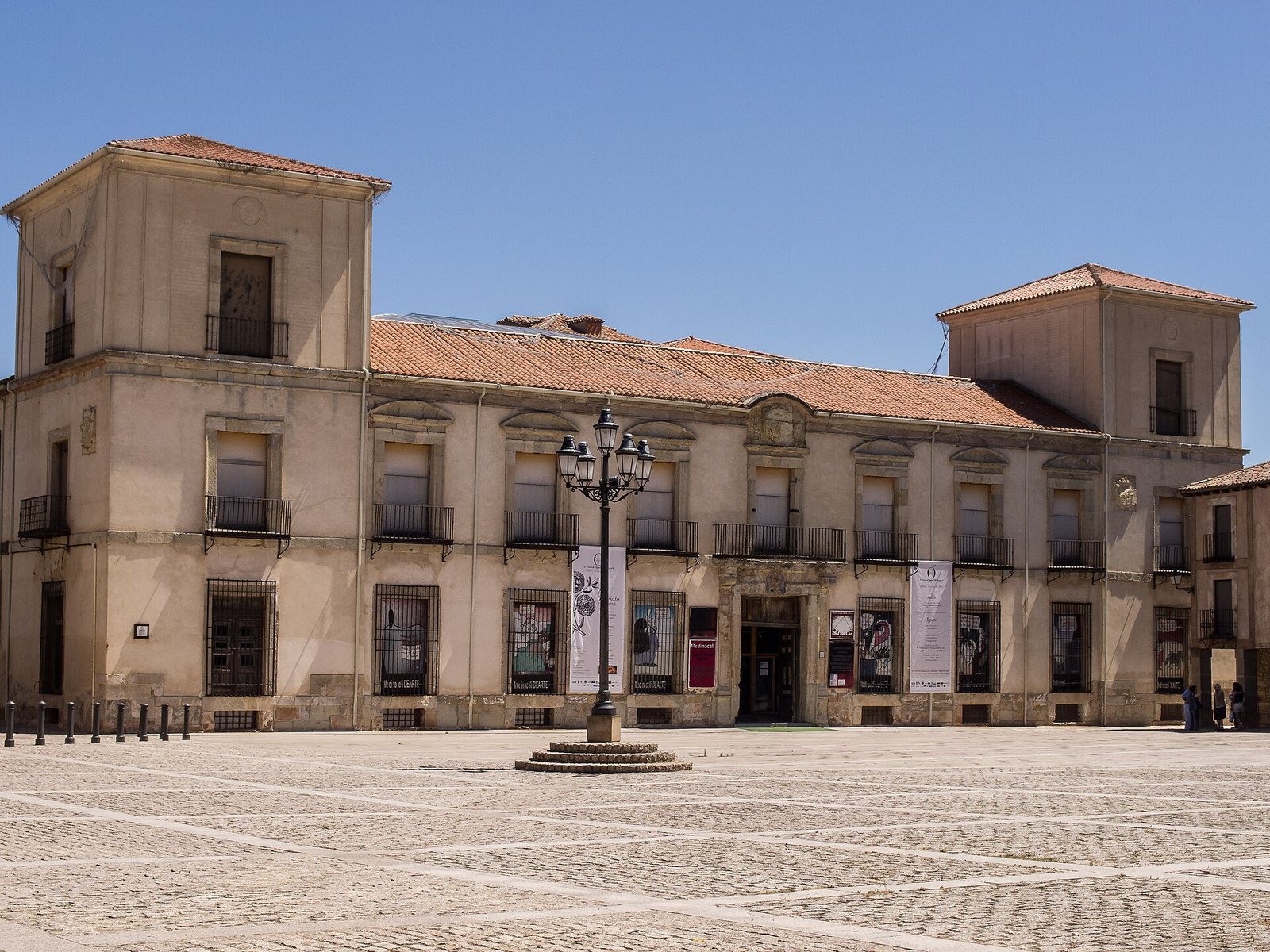
The palace occupies one side of Medinaceli’s Main Square and is arranged around an interior courtyard on two levels. Its restrained, symmetrical design includes a two-storey front flanked by towers, which were removed in the nineteenth century and later reinstated. The front has a sequence of balconies with curved decorative tops. Above the main entrance, the Dukes of Medinaceli’s coat of arms sits beneath a protective cornice. Slate was planned for the roofs, as at the Ducal Palace of Lerma, the Main Square, and Madrid’s Casa de la Villa.
Roman Mosaics
Roman mosaics can be viewed inside the palace. One, found in the Main Square and dated to the fourth century, has Ceres, the Roman goddess associated with agriculture and grain, at its center. Geometric designs and animals facing one another surround her. A second mosaic, found on San Gil Street and dated to the second century, is made with smaller mosaic pieces and features geometric patterns and fantastic animals.