Palacio de la Marquesa de Sonora: Madrid’s Ministry of Justice Headquarters
Site at a Glance
- Popularity
- Medium
- Country
- Spain
- Primary era
- Modern
- Eras represented
- Early Modern, Modern
- Civilizations
- Spanish
- Site type
- Civic
- Remains
- Palace
On this page8 sections
History
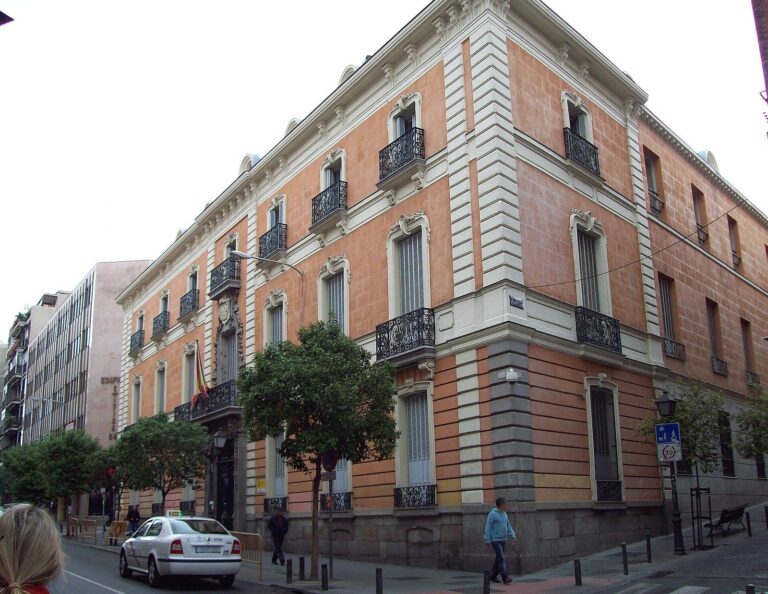
The Palacio de la Marquesa de Sonora is in Madrid, Spain. Its reconstruction, commissioned in 1797 and completed in 1828, followed several earlier building projects on the site. Today it is the principal headquarters of Spain’s Ministry of Justice. Its architecture combines neoclassical forms based on Greek and Roman models with Neo-Herrerian elements, a Spanish revival style inspired by Renaissance architecture associated with Juan de Herrera.
Early building projects
In 1745, Antonio José Álvarez de Abreu, Marquis of Regalía, bought the Casa Grande and adjoining buildings from the Duchess of Alba. The property stood on the site of the present palace. In 1752, Álvarez de Abreu commissioned plans from Ventura Rodríguez, a prominent eighteenth-century Spanish architect. The proposed design drew on classical and Renaissance traditions centered in Rome and on the Royal Palace of Madrid, but it was never built.
The complex passed to Bernardo de Grimaldo, the second Marquis of Grimaldo, in 1761. Two years later, he commissioned José Serrano to design a unified palace incorporating the existing buildings. Grimaldo lived there until a fire destroyed the palace on 17 August 1789.
Rebuilding and private ownership
María de la Concepción Valenzuela, Marchioness of Sonora, acquired the property in 1797 and commissioned Evaristo del Castillo to rebuild and enlarge it. The work was unfinished until 1828. By then, ownership had passed to Prudencio de Guadalfajara, Duke of Castroterreño, who was the widower of Valenzuela’s daughter. Valenzuela was the third wife of José de Gálvez, a Spanish statesman and the first Marquis of Sonora.
The palace served as a residence from its completion until 1851. In 1847, the duke sold it to financier Mariano Bertodano for 1,750,000 reales, a Spanish unit of currency. Financial difficulties led to its transfer to Javier de Quinto in settlement of debts in 1851. On 18 December that year, the government bought the property for 1,600,000 reales, subject to an annual charge payable to the duke. It then housed the Ministry of Grace and Justice.
Government use and later changes
Architect Javier Barroso led a major renovation and enlargement from 1941 to 1947, with the principal phase dated to 1942–47. The Spanish State owns the palace, and the minister’s office is located there. In 1995, it received Bien de Interés Cultural status, Spain’s protected cultural heritage designation.
Remains
Site and construction
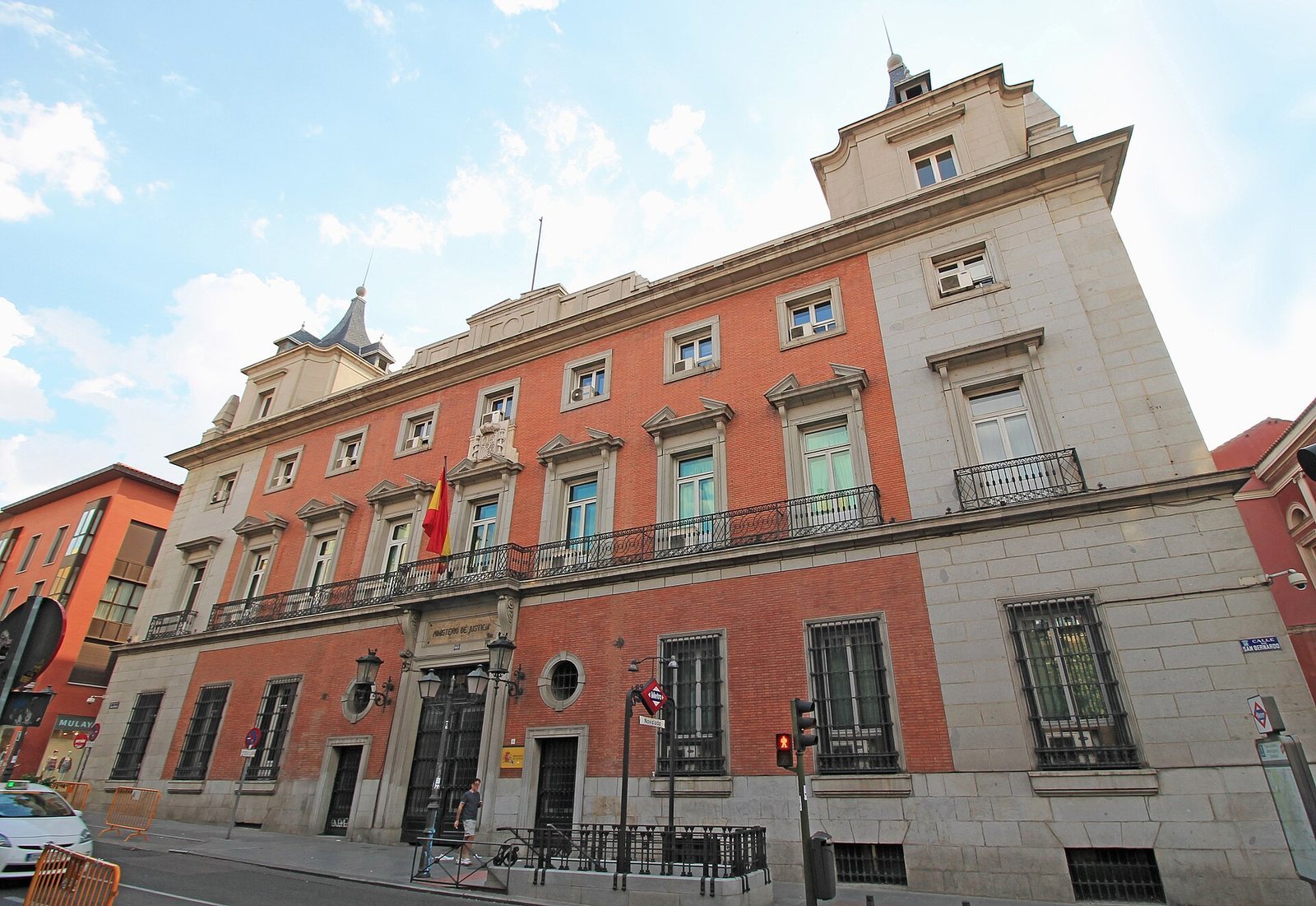
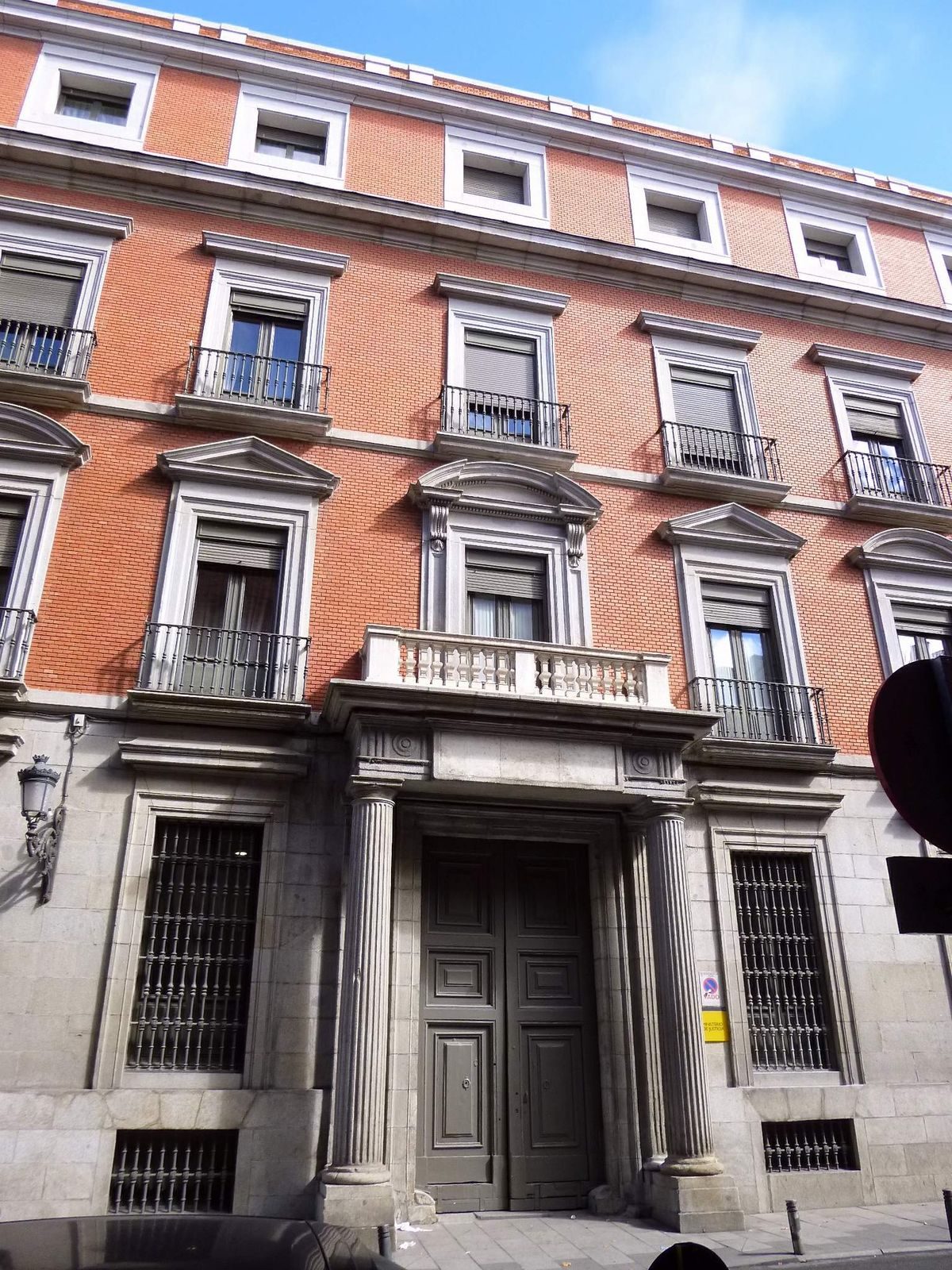
The three-storey palace stands at 45 Calle de San Bernardo, on a block bounded by Calle de los Reyes, Calle de San Bernardo, Calle de la Manzana, and Calle del Álamo. Granite, red brick, and Colmenar stone form its principal construction materials.
Courtyard and interior
The palace’s principal features include a vestibule, a large branching staircase, and a main courtyard. Serrano’s design arranged the integrated buildings around the courtyard and vestibule, with visual continuity between these spaces and neoclassical touches in the decoration. Stables and carriage houses occupy the rear of the complex.
Rebuilding and additions
Valenzuela’s rebuilding brought substantial structural changes and a new decorative scheme for the salons. Barroso’s later enlargement added corner towers topped with slate spires.