Palace of Andrei Bogolyubsky: A Medieval Residence in Bogolyubovo, Russia
Visitor Information
Google Rating: 4.7
Popularity: Low
Official Website: sv-bogolubovo.ru
Country: Russia
Civilization: Early Modern, Medieval European
Site type: Domestic
Remains: Palace
History
The Palace of Andrei Bogolyubsky is located in Bogolyubovo, a settlement near Vladimir in modern Russia. It was built by the medieval East Slavic civilization known as Kievan Rus’, specifically under the rule of Prince Andrei Yuryevich, also known as Andrei Bogolyubsky.
Construction of the palace took place between 1158 and 1165, serving as a white-stone residence for Andrei Bogolyubsky himself. The settlement of Bogolyubovo grew around this estate and eventually lent the prince his surname, highlighting the close connection between the ruler and his countryside residence. Andrei lived there until his death in 1174, when he was assassinated during a conspiracy staged by boyars, the high-ranking nobility. This event took place within or near the palace complex, and its staircase tower is traditionally identified as the probable location of his murder, according to historic chronicles.
Following these dramatic events, the palace remained a notable site but suffered significant damage during the Mongol-Tatar invasion in the 13th century. Over time, as the region underwent political and social changes, the palace complex seems to have come under monastic possession, which affected its maintenance and function. By the late 18th century, many of the defensive structures, including walls, gates, and towers, were dismantled, reflecting shifts in both military needs and architectural priorities.
Nearby, the Church of the Intercession on the Nerl River was constructed around 1166, approximately one kilometer from the palace. This church served as a grand landmark visible to those traveling by river toward the residence, emphasizing the religious and symbolic landscape connected to the palace grounds.
Today, the palace, along with the adjacent Church of the Nativity of the Theotokos, forms part of the UNESCO World Heritage site known as the White Monuments of Vladimir and Suzdal. Rediscovered archaeologically in 1954 when historian Nikolai Voronin identified key structural elements, the palace stands as a rare and significant example of secular architecture from pre-Mongol Rus’.
Remains
The Palace of Andrei Bogolyubsky was originally a white-stone complex centered around a two-story palace and connected ecclesiastical buildings. The entire ensemble was enclosed within rectangular walls made of well-dressed white limestone blocks, filled with rubble and bound by mortar. These walls lacked corner watchtowers, indicating a primarily ornamental rather than defensive purpose.
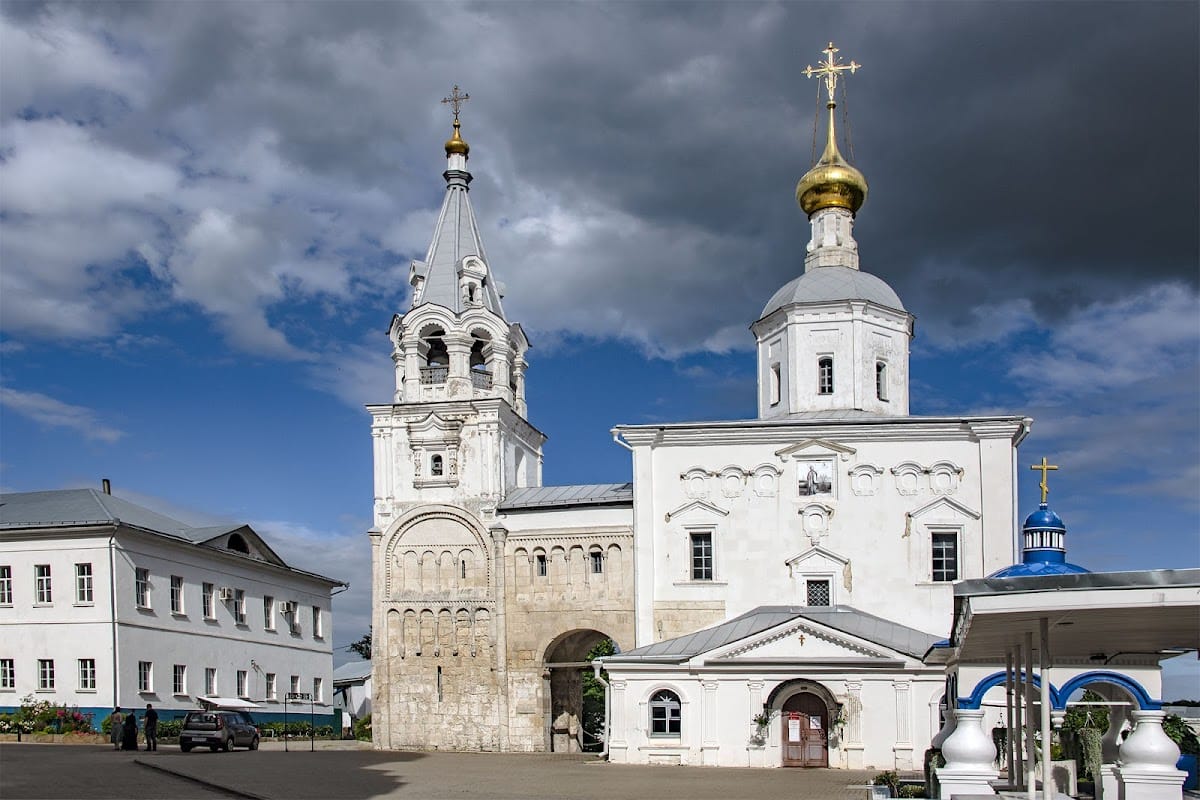
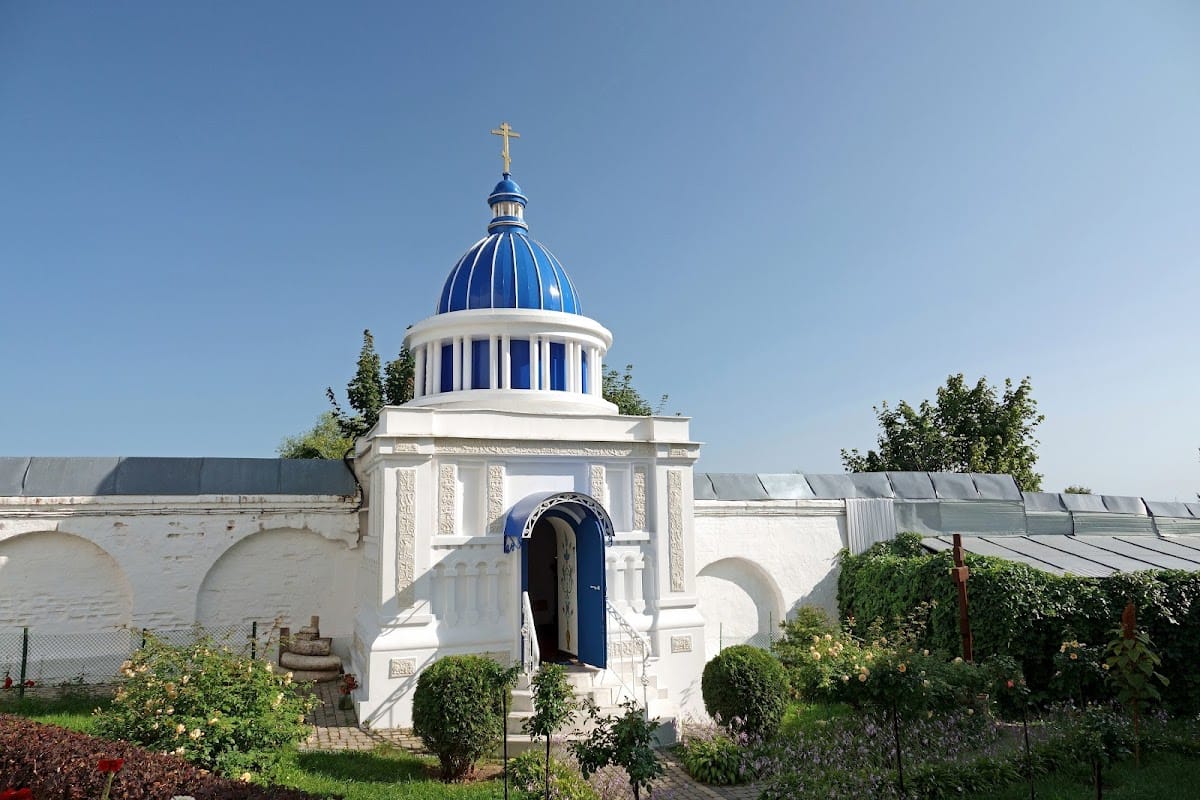
One of the most prominent surviving features is the palace’s staircase tower, forming part of an arched passage on the second floor that linked the residence to the choir area of the Church of the Nativity of the Theotokos. This staircase tower remains partially intact, with the lower sections preserved and a later 18th-century pyramidal bell tower added atop it. The arched passage still stands and provides physical evidence of the architectural relationship between the secular and religious parts of the complex.
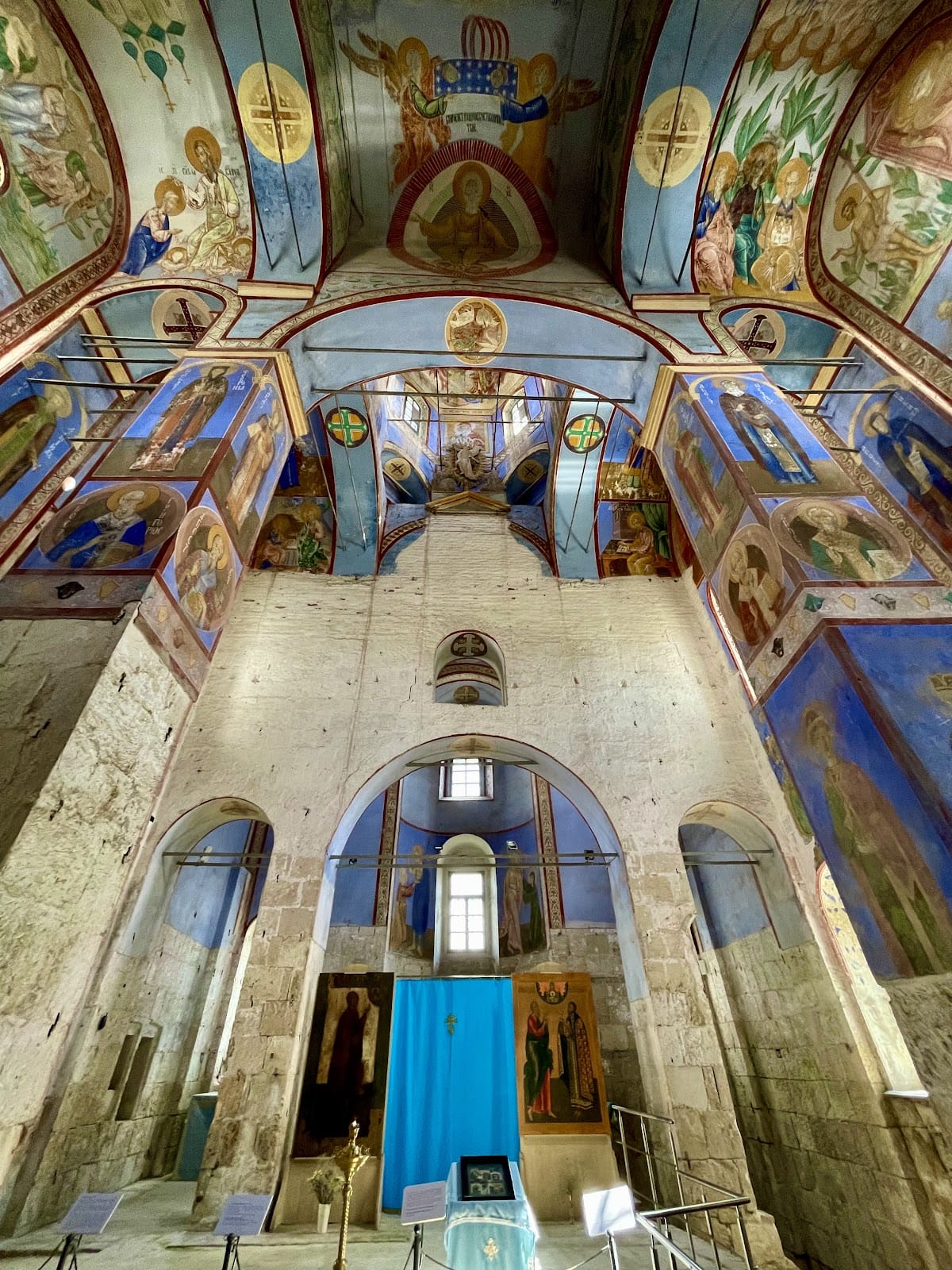
The Church of the Nativity itself was originally a richly decorated, smaller four-pillared structure, inspired by the grander six-pillared Assumption Cathedral in Vladimir. In front of the church stood a stone-paved square, featuring a canopy called a kivory. Though the original church building collapsed in 1722, its foundational elements and lower façade fragments survive underneath the present mid-18th-century reconstruction. This newer building incorporated a bell tower that significantly changed the original cubic shape and roof outline of the medieval church.
Additionally, foundations reveal the footprint of the palace, offering insights into its original scale and layout. Alongside the Church of the Nativity, the Leontievsky Church was once part of the estate, contributing to the sacred atmosphere surrounding the princely residence.
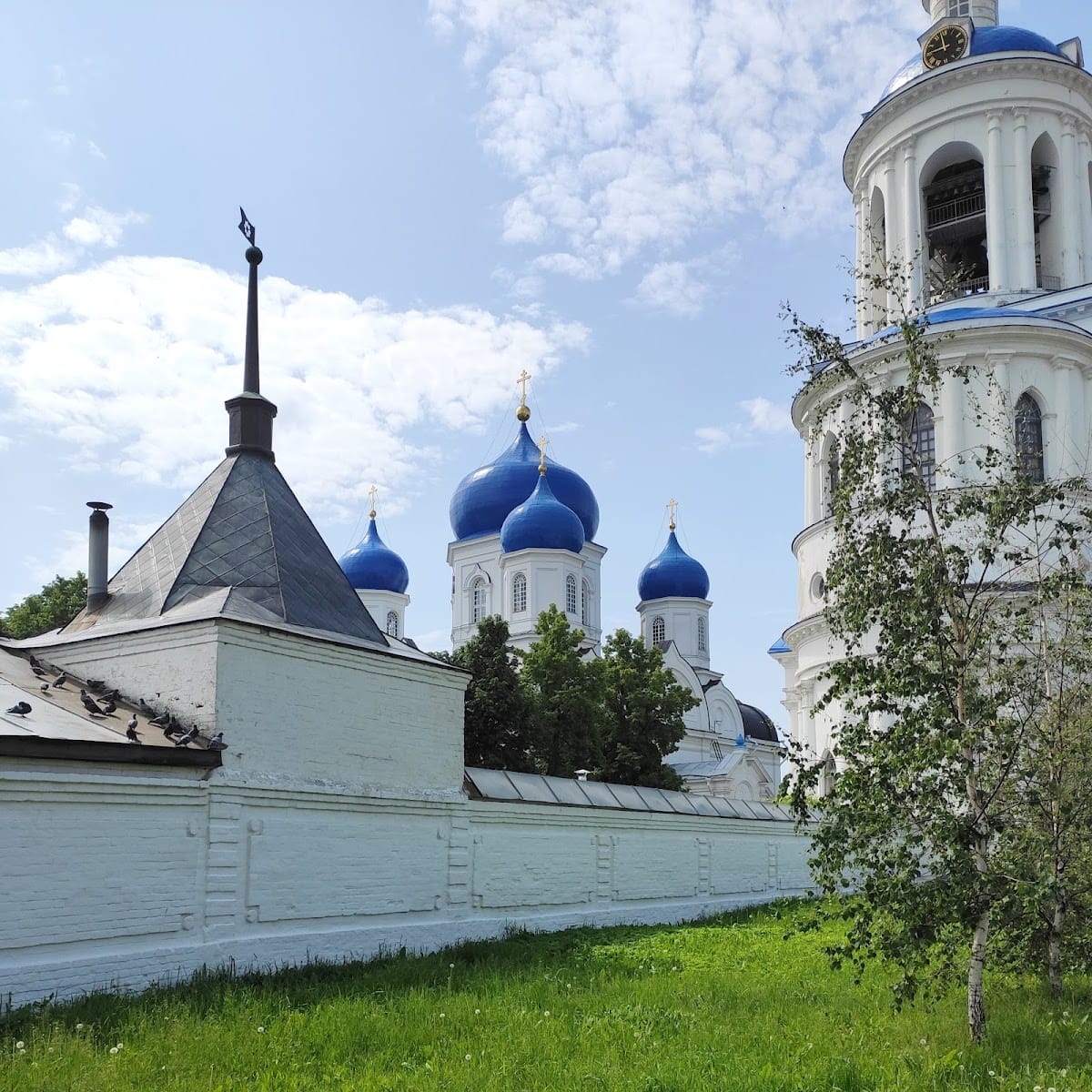
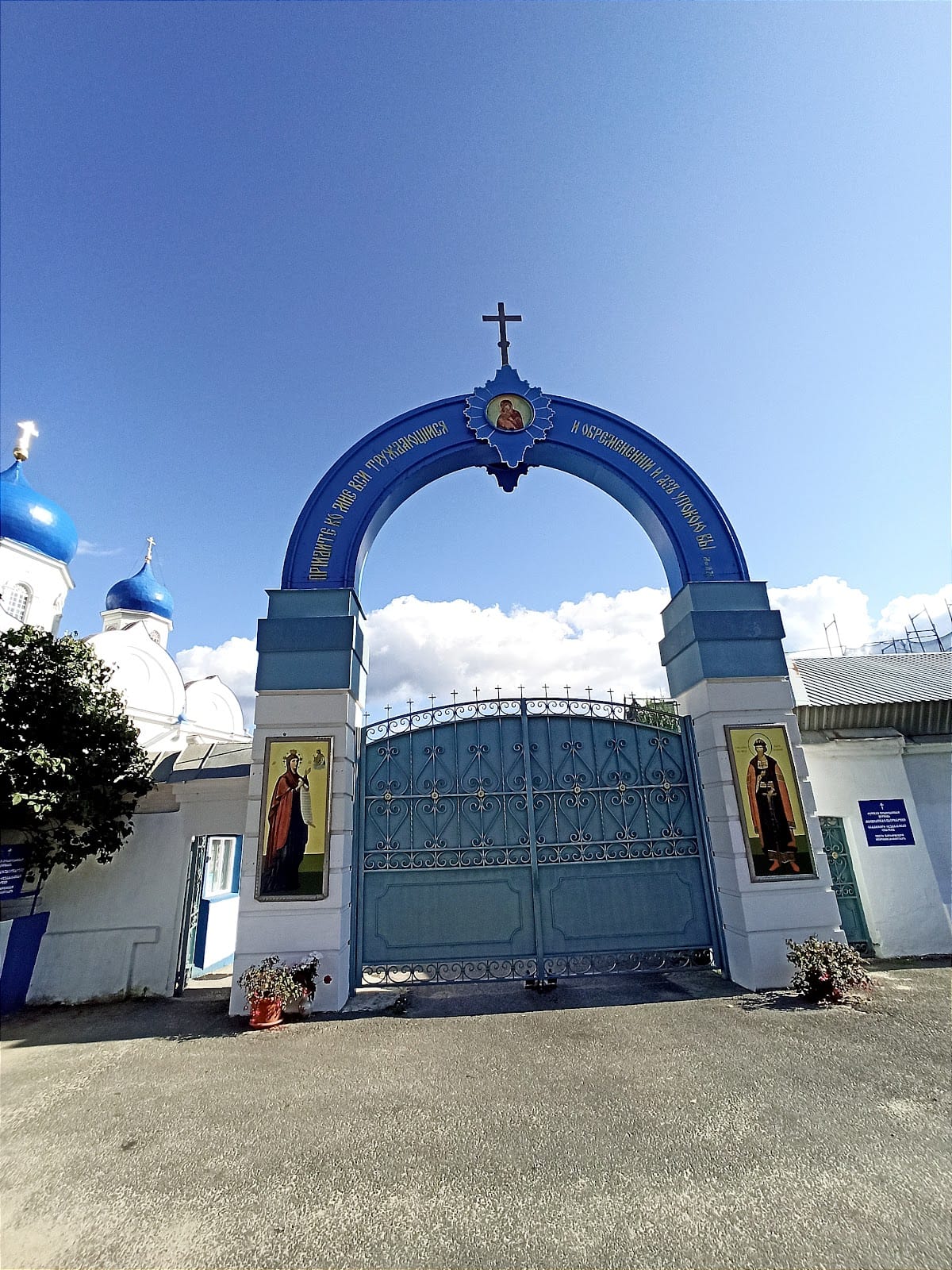
The entire palace and church vestiges now lie within the grounds of the Bogolyubovo Monastery, which developed nearby over time. Adjacent to the palace ruins stands the monastery’s five-domed blue church, showcasing the continued religious significance of this historic site.
Together, these archaeological remains provide a tangible connection to 12th-century Rus’, illustrating the blend of princely grandeur and religious devotion that defined Andrei Bogolyubsky’s residence.