Palace in Poręba Żegoty: A Historic Estate Residence in Poland
Site at a Glance
- Popularity
- Medium
- Country
- Poland
- Primary era
- Early Modern
- Eras represented
- Early Modern, Modern
- Civilizations
- Polish–Lithuanian Commonwealth
- Site type
- Domestic
- Remains
- Manor House
On this page8 sections
History
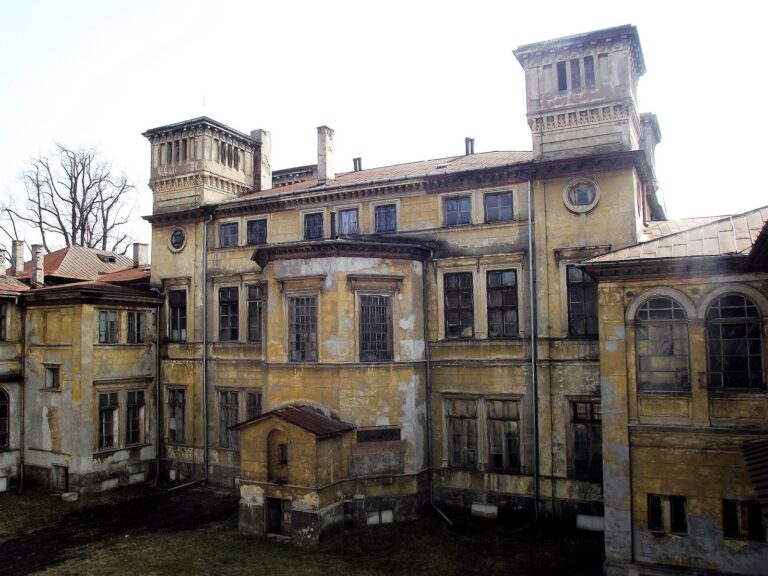
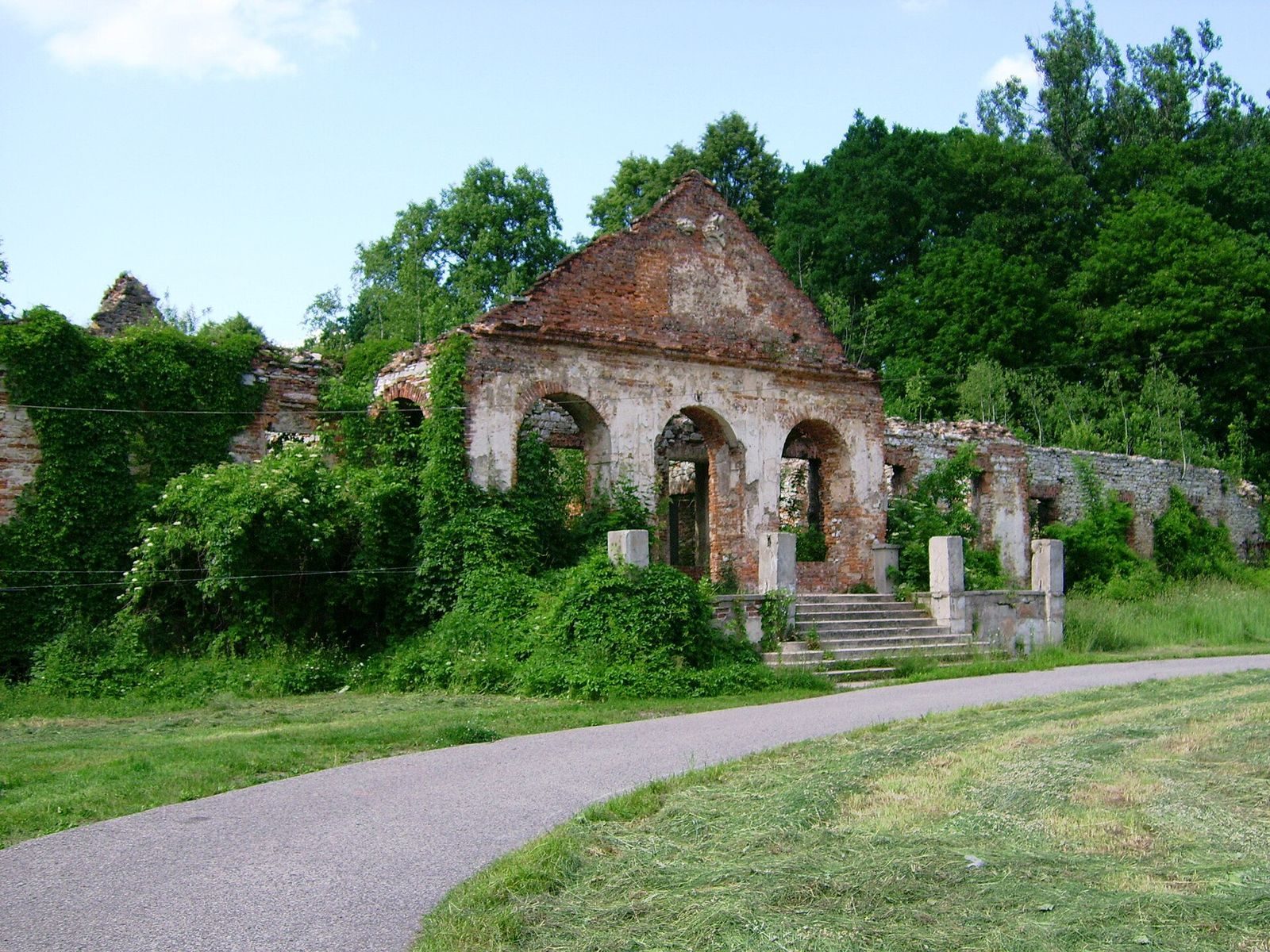
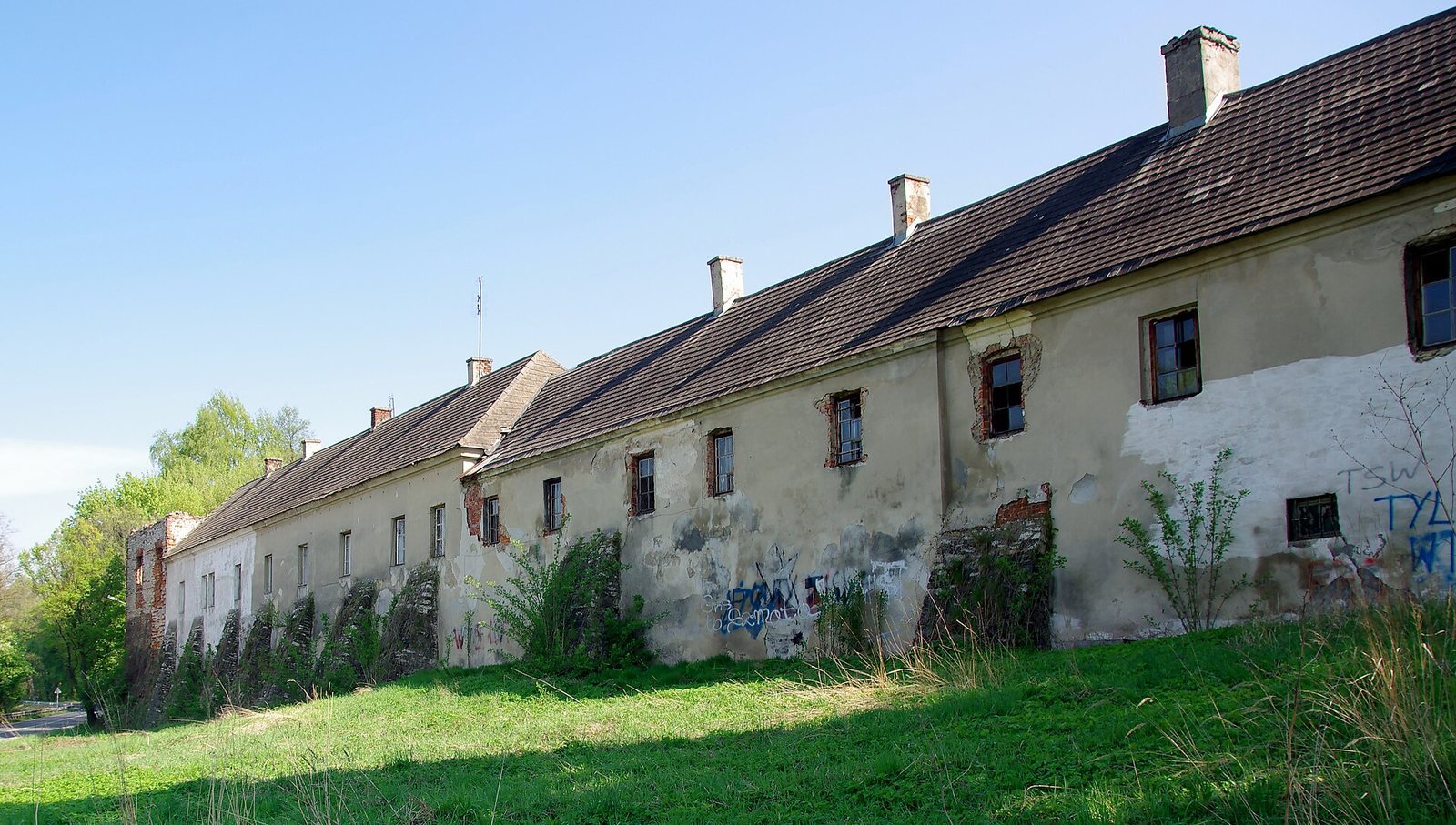
The Palace in Poręba Żegoty is a ruined estate residence in Poland, remodeled in the late-Baroque style during the second half of the eighteenth century. Its history reflects the changing ownership and uses of the surrounding estate.
Early ownership and the Szembek estate
In 1532, the village belonged to Piotr Porębski. Around the turn of the seventeenth century, it was held by Krzysztof Koryciński, a castellan (a senior official responsible for a castle and its district) of Wojnicz. From the mid-eighteenth century, the estate belonged to Franciszek Czerny-Szwarcenberg, castellan of Wojnicz and Oświęcim. After his death, it passed to his daughter Marianna and her husband, Józef Szembek.
In 1787, their son Aleksander hosted King Stanisław August Poniatowski, the last monarch of the Polish-Lithuanian Commonwealth, at the palace. Jan Szembek, who later became a diplomat, was born there in 1881. Other Szembek owners included Józef, Aleksander, Józef Karol and Józef Hilary. From 1905 to 1910, Józef Hilary established an agricultural company beside the palace. The estate remained in the family until 1945.
The estate also included a melaphyre quarry on wooded Belwender Hill, west of the palace. The Szembeks owned it until the 1930s, when the Poręby Quarries company in Kwaczała took it over. Stone from the quarry went into the Kraków–Chełmek road. During the Second World War, German occupiers worked the quarry and built a railway to Okleśna, then annexed by Nazi Germany.
Wartime occupation and damage
During the war, German occupiers displaced the female owners and used the palace as a recreation center for personnel of Auschwitz-Birkenau, the Nazi German concentration and extermination camp. In January 1945, Soviet soldiers accidentally started a fire that burned the palace. The building was also partly dismantled. It contained a library, an archive and art collections.
Postwar use and ownership
After 1945, the palace served several local purposes, including as a village national council, a maternity ward, a pig-fattening facility, an agricultural association and a livestock-breeding establishment. The Szembek mausoleum was desecrated after the war. Around the turn of the 1970s and 1980s, parish priest Wacław Mokosa arranged for the human remains to be transferred to a cemetery.
In 1985, the palace-and-park estate belonged to the Okleśna Agricultural Production Cooperative. It passed to the municipality of Alwernia in 1990. The palace was sold in September 2002, and the park in 2006, to Janina (Aśka) Mendys-Gatti, a physician and painter from Dąbrowa Tarnowska who lived in Italy. The complex is listed in the Lesser Poland Voivodeship register of immovable monuments, with entries dated 18 March 1985 and 25 July 1988.
In 2022, a project was developed at Cracow University of Technology under the direction of Barbara Zin to adapt the palace ruins as a headquarters for the Szembek Historical Society. Founded in 1989 by Władysław Szeląg, the society was the intended occupant of the proposed renovation.
Remains
The estate comprises the palace and park, the Szembek chapel-mausoleum, a granary, a steward’s house and a barn. The palace is a ruin, while one ancillary building survives intact.
The palace
The residence began as a seventeenth-century wooden manor associated with the Koryciński family. It was remodeled for the Szembeks in the early twentieth century to plans by Tadeusz Stryjeński. Its ruined state follows the fire and partial dismantling of 1945.
The chapel-mausoleum
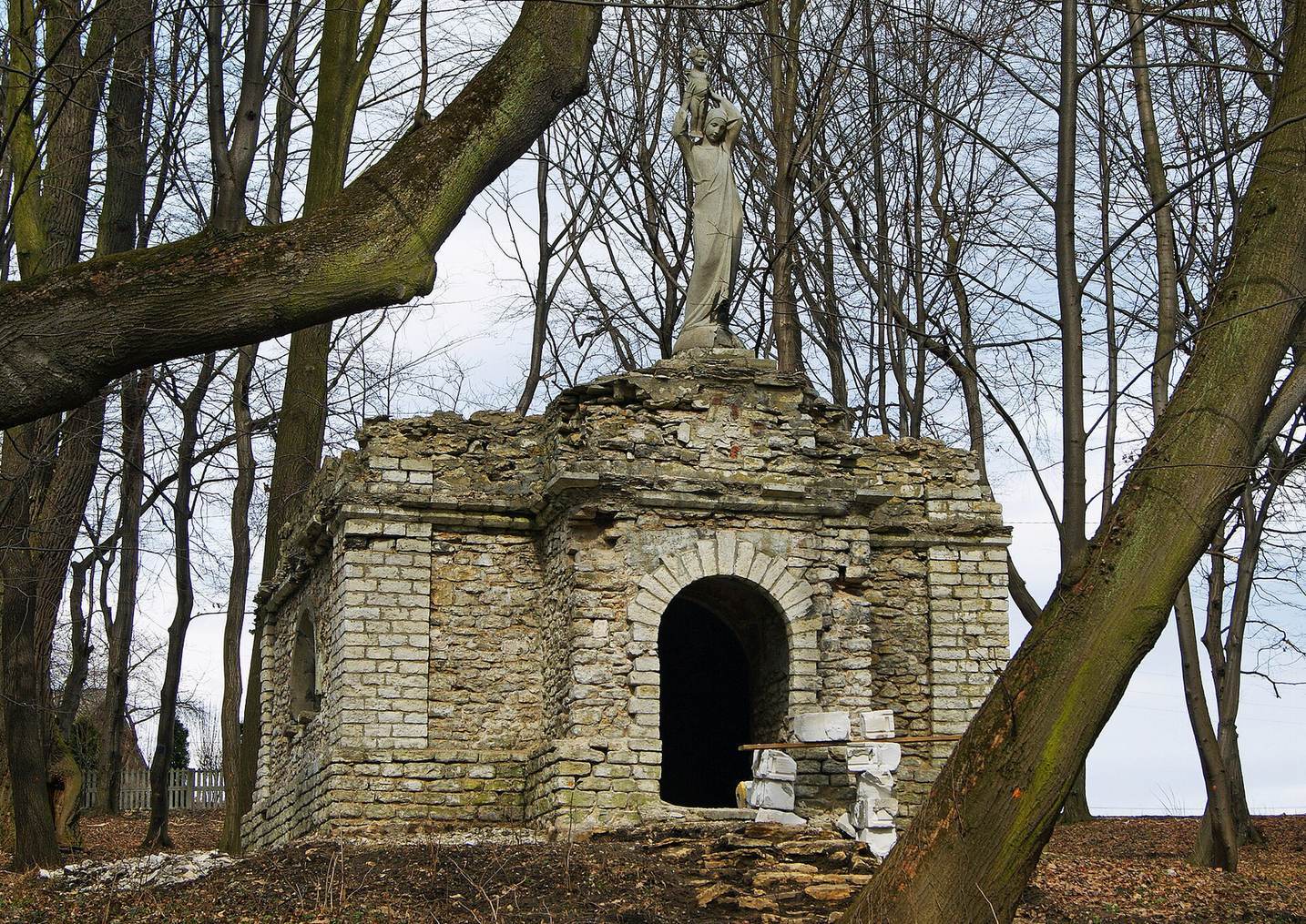
Built in the manor park from 1920 to 1922, the Szembek mausoleum was designed as a modernist chapel by the Polish architect Karol Stryjeński. Aleksander Szembek (1893–1920), Józef Szembek (1856–1928) and Józef’s wife Ludwika, née Wielopolska (1867–1936), were buried there. Above the façade is a stone sculpture of the Virgin Mary holding the Child above her head.
Park and other estate features
The park also had an artificial grotto with a statue of Neptune, the Roman god of the sea. Beside the road toward Alwernia, fishponds and a stone statue of Saint John of Nepomuk dating to 1782 stand near the palace.