Palace in Piekary: A Nineteenth-Century Palace-and-Park Complex
Site at a Glance
- Popularity
- Medium
- Country
- Poland
- Primary era
- Modern
- Eras represented
- Modern
- Civilizations
- Austrian Empire, Habsburg
- Site type
- Domestic
- Remains
- Elite Residence
On this page7 sections
History
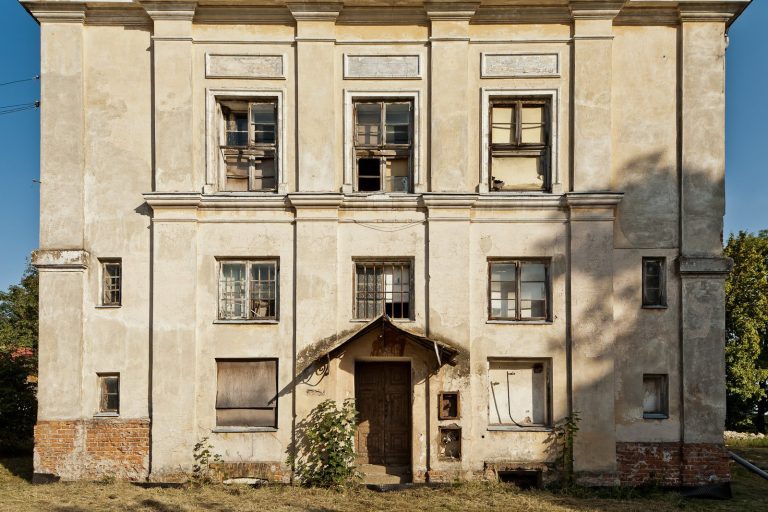
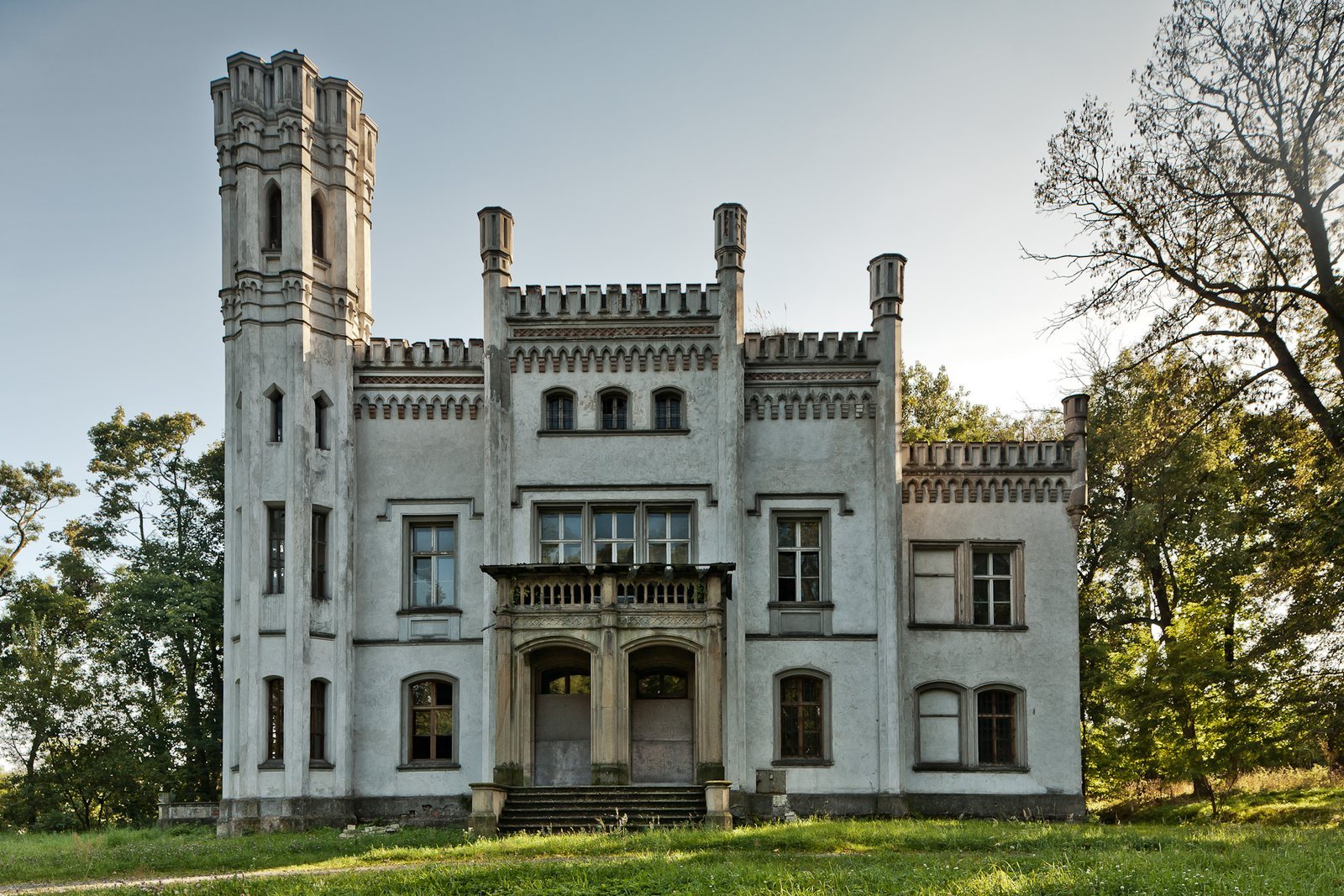
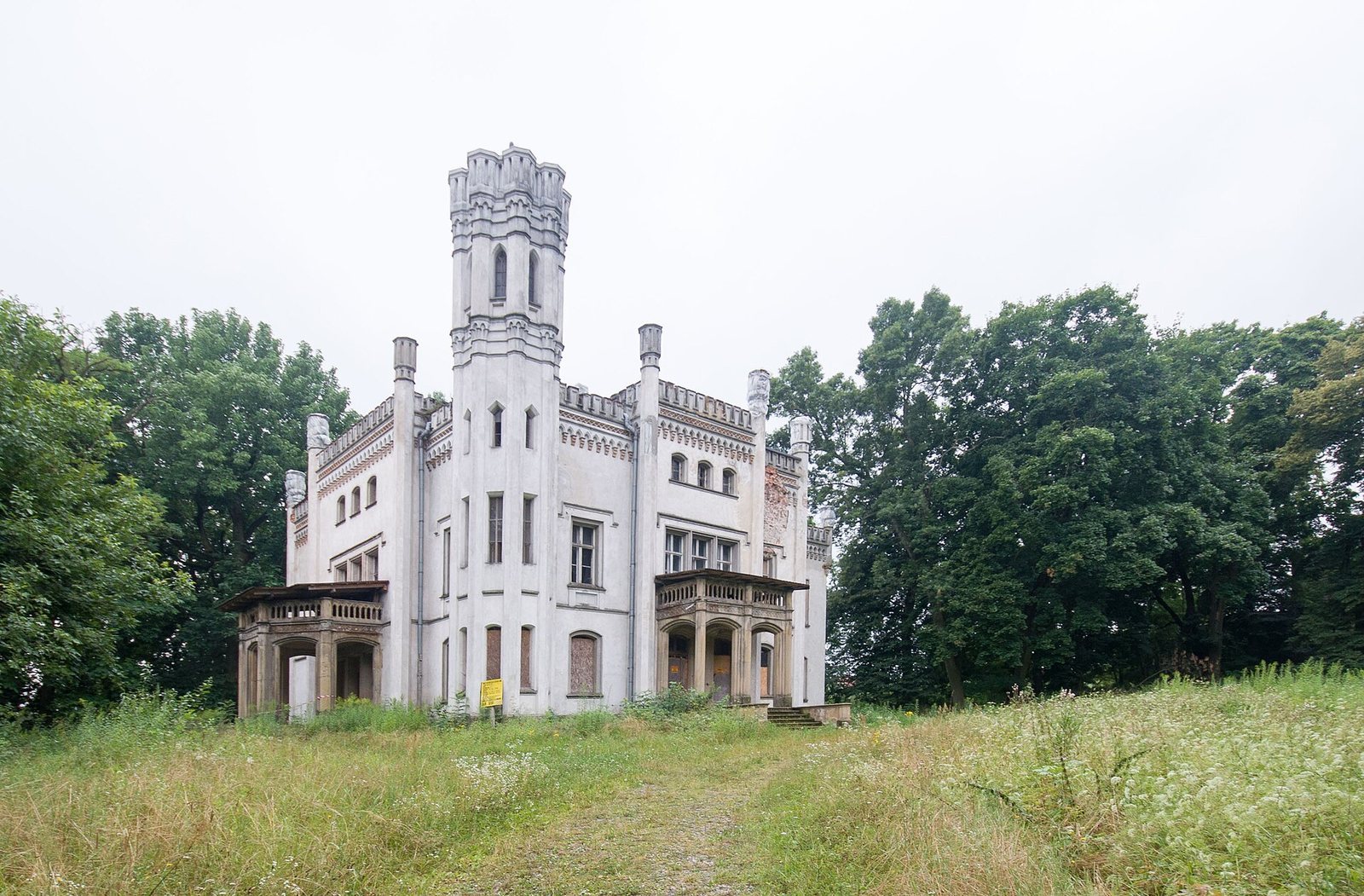
The Palace in Piekary is a nineteenth-century palace-and-park complex near Kraków, Poland, built in the Italian Neo-Gothic style with Neo-Renaissance elements. These revival styles draw respectively on medieval Gothic and Renaissance architecture. Alfred Milieski, a Polish jurist and politician, commissioned the palace in 1857, and construction was completed in 1865.
Milieski ownership and construction
A manor belonging to the Żeleński family stood on the site before the palace. Alfred inherited the estate from his mother, Antonina of the Żeleński family, and commissioned the new building. The estate remained with the Milieski family until 1934. Alfred’s son Witold owned it from 1908, then sold it to the Braun family in 1934 after extensive debts arose from his sons’ extravagant lifestyle.
Occupation and state use
From 1939 to 1945, the palace served as a seat of the German occupation authorities. After the war, the Braun estate was nationalized under the 1944 agrarian reform, and the palace remained state property until 1995. A herbal technical school used the building from 1945 to 1953; it later served as a hospital. The Dr Józef Babiński Specialist Hospital took it over in 1957 and owned it until 1993. The palace complex was entered in the Małopolskie Voivodeship register of immovable monuments on 29 November 1981.
Private sale and ownership dispute
In 1995, the Liszki commune sold the palace to private buyers. The Braun heirs challenged the sale and sought the property’s return, and the legal case in Kraków remains unresolved. The palace is listed as privately owned.
Remains
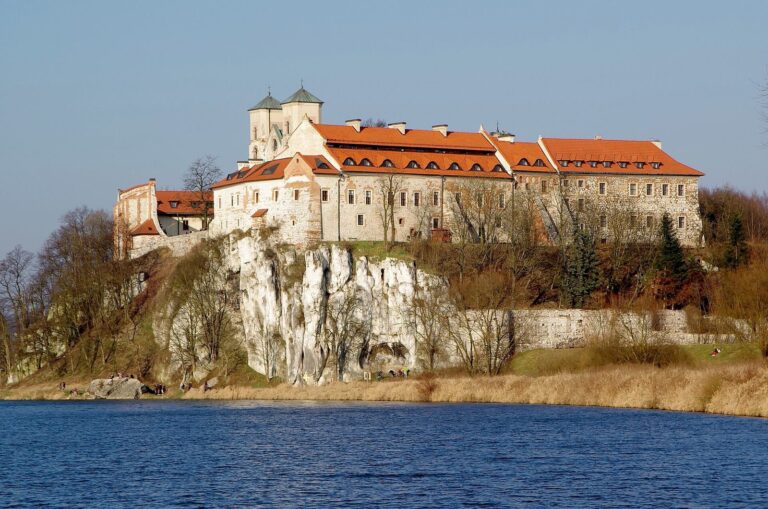
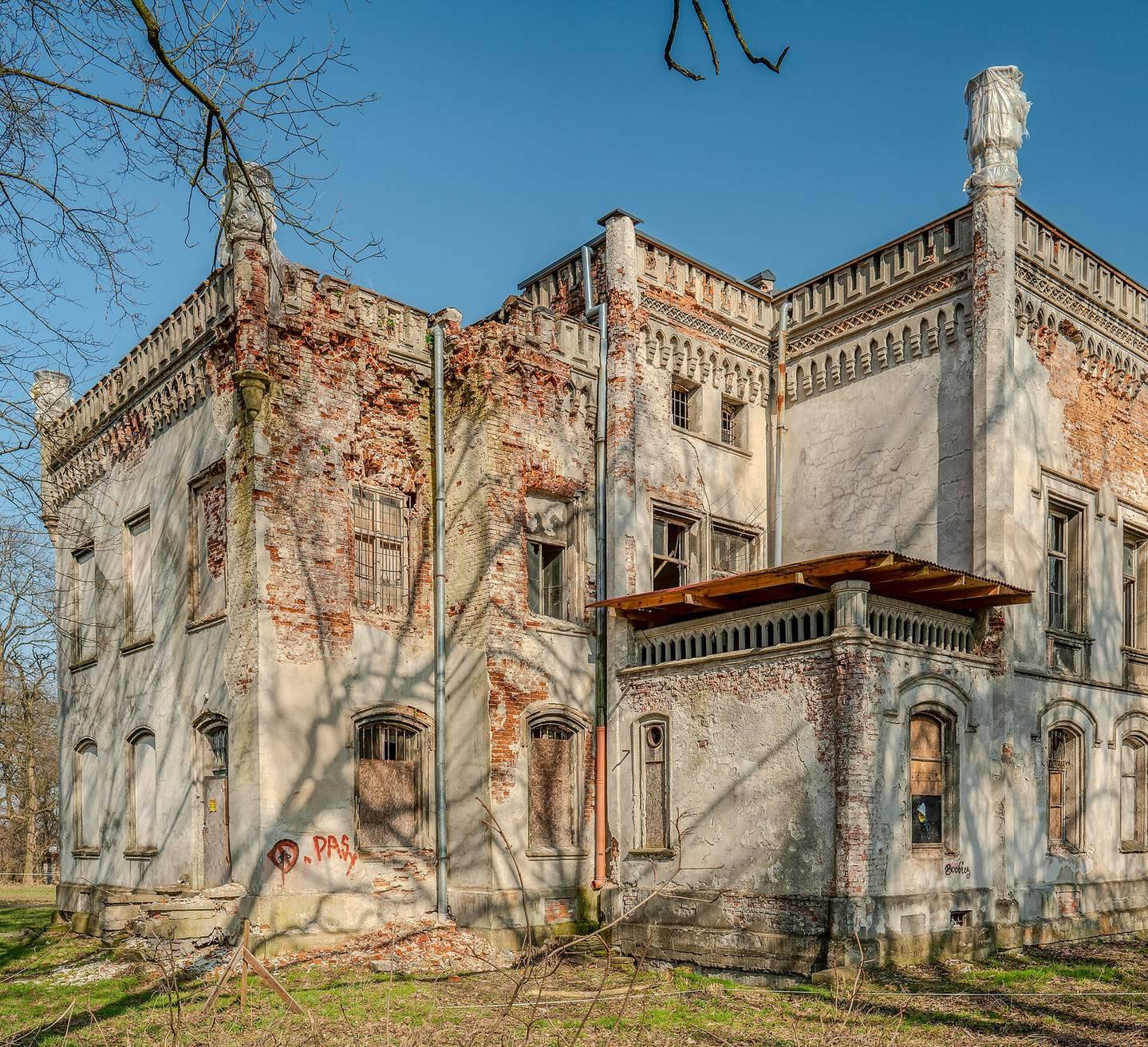
The palace-and-park complex lies in the Kraków-Częstochowa Jura, across the Vistula from Tyniec Abbey, a Benedictine monastery near Kraków. Its Italian Neo-Gothic palace has Neo-Renaissance elements, and the wider grounds include manor buildings, remnants of a granary and an orangery, and a park.
Palace and viewing tower
The palace has several small turrets and an octagonal viewing tower that can be reached from every floor. The first owners used the tower to keep valuable possessions.
Estate buildings and park
The complex also contains manor buildings, remnants of a granary and an orangery, and a park.