Żelechów Palace: A Classicist Residence in Poland


Site at a Glance
- Rating
- 4.1
- Popularity
- Low
- Country
- Poland
- Primary era
- Early Modern
- External website
- Open
- Eras represented
- Early Modern
- Civilizations
- Polish–Lithuanian Commonwealth
- Site type
- Domestic
- Remains
- Elite Residence
On this page10 sections
History
Construction and Early Ownership
Żelechów Palace is an eighteenth-century Classicist residence in Żelechów, Poland, built between 1762 and 1794. Classicism drew on the forms and proportions of ancient Greece and Rome, emphasizing symmetry, order, and restrained decoration. Construction began in 1762 with funds provided by Jerzy Lubomirski. After his death, his widow, Joanna Lubomirska, became the first owner. In 1772, she exchanged the Żelechów estate for land in Podolia.
Fabian Sebastian Roman acquired the estate in 1772 but left the palace unfinished, partly because of his extravagant lifestyle. Ignacy Wyssogota Zakrzewski took possession in 1792 and completed the building two years later. Zakrzewski was a Polish statesman who later served as mayor of Warsaw in the late eighteenth century.
The Ordęga Estate
During the first quarter of the nineteenth century, the palace briefly belonged to the Dangl family. Jan Ordęga then became its owner, remodeled the residence in 1838, and established an English-style landscape park. This kind of park used informal scenery, winding plantings, lawns, water, and picturesque views instead of rigid geometric beds. The Ordęga family substantially furnished and decorated the palace and retained the estate until the Second World War. During the interwar period, the Szustr family lived there.
The palace was also the setting for the wedding of Romuald Traugutt and Anna Pikiel. Traugutt was a Polish military officer and the final leader of the January Uprising of 1863–1864, while Anna Pikiel was his wife.
War, Nationalization, and Restoration
After Soviet troops entered Żelechów, the palace was vandalized and looted. The building and the entire estate were subsequently nationalized. During the Polish People’s Republic and the 1990s, the palace served first as a school and later as a boarding facility, with physical-education classes also held inside. It stood abandoned for several years before returning to private ownership in 2006, when comprehensive renovation and restoration began.
In 2013, the restored palace opened as the Żelechów Palace hotel and conference-and-leisure center. The palace and park were entered on Poland’s register of historic monuments in 1960. The listing bears registration number 266 and is dated 25 September 1960 and 10 January 1998. A memorial plaque honoring Ignacy Wyssogota Zakrzewski was installed in the palace for the 700th anniversary of Warsaw by the Polish Tourist and Sightseeing Society’s Motor Touring Club in Warsaw. The plaque was stolen in 2006.
Remains
Palace Building
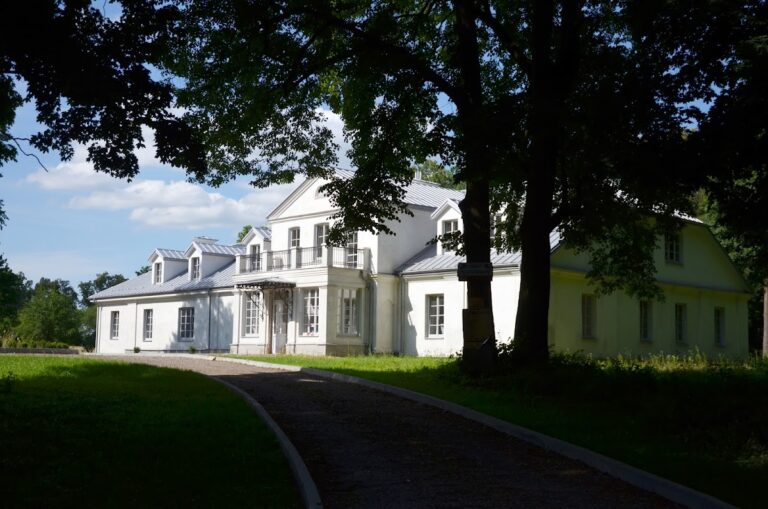
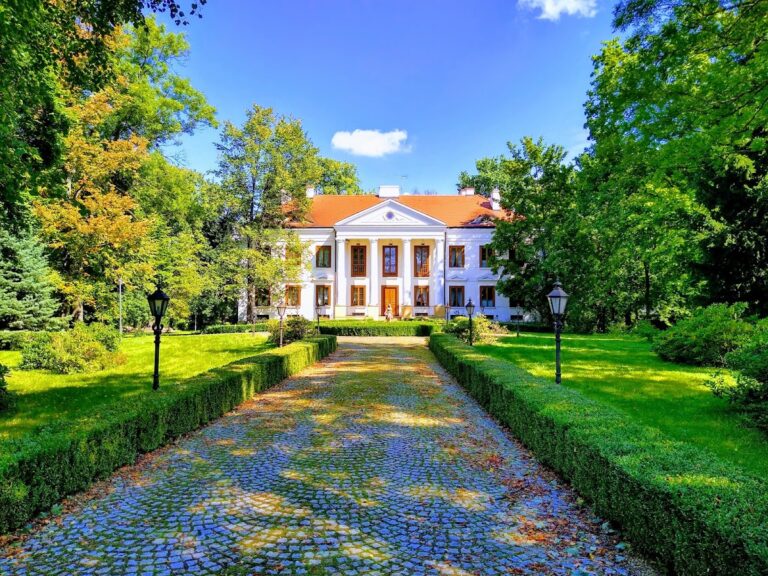
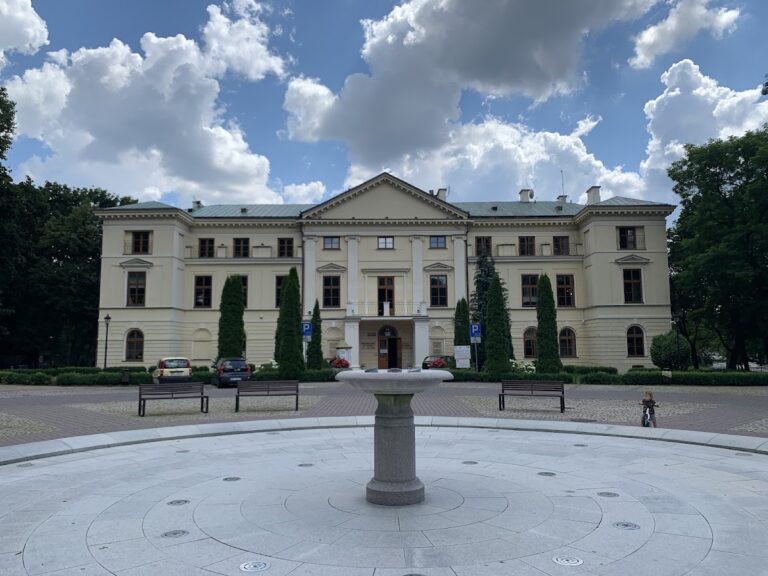
The two-storey palace is a late-eighteenth-century Classicist building set within a landscaped park. Its main entrance opens into a vestibule linking the principal parts of the residence. The staircase lies immediately beyond it, the salon farther inside, and the ballroom at the rear of the left wing. The height of the rooms allowed the right wing to contain two levels of service spaces, including servants’ rooms and a kitchen. On the upper floor, two large rooms are separated by a corridor, with two attics also present. The interior was stripped during the Second World War, but several tiled stoves and parts of the decoration, including sphinx motifs, survive.
Outbuilding
An outbuilding stands immediately beside the palace, parallel to its main axis. It was erected in the second half of the eighteenth century and remodeled during the first half of the nineteenth century.
Park Landscape
Ponds and Former Orchard
The palace complex occupies a 7.8-hectare park containing several protected natural monuments. Two ponds lie north of the residence at different water levels. One pond has an island that was originally linked to the rest of the park by a footbridge. The former estate also included an orchard on land now occupied by a sports field, workshops, and residential houses.
Avenue and Farm Buildings
Beyond the park, a hornbeam-lined avenue once continued into the fields. Soviet troops destroyed it while establishing an airfield. Farm buildings formerly surrounded the park, and during the Polish People’s Republic they belonged to the Żelechów State Agricultural Farm.