Palace of the Pomeranian Estates Assembly: A Prussian Government Building in Szczecin
Site at a Glance
- Popularity
- Medium
- Country
- Poland
- Primary era
- Early Modern
- Eras represented
- Early Modern, Modern
- Civilizations
- German, Kingdom of Prussia
- Site type
- Civic
- Remains
- Palace
On this page8 sections
History
The Palace of the Pomeranian Estates Assembly is an eighteenth-century government palace in Szczecin, Poland, commissioned by Frederick William I of Prussia and built from 1726 to 1729 in a northern Baroque style with classical elements. It was the seat of the Pomeranian Estates Assembly, a representative body of legally recognized social groups such as the nobility and towns. The assembly governed the Province of Pomerania, a historical Prussian province on the southern Baltic coast. The palace also served as a royal residence when the Prussian monarch visited Szczecin.
Assembly and provincial government
In 1823, the Estates Assembly gave way to the Province of Pomerania’s Provincial Assembly, which continued to meet in the palace until 1927. The building was enlarged in the late nineteenth century. In 1926–1927 it was restored and adapted for museum use. The Provincial Assembly moved in 1927 to new premises, in the building now used as Szczecin City Hall. From 1928 to 1945, the palace housed the Pomeranian State Museum.
Museum use
After the Second World War, the palace became one of two buildings used by the Szczecin Municipal Museum. The institution took the name Museum of Western Pomerania in 1947 and became the National Museum in Szczecin in 1970. The palace continues to house museum administration and exhibitions. Its permanent displays include art made for the Pomeranian dukes’ court in the sixteenth and seventeenth centuries, Pomeranian works from the thirteenth to seventeenth centuries, silver and ceramic applied arts, and European paintings from the sixteenth to early twentieth centuries. The painting displays occupy three rooms and include German, Dutch, Italian, and Pomeranian artists.
Remains
Exterior and layout
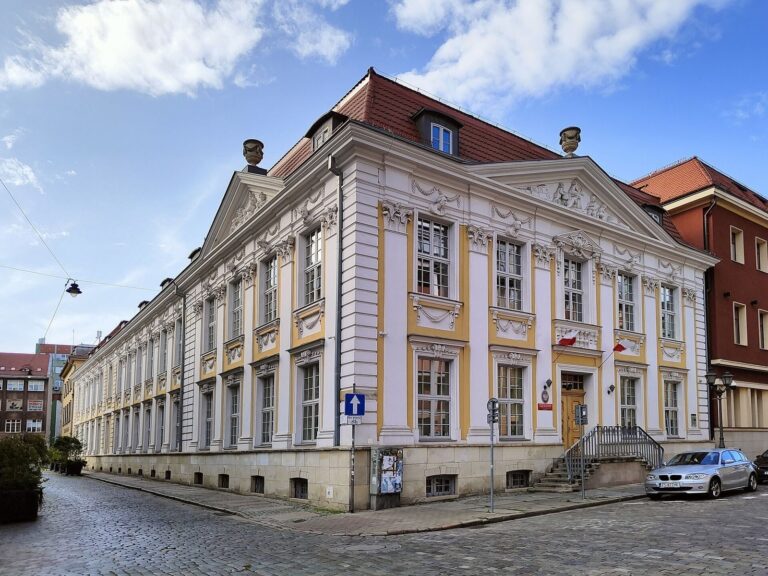
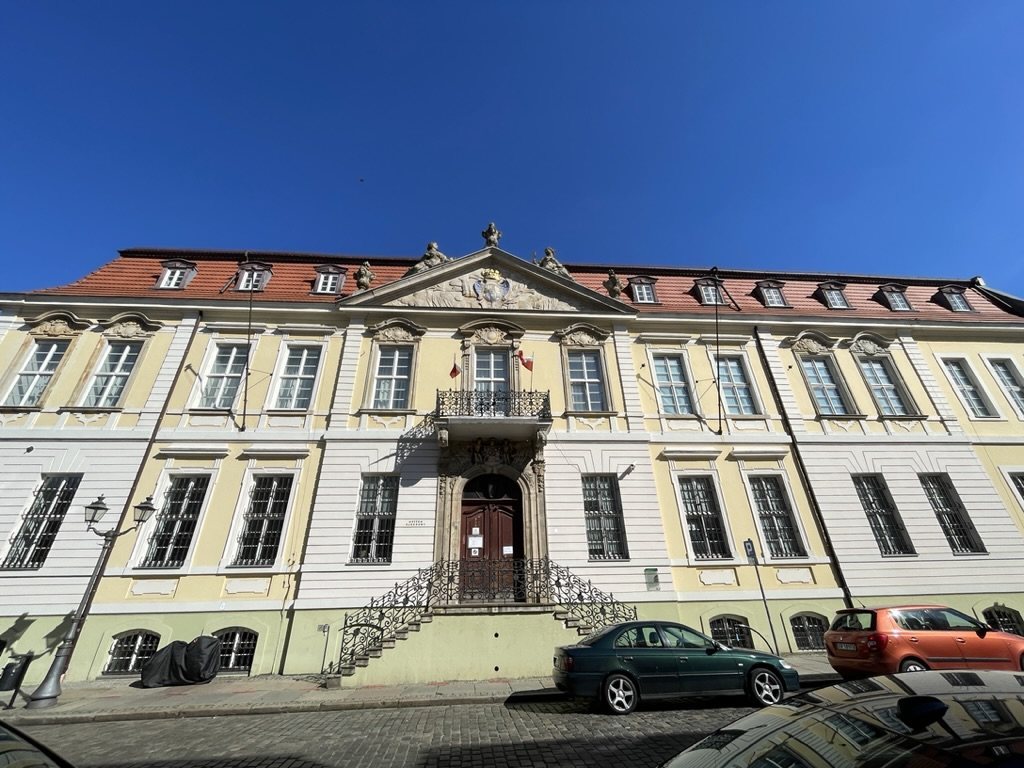
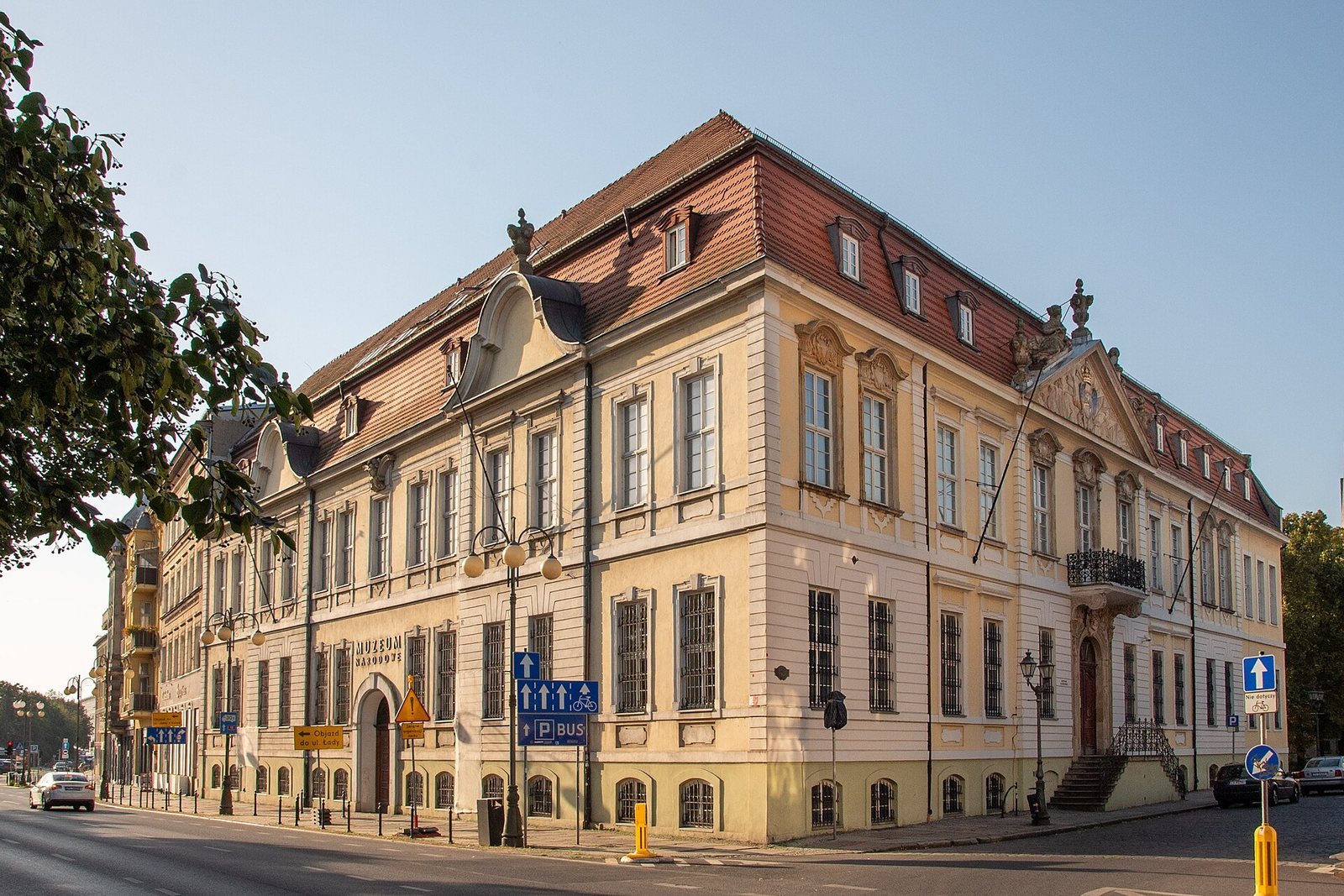
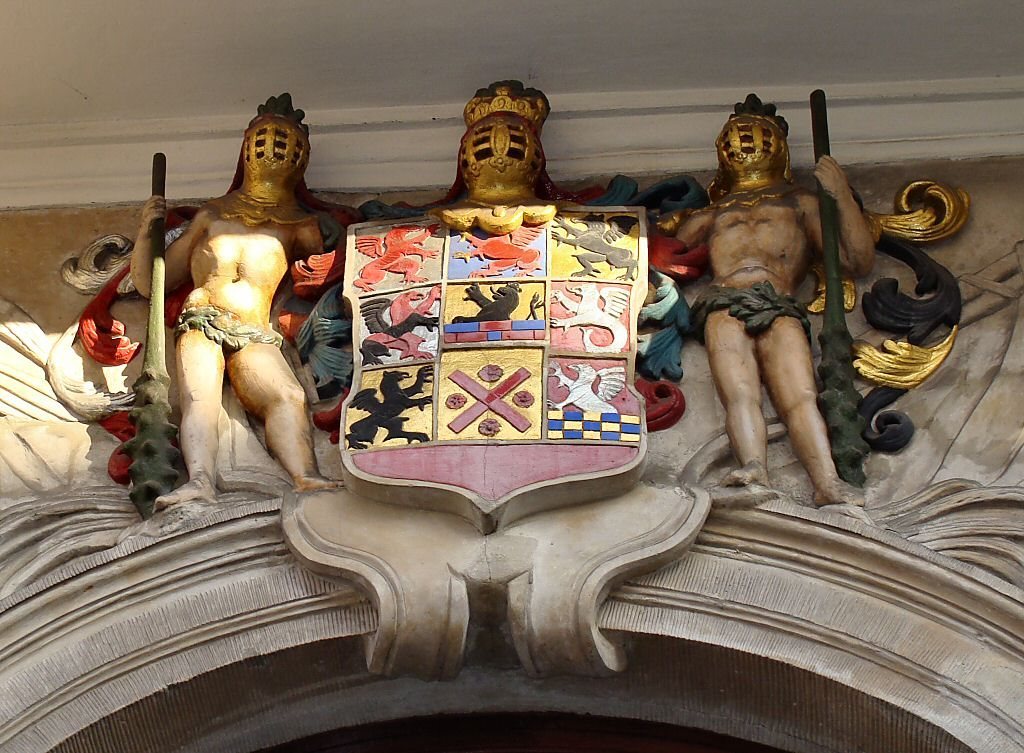
The four-storey palace has a mansard roof, with a steep lower slope and a shallower upper slope on each side. Its northern Baroque design incorporates classical features. Raised masonry blocks with recessed joints frame a facade with ornamented window surrounds and a prominent balcony above the main entrance. Railings edge the balcony and the exterior stairs. The central field of the upper pediment displays the Prussian coat of arms against a decorative arrangement of weapons and armor. Two reclining figures represent Prudence, holding a mirror and snake, and Justice, with scales and a sword; three vase sculptures bearing human faces accompany them. Below, a nine-part Pomeranian coat of arms appears above the entrance. Their placement expressed Pomerania’s subordination to the Prussian king. The 1885–1888 enlargement added a wing and extended the existing wing along Staromłyńska Street.
Interior and sculpture
Assembly chamber
The former assembly chamber was converted into an exhibition hall when the palace was adapted for museum use.
Statue of Frederick the Great
A marble statue by German sculptor Johann Gottfried Schadow depicts Frederick the Great as king of Prussia and Elector of Brandenburg. Unveiled on 10 October 1793, it first stood in front of the palace on the nearby square then known as White Parade Square. Atmospheric exposure damaged the statue, leading to its relocation indoors in 1877. It was removed in 1942 and returned to the palace in 2015.