Ōzato Castle: A Nanzan Stronghold and Royal Residence
Site at a Glance
- Popularity
- Medium
- Country
- Japan
- Primary era
- Medieval
- Eras represented
- Medieval, Modern
- Civilizations
- Unclassified
- Site type
- Military
- Remains
- Castle
On this page10 sections
History
Ōzato Castle is a ruined Ryukyuan castle on Okinawa Island, Japan, built in the early 14th century, although its precise construction year is unknown. Its construction is attributed to Ōzato Ofusato, a local aji, or lord in the Ryukyuan political order. The castle served as a secondary stronghold of Nanzan and later as a royal residence under the First Shō Dynasty.
Origins and Nanzan
In 1314, Ofusato broke away from the chieftain Tamagusuku, who was based at Urasoe Castle, and declared himself King of Nanzan. During the Sanzan period, when Okinawa was divided among three kingdoms, including Nanzan, Ōzato Castle served as a secondary castle of that kingdom. Shō Hashi, based at Sashiki Castle, captured it in 1402, bringing it under the influence of the First Shō Dynasty, the ruling house he founded.
Royal residence and later use
After Nanzan Castle was captured in 1429, Ōzato Castle no longer served as Nanzan’s secondary stronghold. Under the Shō dynasty it also functioned as a detached palace, a royal residence separate from the main seat of government, until at least the mid-15th century. At the time, it was considered comparable to Shuri Castle, the Ryukyu Kingdom’s royal castle.
By 1683 the castle had been abandoned. That year, a Qing-dynasty investiture envoy, sent to formally recognize a ruler’s title, visited the site.
War, salvage, and archaeology
During the Battle of Okinawa in 1945, a military camp occupied the castle grounds, and its walls were taken for building material. U.S. military attacks also caused serious damage. After the war, further stone and other material was salvaged for reconstruction, leaving much of the site’s former fabric lost.
Archaeological excavations began in 1990. Finds from the site indicate extensive trade between Nanzan and Ming China, ruled by the Ming dynasty. Japan designated Ōzato Castle a National Historic Site in 2012.
Remains
Site layout and surviving features
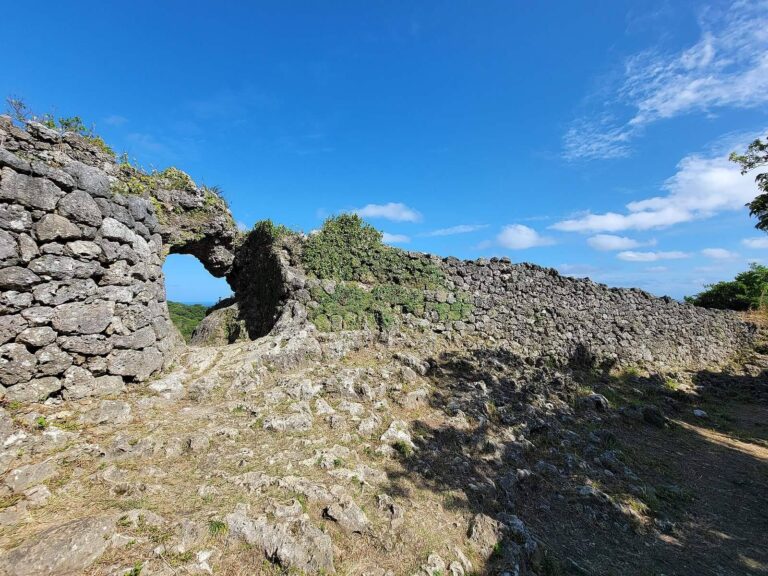
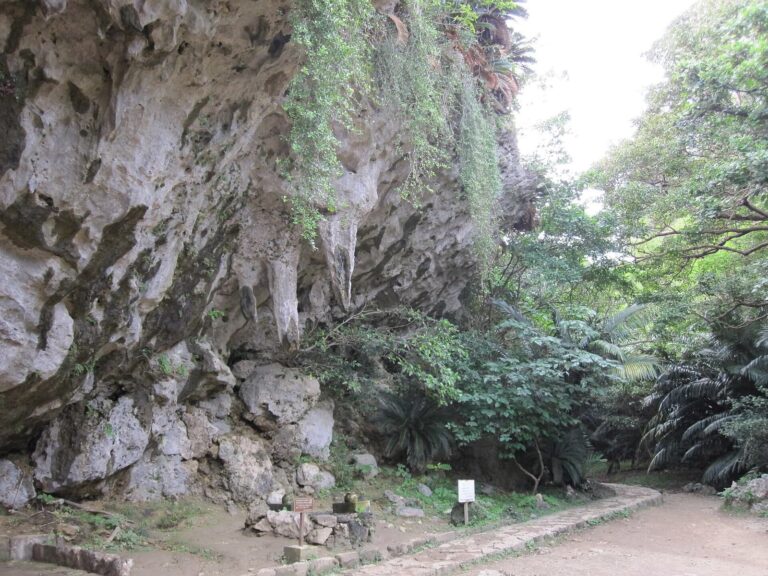
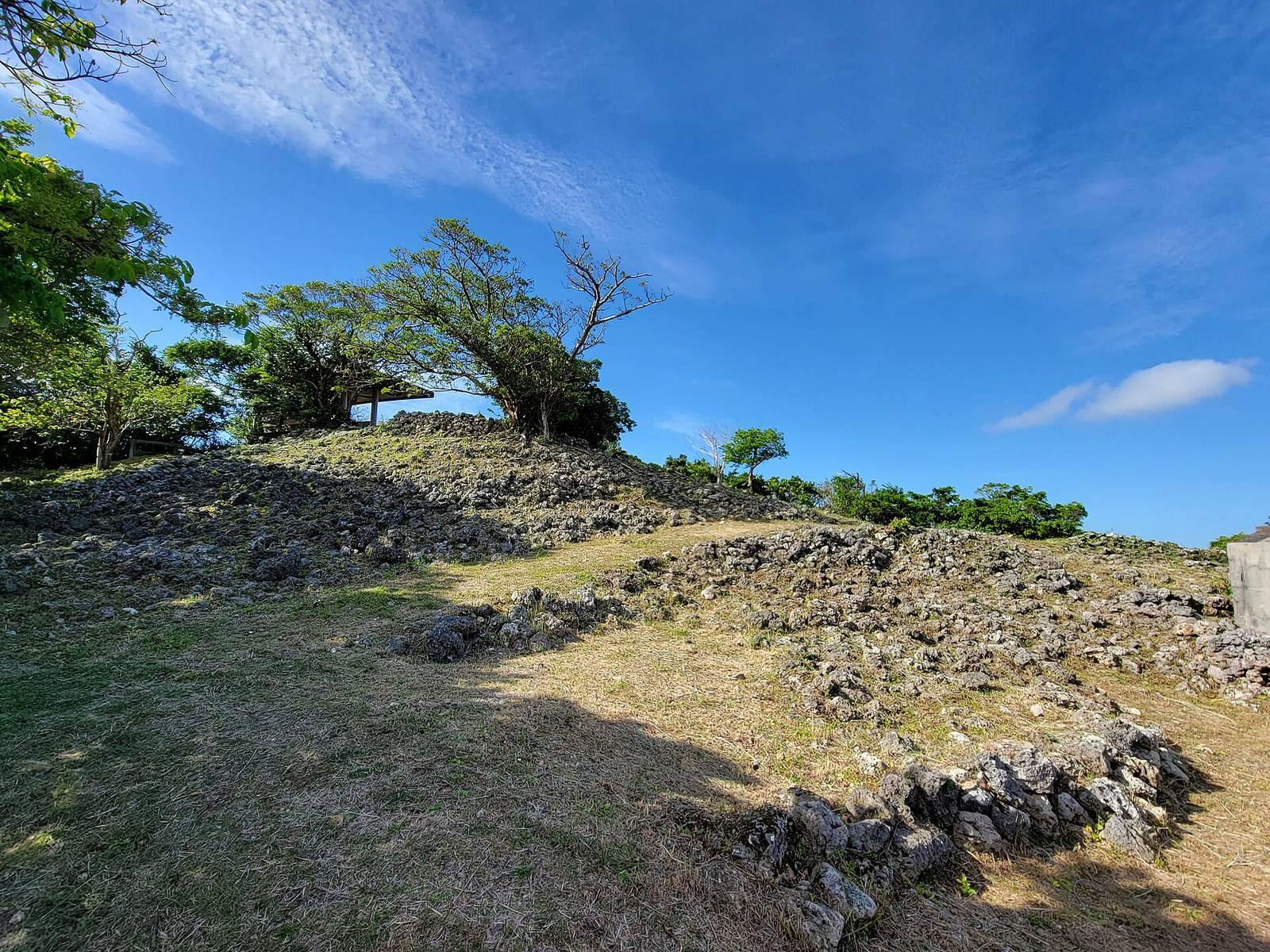
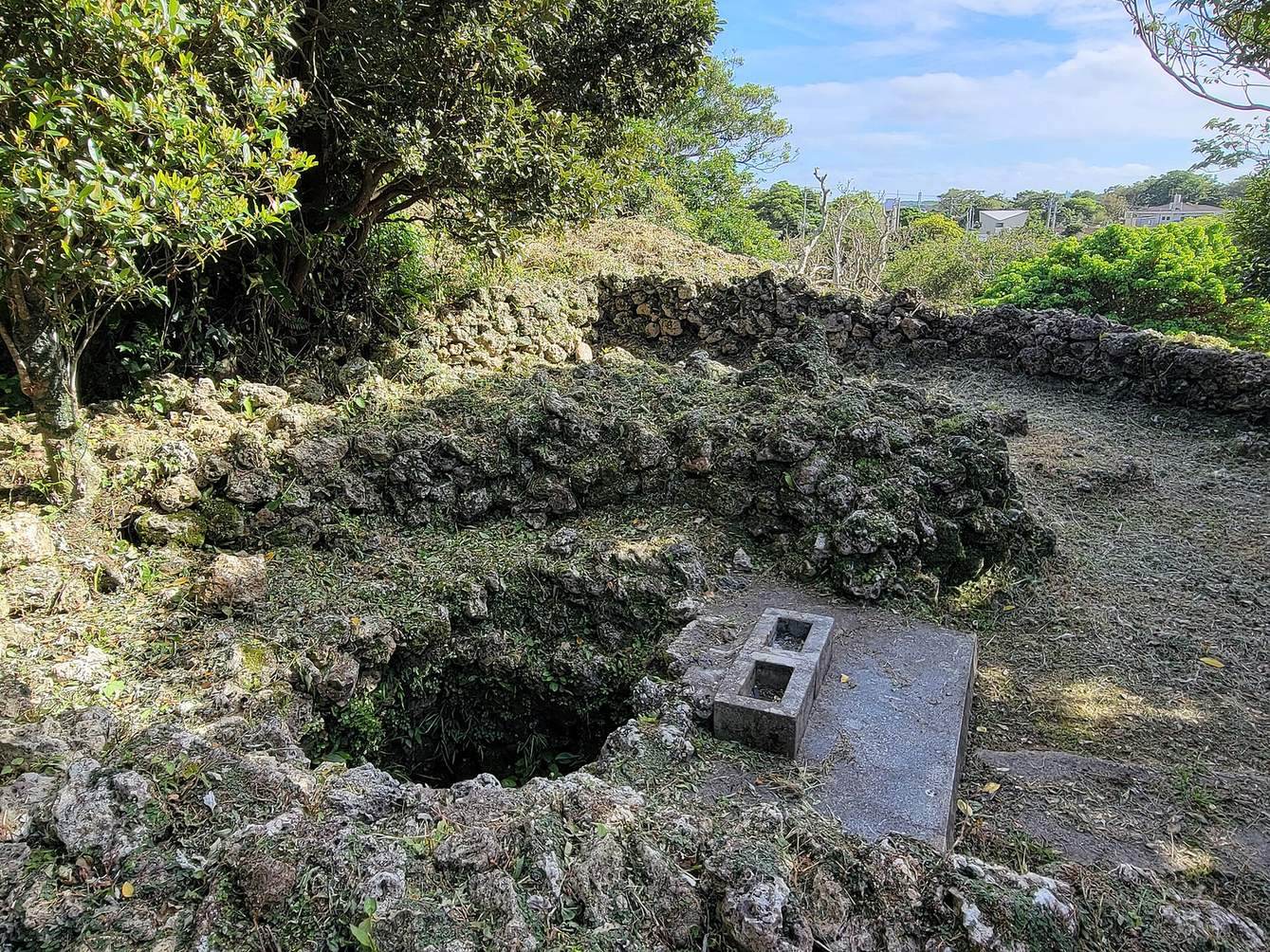
The ruins occupy the eastern end of a tongue-shaped Ryukyuan limestone hill, about 150 metres above sea level near the southern end of Okinawa Island’s east coast. Steep cliffs border the northern and western sides. The castle extended about 210 metres from north to south and 270 metres from east to west. Its construction materials included Ryukyuan limestone and wood.
Enclosing walls
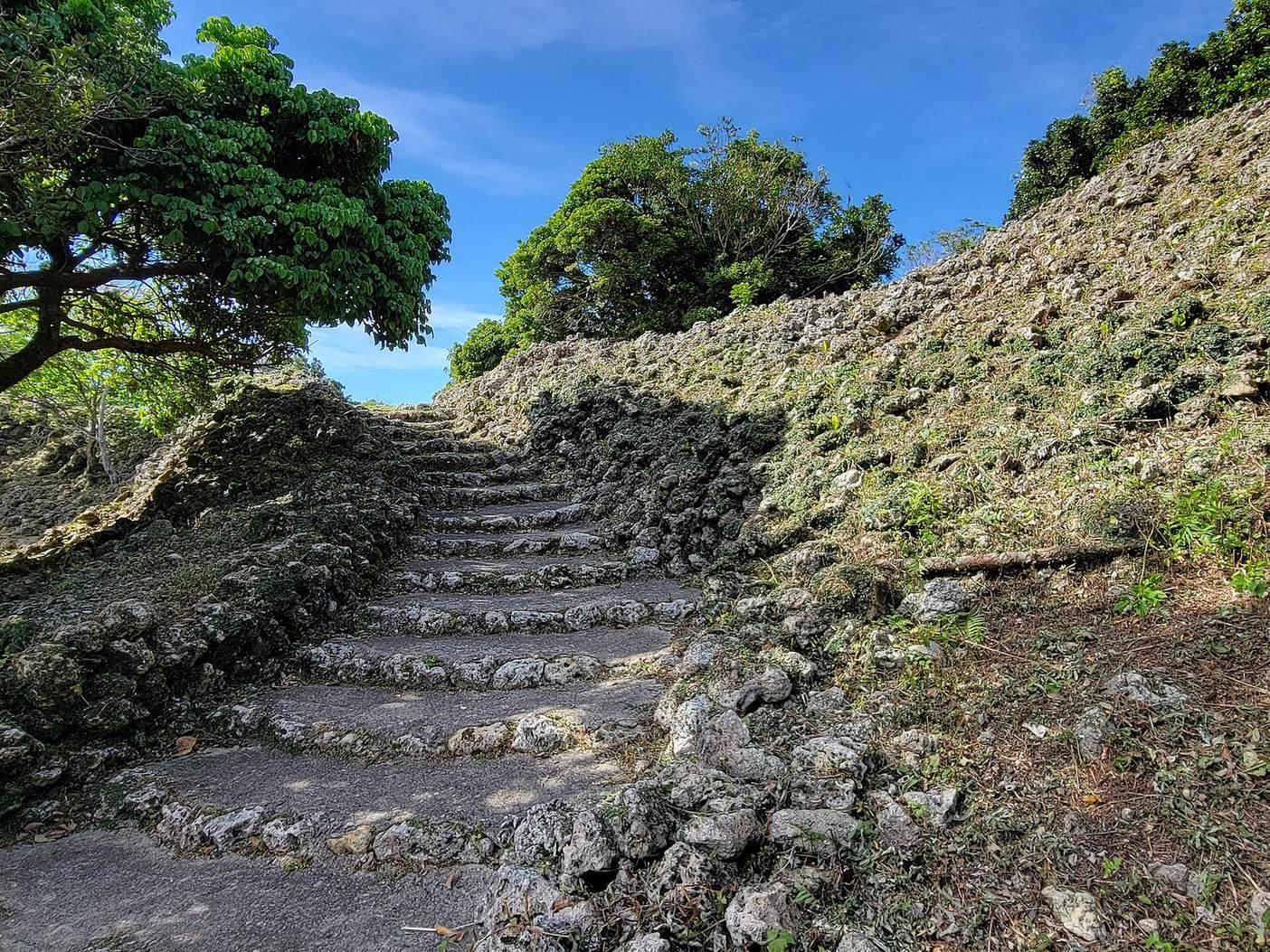
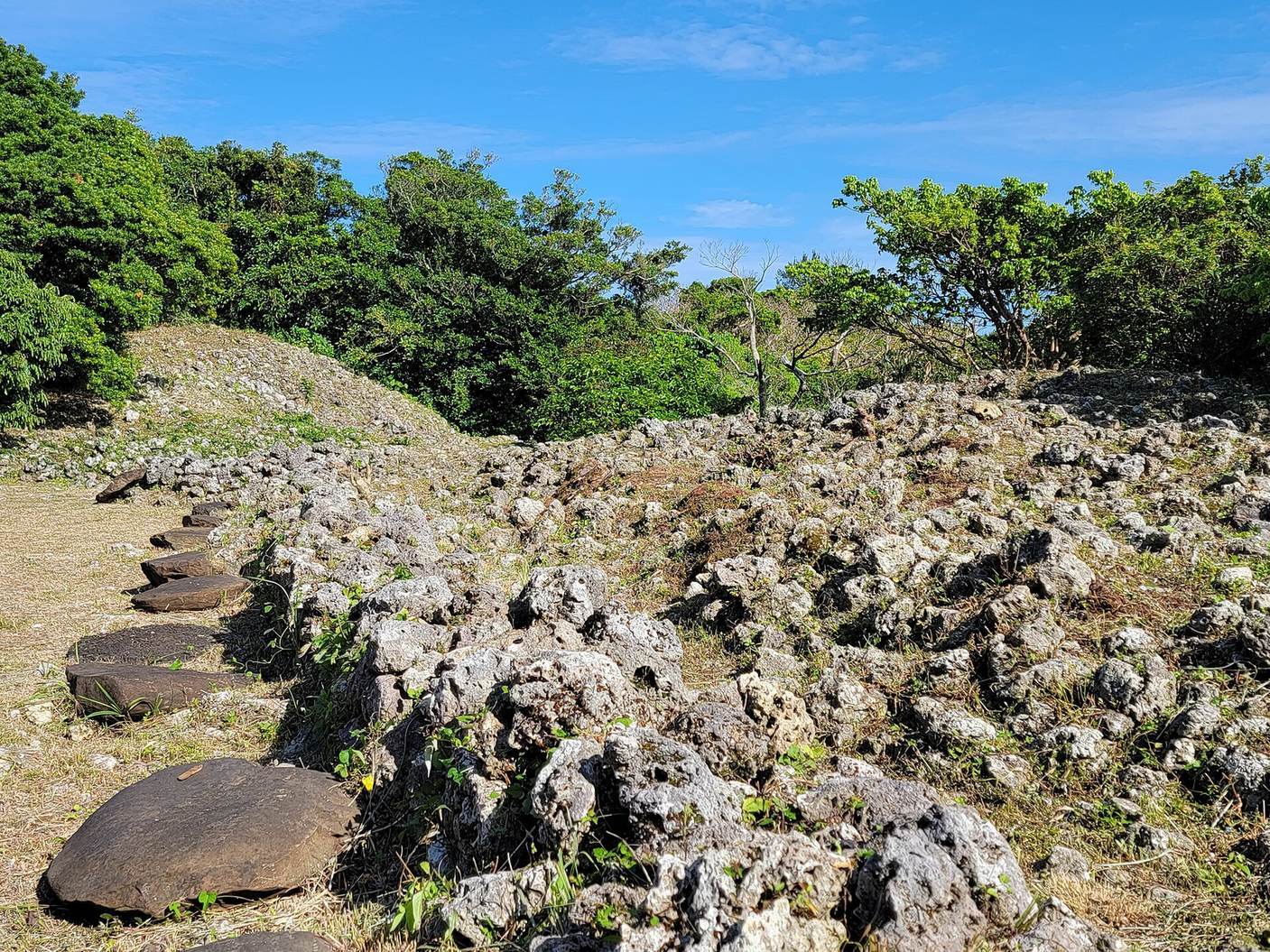
Double walls enclosed the castle. The inner wall was about six metres high and 175 metres long. Stonework from the outer wall remains west and northeast of the ruins.
Main hall
Remains of the main hall and its foundation stone have been confirmed. Both form part of the site’s surviving ruins.
Park additions
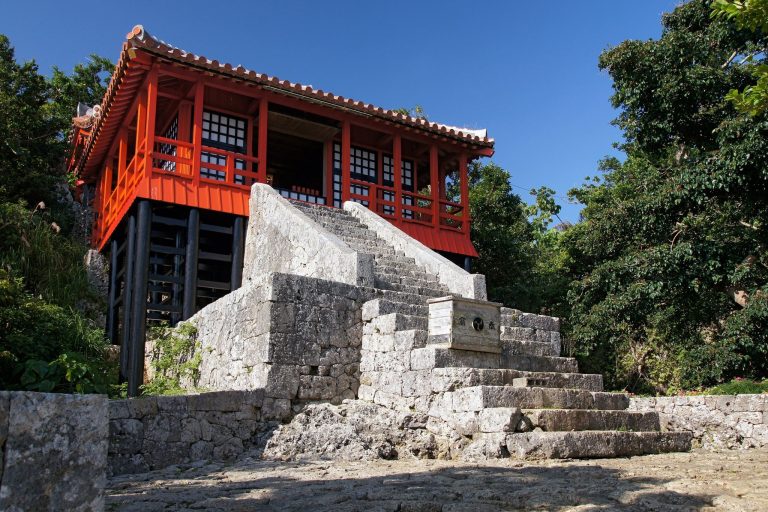
A 1961 park project added an observation deck and concrete roads, using materials donated by the U.S. military.
Excavated finds
Excavations have recovered Chinese ceramics, metal objects, and ornaments.