Our Lady of Kazan Orthodox Church in Wojsławice: A Baroque Uniate and Orthodox Heritage Site


Site at a Glance
- Rating
- 4.5
- Popularity
- Very Low
- Country
- Poland
- Primary era
- Early Modern
- Eras represented
- Early Modern, Modern
- Civilizations
- Polish–Lithuanian Commonwealth, Russian
- Site type
- Religious
- Remains
- Church
On this page10 sections
History
Our Lady of Kazan Orthodox Church in Wojsławice, Poland, is a Baroque church built between 1771 and 1774 as a Uniate church. Its history extends a much older Orthodox tradition in the town and reflects the transformation of religious institutions in the Chełm region.
Early Orthodox foundations
Orthodox churches existed in Wojsławice from the town’s foundation in the fifteenth century. The founding charter of about 1440 mentions a wooden church dedicated to Saint Elijah, the biblical prophet honored as a saint in Eastern Christianity. It was probably destroyed during a Tatar raid. A second church with the same dedication had been built before 1508.
By the sixteenth century, Wojsławice had three Orthodox churches serving about 2,600 people. An Orthodox monastery reportedly stood alongside the Church of Saint Elijah, indicating that the town was an established center of Eastern Christian religious life before the construction of the present building.
Construction as a Uniate church
The present church was founded by Marianna of the Daniłowicz family, an eighteenth-century patron who financed its construction. It was built between 1771 and 1774 as a Uniate church. A Uniate church followed Eastern Christian liturgical traditions while remaining in communion with the Roman Catholic Church.
The church remained the seat of a Uniate parish until the liquidation of the Uniate Chełm Eparchy. In 1874, one year before the formal liquidation, the Wojsławice parish was incorporated into the Chełm Vicariate of the Orthodox Eparchy of Chełm and Warsaw. This change placed the parish within the Orthodox ecclesiastical structure.
Orthodox parish and twentieth-century decline
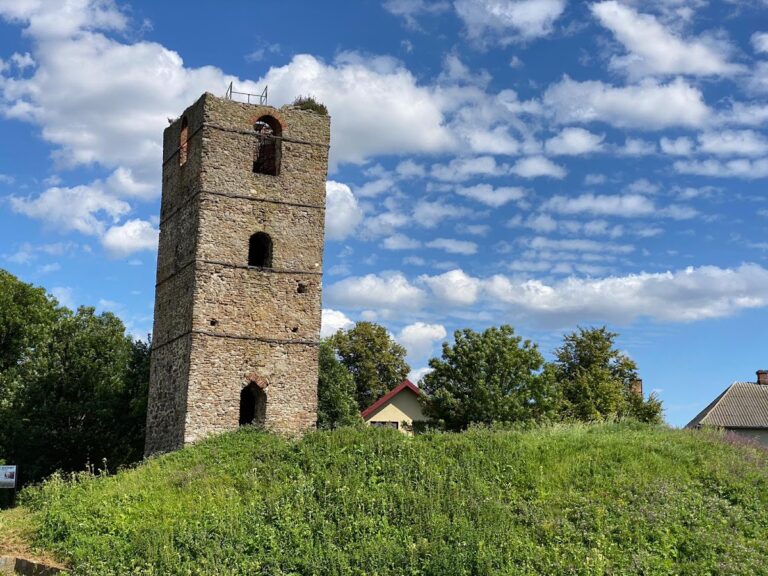
A cycle of interior frescoes by Michał Olechwier was completed in 1880, and the church was renovated during the following decade. A brick bell tower was built beside the church before the First World War.
After Poland regained independence, the church was legally recognized as an active Orthodox parish. In 1919, the Ministry of Religious Affairs and Public Education included it among the churches designated for reopening. By the middle of 1921, an Orthodox parish was operating there as one of 14 pastoral centers in the Chełm Deanery of the Diocese of Warsaw and Chełm, and as one of 13 Orthodox churches in Chełm County.
The parish functioned until the 1940s, when the local Ukrainian Orthodox population was deported. The church then lost its religious function, and an Orthodox priest removed its furnishings from Wojsławice. The building was first used to store chemicals and later fuel and lubricants. The surrounding fence and the Orthodox cemetery were destroyed, while the lower level of the bell tower became first a shop and later a waiting room for the state bus service before the tower was abandoned.
Restoration and renewed religious use
From the 1960s, the church served as museum storage, but its condition continued to deteriorate. Local authorities sought during the 1980s to restore it for religious use by 1990. Restoration began in the 1990s, although the work was interrupted by a lack of funds and carried out ineffectively. The frescoes by Olechwier were destroyed, and plaster was removed from the walls.
During the 1990s, the church became associated with the dedication to Our Lady of Kazan. This dedication had formerly belonged to a wooden Orthodox chapel on Grabowiecka Street, which was destroyed in 1938. A successful renovation followed in the early twenty-first century, undertaken on the initiative of the Orthodox Diocese of Lublin and Chełm.
The church is now an Orthodox filial church belonging to the Parish of Saint John the Theologian in Chełm. A filial church is served by another parish rather than functioning as an independent parish seat. It belongs to the Chełm Deanery of the Diocese of Lublin and Chełm of the Polish Orthodox Church, an autocephalous, or self-governing, Orthodox church. Although described as active, it opens for worship only occasionally because no Orthodox residents remain in Wojsławice.
In 2009, Great Vespers was held in the church for the first time since 1944 during the Three Cultures Festival organized by the Wojsławice Enthusiasts’ Association. Similar services have taken place during later editions of the annual festival. In 2012, the first Divine Liturgy in Wojsławice since the deportations was celebrated there. The church entered Poland’s register of historical monuments on 31 January 1970 under number A/478.
Remains
Building and plan
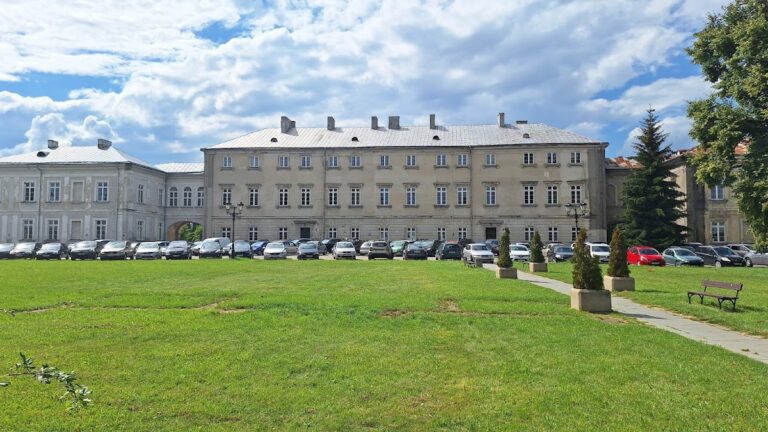
The church is a brick Baroque building with a single nave, a porch, a chancel ending in a polygonal form, and a sacristy. The chancel is the area surrounding the main altar or sanctuary. One church tower and one onion-shaped roof cupola rise above the building, whose roof is covered with sheet metal.
The porch was originally wooden, but it was rebuilt in brick in 1841. After that alteration, the entire church was a masonry structure. Inside, an elevated gallery, known as a matroneum, is supported by two brick pillars. Such a gallery was traditionally associated with women’s seating or a choir. On the exterior, Tuscan pilasters, simplified classical wall supports, articulate the walls beneath a profiled cornice.
Interior and decorative features
Iconostasis and furnishings
Before the church closed after the deportation of its parishioners, the interior contained a four-tiered iconostasis. An iconostasis is the screen separating the sanctuary from the nave in an Eastern Christian church. It normally carries icons and includes doors leading into the sanctuary. The structure was later removed, and no replacement has been installed.
Two icon cases once stood before the iconostasis. One held an image of Christ the Savior, while the other contained a copy of the Chełm Icon of the Mother of God. The only surviving piece of the original furnishings is a historic thurible, a vessel used to burn incense during worship. Individual icons formerly kept in the church are occasionally brought back when services are celebrated. During the fourth Three Cultures Festival in 2012, the church displayed a copy of Saint Nicholas from one of Wojsławice’s former Orthodox churches.
Frescoes and facade images
Michał Olechwier’s 1880 fresco cycle once formed part of the interior decoration. Chemical substances stored in the building damaged the paintings, and the frescoes were ultimately destroyed during unsuccessful restoration work in the 1990s. Plaster was also removed from the walls during those attempts, leaving the present interior without that historic painted cycle.
Before the Second World War, the facade carried images of Saint Nicholas, Saint Elijah, and the Mother of God. The image of the Mother of God followed a composition by Viktor Vasnetsov, a Russian painter known for religious and historical works, including the decoration of Saint Volodymyr’s Cathedral in Kyiv. The facade also bore the Church Slavonic inscriptions “Błagosłowien griadyj wo imia Gospodnie,” translated as “Blessed is he who comes in the name of the Lord,” and “Oswiati lubiaszczych błagolepije domu Twojego,” meaning “Sanctify those who love the splendor of Your house.”