Our Lady Help of Christians Church in Będargowo: A Gothic Parish Church
Site at a Glance
- Popularity
- Very Low
- Country
- Poland
- Primary era
- Medieval
- Eras represented
- Medieval, Modern
- Civilizations
- Danish, Duchy of Pomerania, German, Holy Roman Empire, Kingdom of Prussia
- Site type
- Religious
- Remains
- Church
On this page10 sections
History
Medieval foundation and parish
Our Lady Help of Christians Church in Będargowo is a church in Poland, built around 1220 in the Gothic style, a medieval architectural tradition. In 1657, the parish was transferred from nearby Warzymice and established at the church.
Remodelling and dedication
The church was remodelled in 1690, 1701, 1786, and 1863. The last of these campaigns substantially changed the building and removed its western tower.
On 1 May 1945, the church was consecrated as a Roman Catholic church and dedicated to Our Lady Help of Christians, a title for the Virgin Mary. A comprehensive renovation followed in 1998–1999.
Remains
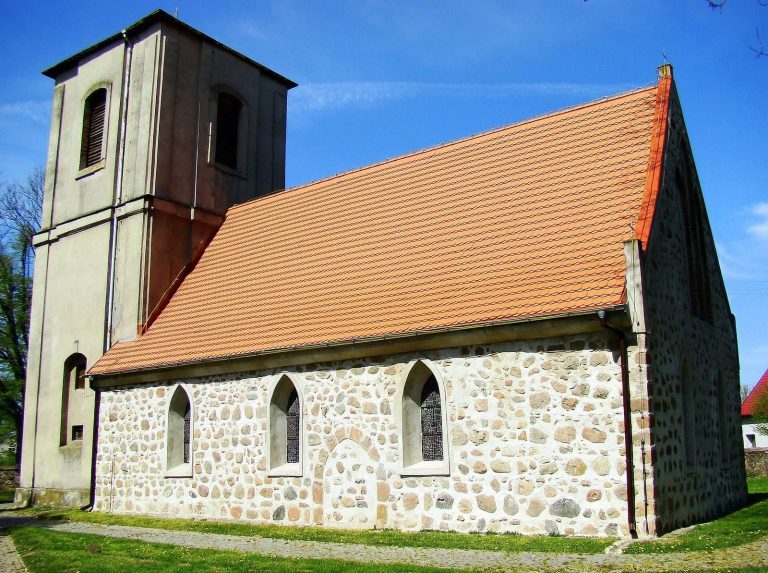
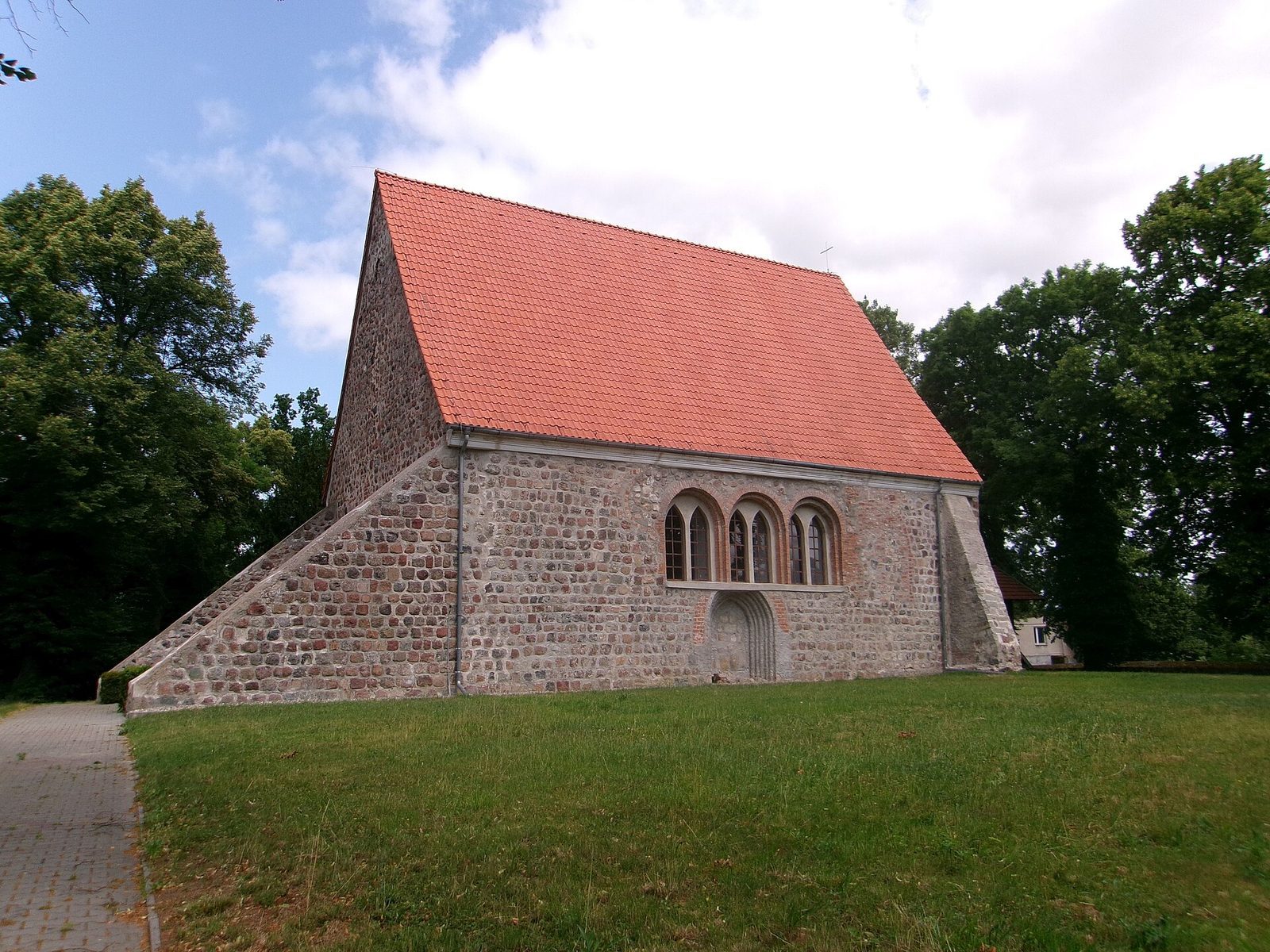
The church has a rectangular, single-nave plan and measures 18.5 by 11.5 metres. Its walls are built of granite.
Church exterior
Plan and entrances
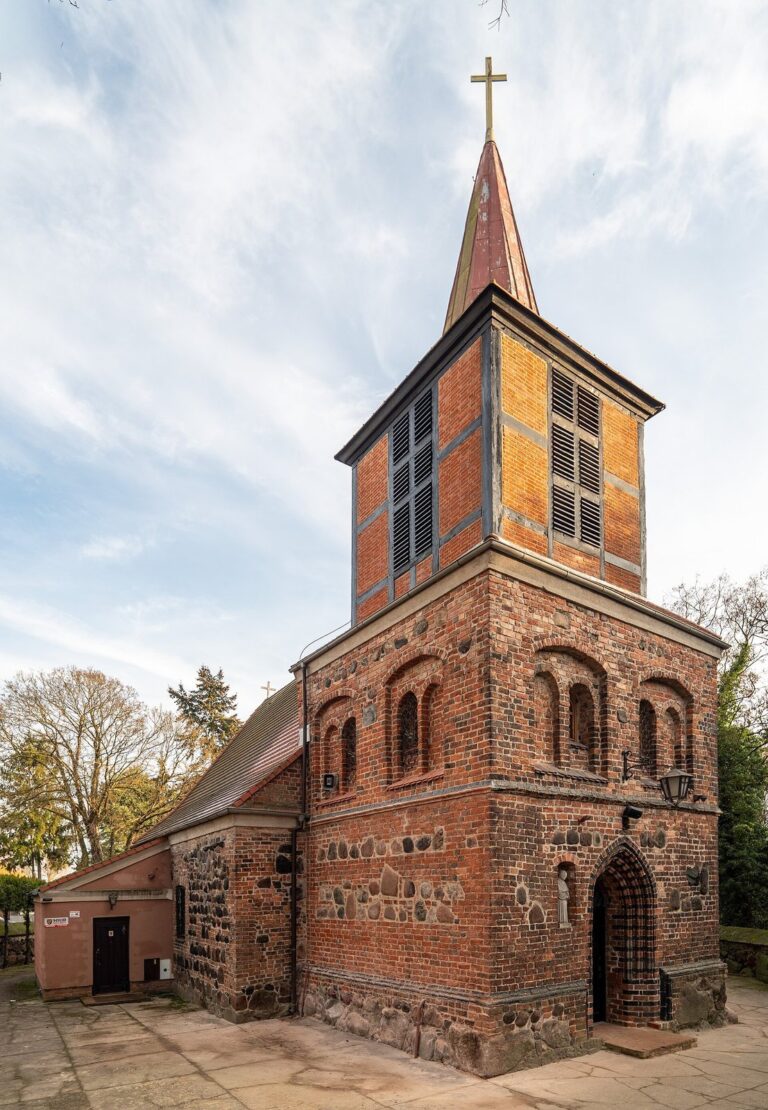
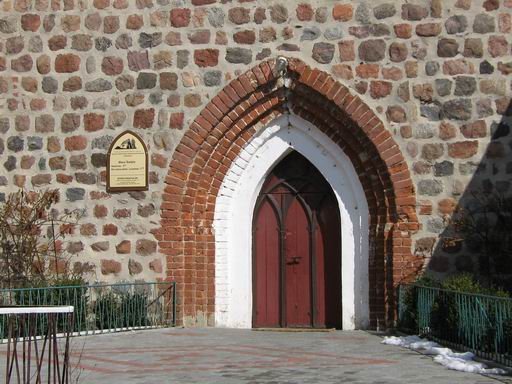
The western entrance has five stepped recesses and remains in use. On the south side, a pointed-arch entrance with three stepped recesses is now blocked.
Altered elevations and tower remains
Changes to the exterior obscured the original arrangement of the wall surfaces and introduced openings in the side walls. The south elevation retains parts of its entrance and traces of circular recessed panels that do not pass through the wall. Fragments of the former western tower’s side walls survive as massive buttresses, or projecting wall supports. A trace of a former sacristy, a side room serving the church, remains in the north elevation.
Interior and churchyard
Interior fittings
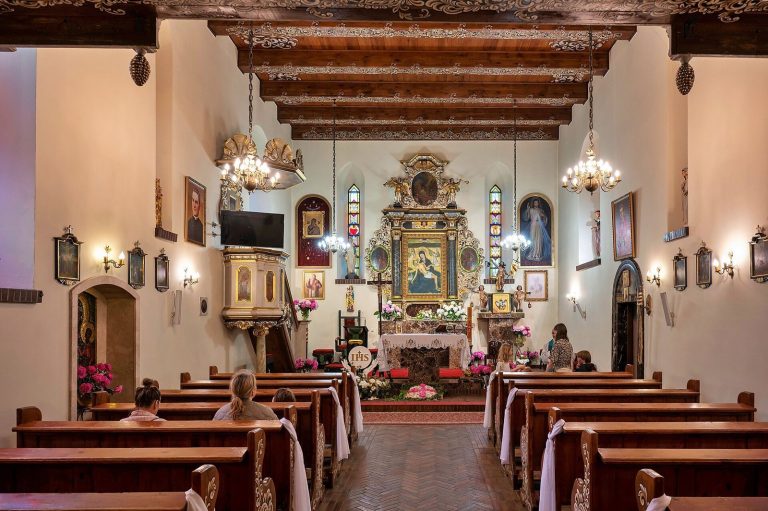
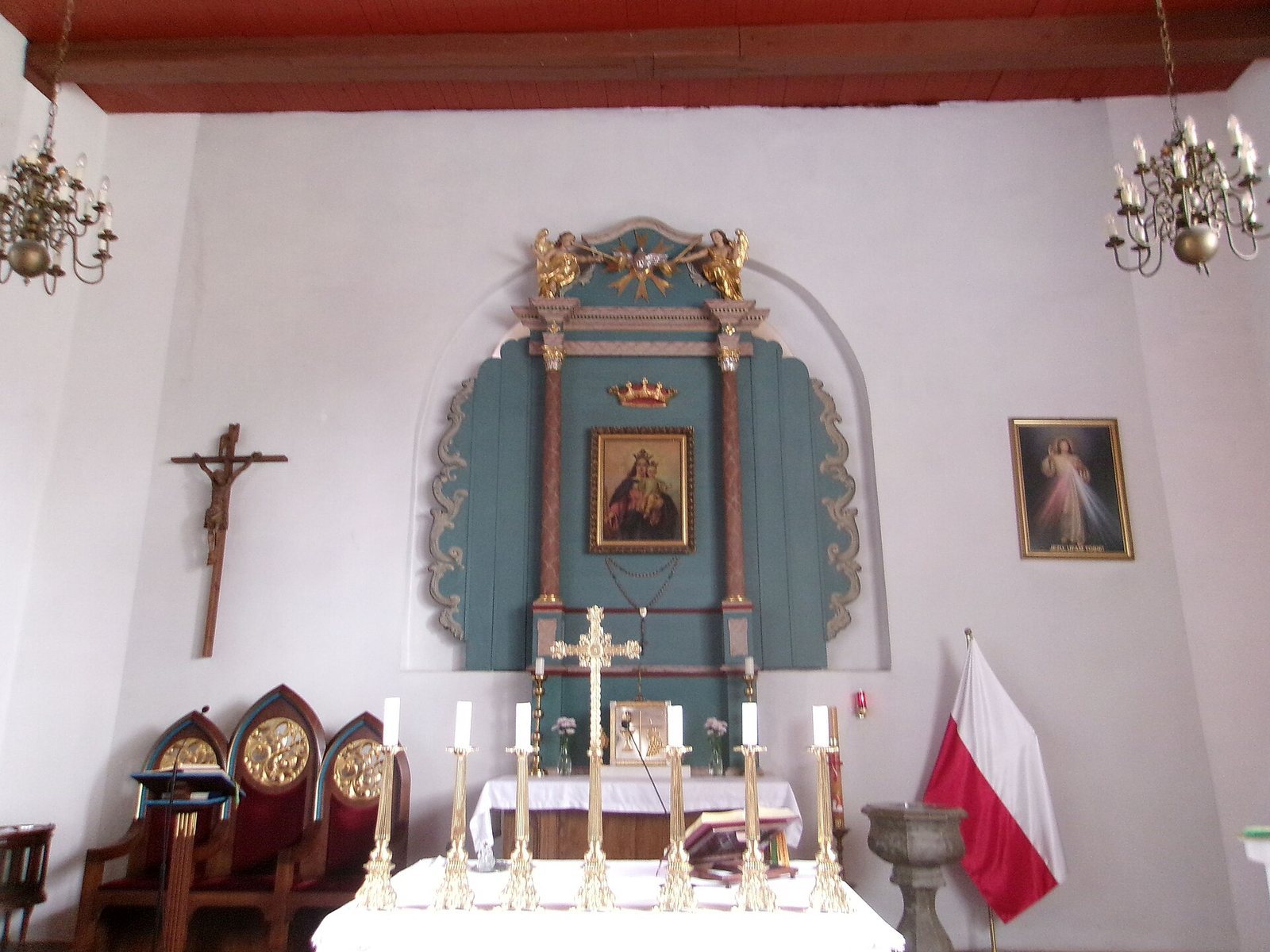
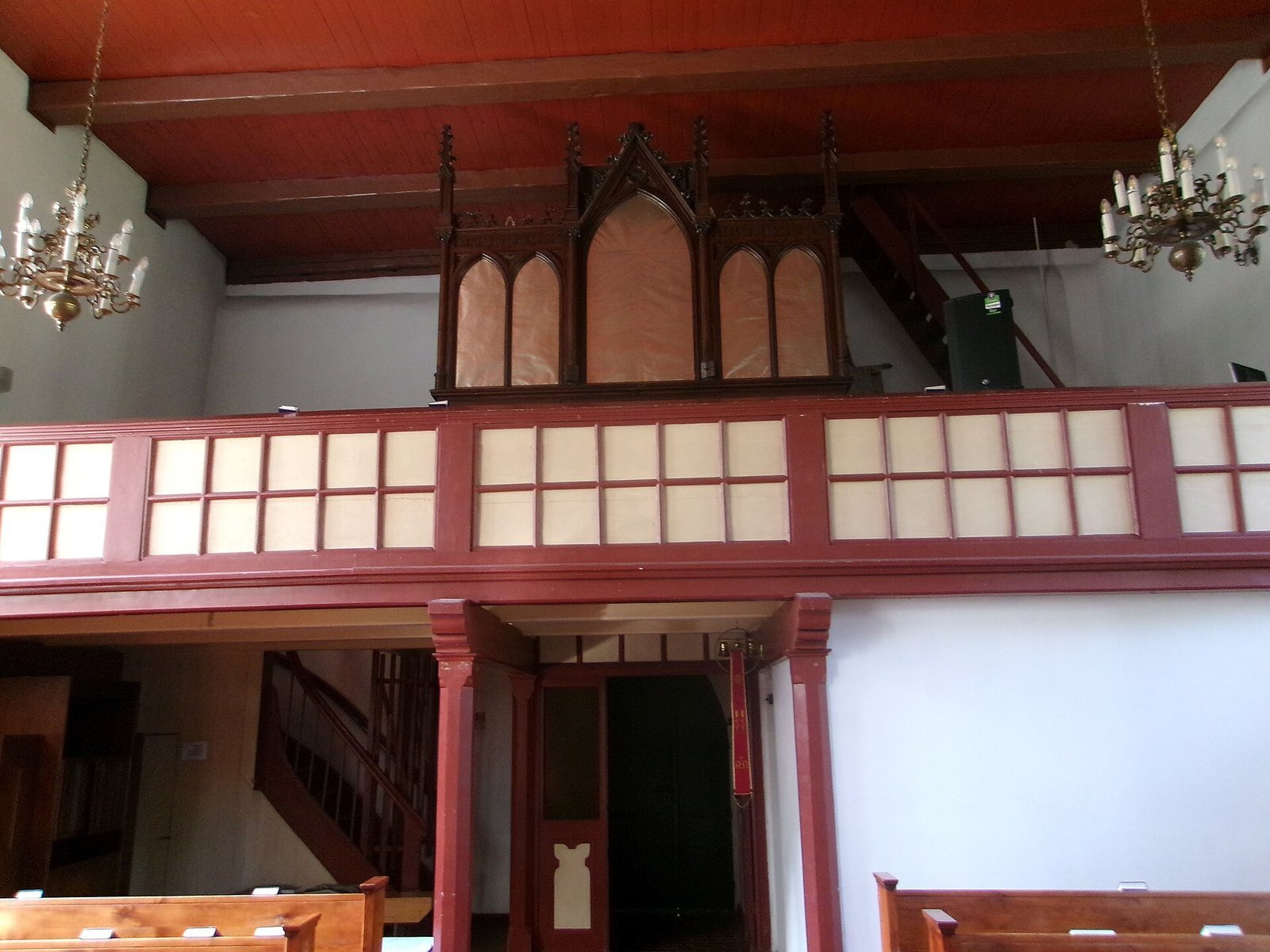
Nineteenth-century furnishings include a baptismal font, pulpit, and altar. A Neo-Gothic organ case, reflecting a later revival of Gothic forms, stands on a raised gallery for the organ.
Cemetery and bell tower
A cemetery covering 0.3 hectares adjoins the church. A wooden bell tower built around 1930 stands in front of it and houses two bells, cast in 1737 and 1833.